Dad brain: How fatherhood reshapes the male mind
The modern dad is quietly undergoing a biological makeover, and babies seem to be driving it.
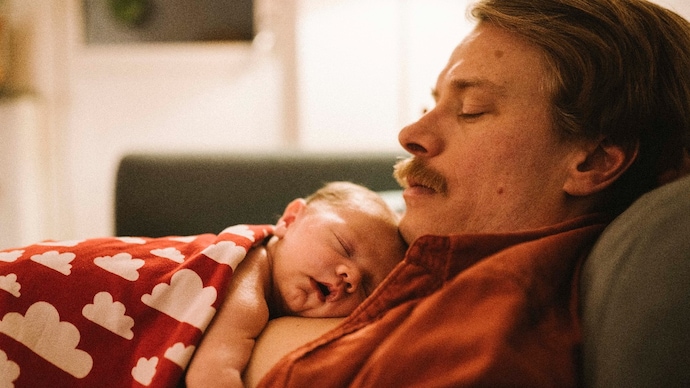
When Neelima (name changed) became a mother, she found herself swept up in the emotional whirlwind that accompanies the arrival of a baby. Sleepless nights, endless feeds and the joy of first smiles transformed her life in ways she had expected. What she had not anticipated, however, was the quieter transformation taking place in her husband.
"Watching him with our daughter completely changed the way I looked at fatherhood," she recalled. "This six-foot-tall man, who once had strong opinions about almost everything, now happily says 'yes' to a three-foot toddler. He has become softer, more patient and fiercely protective. Every decision he makes somehow includes our daughter," she tells India Today Digital.
For decades, scientists have focused on what pregnancy and childbirth do to mothers.
But a growing body of research suggests that babies leave their mark on fathers too.
Fatherhood, it turns out, is not just a social role. It is a biological transition that can reshape the male brain.
THE MAKING OF A FATHER
The idea that men undergo biological changes after becoming parents is not entirely new. Early studies in mammals showed that males involved in raising their offspring experienced hormonal shifts similar to those associated with motherhood.
The first evidence in humans emerged in 2000, when Canadian researchers Katherine Wynne-Edwards and Anne Storey demonstrated that fathers experience hormonal changes after the birth of a child.
Since then, scientists have consistently found that men who become fathers tend to have lower testosterone levels than men without children.
But one question remains unanswered: do these changes begin only after birth, or do they start much earlier?
Research suggests the transition begins even before the baby arrives.
James K. Riling, the director of the Laboratory for Human Social Neuroscience at Emory University in the US, released a study last year that found that expectant fathers have shown that testosterone and vasopressin levels start falling during pregnancy itself.
Intriguingly, researchers found that men with lower testosterone levels become more involved with both their partners and their babies after birth.
Meanwhile, oxytocin, called the "love hormone", rises when fathers hold their newborns or spend time in close physical contact with them. The increase appears to be linked to the amount of time fathers devote to caring for their children.
Playful interaction, skin-to-skin contact and even holding a baby for the first time can trigger a rise in oxytocin, strengthening emotional bonds between father and child.
INSIDE THE FATHER'S BRAIN
Scientists are now discovering that these hormonal changes are accompanied by physical changes inside the brain.
Researchers from the University of Southern California and Spain's Instituto de Investigaciƒón Sanitaria Gregorio Maraƒón scanned the brains of 40 first-time fathers during their partner's pregnancy and again six months after childbirth. They also followed a group of childless men over the same period.
The study revealed noticeable changes in regions of the brain involved in visual processing, attention and empathy. These alterations were absent in men who had not become fathers.
The researchers believe these changes help fathers become more attuned to their babies' needs.
Another study, published this year in Translational Psychiatry by German researchers, provided further evidence.
Brain scans showed reductions in grey matter volume during the first 24 weeks after childbirth. Scientists believe these changes reflect the brain's ability to reorganise itself in response to the demands of parenthood.
A surprising change is seen in ‘grey matter’, with MRI scans showing a reduction in grey matter volume in the brain's ‘mentalizing network’ (areas associated with empathy and understanding others), according to Nandini Chatterjee Singh, Head of Department, Psychology and Cognitive Sciences, Ashoka University, New Delhi.
An important brain region for emotion processing, the amygdala shows increased connectivity with other networks, which supports heightened parental vigilance and emotional attachment to the baby.
Nandini Chatterjee Singh added, “These neurological changes manifest in practical terms as an increased ability to plan, problem-solve, and stay alert to the baby's needs.”
DAD'S INVOLVEMENT MATTERS
Researchers say the father's brain is be shaped by experience.
As fathers spend more time feeding, playing with and soothing their babies, the neural circuits associated with caregiving become stronger.
In other words, parenting itself helps build the "dad brain".
Over the past five decades, the amount of time fathers spend caring for children has increased dramatically in many countries.
Across many high-income countries, fathers are spending more time caring for their children than previous generations. The change has been particularly pronounced in countries such as Sweden, Iceland, Germany and Spain, where generous paid leave policies have helped normalise involved fatherhood.
In India, too, change is witnessed, but research is limited to urban areas. A 2024 review in Sociology Compass by Delhi University researcher Ameeta Motwani concluded that the involvement of fathers in caring for newborns and young children is increasingly becoming "a fact of life" in contemporary urban India.
Based on interviews with two generations of middle-class fathers, the study found that both attitudes and practices surrounding childcare are shifting, with younger fathers participating more actively than their own fathers did.
Studies also suggest that children with engaged fathers enjoy better physical health, improved cognitive performance and stronger emotional wellbeing.
Small studies from India are now revealing that fathers are taking a more active role in family health.
In a 2024 study from Kolkata, most fathers reported buying groceries, setting rules around junk food and encouraging healthier habits among their children.
Evidence also suggests that early father-child bonding plays an important role in a child's self-esteem, emotional health and long-term cognitive development.
FATHERHOOD RESHAPED CONSTANTLY
Scientists believe that fatherhood is not a fixed instinct that automatically appears at birth.
Instead, it develops through repeated interactions with a child. Time spent rocking a baby to sleep, changing diapers or responding to cries may be doing more than creating memories, it may be reshaping the father's brain itself.
Perhaps that is what Neelima witnessed in her own home.
"I've watched the man I married become a father who would do absolutely anything for his little girl," she said. "Maybe that's what fatherhood really is. It's not just about raising a child. Sometimes, it's the child who quietly reshapes the father from within."
As science continues to unravel the hidden biology of fatherhood, one thing is becoming increasingly clear. Babies change fathers too.
The rise of the involved dad is quietly transforming the male mind in ways we are only beginning to understand.
When Neelima (name changed) became a mother, she found herself swept up in the emotional whirlwind that accompanies the arrival of a baby. Sleepless nights, endless feeds and the joy of first smiles transformed her life in ways she had expected. What she had not anticipated, however, was the quieter transformation taking place in her husband.
"Watching him with our daughter completely changed the way I looked at fatherhood," she recalled. "This six-foot-tall man, who once had strong opinions about almost everything, now happily says 'yes' to a three-foot toddler. He has become softer, more patient and fiercely protective. Every decision he makes somehow includes our daughter," she tells India Today Digital.
For decades, scientists have focused on what pregnancy and childbirth do to mothers.
But a growing body of research suggests that babies leave their mark on fathers too.
Fatherhood, it turns out, is not just a social role. It is a biological transition that can reshape the male brain.
THE MAKING OF A FATHER
The idea that men undergo biological changes after becoming parents is not entirely new. Early studies in mammals showed that males involved in raising their offspring experienced hormonal shifts similar to those associated with motherhood.
The first evidence in humans emerged in 2000, when Canadian researchers Katherine Wynne-Edwards and Anne Storey demonstrated that fathers experience hormonal changes after the birth of a child.
Since then, scientists have consistently found that men who become fathers tend to have lower testosterone levels than men without children.
But one question remains unanswered: do these changes begin only after birth, or do they start much earlier?
Research suggests the transition begins even before the baby arrives.
James K. Riling, the director of the Laboratory for Human Social Neuroscience at Emory University in the US, released a study last year that found that expectant fathers have shown that testosterone and vasopressin levels start falling during pregnancy itself.
Intriguingly, researchers found that men with lower testosterone levels become more involved with both their partners and their babies after birth.
Meanwhile, oxytocin, called the "love hormone", rises when fathers hold their newborns or spend time in close physical contact with them. The increase appears to be linked to the amount of time fathers devote to caring for their children.
Playful interaction, skin-to-skin contact and even holding a baby for the first time can trigger a rise in oxytocin, strengthening emotional bonds between father and child.
INSIDE THE FATHER'S BRAIN
Scientists are now discovering that these hormonal changes are accompanied by physical changes inside the brain.
Researchers from the University of Southern California and Spain's Instituto de Investigaciƒón Sanitaria Gregorio Maraƒón scanned the brains of 40 first-time fathers during their partner's pregnancy and again six months after childbirth. They also followed a group of childless men over the same period.
The study revealed noticeable changes in regions of the brain involved in visual processing, attention and empathy. These alterations were absent in men who had not become fathers.
The researchers believe these changes help fathers become more attuned to their babies' needs.
Another study, published this year in Translational Psychiatry by German researchers, provided further evidence.
Brain scans showed reductions in grey matter volume during the first 24 weeks after childbirth. Scientists believe these changes reflect the brain's ability to reorganise itself in response to the demands of parenthood.
A surprising change is seen in ‘grey matter’, with MRI scans showing a reduction in grey matter volume in the brain's ‘mentalizing network’ (areas associated with empathy and understanding others), according to Nandini Chatterjee Singh, Head of Department, Psychology and Cognitive Sciences, Ashoka University, New Delhi.
An important brain region for emotion processing, the amygdala shows increased connectivity with other networks, which supports heightened parental vigilance and emotional attachment to the baby.
Nandini Chatterjee Singh added, “These neurological changes manifest in practical terms as an increased ability to plan, problem-solve, and stay alert to the baby's needs.”
DAD'S INVOLVEMENT MATTERS
Researchers say the father's brain is be shaped by experience.
As fathers spend more time feeding, playing with and soothing their babies, the neural circuits associated with caregiving become stronger.
In other words, parenting itself helps build the "dad brain".
Over the past five decades, the amount of time fathers spend caring for children has increased dramatically in many countries.
Across many high-income countries, fathers are spending more time caring for their children than previous generations. The change has been particularly pronounced in countries such as Sweden, Iceland, Germany and Spain, where generous paid leave policies have helped normalise involved fatherhood.
In India, too, change is witnessed, but research is limited to urban areas. A 2024 review in Sociology Compass by Delhi University researcher Ameeta Motwani concluded that the involvement of fathers in caring for newborns and young children is increasingly becoming "a fact of life" in contemporary urban India.
Based on interviews with two generations of middle-class fathers, the study found that both attitudes and practices surrounding childcare are shifting, with younger fathers participating more actively than their own fathers did.
Studies also suggest that children with engaged fathers enjoy better physical health, improved cognitive performance and stronger emotional wellbeing.
Small studies from India are now revealing that fathers are taking a more active role in family health.
In a 2024 study from Kolkata, most fathers reported buying groceries, setting rules around junk food and encouraging healthier habits among their children.
Evidence also suggests that early father-child bonding plays an important role in a child's self-esteem, emotional health and long-term cognitive development.
FATHERHOOD RESHAPED CONSTANTLY
Scientists believe that fatherhood is not a fixed instinct that automatically appears at birth.
Instead, it develops through repeated interactions with a child. Time spent rocking a baby to sleep, changing diapers or responding to cries may be doing more than creating memories, it may be reshaping the father's brain itself.
Perhaps that is what Neelima witnessed in her own home.
"I've watched the man I married become a father who would do absolutely anything for his little girl," she said. "Maybe that's what fatherhood really is. It's not just about raising a child. Sometimes, it's the child who quietly reshapes the father from within."
As science continues to unravel the hidden biology of fatherhood, one thing is becoming increasingly clear. Babies change fathers too.
The rise of the involved dad is quietly transforming the male mind in ways we are only beginning to understand.

