FIFA World Cup 2026: Heat the new impact player at this year's tournament?
A new analysis says climate change could affect playing conditions in most FIFA World Cup 2026 matches.
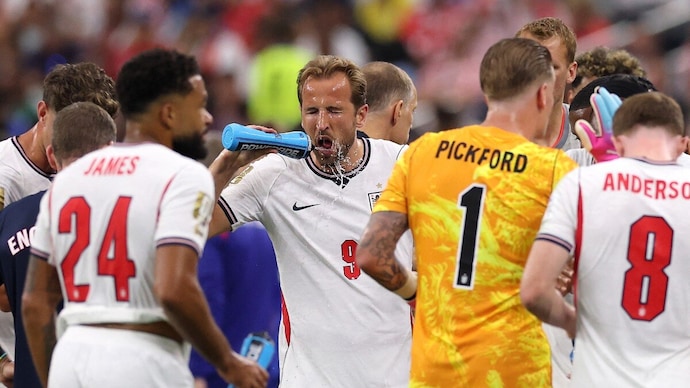
But, this year’s tournament comes with an extra opponent on the pitch, which is threatening to pull all teams down – extreme heat caused by climate change.
According to a new analysis by Climate Central, the performance of players in around 93 percent of the matches to be played during this year’s FIFA World Cup could be impacted by heat caused by climate change.
FINDINGS
Around half of the matches scheduled to be played in this year’s World Cup have at least a 50 percent likelihood of experiencing heat which can affect players’ performance.
For most matches – 97 out of 104 – climate change has increased the odds of performance-impairing heat by about 8 percentage points on average. “That sounds small, but put the stat to work across the entire tournament, and it adds up – almost all of the matches are more likely to see performance-impairing heat because of climate change,” Shel Winkley, meteorologist at Climate Central, said. “The heat that climate change has added is now as much of an opponent as the team across the pitch,” he added.
The worst impact of climate change is predicted for the match between Spain and Uruguay, scheduled for June 26, 2026, in Guadalajara, Mexico. The 70 percent chance of performance-impairing heat during this match is a whopping 37 percentage points higher because of climate change.
WHAT HAPPENS TO PLAYERS IN THE HEAT?
The key thing to note when analysing suitable conditions for gameplay is the wet-bulb globe temperature (WBGT), which combines air temperature with other environmental factors such as humidity, wind speed, and solar radiation to predict how heat stress will affect humans.
The core body temperature for humans is usually in the range of 36.5 and 37.5°C. The most common way for the body to maintain this is through sweating. As sweat evaporates, the body cools.
But there are other thermoregulatory mechanisms too that take place so that the body can maintain its core temperature, Dr Oliver Gibson, Senior Lecturer in Exercise Physiology at Brunel University of London, explained. Blood flow to organs considered non-essential like the gastrointestinal tract, kidneys, and liver is restricted during acute heat stress to prioritise cooling. In addition, the heart’s workload increases to maintain adequate blood pressure and support circulation to both the skin and vital organs.
“In the case of an athlete exercising in the heat, if this thermoregulatory response proves insufficient, a physiological conflict may arise between supplying blood to the working muscles and to the skin for cooling,” Dr Gibson said. “As the body prioritises heat dissipation and the prevention of heat-related illness or injury, muscle blood flow may become compromised. This can lead to a reduction in exercise intensity as the athlete subconsciously or consciously adjusts their effort,” he added.
According to Dr Gibson, these changes are more visible in endurance athletes as compared to footballers, but even so, this can manifest as a reduction in the distance covered during high-speed running in the sport, as the number of high-speed runs or sprints declines.
“The pattern of games typically slows with more conservative passing selections made to allow players to pace themselves through matches played in higher versus lower or familiar heat stress,” Dr Gibson explained.
An analysis of players’ performance at the 2014 FIFA World Cup, published in 2016 in the International Journal of Biometeorology, found that at temperatures above 28°C, players ran comparatively shorter distances overall. High humidity also reduced the overall distance run. They also performed fewer sprints at higher temperatures. In cool, dry conditions, players averaged about 40 sprints per match. In hot conditions (above 28°C), that fell to roughly 31 sprints, which is a drop of almost 22.5 percent. Around one in four sprints disappeared when it got hot.
The International Federation of Football Players, FIFPRO, recommends that if WBGT is between 28 and 32°C, cooling breaks should take place around the 30th and 75th minute of the game. If WBGT is above 32°C, training sessions and matches should be rescheduled.
FIFPRO also adds that athletes cannot digest more than 250ml of water every 20 minutes, which is why hydration breaks should be short and frequent.
However, according to Dr Ollie Jay, Professor of Heat and Health at the University of Sydney, these players are highly conditioned and have all undergone heat acclimatisation by arriving early at the tournament locations. “The greatest risk to the athletes is reduced performance (up to 30%) and, from a health perspective, mild heat exhaustion. It is unlikely that a player will experience heat stroke, which is a medical emergency,” he said.
The breaks imposed halfway through each half only provide very limited respite, Dr Jay added. “Research shows that an extended half-time break is the most effective way of reducing the risk of the players overheating.”
COULD THIS SKEW THE TOURNAMENT RESULT?
According to Dr Gibson, teams that are well-prepared to deal with the heat stress may have a substantial advantage over an unprepared team, particularly in the late stages of the game, in games played in hotter conditions, and early in the tournament before other players have acclimatised to the heat stress.
Heat acclimatisation could be an important strategy to train for playing in hotter conditions. This includes active exercising or passive ways like sauna, hot bathing, often referred to as a chronic heat alleviation approach, Dr Gibson said.
“In addition to heat training, acute heat alleviation strategies, like familiarising players with planned drinking strategies to avoid dehydration, and personalising pre- and mid-competition cooling via ice slurry drinks, cooling garments, and modifying pre-match routines, all help to maintain player health and performance by reducing the increase in core body temperature,” he added.
Acclimatisation is easy to acquire, but that means players can lose it quickly too, Dr Jay said. “Acclimatised players will also be able to sweat more readily, meaning that they can keep cooler. Their core temperature starts slightly lower too, so they have more headroom before getting to dangerous levels of core temperature,” he explained.
Out of the 16 stadiums hosting the 2026 FIFA World Cup, three are fully climate-controlled, two have a partial canopy that covers the seating area but not the playing field, two have a retractable roof but are not climate-controlled, while nine are open-air. The impact of atmospheric heat is likely to be much higher for open-air stadiums than for those with controlled climate.
The impact is also noticeable to viewers. The June 14 match between Brazil and Morocco was played at the open-air New York New Jersey Stadium in East Rutherford, and drew 1-1. The match had a 20 percent chance of being played in performance-impairing heat, which was made 7 percentage points worse by climate change. According to Deepankar Singh, a data scientist and football enthusiast based in the city, the last quarter was “flat because the players just appeared to conserve energy and settle for a draw”. “The game was happening in my city, and it was a hot day. I suppose that’ll happen in other games too,” Singh said.
But, this year’s tournament comes with an extra opponent on the pitch, which is threatening to pull all teams down – extreme heat caused by climate change.
According to a new analysis by Climate Central, the performance of players in around 93 percent of the matches to be played during this year’s FIFA World Cup could be impacted by heat caused by climate change.
FINDINGS
Around half of the matches scheduled to be played in this year’s World Cup have at least a 50 percent likelihood of experiencing heat which can affect players’ performance.
For most matches – 97 out of 104 – climate change has increased the odds of performance-impairing heat by about 8 percentage points on average. “That sounds small, but put the stat to work across the entire tournament, and it adds up – almost all of the matches are more likely to see performance-impairing heat because of climate change,” Shel Winkley, meteorologist at Climate Central, said. “The heat that climate change has added is now as much of an opponent as the team across the pitch,” he added.
The worst impact of climate change is predicted for the match between Spain and Uruguay, scheduled for June 26, 2026, in Guadalajara, Mexico. The 70 percent chance of performance-impairing heat during this match is a whopping 37 percentage points higher because of climate change.
WHAT HAPPENS TO PLAYERS IN THE HEAT?
The key thing to note when analysing suitable conditions for gameplay is the wet-bulb globe temperature (WBGT), which combines air temperature with other environmental factors such as humidity, wind speed, and solar radiation to predict how heat stress will affect humans.
The core body temperature for humans is usually in the range of 36.5 and 37.5°C. The most common way for the body to maintain this is through sweating. As sweat evaporates, the body cools.
But there are other thermoregulatory mechanisms too that take place so that the body can maintain its core temperature, Dr Oliver Gibson, Senior Lecturer in Exercise Physiology at Brunel University of London, explained. Blood flow to organs considered non-essential like the gastrointestinal tract, kidneys, and liver is restricted during acute heat stress to prioritise cooling. In addition, the heart’s workload increases to maintain adequate blood pressure and support circulation to both the skin and vital organs.
“In the case of an athlete exercising in the heat, if this thermoregulatory response proves insufficient, a physiological conflict may arise between supplying blood to the working muscles and to the skin for cooling,” Dr Gibson said. “As the body prioritises heat dissipation and the prevention of heat-related illness or injury, muscle blood flow may become compromised. This can lead to a reduction in exercise intensity as the athlete subconsciously or consciously adjusts their effort,” he added.
According to Dr Gibson, these changes are more visible in endurance athletes as compared to footballers, but even so, this can manifest as a reduction in the distance covered during high-speed running in the sport, as the number of high-speed runs or sprints declines.
“The pattern of games typically slows with more conservative passing selections made to allow players to pace themselves through matches played in higher versus lower or familiar heat stress,” Dr Gibson explained.
An analysis of players’ performance at the 2014 FIFA World Cup, published in 2016 in the International Journal of Biometeorology, found that at temperatures above 28°C, players ran comparatively shorter distances overall. High humidity also reduced the overall distance run. They also performed fewer sprints at higher temperatures. In cool, dry conditions, players averaged about 40 sprints per match. In hot conditions (above 28°C), that fell to roughly 31 sprints, which is a drop of almost 22.5 percent. Around one in four sprints disappeared when it got hot.
The International Federation of Football Players, FIFPRO, recommends that if WBGT is between 28 and 32°C, cooling breaks should take place around the 30th and 75th minute of the game. If WBGT is above 32°C, training sessions and matches should be rescheduled.
FIFPRO also adds that athletes cannot digest more than 250ml of water every 20 minutes, which is why hydration breaks should be short and frequent.
However, according to Dr Ollie Jay, Professor of Heat and Health at the University of Sydney, these players are highly conditioned and have all undergone heat acclimatisation by arriving early at the tournament locations. “The greatest risk to the athletes is reduced performance (up to 30%) and, from a health perspective, mild heat exhaustion. It is unlikely that a player will experience heat stroke, which is a medical emergency,” he said.
The breaks imposed halfway through each half only provide very limited respite, Dr Jay added. “Research shows that an extended half-time break is the most effective way of reducing the risk of the players overheating.”
COULD THIS SKEW THE TOURNAMENT RESULT?
According to Dr Gibson, teams that are well-prepared to deal with the heat stress may have a substantial advantage over an unprepared team, particularly in the late stages of the game, in games played in hotter conditions, and early in the tournament before other players have acclimatised to the heat stress.
Heat acclimatisation could be an important strategy to train for playing in hotter conditions. This includes active exercising or passive ways like sauna, hot bathing, often referred to as a chronic heat alleviation approach, Dr Gibson said.
“In addition to heat training, acute heat alleviation strategies, like familiarising players with planned drinking strategies to avoid dehydration, and personalising pre- and mid-competition cooling via ice slurry drinks, cooling garments, and modifying pre-match routines, all help to maintain player health and performance by reducing the increase in core body temperature,” he added.
Acclimatisation is easy to acquire, but that means players can lose it quickly too, Dr Jay said. “Acclimatised players will also be able to sweat more readily, meaning that they can keep cooler. Their core temperature starts slightly lower too, so they have more headroom before getting to dangerous levels of core temperature,” he explained.
Out of the 16 stadiums hosting the 2026 FIFA World Cup, three are fully climate-controlled, two have a partial canopy that covers the seating area but not the playing field, two have a retractable roof but are not climate-controlled, while nine are open-air. The impact of atmospheric heat is likely to be much higher for open-air stadiums than for those with controlled climate.
The impact is also noticeable to viewers. The June 14 match between Brazil and Morocco was played at the open-air New York New Jersey Stadium in East Rutherford, and drew 1-1. The match had a 20 percent chance of being played in performance-impairing heat, which was made 7 percentage points worse by climate change. According to Deepankar Singh, a data scientist and football enthusiast based in the city, the last quarter was “flat because the players just appeared to conserve energy and settle for a draw”. “The game was happening in my city, and it was a hot day. I suppose that’ll happen in other games too,” Singh said.

