Brain scans show playing music or learning an instrument even after 70 slows ageing
Older adults who kept practising a musical instrument or learnt a new instrument even after 70 preserved memory better than those who stopped. The findings suggest starting music late in life helps reduce age-related brain decline.
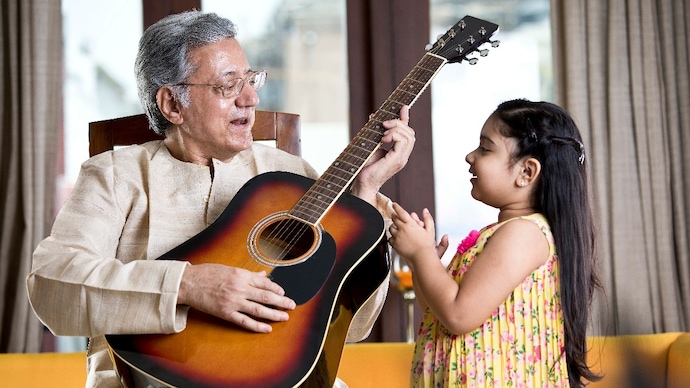
Picking up a musical instrument isn't just a childhood skill, it could also be one of the best gifts you give your brain later in life.
A new study from researchers at Kyoto University has found that older adults who continued practicing a musical instrument for more than three years maintained their memory and showed less age-related brain shrinkage than those who stopped playing.
The research followed participants who first learned to play an instrument at an average age of 73 as part of a 2020 study.
After four months of lessons, about half continued practicing for over three years, while the rest gave up music and pursued other hobbies.
MRI SCANS SHOWED STRIKING RESULTS
When researchers invited them back four years later for MRI scans and memory tests, the differences were striking.
Those who had stopped practicing experienced a decline in verbal working memory, a key mental skill used to remember and process information.
Brain scans also revealed shrinkage in the right putamen, a region involved in memory and learning that is known to deteriorate with age.
In contrast, participants who kept playing their instruments maintained their memory performance and showed no significant loss in this brain region.
They also had greater activity in the cerebellum, another area that typically becomes less active as people age.
"We were surprised to find that the effects on the brains of elderly people who start and continue practicing an instrument were also concentrated in these two areas of the brain, and that this was an effective way to prevent age-related decline," said corresponding author Kaoru Sekiyama.
MUSIC BETTER THAN EXERCISE FOR THE BRAIN?
Scientists have long known that both physical exercise and mentally stimulating activities support healthy brain ageing. While previous studies mainly focused on people who had played music since childhood, this research suggests the brain remains adaptable even in later life.
The findings offer an encouraging message: you don't have to be a lifelong musician to benefit.
"It's never too late to start playing an instrument, and starting in old age may have major benefits," Sekiyama said, adding that music can also be an excellent alternative for older adults who find physical exercise difficult because of pain or mobility issues.
Picking up a musical instrument isn't just a childhood skill, it could also be one of the best gifts you give your brain later in life.
A new study from researchers at Kyoto University has found that older adults who continued practicing a musical instrument for more than three years maintained their memory and showed less age-related brain shrinkage than those who stopped playing.
The research followed participants who first learned to play an instrument at an average age of 73 as part of a 2020 study.
After four months of lessons, about half continued practicing for over three years, while the rest gave up music and pursued other hobbies.
MRI SCANS SHOWED STRIKING RESULTS
When researchers invited them back four years later for MRI scans and memory tests, the differences were striking.
Those who had stopped practicing experienced a decline in verbal working memory, a key mental skill used to remember and process information.
Brain scans also revealed shrinkage in the right putamen, a region involved in memory and learning that is known to deteriorate with age.
In contrast, participants who kept playing their instruments maintained their memory performance and showed no significant loss in this brain region.
They also had greater activity in the cerebellum, another area that typically becomes less active as people age.
"We were surprised to find that the effects on the brains of elderly people who start and continue practicing an instrument were also concentrated in these two areas of the brain, and that this was an effective way to prevent age-related decline," said corresponding author Kaoru Sekiyama.
MUSIC BETTER THAN EXERCISE FOR THE BRAIN?
Scientists have long known that both physical exercise and mentally stimulating activities support healthy brain ageing. While previous studies mainly focused on people who had played music since childhood, this research suggests the brain remains adaptable even in later life.
The findings offer an encouraging message: you don't have to be a lifelong musician to benefit.
"It's never too late to start playing an instrument, and starting in old age may have major benefits," Sekiyama said, adding that music can also be an excellent alternative for older adults who find physical exercise difficult because of pain or mobility issues.

