New fathers without paid leave face higher risk of anxiety, depression: Study
New fathers without paid leave reported more anxiety and depression symptoms.
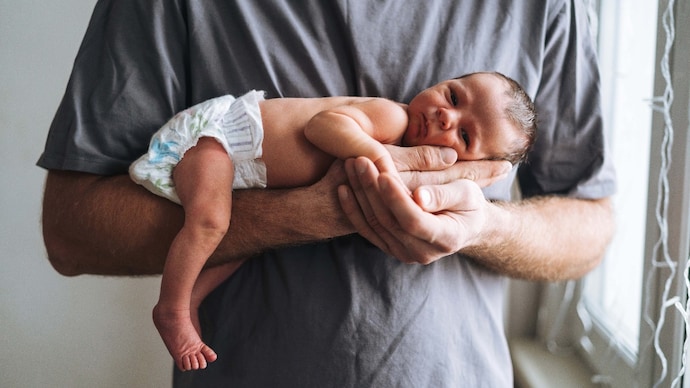
Fathers who do not have access to paid leave after the birth of a child could be at a significantly higher risk of anxiety and depression, according to a new study from researchers at Northwestern University and Ann & Robert H. Lurie Children's Hospital of Chicago.
The study found that new fathers who took unpaid leave were 58% more likely to report symptoms of anxiety compared to those who had access to paid leave.
Men who wanted to take leave but could not were also more likely to experience both anxiety and depression.
The findings, published in the American Journal of Public Health, are based on data from the 2022-2023 Ohio Fatherhood Survey, which included 4,290 new fathers.
"Bottom line, mental health and paternity leave are linked," said Dr. Craig Garfield, professor of paediatrics at Northwestern University Feinberg School of Medicine and the study's senior author.
"Our findings underscore that paternal leave is not just a workplace benefit. It is a public health issue that can deeply impact families and children," he said.
Researchers found that 54% of fathers in the study took paid leave after the birth of their child, while 22% took unpaid leave.
Another 15% did not take any leave, and 9% used a combination of paid and unpaid leave.
Overall, 11% of fathers reported symptoms of anxiety and 6.6% reported symptoms of depression.
Financial concerns emerged as the biggest barrier to taking time off. Among fathers experiencing depression, about 75% said finances prevented them from taking leave. Among those with anxiety symptoms, 71% cited money-related concerns.
While maternal mental health after childbirth has received growing attention, researchers said fathers also face emotional and psychological challenges during the transition to parenthood.
The study adds to evidence suggesting that paid parental leave may offer benefits beyond the workplace. Researchers noted that paid leave can support fathers' mental health, strengthen parent-child bonding and contribute to overall family well-being.
The findings also have implications for employers and policymakers, who are increasingly discussing ways to support families during the early months after childbirth.
"As the U.S. continues to discuss how best to support families from day one, paid paternity leave is one valuable tool to use," Garfield said. "Paid leave can help new dads as they transition into fatherhood, giving them time and resources to get off on the right foot."
The researchers plan to expand their work using fatherhood surveys from multiple states to better understand how parental leave policies affect fathers' health nationwide.
Fathers who do not have access to paid leave after the birth of a child could be at a significantly higher risk of anxiety and depression, according to a new study from researchers at Northwestern University and Ann & Robert H. Lurie Children's Hospital of Chicago.
The study found that new fathers who took unpaid leave were 58% more likely to report symptoms of anxiety compared to those who had access to paid leave.
Men who wanted to take leave but could not were also more likely to experience both anxiety and depression.
The findings, published in the American Journal of Public Health, are based on data from the 2022-2023 Ohio Fatherhood Survey, which included 4,290 new fathers.
"Bottom line, mental health and paternity leave are linked," said Dr. Craig Garfield, professor of paediatrics at Northwestern University Feinberg School of Medicine and the study's senior author.
"Our findings underscore that paternal leave is not just a workplace benefit. It is a public health issue that can deeply impact families and children," he said.
Researchers found that 54% of fathers in the study took paid leave after the birth of their child, while 22% took unpaid leave.
Another 15% did not take any leave, and 9% used a combination of paid and unpaid leave.
Overall, 11% of fathers reported symptoms of anxiety and 6.6% reported symptoms of depression.
Financial concerns emerged as the biggest barrier to taking time off. Among fathers experiencing depression, about 75% said finances prevented them from taking leave. Among those with anxiety symptoms, 71% cited money-related concerns.
While maternal mental health after childbirth has received growing attention, researchers said fathers also face emotional and psychological challenges during the transition to parenthood.
The study adds to evidence suggesting that paid parental leave may offer benefits beyond the workplace. Researchers noted that paid leave can support fathers' mental health, strengthen parent-child bonding and contribute to overall family well-being.
The findings also have implications for employers and policymakers, who are increasingly discussing ways to support families during the early months after childbirth.
"As the U.S. continues to discuss how best to support families from day one, paid paternity leave is one valuable tool to use," Garfield said. "Paid leave can help new dads as they transition into fatherhood, giving them time and resources to get off on the right foot."
The researchers plan to expand their work using fatherhood surveys from multiple states to better understand how parental leave policies affect fathers' health nationwide.

