Is your smartphone quietly giving you a phone body? Here's what it means
Excessive smartphone use can lead to "phone body", a term describing posture-related issues such as text neck, rounded shoulders, sore thumbs, digital eye strain, and reduced mobility. While not a medical diagnosis, these changes are often reversible through better posture, regular movement, exercise, and healthier screen-use habits.
Your phone probably knows your face better than some of your friends do. It knows when you wake up, when you're bored, and when you can't sleep. But after years of scrolling, texting, gaming, and binge-watching, it may be teaching your body a few habits too.
Rounded shoulders. A stiff neck. Sore thumbs. Tired eyes. The constant urge to look down, even when your phone isn't in your hand. Welcome to what many people are calling the "phone body." It's not an official medical diagnosis, but it's a catchy way to describe the physical changes that can creep in after years of living life through a screen.
Doctors say the phenomenon is becoming increasingly common. Dr Ashwani Maichand, Director, Department of Orthopaedics at CK Birla Hospital (R), Delhi, says he is seeing a clear rise in posture-related musculoskeletal problems linked to prolonged smartphone and screen use.
"While 'phone body' is not a medical term, it effectively describes the changes that occur when people spend hours looking down at their phones or sitting with poor posture."
He explains that the most common problems include text neck, rounded shoulders, upper back stiffness, lower back pain, wrist and thumb injuries caused by repetitive movements, and shoulder muscle fatigue. Left unchecked, these habits can create muscle imbalances and reduce spinal mobility over time.
YOUR HEAD DIDN'T GET HEAVIER, YOUR NECK JUST THINKS IT DID
Your head weighs around 4.5 to 5.5 kilograms. But the moment you tilt it forward to check a message or watch "just one more reel," your neck suddenly has a lot more work to do. The farther your head bends, the greater the strain on your neck, shoulders, and upper spine.
Now think about how many times you glance at your phone every day. Those little moments quickly add up. Over time, they can contribute to what's commonly known as "text neck", a condition associated with neck stiffness, headaches, shoulder pain, and reduced mobility. If you've ever rubbed your neck after a long scrolling session, your posture might be trying to tell you something.
According to Dr Maichand, text neck develops when the head remains bent forward for extended periods, placing excessive stress on the cervical spine.
"In the early stages, these changes usually reverse with posture correction, strengthening exercises, and regular movement."
However, he cautions that ignoring the problem for months or years can lead to chronic neck and back pain, nerve irritation, shoulder issues and early wear and tear in the spine. While smartphones do not permanently deform the spine, long-term poor posture becomes increasingly difficult to correct and may eventually require structured rehabilitation.
IS YOUR PHONE TURNING YOU INTO A HUMAN QUESTION MARK?
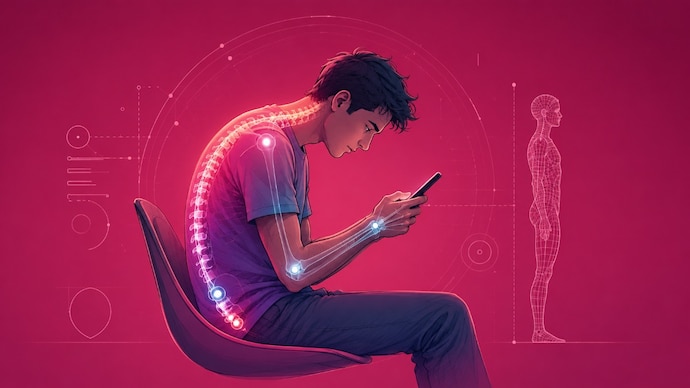
Ever caught yourself sitting with your shoulders rolled forward, chin tucked in, and back curved like a question mark while scrolling? You're definitely not the only one.
Hours spent looking down at a screen encourage poor posture. Your chest muscles gradually tighten while the muscles in your upper back weaken, making it harder to stand tall. Before you know it, slouching starts to feel natural. Over time, this can contribute to back pain, muscle fatigue, and reduced flexibility, not because your phone changed your body overnight, but because it trained it to stay in the same position for hours.
Dr Maichand says these postural changes often happen gradually. Poor habits weaken some muscle groups while tightening others, creating muscle imbalances that affect the way the body moves and functions. The encouraging part, he adds, is that most of these issues can be prevented, or significantly improved, if people act early and adopt healthier daily habits.
IT'S NOT JUST YOUR NECK, YOUR WHOLE BODY IS KEEPING SCORE
A "phone body" isn't just about posture. Constant swiping, typing, and gaming can leave your thumbs and wrists feeling sore from repetitive movements. Meanwhile, marathon scrolling sessions can dry out your eyes, blur your vision, and leave them feeling tired, a common problem known as digital eye strain.
There's another side effect that's easy to miss: the less you move, the less your body wants to move. Hours spent sitting with a phone often replace walking, stretching, or exercising, which can weaken muscles, reduce overall fitness, and leave you feeling sluggish by the end of the day.
The spine, Dr Maichand points out, is designed for movement, not for staying in one position for hours. That is why regular breaks from screens are just as important as good posture itself.
YOUR PHONE DOESN'T NEED TO CHANGE, YOUR HABITS DO
The good news? Your body is surprisingly good at bouncing back.
You don't have to give up your smartphone, just change how you use it. Hold your phone closer to eye level instead of looking down into your lap. If you're studying or working on a screen for long periods, get up every 30 to 60 minutes, stretch your neck and shoulders, and walk around for a few minutes.
Dr Maichand says prevention is always the best treatment.
"The spine is built for movement, not for staying in the same position for hours."
He recommends taking a short movement break every 30 to 45 minutes to stand, stretch and reset your posture. Holding the phone at eye level, rather than bending your neck downward, can significantly reduce stress on the cervical spine.
Daily exercises such as chin tucks, neck stretches, chest-opening stretches, shoulder blade retractions and upper back strengthening can help improve posture and reduce muscle imbalances. He also emphasises the importance of strengthening the core muscles, which support the spine and improve overall posture.
For people who work on digital devices all day, he recommends creating an ergonomic workspace with good chair support and keeping the monitor at eye level. The familiar 20-20-20 rule—looking at something 20 feet away for 20 seconds every 20 minutes, can also help reduce digital eye strain.
Dr Maichand adds that prevention strategies differ slightly across age groups. Children and teenagers should balance screen time with outdoor play because their bones and muscles are still developing. Working adults benefit from ergonomic workstations, regular movement and strengthening exercises, while older adults should focus on flexibility, posture training, resistance exercises and balance activities to maintain spinal health and reduce the risk of chronic pain.
YOUR BODY IS ALWAYS TAKING NOTES
Your smartphone isn't secretly transforming your body overnight, but the habits that come with it might be. The "phone body" isn't a medical diagnosis; it's a reminder that small, repeated actions shape the way we move, stand, and feel.
The reassuring part is that these changes are largely preventable. As Dr Maichand notes, maintaining good posture, staying physically active, and making simple stretching and strengthening exercises part of your daily routine can go a long way in protecting long-term spinal health.
So the next time you instinctively reach for your phone, take a second to check your posture too. Lift the screen a little higher, roll your shoulders back, and stretch once in a while. Your notifications can wait a few seconds, but your neck, back, and shoulders will thank you for it.
Your phone probably knows your face better than some of your friends do. It knows when you wake up, when you're bored, and when you can't sleep. But after years of scrolling, texting, gaming, and binge-watching, it may be teaching your body a few habits too.
Rounded shoulders. A stiff neck. Sore thumbs. Tired eyes. The constant urge to look down, even when your phone isn't in your hand. Welcome to what many people are calling the "phone body." It's not an official medical diagnosis, but it's a catchy way to describe the physical changes that can creep in after years of living life through a screen.
Doctors say the phenomenon is becoming increasingly common. Dr Ashwani Maichand, Director, Department of Orthopaedics at CK Birla Hospital (R), Delhi, says he is seeing a clear rise in posture-related musculoskeletal problems linked to prolonged smartphone and screen use.
"While 'phone body' is not a medical term, it effectively describes the changes that occur when people spend hours looking down at their phones or sitting with poor posture."
He explains that the most common problems include text neck, rounded shoulders, upper back stiffness, lower back pain, wrist and thumb injuries caused by repetitive movements, and shoulder muscle fatigue. Left unchecked, these habits can create muscle imbalances and reduce spinal mobility over time.
YOUR HEAD DIDN'T GET HEAVIER, YOUR NECK JUST THINKS IT DID
Your head weighs around 4.5 to 5.5 kilograms. But the moment you tilt it forward to check a message or watch "just one more reel," your neck suddenly has a lot more work to do. The farther your head bends, the greater the strain on your neck, shoulders, and upper spine.
Now think about how many times you glance at your phone every day. Those little moments quickly add up. Over time, they can contribute to what's commonly known as "text neck", a condition associated with neck stiffness, headaches, shoulder pain, and reduced mobility. If you've ever rubbed your neck after a long scrolling session, your posture might be trying to tell you something.
According to Dr Maichand, text neck develops when the head remains bent forward for extended periods, placing excessive stress on the cervical spine.
"In the early stages, these changes usually reverse with posture correction, strengthening exercises, and regular movement."
However, he cautions that ignoring the problem for months or years can lead to chronic neck and back pain, nerve irritation, shoulder issues and early wear and tear in the spine. While smartphones do not permanently deform the spine, long-term poor posture becomes increasingly difficult to correct and may eventually require structured rehabilitation.
IS YOUR PHONE TURNING YOU INTO A HUMAN QUESTION MARK?
Ever caught yourself sitting with your shoulders rolled forward, chin tucked in, and back curved like a question mark while scrolling? You're definitely not the only one.
Hours spent looking down at a screen encourage poor posture. Your chest muscles gradually tighten while the muscles in your upper back weaken, making it harder to stand tall. Before you know it, slouching starts to feel natural. Over time, this can contribute to back pain, muscle fatigue, and reduced flexibility, not because your phone changed your body overnight, but because it trained it to stay in the same position for hours.
Dr Maichand says these postural changes often happen gradually. Poor habits weaken some muscle groups while tightening others, creating muscle imbalances that affect the way the body moves and functions. The encouraging part, he adds, is that most of these issues can be prevented, or significantly improved, if people act early and adopt healthier daily habits.
IT'S NOT JUST YOUR NECK, YOUR WHOLE BODY IS KEEPING SCORE
A "phone body" isn't just about posture. Constant swiping, typing, and gaming can leave your thumbs and wrists feeling sore from repetitive movements. Meanwhile, marathon scrolling sessions can dry out your eyes, blur your vision, and leave them feeling tired, a common problem known as digital eye strain.
There's another side effect that's easy to miss: the less you move, the less your body wants to move. Hours spent sitting with a phone often replace walking, stretching, or exercising, which can weaken muscles, reduce overall fitness, and leave you feeling sluggish by the end of the day.
The spine, Dr Maichand points out, is designed for movement, not for staying in one position for hours. That is why regular breaks from screens are just as important as good posture itself.
YOUR PHONE DOESN'T NEED TO CHANGE, YOUR HABITS DO
The good news? Your body is surprisingly good at bouncing back.
You don't have to give up your smartphone, just change how you use it. Hold your phone closer to eye level instead of looking down into your lap. If you're studying or working on a screen for long periods, get up every 30 to 60 minutes, stretch your neck and shoulders, and walk around for a few minutes.
Dr Maichand says prevention is always the best treatment.
"The spine is built for movement, not for staying in the same position for hours."
He recommends taking a short movement break every 30 to 45 minutes to stand, stretch and reset your posture. Holding the phone at eye level, rather than bending your neck downward, can significantly reduce stress on the cervical spine.
Daily exercises such as chin tucks, neck stretches, chest-opening stretches, shoulder blade retractions and upper back strengthening can help improve posture and reduce muscle imbalances. He also emphasises the importance of strengthening the core muscles, which support the spine and improve overall posture.
For people who work on digital devices all day, he recommends creating an ergonomic workspace with good chair support and keeping the monitor at eye level. The familiar 20-20-20 rule—looking at something 20 feet away for 20 seconds every 20 minutes, can also help reduce digital eye strain.
Dr Maichand adds that prevention strategies differ slightly across age groups. Children and teenagers should balance screen time with outdoor play because their bones and muscles are still developing. Working adults benefit from ergonomic workstations, regular movement and strengthening exercises, while older adults should focus on flexibility, posture training, resistance exercises and balance activities to maintain spinal health and reduce the risk of chronic pain.
YOUR BODY IS ALWAYS TAKING NOTES
Your smartphone isn't secretly transforming your body overnight, but the habits that come with it might be. The "phone body" isn't a medical diagnosis; it's a reminder that small, repeated actions shape the way we move, stand, and feel.
The reassuring part is that these changes are largely preventable. As Dr Maichand notes, maintaining good posture, staying physically active, and making simple stretching and strengthening exercises part of your daily routine can go a long way in protecting long-term spinal health.
So the next time you instinctively reach for your phone, take a second to check your posture too. Lift the screen a little higher, roll your shoulders back, and stretch once in a while. Your notifications can wait a few seconds, but your neck, back, and shoulders will thank you for it.

