As China-Pakistan hasten India's submarine hunt, is Scorpene the quick fix?
Military experts call for concluding talks on acquiring three additional Scorpene-class submarines for the Indian Navy during PM Narendra Modi's France visit
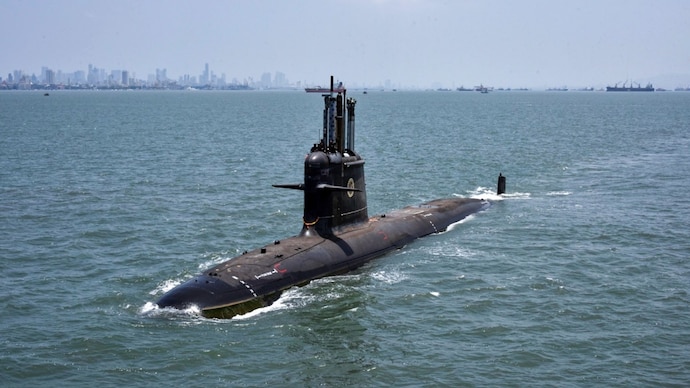
The submarine proposal, first announced during Modi’s visit to France for Bastille Day celebrations in July 2023, has been awaiting approval from the Cabinet Committee on Security (CCS) since January 2025.
At the same time, the ministry of defence is in advanced stages of negotiations for Project 75(I), India’s next-generation conventional submarine programme. The project envisages the construction of six advanced submarines by the Mumbai-based Mazagon Dock Shipbuilders Limited (MDL) in partnership with Germany’s Thyssenkrupp Marine Systems (TKMS).
However, with MDL having recently completed the construction of six Kalvari-class submarines under the Indo-French submarine programme, naval planners argue that a follow-on order for three additional Scorpenes could be executed much faster by leveraging the existing production ecosystem, trained workforce and established supply chain.
Defence officials point out that the proposed submarines would significantly strengthen the navy’s underwater capabilities while avoiding the delays typically associated with launching a new production line.
A senior defence official noted that the three additional Scorpene submarines could be delivered within six years of signing the contract. In contrast, under Project 75(I), the first German-designed submarine is unlikely to be delivered for at least a decade, given the complexity of India’s procurement process and the time required to establish production infrastructure.
The Scorpene move could provide a timely boost to the navy’s underwater combat capability at a time a significant portion of its conventional submarine fleet is approaching the end of its operational life. Industry sources also point out that advanced weapon-launching and propulsion features, at no additional cost, were reportedly offered by the highest levels of the French administration during president Emmanuel Macron’s last state visit to India.
Supporters of the proposal argue that ordering three additional submarines would help bridge a critical capability gap until next-generation submarine programmes gather momentum. It would also preserve valuable submarine-building expertise at MDL while providing a cost-effective means of rapidly augmenting force levels without the delays associated with developing an entirely new platform.
The debate comes at a time when both China and Pakistan are accelerating modernisation of their underwater fleets, increasing pressure on India to maintain its edge in the regional maritime balance. China, which operates the world’s largest navy, possesses a submarine fleet of around 70 vessels, including a growing mix of nuclear-powered and advanced conventional submarines. Through extensive defence cooperation with Pakistan, Beijing is also playing a central role in enhancing Islamabad’s naval capabilities, particularly in the undersea domain.
A major milestone in this partnership was marked on April 30 when Pakistan formally commissioned its first Hangor-class diesel-electric attack submarine at Sanya, China. The ceremony was attended by Pakistan president Asif Ali Zardari and navy chief Admiral Naveed Ashraf.
The commissioned submarine is the first of eight Hangor-class boats being acquired by Pakistan under a Chinese-backed programme, with four submarines being built in China and the remaining four under construction in Pakistan under a technology-transfer arrangement.
The strategic significance of the programme became evident earlier this month when the Pakistan navy’s new AIP (air-independent propulsion)-equipped Hangor-class submarine, accompanied by Chinese-built stealth warships, arrived in Colombo. The deployment placed advanced Pakistani naval assets less than 130 nautical miles from Indian territorial waters, drawing close attention from Indian naval planners.
For New Delhi, the episode highlighted not only Pakistan’s expanding underwater warfare capability but also the growing role of Chinese support in enabling Islamabad to project maritime power across the northern Indian Ocean.
India’s underwater force, meanwhile, is entering a critical transition phase. The navy operates 17 conventional submarines, several of which belong to the ageing Kilo- and Shishumar-class fleets and are approaching the end of their service lives. A number of these platforms are expected to retire over the next decade while operational availability is further affected by lengthy refit cycles that can keep submarines out of service for extended periods.
Although the induction of six Kalvari-class submarines has strengthened the fleet, concerns persist over force levels and replacement timelines. To address these challenges, the navy has begun integrating the Defence Research and Development Organisation’s (DRDO) indigenous AIP system into the Scorpene fleet. The capability is expected to significantly enhance underwater endurance and improve operational effectiveness, helping India narrow the emerging capability gap as China and Pakistan continue to expand and modernise their submarine forces across the Indian Ocean region.
Subscribe to India Today Magazine
The submarine proposal, first announced during Modi’s visit to France for Bastille Day celebrations in July 2023, has been awaiting approval from the Cabinet Committee on Security (CCS) since January 2025.
At the same time, the ministry of defence is in advanced stages of negotiations for Project 75(I), India’s next-generation conventional submarine programme. The project envisages the construction of six advanced submarines by the Mumbai-based Mazagon Dock Shipbuilders Limited (MDL) in partnership with Germany’s Thyssenkrupp Marine Systems (TKMS).
However, with MDL having recently completed the construction of six Kalvari-class submarines under the Indo-French submarine programme, naval planners argue that a follow-on order for three additional Scorpenes could be executed much faster by leveraging the existing production ecosystem, trained workforce and established supply chain.
Defence officials point out that the proposed submarines would significantly strengthen the navy’s underwater capabilities while avoiding the delays typically associated with launching a new production line.
A senior defence official noted that the three additional Scorpene submarines could be delivered within six years of signing the contract. In contrast, under Project 75(I), the first German-designed submarine is unlikely to be delivered for at least a decade, given the complexity of India’s procurement process and the time required to establish production infrastructure.
The Scorpene move could provide a timely boost to the navy’s underwater combat capability at a time a significant portion of its conventional submarine fleet is approaching the end of its operational life. Industry sources also point out that advanced weapon-launching and propulsion features, at no additional cost, were reportedly offered by the highest levels of the French administration during president Emmanuel Macron’s last state visit to India.
Supporters of the proposal argue that ordering three additional submarines would help bridge a critical capability gap until next-generation submarine programmes gather momentum. It would also preserve valuable submarine-building expertise at MDL while providing a cost-effective means of rapidly augmenting force levels without the delays associated with developing an entirely new platform.
The debate comes at a time when both China and Pakistan are accelerating modernisation of their underwater fleets, increasing pressure on India to maintain its edge in the regional maritime balance. China, which operates the world’s largest navy, possesses a submarine fleet of around 70 vessels, including a growing mix of nuclear-powered and advanced conventional submarines. Through extensive defence cooperation with Pakistan, Beijing is also playing a central role in enhancing Islamabad’s naval capabilities, particularly in the undersea domain.
A major milestone in this partnership was marked on April 30 when Pakistan formally commissioned its first Hangor-class diesel-electric attack submarine at Sanya, China. The ceremony was attended by Pakistan president Asif Ali Zardari and navy chief Admiral Naveed Ashraf.
The commissioned submarine is the first of eight Hangor-class boats being acquired by Pakistan under a Chinese-backed programme, with four submarines being built in China and the remaining four under construction in Pakistan under a technology-transfer arrangement.
The strategic significance of the programme became evident earlier this month when the Pakistan navy’s new AIP (air-independent propulsion)-equipped Hangor-class submarine, accompanied by Chinese-built stealth warships, arrived in Colombo. The deployment placed advanced Pakistani naval assets less than 130 nautical miles from Indian territorial waters, drawing close attention from Indian naval planners.
For New Delhi, the episode highlighted not only Pakistan’s expanding underwater warfare capability but also the growing role of Chinese support in enabling Islamabad to project maritime power across the northern Indian Ocean.
India’s underwater force, meanwhile, is entering a critical transition phase. The navy operates 17 conventional submarines, several of which belong to the ageing Kilo- and Shishumar-class fleets and are approaching the end of their service lives. A number of these platforms are expected to retire over the next decade while operational availability is further affected by lengthy refit cycles that can keep submarines out of service for extended periods.
Although the induction of six Kalvari-class submarines has strengthened the fleet, concerns persist over force levels and replacement timelines. To address these challenges, the navy has begun integrating the Defence Research and Development Organisation’s (DRDO) indigenous AIP system into the Scorpene fleet. The capability is expected to significantly enhance underwater endurance and improve operational effectiveness, helping India narrow the emerging capability gap as China and Pakistan continue to expand and modernise their submarine forces across the Indian Ocean region.
Subscribe to India Today Magazine

