As DK Shivakumar takes Karnataka reins, why Siddaramaiah's CM tenure is a record
Only on three occasions has a Karnataka chief minister served a full five-year tenure between elections. Siddaramaiah is one of them
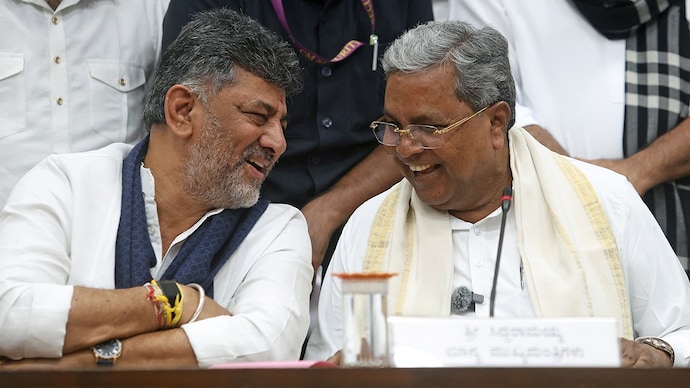
Tied to that metric is also an enduring paradox of Karnataka’s politics—the rather short tenures of most leaders who have helmed the state and the tumultuous events that led to these outcomes. Barring Urs and Siddaramaiah, only one other chief minister, S.M. Krishna, has so far been able to serve out a five-year term between two assembly elections.
Even so, Krishna didn't complete the full five years because he called elections five months ahead of schedule. Most other terms, however, have seen multiple leaders occupy the top post.
Now, D.K. Shivakumar, who replaced Siddaramaiah as Karnataka chief minister on June 3, will have a two-year tenure before the term of the current legislative assembly expires in May 2028.
In fact, out of the 15 assemblies elected between 1952 and 2023, as many as five saw three chief ministers while six witnessed two chief ministers sharing the term.
Prominent among the several factors that have led to this curious chronology are the caste dynamics endemic to the state, the power tussles between key leaders, and the role of a ‘high command’ in each of the political parties that have held power. This list includes the Congress, the Janata Party and the BJP. Short tenures, political observers point out, were possibly also the reason that only a few leaders have been able to consolidate their position.
By and large, one rule of thumb emerges: leaders who could hold on to power the longest were those who built a wide social coalition while also benefitting from a benign party high command. Of course, there are some exceptions to this analysis, most notably H.D. Deve Gowda, who became chief minister in 1994 and had to resign 17 months later because he was elevated to the post of prime minister.
More rule than an exception is the mid-term change of guard. For instance, there were three chief ministers between 2018 and 2023, a period of high political instability that started off with a coalition government helmed by H.D. Kumaraswamy of the Janata Dal (Secular). This arrangement was toppled a year later by the BJP, which brought back its warhorse B.S. Yediyurappa as chief minister. But exactly two years later, the BJP replaced Yediyurappa with B.S. Bommai, thereby rounding up the 15th Karnataka assembly with three chief ministers.
Yediyurappa, who emerged as one of Karnataka’s biggest leaders in the past quarter century, himself had a chequered career. He has been chief minister four times, of which two stints were only for a week each. Cumulatively, he helmed the state for five years across four stints. This ranks him no. 5 in the list of Karnataka’s longest-serving chief ministers.
Ahead of him comes Ramakrishna Hegde, the charismatic Janata Party leader who formed Karnataka’s first non-Congress government in 1983. Hegde overcame two deficiencies to retain power for five years between 1983 and 1988. Firstly, he emerged the candidate when leaders such as S. Bangarappa, Deve Gowda and S.R. Bommai had a strong claim to the top post, representing between them major caste groups. Besides, he soon strengthened the Janata Party’s position by calling an election less than two years later and, in 1985, bounced back with a majority.
Among the chief ministers with the longest tenure in Karnataka are Siddaramaiah (eight years), Devaraj Urs (seven years and eight months) and S. Nijalingappa (seven years and five months). Of these, only Urs stands out as the chief minister who enjoyed an almost straight run between 1972 and 1980, interrupted only by a two-month interregnum during which the state was placed under president’s rule. Nijalingappa, on the other hand, served two terms—a relatively short 18 months during 1956-58 and then a six-year period from 1962.
Subscribe to India Today Magazine
Tied to that metric is also an enduring paradox of Karnataka’s politics—the rather short tenures of most leaders who have helmed the state and the tumultuous events that led to these outcomes. Barring Urs and Siddaramaiah, only one other chief minister, S.M. Krishna, has so far been able to serve out a five-year term between two assembly elections.
Even so, Krishna didn't complete the full five years because he called elections five months ahead of schedule. Most other terms, however, have seen multiple leaders occupy the top post.
Now, D.K. Shivakumar, who replaced Siddaramaiah as Karnataka chief minister on June 3, will have a two-year tenure before the term of the current legislative assembly expires in May 2028.
In fact, out of the 15 assemblies elected between 1952 and 2023, as many as five saw three chief ministers while six witnessed two chief ministers sharing the term.
Prominent among the several factors that have led to this curious chronology are the caste dynamics endemic to the state, the power tussles between key leaders, and the role of a ‘high command’ in each of the political parties that have held power. This list includes the Congress, the Janata Party and the BJP. Short tenures, political observers point out, were possibly also the reason that only a few leaders have been able to consolidate their position.
By and large, one rule of thumb emerges: leaders who could hold on to power the longest were those who built a wide social coalition while also benefitting from a benign party high command. Of course, there are some exceptions to this analysis, most notably H.D. Deve Gowda, who became chief minister in 1994 and had to resign 17 months later because he was elevated to the post of prime minister.
More rule than an exception is the mid-term change of guard. For instance, there were three chief ministers between 2018 and 2023, a period of high political instability that started off with a coalition government helmed by H.D. Kumaraswamy of the Janata Dal (Secular). This arrangement was toppled a year later by the BJP, which brought back its warhorse B.S. Yediyurappa as chief minister. But exactly two years later, the BJP replaced Yediyurappa with B.S. Bommai, thereby rounding up the 15th Karnataka assembly with three chief ministers.
Yediyurappa, who emerged as one of Karnataka’s biggest leaders in the past quarter century, himself had a chequered career. He has been chief minister four times, of which two stints were only for a week each. Cumulatively, he helmed the state for five years across four stints. This ranks him no. 5 in the list of Karnataka’s longest-serving chief ministers.
Ahead of him comes Ramakrishna Hegde, the charismatic Janata Party leader who formed Karnataka’s first non-Congress government in 1983. Hegde overcame two deficiencies to retain power for five years between 1983 and 1988. Firstly, he emerged the candidate when leaders such as S. Bangarappa, Deve Gowda and S.R. Bommai had a strong claim to the top post, representing between them major caste groups. Besides, he soon strengthened the Janata Party’s position by calling an election less than two years later and, in 1985, bounced back with a majority.
Among the chief ministers with the longest tenure in Karnataka are Siddaramaiah (eight years), Devaraj Urs (seven years and eight months) and S. Nijalingappa (seven years and five months). Of these, only Urs stands out as the chief minister who enjoyed an almost straight run between 1972 and 1980, interrupted only by a two-month interregnum during which the state was placed under president’s rule. Nijalingappa, on the other hand, served two terms—a relatively short 18 months during 1956-58 and then a six-year period from 1962.
Subscribe to India Today Magazine

