Disease, industry, deaths: How Gir lions are ringed in by rising threat
At least 13 Asiatic Lions, including 10 cubs, have died of infections since late May, with rabies emerging as the newest concern
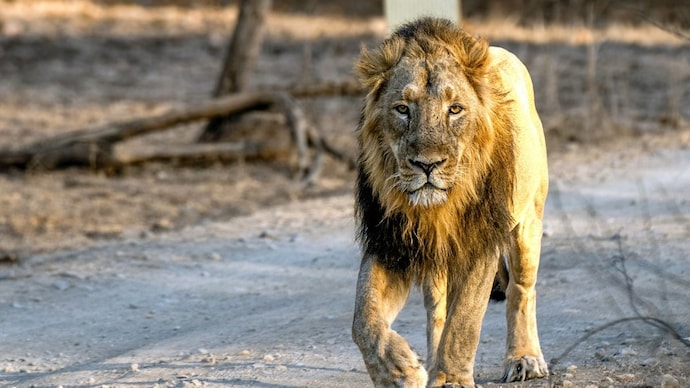
The immediate concern has been the unusual cluster of lion deaths reported from across the Gir landscape. Since late May, at least 13 lions, including 10 cubs, have died within a span of around 10 days in Gir Somnath and Amreli districts due to babesiosis and, local sources claim, canine distemper virus (CDV). This, however, is disputed by the forest department, which has confirmed only eight deaths due to ‘seasonal illness’. The tragedy has triggered memories of the 2018 CDV outbreak that killed more than 20 lions.
Babesiosis is a tick-borne parasitic disease. Some reports have also pointed to the possibility of a viral infection. Chief wildlife warden Jaipal Singh said samples sent to laboratories, including at the Gujarat Biotechnology Research Centre, have revealed “some” deaths were caused by babesiosis and some from complications due to pneumonia.
Meanwhile, another lion death was caused due to rabies in Jafrabad taluka in Amreli district. This a new dimension to the threat the Asiatic Lion faces. The rabid lion in Jafrabad triggered panic by displaying unusually aggressive behaviour, reportedly chasing an autorickshaw and forcing authorities to shut the road and launch a capture-and-rescue operation.
The lion died before it could be tranquilised, and a subsequent veterinary examination confirmed rabies. This has raised concerns about disease transmission, increasing human-lion encounters and monitoring of wildlife health in Gir.
Singh said it was rare for a lion to contract rabies, but naturalists in the region reveal at least three incidents in the last year where lions got inexplicably aggressive and attacked locals. Such animals would be captured by the forest department, but the reason would not be revealed; thus the attribution to rabies for the aggression remained their own estimation.
According to the 2025 lion census, Gujarat’s Asiatic Lion population rose from 674 in 2020 to 891 in 2025, an increase of 32 per cent over five years. Amreli district recorded the highest concentration of lions, with its population increasing from 339 in 2020 to 406 in 2025—a rise of nearly 20 per cent—cementing its status as the district with the largest lion population in Gir. As farmlands, urban towns and industrial facilities seamlessly overlap with lion habitats, the large carnivore is practically cohabiting with humans.
Most of the lions make merry with easy prey such as livestock on farmlands, dry cattle or carcasses discarded on the fringes of villages by dairy farmers. “Lion food is often shared by local dogs. The Jafrabad region has negligible natural prey base, so the lions almost entirely survive on cattle,” says a naturalist based in the region.
“Lions getting rabies shouldn’t surprise anyone. Lions in human-dominated areas are interacting with domestic and feral animals all the time,” says Ravi Chellam, wildlife biologist and a big cat expert. “It is known that lions feed on carcasses of domestic animals dumped by people. Several domestic animals, especially dogs, feed on these carcasses too. This poses enormous disease risk for the lions. It’s a ticking time-bomb.”
Subscribe to India Today Magazine
The immediate concern has been the unusual cluster of lion deaths reported from across the Gir landscape. Since late May, at least 13 lions, including 10 cubs, have died within a span of around 10 days in Gir Somnath and Amreli districts due to babesiosis and, local sources claim, canine distemper virus (CDV). This, however, is disputed by the forest department, which has confirmed only eight deaths due to ‘seasonal illness’. The tragedy has triggered memories of the 2018 CDV outbreak that killed more than 20 lions.
Babesiosis is a tick-borne parasitic disease. Some reports have also pointed to the possibility of a viral infection. Chief wildlife warden Jaipal Singh said samples sent to laboratories, including at the Gujarat Biotechnology Research Centre, have revealed “some” deaths were caused by babesiosis and some from complications due to pneumonia.
Meanwhile, another lion death was caused due to rabies in Jafrabad taluka in Amreli district. This a new dimension to the threat the Asiatic Lion faces. The rabid lion in Jafrabad triggered panic by displaying unusually aggressive behaviour, reportedly chasing an autorickshaw and forcing authorities to shut the road and launch a capture-and-rescue operation.
The lion died before it could be tranquilised, and a subsequent veterinary examination confirmed rabies. This has raised concerns about disease transmission, increasing human-lion encounters and monitoring of wildlife health in Gir.
Singh said it was rare for a lion to contract rabies, but naturalists in the region reveal at least three incidents in the last year where lions got inexplicably aggressive and attacked locals. Such animals would be captured by the forest department, but the reason would not be revealed; thus the attribution to rabies for the aggression remained their own estimation.
According to the 2025 lion census, Gujarat’s Asiatic Lion population rose from 674 in 2020 to 891 in 2025, an increase of 32 per cent over five years. Amreli district recorded the highest concentration of lions, with its population increasing from 339 in 2020 to 406 in 2025—a rise of nearly 20 per cent—cementing its status as the district with the largest lion population in Gir. As farmlands, urban towns and industrial facilities seamlessly overlap with lion habitats, the large carnivore is practically cohabiting with humans.
Most of the lions make merry with easy prey such as livestock on farmlands, dry cattle or carcasses discarded on the fringes of villages by dairy farmers. “Lion food is often shared by local dogs. The Jafrabad region has negligible natural prey base, so the lions almost entirely survive on cattle,” says a naturalist based in the region.
“Lions getting rabies shouldn’t surprise anyone. Lions in human-dominated areas are interacting with domestic and feral animals all the time,” says Ravi Chellam, wildlife biologist and a big cat expert. “It is known that lions feed on carcasses of domestic animals dumped by people. Several domestic animals, especially dogs, feed on these carcasses too. This poses enormous disease risk for the lions. It’s a ticking time-bomb.”
Subscribe to India Today Magazine

