Fifth-Gen AMCA: Why India is sticking to GE engine as price war hots up
Sources say the stealth jet's design has been frozen around the F414 engine, giving GE leverage yet seeing India determined to negotiate hard on the cost
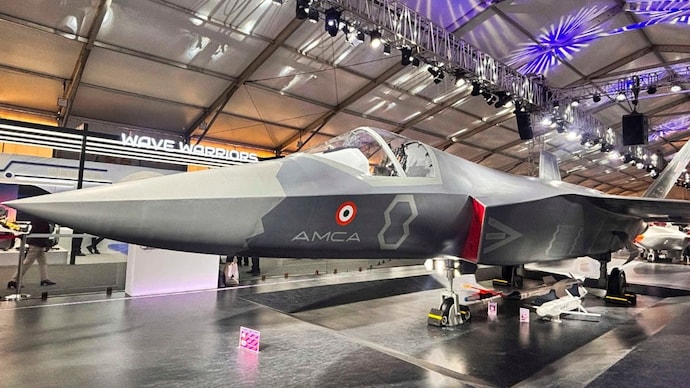
As negotiations begin for 15 engines to power five AMCA prototypes, defence sources said the stealth fighter’s design has already been frozen around the F414, giving GE considerable leverage yet leaving India determined to negotiate aggressively on costing.
Although price negotiations began some time ago and are expected to be completed in the next couple of months, defence officials are confident they will be able to negotiate hard with the engine manufacturer. It’s believed that GE has quoted a higher price, which risks inflating the overall cost of the AMCA.
“We simply do not have the option of changing the engine at this stage. Such a move would require extensive adjustments across the aircraft’s aerodynamics, electrical systems, vibration characteristics and throttle-control architecture. It is not a plug-and-play technology,” explained a source.
With the AMCA’s design already set, any alternative engine selected in the future would need to be integrated into the aircraft’s existing configuration rather than the aircraft being redesigned around the engine.
Another official said that the propulsion system was a primary design driver of a fighter aircraft; therefore, replacing an integrated engine was far tougher than an engine change. Differences in size, weight, centre of gravity, thrust, airflow, vibration, thermal characteristics and fuel consumption influence the aircraft’s structure, performance, handling qualities and maintainability. Consequently, the aircraft-engine combination must be re-evaluated as an integrated system.
The official said engine replacement required verification of Form, Fit and Function together with all Mechanical and Electrical Interface Control Documents (ICDs). Compatibility of engine mounts, structural interfaces, intake and exhaust systems, fuel, hydraulic and electrical systems, digital controls, software and accessories, such as FADEC (Full Authority Digital Engine Control), accessory gearbox, pumps, generators and starter system, must be established before integration.
He added that the modified aircraft must then undergo comprehensive analysis and testing covering aerodynamics, air-intake compatibility, flight control laws, vibration, thermal management, fuel system performance, ground trials and flight testing. Since engine replacement affects multiple aircraft systems simultaneously, it is treated as a major design change requiring full multidisciplinary verification and certification before operational induction.
When contacted by INDIA TODAY, GE Aerospace representatives refused to comment, saying negotiations were on.
On the other hand, Hindustan Aeronautics Limited (HAL) is already in talks with GE Aerospace to manufacture 99 GE-F414 engines under an ‘80 per cent transfer of technology’ programme. The two sides have been in talks for nearly three years since signing an agreement on co-production of F414 fighter jet engines, and are now close to concluding key elements of the programme.
Last April, GE Aerospace said it had made significant progress with HAL towards finalising a partnership to co-produce F414 jet engines in India for future combat aircraft.
“These are two entirely separate negotiations. Some vested interests are attempting to create the impression that the AMCA programme is in trouble, in order to influence the ongoing process involving private-sector players, who are participating in a fighter aircraft programme for the first time,” said a senior defence official.
However, the episode also underscores India’s continued dependence on foreign suppliers for critical fighter-jet technologies, particularly engines. Such reliance can leave major indigenous programmes vulnerable to commercial pressures and strengthen the negotiating leverage of overseas manufacturers.
The ministry of defence has issued a request for proposal (RFP) for five AMCA prototypes to three shortlisted private-sector-led consortia: Larsen & Toubro-Bharat Electronics Limited, Tata Advanced Systems Limited, and Bharat Forge-BEML. Under the RFP issued last month, the selected industry partner is expected to achieve the aircraft’s maiden flight within 30 months of signing of the contract.
The government has sanctioned over Rs 15,000 crore for the AMCA’s prototype development phase, under which five flying prototypes would be built. Over a seven-year test campaign, these prototypes are expected to conduct nearly 1,800 sorties to validate the aircraft’s flight-control systems, stealth features, sensors, radar, weapons integration and propulsion performance.
The AMCA is India’s most ambitious indigenous fighter aircraft project and is intended to provide the Indian Air Force with a fifth-generation stealth combat platform. Developed by the Aeronautical Development Agency in partnership with the Defence Research and Development Organisation (DRDO) and industry stakeholders, the twin-engine aircraft is designed to feature low observability, internal weapons bays, advanced avionics, sensor fusion, artificial intelligence-enabled decision support, and supercruise capability.
The programme has entered a crucial development phase following government approval of the full-scale engineering development stage and allocation of substantial funding to convert the design into a flying prototype. Detailed engineering, systems integration and manufacturing-focused design activities are underway. A notable feature of the programme is the government’s decision to expand participation to both public and private sector aerospace firms, reflecting a broader push to strengthen India’s defence-industrial base.
The immediate focus is on prototype development, technology validation and creation of the industrial ecosystem needed for production. Engine development remains one of the programme’s most significant challenges, with efforts underway to balance indigenous capabilities and international collaboration. Prototype flights are expected towards the end of the decade, followed by testing and certification. Subject to successful development, the AMCA is projected to enter service in the mid-2030s, marking a major milestone in India’s pursuit of advanced aerospace self-reliance.
The AMCA Mk-2, meanwhile, is slated to be powered by a more powerful 110-120 kN thrust class engine being developed through an international partnership. France’s Safran and Britain’s Rolls-Royce have emerged as the leading contenders for the programme.
Subscribe to India Today Magazine
As negotiations begin for 15 engines to power five AMCA prototypes, defence sources said the stealth fighter’s design has already been frozen around the F414, giving GE considerable leverage yet leaving India determined to negotiate aggressively on costing.
Although price negotiations began some time ago and are expected to be completed in the next couple of months, defence officials are confident they will be able to negotiate hard with the engine manufacturer. It’s believed that GE has quoted a higher price, which risks inflating the overall cost of the AMCA.
“We simply do not have the option of changing the engine at this stage. Such a move would require extensive adjustments across the aircraft’s aerodynamics, electrical systems, vibration characteristics and throttle-control architecture. It is not a plug-and-play technology,” explained a source.
With the AMCA’s design already set, any alternative engine selected in the future would need to be integrated into the aircraft’s existing configuration rather than the aircraft being redesigned around the engine.
Another official said that the propulsion system was a primary design driver of a fighter aircraft; therefore, replacing an integrated engine was far tougher than an engine change. Differences in size, weight, centre of gravity, thrust, airflow, vibration, thermal characteristics and fuel consumption influence the aircraft’s structure, performance, handling qualities and maintainability. Consequently, the aircraft-engine combination must be re-evaluated as an integrated system.
The official said engine replacement required verification of Form, Fit and Function together with all Mechanical and Electrical Interface Control Documents (ICDs). Compatibility of engine mounts, structural interfaces, intake and exhaust systems, fuel, hydraulic and electrical systems, digital controls, software and accessories, such as FADEC (Full Authority Digital Engine Control), accessory gearbox, pumps, generators and starter system, must be established before integration.
He added that the modified aircraft must then undergo comprehensive analysis and testing covering aerodynamics, air-intake compatibility, flight control laws, vibration, thermal management, fuel system performance, ground trials and flight testing. Since engine replacement affects multiple aircraft systems simultaneously, it is treated as a major design change requiring full multidisciplinary verification and certification before operational induction.
When contacted by INDIA TODAY, GE Aerospace representatives refused to comment, saying negotiations were on.
On the other hand, Hindustan Aeronautics Limited (HAL) is already in talks with GE Aerospace to manufacture 99 GE-F414 engines under an ‘80 per cent transfer of technology’ programme. The two sides have been in talks for nearly three years since signing an agreement on co-production of F414 fighter jet engines, and are now close to concluding key elements of the programme.
Last April, GE Aerospace said it had made significant progress with HAL towards finalising a partnership to co-produce F414 jet engines in India for future combat aircraft.
“These are two entirely separate negotiations. Some vested interests are attempting to create the impression that the AMCA programme is in trouble, in order to influence the ongoing process involving private-sector players, who are participating in a fighter aircraft programme for the first time,” said a senior defence official.
However, the episode also underscores India’s continued dependence on foreign suppliers for critical fighter-jet technologies, particularly engines. Such reliance can leave major indigenous programmes vulnerable to commercial pressures and strengthen the negotiating leverage of overseas manufacturers.
The ministry of defence has issued a request for proposal (RFP) for five AMCA prototypes to three shortlisted private-sector-led consortia: Larsen & Toubro-Bharat Electronics Limited, Tata Advanced Systems Limited, and Bharat Forge-BEML. Under the RFP issued last month, the selected industry partner is expected to achieve the aircraft’s maiden flight within 30 months of signing of the contract.
The government has sanctioned over Rs 15,000 crore for the AMCA’s prototype development phase, under which five flying prototypes would be built. Over a seven-year test campaign, these prototypes are expected to conduct nearly 1,800 sorties to validate the aircraft’s flight-control systems, stealth features, sensors, radar, weapons integration and propulsion performance.
The AMCA is India’s most ambitious indigenous fighter aircraft project and is intended to provide the Indian Air Force with a fifth-generation stealth combat platform. Developed by the Aeronautical Development Agency in partnership with the Defence Research and Development Organisation (DRDO) and industry stakeholders, the twin-engine aircraft is designed to feature low observability, internal weapons bays, advanced avionics, sensor fusion, artificial intelligence-enabled decision support, and supercruise capability.
The programme has entered a crucial development phase following government approval of the full-scale engineering development stage and allocation of substantial funding to convert the design into a flying prototype. Detailed engineering, systems integration and manufacturing-focused design activities are underway. A notable feature of the programme is the government’s decision to expand participation to both public and private sector aerospace firms, reflecting a broader push to strengthen India’s defence-industrial base.
The immediate focus is on prototype development, technology validation and creation of the industrial ecosystem needed for production. Engine development remains one of the programme’s most significant challenges, with efforts underway to balance indigenous capabilities and international collaboration. Prototype flights are expected towards the end of the decade, followed by testing and certification. Subject to successful development, the AMCA is projected to enter service in the mid-2030s, marking a major milestone in India’s pursuit of advanced aerospace self-reliance.
The AMCA Mk-2, meanwhile, is slated to be powered by a more powerful 110-120 kN thrust class engine being developed through an international partnership. France’s Safran and Britain’s Rolls-Royce have emerged as the leading contenders for the programme.
Subscribe to India Today Magazine

