From buffer to flow economics: How India is reshaping its foreign capital strategy
The RBI and government are no longer simply guarding the dollar equation. They are engineering both sides of it: how much leaves, and how much comes in
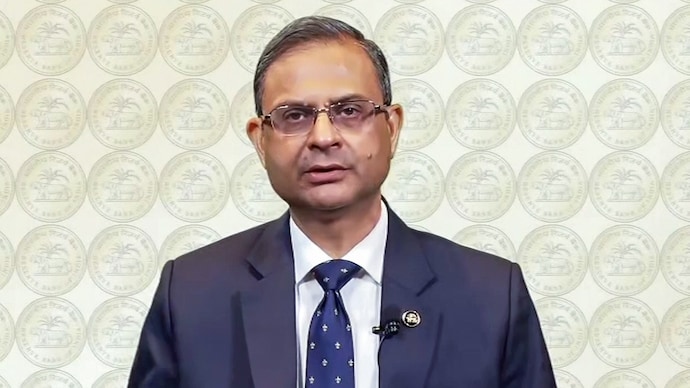
Wider access to government bonds, incentives for FCNR(B) deposits, concessional forex swaps, tax relief for foreign investors and easier entry into debt markets—all converged on an immediate goal: steadying a rupee that had slid to a record low of 96.90 to the dollar in late May and shed close to 6 per cent over a year.
The market obliged. The rupee rallied nearly 1 per cent, its strongest day in two months. Analysts reckoned the combined package from the RBI and the government could pull in $25 billion to $40 billion, and some private estimates ran as high as $50 billion to $75 billion if global bond allocations rise.
The more telling story: what Malhotra laid out was the clearest signal yet that India is moving away from defending external stability through reserves and towards actively engineering the flow of capital; and that shift says a good deal about where the economy stands and how its policymakers now read the world.
For most of the past decade, India’s external strategy rested on buffers. Build reserves, accumulate insurance, intervene when markets turn disorderly. It worked well. Reserves climbed to an all-time high of $728.49 billion in the week to February 27, and even after months of dollar sales they stood at $682.3 billion by late May—roughly 11 months of import cover and among the strongest external positions in the emerging world.
But the problem is no longer the quantity of reserves but the quality of flows. India has seen no classic episode of capital flight, yet the composition of foreign money has turned lopsided. Investors have so far in 2026 pulled roughly Rs 2.2 lakh crore out of Indian equities, the heaviest annual exit since the market was first opened to them in 1993, dragging foreign ownership of Indian stocks down to about 14.7 per cent, a 14-year low, against the 18.9 per cent held by domestic institutions.
Debt has held up better, cushioned by India’s 2024 entry into J.P. Morgan’s emerging-market bond index, but the broader picture is of a system that looks stable in aggregate even as it grows steadily more volatile at the margin.
The external backdrop has sharpened that volatility. The West Asia conflict that erupted in late February closed the Strait of Hormuz, through which close to a fifth of the world’s oil passes, and pushed Brent crude to an average of about $117 a barrel in April, its highest in nearly four years, with daily prices spiking as high as $138.
May brought no calm, only violent swings. Brent climbed above $110 in the first half of the month, touching about $113 before tumbling towards the high $80s by its close as hopes of a US-Iran understanding firmed, the same retreat that finally let the rupee crawl back from its record low. For a country that imports roughly 87 per cent of its crude, the bill landed fast all the same.
India’s monthly oil import outgo climbed from around $14 billion before the conflict to roughly $17.5 billion at its height. Crude sits at the heart of the problem because oil is India’s single largest source of dollar demand. That is the logic behind Prime Minister Narendra Modi’s repeated appeals to Indians to conserve fuel, behind the push on ethanol blending and energy efficiency, and behind the broader drive to lift domestic manufacturing and trim import dependence. What first looked like political messaging is in substance an effort to shrink the country’s appetite for dollars at the source.
So the RBI’s response has run along one track and the Modi government’s along another, and the two have begun to converge. For nearly a year, the central bank’s playbook was textbook. Sell dollars, use forwards and swaps, manage liquidity, damp the swings, all while insisting, as Malhotra reiterated, that it targets no particular level for the rupee and steps in only to curb volatility.
Every intervention carries a hidden cost, though. Much of the reserve stockpile was built when the rupee was considerably stronger than now, and in recent months the bank has been selling dollars into a weaker rupee to head off disorderly depreciation. This is not a hedge fund buying high and selling low, since the RBI is not trading for profit. A harder reality is setting in underneath. In a world of persistent dollar strength, holding a vast reserve pile has become costlier to maintain, and rebuilding it later means attracting capital or buying dollars back at rates less favourable than those that prevailed when the reserves were first accumulated. Intervention still works. It has simply become a less elegant solution.
That is what makes the June package significant. Rather than lean only on stockpiled dollars, the RBI is trying to shape the flow of future ones, and the specific steps reveal the design. It widened the fully accessible route (FAR) so that every fresh issue of 15-year, 30-year and 40-year government bonds is now fully open to foreign buyers, an attempt to deepen the long end of the market where index trackers and pension funds tend to sit. It opened a concessional swap and hedging window, running to September 30, for external commercial borrowings by public-sector firms and for FCNR(B) deposits raised by banks, which lowers the cost of bringing those dollars in.
On three-to-five-year FCNR(B) deposits it went further still, agreeing to absorb the full hedging cost and to exempt the money from cash-reserve and statutory-liquidity requirements, freeing banks to offer non-resident Indians sharper rates. Alongside, it eased the remaining curbs on foreign investment in debt, raised the limits for NRIs and overseas citizens of India, restored to nine months the window for repatriating export earnings, and added tax relief on government securities.
Stripped of the jargon, every lever pulls the same way: make it cheaper, easier and more rewarding to park foreign money in India, and do it through several channels at once rather than bet on any single one. These are instruments for managing flows rather than reserves, and they form the supply side of a strategy whose demand side is already running through Delhi’s campaign to curb the oil bill, raise efficiency and produce more at home.
Put the two halves together and the design is precise. The Modi government is working to shrink the economy’s demand for dollars through lower import dependence, energy diversification, ethanol blending and domestic manufacturing. The central bank is working to expand the supply through bond markets, NRI deposits and foreign portfolio participation. One compresses outflows, the other widens inflows, and together they amount to a coordinated attempt to improve India’s external balance without choking growth.
Taken together, economists reckon the package could draw in as much as $50 billion, enough to cover much of the balance of payments (BOP) gap projected for 2026-27. The bond market offered an early nod, the benchmark 10-year yield easing three basis points to 6.96 per cent on the day of the announcement. The backdrop explains the haste: between April 1 and June 2, foreign investors had taken a net $13.4 billion out of equities and a further $0.3 billion out of debt.
The design is deliberately wider than the template India reached for in 2013, when then RBI governor Raghuram Rajan leaned on a single FCNR(B) swap window that drew close to $26 billion. This time the money is meant to arrive through bonds, deposits and borrowing all at once. But the approach carries real limits. The interest-rate gap between India and the United States is far narrower than it was then, which dulls the appeal of NRI deposits and, on past form, tends to send banks to raise dollars more cheaply in global markets instead.
Much of what the package courts is also debt-creating and reversible, since swaps, borrowings and deposits add to external liabilities that must eventually be serviced or repaid and can leave as fast as they arrived if sentiment sours. By shouldering the hedging cost on FCNR(B) money, the RBI takes the currency risk onto its own book rather than making it disappear. And none of it reaches the root of the strain, the oil-driven current-account bill, so the measures buy financing rather than a cure. Their success, most analysts agree, rests on the one variable Delhi cannot dictate—an easing of the West Asia conflict and the crude spike that came with it.
There is a political edge to this as well. Much of the package tilts the field towards foreign money in ways domestic players do not share. On the same day, the government used an ordinance to scrap long-term capital gains tax on foreign institutional holdings of government bonds, a break resident investors do not get, while banks raising FCNR(B) deposits have the RBI absorb their hedging cost and win exemption from the cash-reserve and liquidity rules that bind ordinary domestic deposits.
To parts of the financial industry this looks less like a level playing field than a subsidy for outsiders, and the grievance has grown sharper as a domestic lobby, emboldened by the louder turn toward self-reliance, has gained weight in policy debates. Foreign investors have drawn their own conclusion. Many suspect that concessions extended under duress and resented at home will not endure, that the windows, several of which already expire on September 30, will be narrowed or the terms quietly walked back once the rupee steadies, and quite possibly sooner than the long-dated bonds and multi-year deposits the scheme is meant to attract.
The choice is revealing. With the rupee under pressure, the RBI could have raised rates, as oil-importing peers such as Indonesia, the Philippines and Sri Lanka have done, or tightened liquidity, or mounted a more aggressive defence of the currency. Instead, the six-member Monetary Policy Committee (MPC) voted unanimously to hold the repo rate at 5.25 per cent and keep its neutral stance, leaving in place the 125 basis points of cuts delivered since early 2025.
It held even as it trimmed its growth forecast for 2026-27 to 6.6 per cent from 6.9 per cent and raised its inflation projection to 5.1 per cent, with about four in five economists in a Reuters poll having expected exactly this kind of pause. “We remain confident to withstand shocks with minimum pain amidst heightened global uncertainties,” Malhotra said, signalling a clear preference for inflow measures over monetary tightening.
The reasoning is not hard to follow. India’s challenge today is not solvency but sensitivity. A country sitting on $682 billion in reserves is not struggling to pay its bills. It is trying to navigate a world in which oil shocks, geopolitical conflict and portfolio reallocations can move billions across borders in a matter of days, and in that world reserves alone no longer suffice.
The old model was buffer economics, accumulating dollars and deploying them when pressure hit. The new model is closer to flow economics, shaping the movement of capital before the pressure arrives. The progression is easy to trace, from reserve accumulation to intervention, swaps and forward-market management, and now to a deliberate effort to steer flows on both sides of the ledger.
That may prove the most consequential economic shift of 2026, less because it moves the rupee today than because it changes the philosophy through which India manages its external sector. For three decades, the country stored stability. It is now trying to manufacture it, and that is a far larger story than any single monetary-policy decision.
Subscribe to India Today Magazine
Wider access to government bonds, incentives for FCNR(B) deposits, concessional forex swaps, tax relief for foreign investors and easier entry into debt markets—all converged on an immediate goal: steadying a rupee that had slid to a record low of 96.90 to the dollar in late May and shed close to 6 per cent over a year.
The market obliged. The rupee rallied nearly 1 per cent, its strongest day in two months. Analysts reckoned the combined package from the RBI and the government could pull in $25 billion to $40 billion, and some private estimates ran as high as $50 billion to $75 billion if global bond allocations rise.
The more telling story: what Malhotra laid out was the clearest signal yet that India is moving away from defending external stability through reserves and towards actively engineering the flow of capital; and that shift says a good deal about where the economy stands and how its policymakers now read the world.
For most of the past decade, India’s external strategy rested on buffers. Build reserves, accumulate insurance, intervene when markets turn disorderly. It worked well. Reserves climbed to an all-time high of $728.49 billion in the week to February 27, and even after months of dollar sales they stood at $682.3 billion by late May—roughly 11 months of import cover and among the strongest external positions in the emerging world.
But the problem is no longer the quantity of reserves but the quality of flows. India has seen no classic episode of capital flight, yet the composition of foreign money has turned lopsided. Investors have so far in 2026 pulled roughly Rs 2.2 lakh crore out of Indian equities, the heaviest annual exit since the market was first opened to them in 1993, dragging foreign ownership of Indian stocks down to about 14.7 per cent, a 14-year low, against the 18.9 per cent held by domestic institutions.
Debt has held up better, cushioned by India’s 2024 entry into J.P. Morgan’s emerging-market bond index, but the broader picture is of a system that looks stable in aggregate even as it grows steadily more volatile at the margin.
The external backdrop has sharpened that volatility. The West Asia conflict that erupted in late February closed the Strait of Hormuz, through which close to a fifth of the world’s oil passes, and pushed Brent crude to an average of about $117 a barrel in April, its highest in nearly four years, with daily prices spiking as high as $138.
May brought no calm, only violent swings. Brent climbed above $110 in the first half of the month, touching about $113 before tumbling towards the high $80s by its close as hopes of a US-Iran understanding firmed, the same retreat that finally let the rupee crawl back from its record low. For a country that imports roughly 87 per cent of its crude, the bill landed fast all the same.
India’s monthly oil import outgo climbed from around $14 billion before the conflict to roughly $17.5 billion at its height. Crude sits at the heart of the problem because oil is India’s single largest source of dollar demand. That is the logic behind Prime Minister Narendra Modi’s repeated appeals to Indians to conserve fuel, behind the push on ethanol blending and energy efficiency, and behind the broader drive to lift domestic manufacturing and trim import dependence. What first looked like political messaging is in substance an effort to shrink the country’s appetite for dollars at the source.
So the RBI’s response has run along one track and the Modi government’s along another, and the two have begun to converge. For nearly a year, the central bank’s playbook was textbook. Sell dollars, use forwards and swaps, manage liquidity, damp the swings, all while insisting, as Malhotra reiterated, that it targets no particular level for the rupee and steps in only to curb volatility.
Every intervention carries a hidden cost, though. Much of the reserve stockpile was built when the rupee was considerably stronger than now, and in recent months the bank has been selling dollars into a weaker rupee to head off disorderly depreciation. This is not a hedge fund buying high and selling low, since the RBI is not trading for profit. A harder reality is setting in underneath. In a world of persistent dollar strength, holding a vast reserve pile has become costlier to maintain, and rebuilding it later means attracting capital or buying dollars back at rates less favourable than those that prevailed when the reserves were first accumulated. Intervention still works. It has simply become a less elegant solution.
That is what makes the June package significant. Rather than lean only on stockpiled dollars, the RBI is trying to shape the flow of future ones, and the specific steps reveal the design. It widened the fully accessible route (FAR) so that every fresh issue of 15-year, 30-year and 40-year government bonds is now fully open to foreign buyers, an attempt to deepen the long end of the market where index trackers and pension funds tend to sit. It opened a concessional swap and hedging window, running to September 30, for external commercial borrowings by public-sector firms and for FCNR(B) deposits raised by banks, which lowers the cost of bringing those dollars in.
On three-to-five-year FCNR(B) deposits it went further still, agreeing to absorb the full hedging cost and to exempt the money from cash-reserve and statutory-liquidity requirements, freeing banks to offer non-resident Indians sharper rates. Alongside, it eased the remaining curbs on foreign investment in debt, raised the limits for NRIs and overseas citizens of India, restored to nine months the window for repatriating export earnings, and added tax relief on government securities.
Stripped of the jargon, every lever pulls the same way: make it cheaper, easier and more rewarding to park foreign money in India, and do it through several channels at once rather than bet on any single one. These are instruments for managing flows rather than reserves, and they form the supply side of a strategy whose demand side is already running through Delhi’s campaign to curb the oil bill, raise efficiency and produce more at home.
Put the two halves together and the design is precise. The Modi government is working to shrink the economy’s demand for dollars through lower import dependence, energy diversification, ethanol blending and domestic manufacturing. The central bank is working to expand the supply through bond markets, NRI deposits and foreign portfolio participation. One compresses outflows, the other widens inflows, and together they amount to a coordinated attempt to improve India’s external balance without choking growth.
Taken together, economists reckon the package could draw in as much as $50 billion, enough to cover much of the balance of payments (BOP) gap projected for 2026-27. The bond market offered an early nod, the benchmark 10-year yield easing three basis points to 6.96 per cent on the day of the announcement. The backdrop explains the haste: between April 1 and June 2, foreign investors had taken a net $13.4 billion out of equities and a further $0.3 billion out of debt.
The design is deliberately wider than the template India reached for in 2013, when then RBI governor Raghuram Rajan leaned on a single FCNR(B) swap window that drew close to $26 billion. This time the money is meant to arrive through bonds, deposits and borrowing all at once. But the approach carries real limits. The interest-rate gap between India and the United States is far narrower than it was then, which dulls the appeal of NRI deposits and, on past form, tends to send banks to raise dollars more cheaply in global markets instead.
Much of what the package courts is also debt-creating and reversible, since swaps, borrowings and deposits add to external liabilities that must eventually be serviced or repaid and can leave as fast as they arrived if sentiment sours. By shouldering the hedging cost on FCNR(B) money, the RBI takes the currency risk onto its own book rather than making it disappear. And none of it reaches the root of the strain, the oil-driven current-account bill, so the measures buy financing rather than a cure. Their success, most analysts agree, rests on the one variable Delhi cannot dictate—an easing of the West Asia conflict and the crude spike that came with it.
There is a political edge to this as well. Much of the package tilts the field towards foreign money in ways domestic players do not share. On the same day, the government used an ordinance to scrap long-term capital gains tax on foreign institutional holdings of government bonds, a break resident investors do not get, while banks raising FCNR(B) deposits have the RBI absorb their hedging cost and win exemption from the cash-reserve and liquidity rules that bind ordinary domestic deposits.
To parts of the financial industry this looks less like a level playing field than a subsidy for outsiders, and the grievance has grown sharper as a domestic lobby, emboldened by the louder turn toward self-reliance, has gained weight in policy debates. Foreign investors have drawn their own conclusion. Many suspect that concessions extended under duress and resented at home will not endure, that the windows, several of which already expire on September 30, will be narrowed or the terms quietly walked back once the rupee steadies, and quite possibly sooner than the long-dated bonds and multi-year deposits the scheme is meant to attract.
The choice is revealing. With the rupee under pressure, the RBI could have raised rates, as oil-importing peers such as Indonesia, the Philippines and Sri Lanka have done, or tightened liquidity, or mounted a more aggressive defence of the currency. Instead, the six-member Monetary Policy Committee (MPC) voted unanimously to hold the repo rate at 5.25 per cent and keep its neutral stance, leaving in place the 125 basis points of cuts delivered since early 2025.
It held even as it trimmed its growth forecast for 2026-27 to 6.6 per cent from 6.9 per cent and raised its inflation projection to 5.1 per cent, with about four in five economists in a Reuters poll having expected exactly this kind of pause. “We remain confident to withstand shocks with minimum pain amidst heightened global uncertainties,” Malhotra said, signalling a clear preference for inflow measures over monetary tightening.
The reasoning is not hard to follow. India’s challenge today is not solvency but sensitivity. A country sitting on $682 billion in reserves is not struggling to pay its bills. It is trying to navigate a world in which oil shocks, geopolitical conflict and portfolio reallocations can move billions across borders in a matter of days, and in that world reserves alone no longer suffice.
The old model was buffer economics, accumulating dollars and deploying them when pressure hit. The new model is closer to flow economics, shaping the movement of capital before the pressure arrives. The progression is easy to trace, from reserve accumulation to intervention, swaps and forward-market management, and now to a deliberate effort to steer flows on both sides of the ledger.
That may prove the most consequential economic shift of 2026, less because it moves the rupee today than because it changes the philosophy through which India manages its external sector. For three decades, the country stored stability. It is now trying to manufacture it, and that is a far larger story than any single monetary-policy decision.
Subscribe to India Today Magazine

