How a monsoon of miseries caught Kerala underprepared yet again
With towns flooded by swollen rivers and the hills battered by landslides, hundreds of displaced people are holding up at relief camps
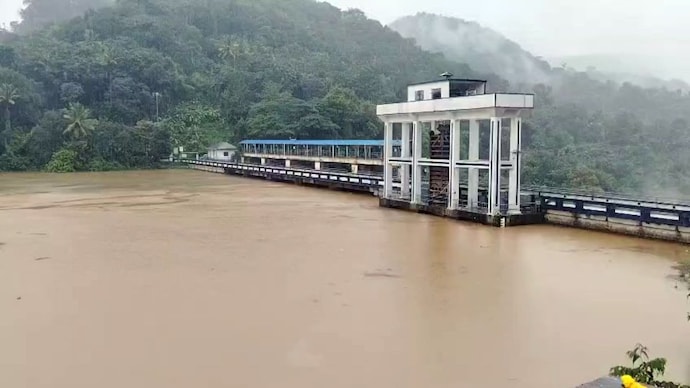
Pathanamthitta district recorded 361 mm of rainfall on August 1, Kozhikode 340 mm, Idukki 213 mm and Wayanad 177 mm. Heavy rainfall caused massive landslides and flooded many parts of the state. Fishermen took the lead in rescuing residents on boats. Vast sections of the Ranni and Aranmula towns were left submerged by the overflowing Pampa river, reviving memories of the horrific floods of 2018 that had killed over 480 people and displaced 1.4 million.
Chief minister V.D. Satheesan said flash floods at night had triggered the landslides and alerts did not come on time. “We had taken adequate steps to meet the flood challenges and reviewed disaster management on July 30. Alerts from the India Meteorological Department (IMD) regarding intense rain in many parts of the state came late,” claimed Satheesan.
The allegation against IMD was made by power minister Sunny Joseph too. With rivers in spate, the government issued a red alert against fishing.
Roshy Augustine, minister for water resources in the previous Left Front government, criticised the new dispensation’s flood management for lacking “timely action”. “Earlier, the district administration, local self-government, police, fire department and volunteer groups would jointly prepare local-level emergency plans. Drainage clearance and widening of water channels would be done before the monsoon season. The local police would issue warnings in case of above-normal rainfall and appeal to people to shift to relief camps,” he said.
“The disaster management authorities would mark out areas prone to landslides. Warnings were issued to hill residents and evacuation done. These protocols have been missing this year. Chief minister Satheesan tasked ministers with evaluating the flood situation and didn’t care to visit the affected areas for three days. He went to Ranni four days late, and only after the Opposition’s criticism,” alleged Augustine.
According to him, Kerala needs to follow the Dutch ‘Room for River’ model wherein space is created within a river system to manage flooding. The Left Front government, he said, had launched a pilot project in 2019, ‘Room for Pampa’, to protect the flood-vulnerable Kuttanad region. For this, then chief minister Pinarayi Vijayan had visited the Netherlands with a team.
Dr K.G. Thara, a former veteran of Kerala’s Disaster Management Authority, told INDIA TODAY how advanced preparedness and early warning alerts can minimise casualties. “One of the Disaster Management Authority’s standard operating procedures is that the state set up 256 rain gauge meters to measure rainfall and ensure flood safety. But only 190 rain gauge meter stations are operating currently,” said Thara, who was part of the Authority for 16 years since 2000.
The CPI(M) mocked the Satheesan government, saying the floods of 2026 had been “sponsored” by the administration. “The people of Pathanamthitta district are in distress from a swollen Pampa. Ranni and Aranmula got submerged on August 1 and around 300 shops remained under water for two days, losing their entire stock. An early warning could have save a lot,” said CPI(M) leader Raju Abraham.
Kerala has been a victim of floods and natural calamities, but recent years have compounded the problem. The floods of 2018 were so grave that several experts described them as the worst in the state in a century. A mega landslide in Pettimudi near Munar in August 2020 killed 66 people. The Wayanad landslide disaster of July 2024 killed at least 300 people. Each tragedy shows casualties are common, but not preparedness.
Subscribe to India Today Magazine
Pathanamthitta district recorded 361 mm of rainfall on August 1, Kozhikode 340 mm, Idukki 213 mm and Wayanad 177 mm. Heavy rainfall caused massive landslides and flooded many parts of the state. Fishermen took the lead in rescuing residents on boats. Vast sections of the Ranni and Aranmula towns were left submerged by the overflowing Pampa river, reviving memories of the horrific floods of 2018 that had killed over 480 people and displaced 1.4 million.
Chief minister V.D. Satheesan said flash floods at night had triggered the landslides and alerts did not come on time. “We had taken adequate steps to meet the flood challenges and reviewed disaster management on July 30. Alerts from the India Meteorological Department (IMD) regarding intense rain in many parts of the state came late,” claimed Satheesan.
The allegation against IMD was made by power minister Sunny Joseph too. With rivers in spate, the government issued a red alert against fishing.
Roshy Augustine, minister for water resources in the previous Left Front government, criticised the new dispensation’s flood management for lacking “timely action”. “Earlier, the district administration, local self-government, police, fire department and volunteer groups would jointly prepare local-level emergency plans. Drainage clearance and widening of water channels would be done before the monsoon season. The local police would issue warnings in case of above-normal rainfall and appeal to people to shift to relief camps,” he said.
“The disaster management authorities would mark out areas prone to landslides. Warnings were issued to hill residents and evacuation done. These protocols have been missing this year. Chief minister Satheesan tasked ministers with evaluating the flood situation and didn’t care to visit the affected areas for three days. He went to Ranni four days late, and only after the Opposition’s criticism,” alleged Augustine.
According to him, Kerala needs to follow the Dutch ‘Room for River’ model wherein space is created within a river system to manage flooding. The Left Front government, he said, had launched a pilot project in 2019, ‘Room for Pampa’, to protect the flood-vulnerable Kuttanad region. For this, then chief minister Pinarayi Vijayan had visited the Netherlands with a team.
Dr K.G. Thara, a former veteran of Kerala’s Disaster Management Authority, told INDIA TODAY how advanced preparedness and early warning alerts can minimise casualties. “One of the Disaster Management Authority’s standard operating procedures is that the state set up 256 rain gauge meters to measure rainfall and ensure flood safety. But only 190 rain gauge meter stations are operating currently,” said Thara, who was part of the Authority for 16 years since 2000.
The CPI(M) mocked the Satheesan government, saying the floods of 2026 had been “sponsored” by the administration. “The people of Pathanamthitta district are in distress from a swollen Pampa. Ranni and Aranmula got submerged on August 1 and around 300 shops remained under water for two days, losing their entire stock. An early warning could have save a lot,” said CPI(M) leader Raju Abraham.
Kerala has been a victim of floods and natural calamities, but recent years have compounded the problem. The floods of 2018 were so grave that several experts described them as the worst in the state in a century. A mega landslide in Pettimudi near Munar in August 2020 killed 66 people. The Wayanad landslide disaster of July 2024 killed at least 300 people. Each tragedy shows casualties are common, but not preparedness.
Subscribe to India Today Magazine
Pathanamthitta district recorded 361 mm of rainfall on August 1, Kozhikode 340 mm, Idukki 213 mm and Wayanad 177 mm. Heavy rainfall caused massive landslides and flooded many parts of the state. Fishermen took the lead in rescuing residents on boats. Vast sections of the Ranni and Aranmula towns were left submerged by the overflowing Pampa river, reviving memories of the horrific floods of 2018 that had killed over 480 people and displaced 1.4 million.
Chief minister V.D. Satheesan said flash floods at night had triggered the landslides and alerts did not come on time. “We had taken adequate steps to meet the flood challenges and reviewed disaster management on July 30. Alerts from the India Meteorological Department (IMD) regarding intense rain in many parts of the state came late,” claimed Satheesan.
The allegation against IMD was made by power minister Sunny Joseph too. With rivers in spate, the government issued a red alert against fishing.
Roshy Augustine, minister for water resources in the previous Left Front government, criticised the new dispensation’s flood management for lacking “timely action”. “Earlier, the district administration, local self-government, police, fire department and volunteer groups would jointly prepare local-level emergency plans. Drainage clearance and widening of water channels would be done before the monsoon season. The local police would issue warnings in case of above-normal rainfall and appeal to people to shift to relief camps,” he said.
“The disaster management authorities would mark out areas prone to landslides. Warnings were issued to hill residents and evacuation done. These protocols have been missing this year. Chief minister Satheesan tasked ministers with evaluating the flood situation and didn’t care to visit the affected areas for three days. He went to Ranni four days late, and only after the Opposition’s criticism,” alleged Augustine.
According to him, Kerala needs to follow the Dutch ‘Room for River’ model wherein space is created within a river system to manage flooding. The Left Front government, he said, had launched a pilot project in 2019, ‘Room for Pampa’, to protect the flood-vulnerable Kuttanad region. For this, then chief minister Pinarayi Vijayan had visited the Netherlands with a team.
Dr K.G. Thara, a former veteran of Kerala’s Disaster Management Authority, told INDIA TODAY how advanced preparedness and early warning alerts can minimise casualties. “One of the Disaster Management Authority’s standard operating procedures is that the state set up 256 rain gauge meters to measure rainfall and ensure flood safety. But only 190 rain gauge meter stations are operating currently,” said Thara, who was part of the Authority for 16 years since 2000.
The CPI(M) mocked the Satheesan government, saying the floods of 2026 had been “sponsored” by the administration. “The people of Pathanamthitta district are in distress from a swollen Pampa. Ranni and Aranmula got submerged on August 1 and around 300 shops remained under water for two days, losing their entire stock. An early warning could have save a lot,” said CPI(M) leader Raju Abraham.
Kerala has been a victim of floods and natural calamities, but recent years have compounded the problem. The floods of 2018 were so grave that several experts described them as the worst in the state in a century. A mega landslide in Pettimudi near Munar in August 2020 killed 66 people. The Wayanad landslide disaster of July 2024 killed at least 300 people. Each tragedy shows casualties are common, but not preparedness.
Subscribe to India Today Magazine

