How a QR code is connecting Bengal's citizens with Hooghly river's history
The North 24 Parganas district administration's Ganga Trails public awareness initiative promises to transform the riverfront into an interactive learning landscape
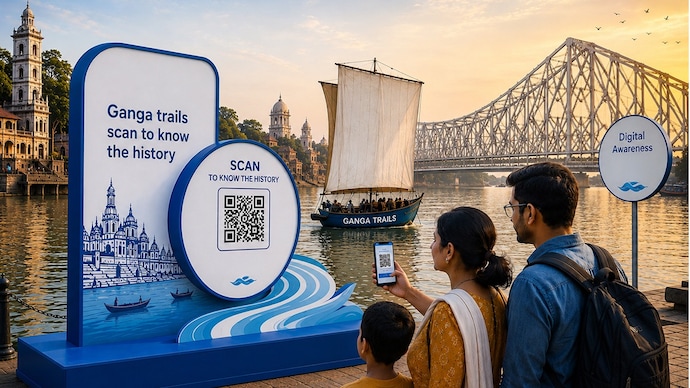
The initiative allows visitors to access location-specific audio stories on their mobile phones by simply scanning QR codes installed along the riverfront. No application download is required. Through immersive storytelling, the project seeks to encourage people to see the Hooghly not merely as a waterway but a living ecosystem—a repository of shared heritage and an asset that requires collective stewardship.
Officials say the initiative has been designed to blend technology with environmental education and heritage interpretation, making learning both accessible and engaging for visitors of all ages. The digital trail has been divided into four thematic segments, each exploring a different dimension of the river and its relationship with the region.
The Heritage Trail takes visitors through the historical evolution of the Hooghly riverfront, covering landmarks such as Gandhi Ghat, Lat Bagan, Dui Paisa Ghat and Dhobi Ghat. Through narrated stories, users can trace the development of the riverbank and understand how these locations shaped the social and cultural life of the area.
The Freedom Trail focuses on Barrackpore’s central role in India’s struggle for independence. Visitors can explore stories linked to the Barrackpore Cantonment, the Sepoy Revolt of 1824, the legacy of Mangal Pandey and the events leading up to the Revolt of 1857, helping place the riverfront within the broader narrative of India’s anti-colonial movement.
The River and Ecology Trail shifts attention to the natural world. Through audio narratives, visitors are introduced to the aquatic biodiversity of the Hooghly, including fish species, birdlife and the endangered Ganges River Dolphin. The trail also highlights the challenges facing the river ecosystem, from pollution to habitat degradation, while promoting conservation awareness.
The fourth component, the Culture and Community Trail, explores the river’s enduring influence on everyday life. It highlights traditions such as the Panihati Danda Mahotsav, pilgrimage routes, livelihoods dependent on the river and the role the Hooghly continues to play in shaping community identities and cultural practices.
District officials believe that by combining storytelling with place-based learning, the initiative can foster a deeper emotional connection between citizens and the river. The goal is not only to inform visitors but also to encourage responsible behaviour, including maintaining cleanliness, reducing plastic waste, protecting biodiversity and spreading awareness about river conservation.
“We want to increase people’s awareness on the importance of Ganga. As part of the Namami Gange initiative of the Union government, we plan to undertake more such works and achieve all-round development of the ghats,” said North 24 Parganas district magistrate Shilpa Gourisaria.
The administration sees Ganga Trails as more than a World Environment Day (June 5) initiative. Officials say the model can be replicated across wetlands, biodiversity parks, eco-tourism destinations, heritage precincts and educational programmes in North 24 Parganas and beyond.
By turning a familiar public space into a digital learning experience, Ganga Trails demonstrates how technology can be used to make environmental awareness and heritage conservation part of everyday public engagement. In doing so, it seeks to transform the Hooghly riverfront from a place people pass through into one where they stop, learn and reconnect with the river that has shaped Bengal’s history for centuries.
Subscribe to India Today Magazine
The initiative allows visitors to access location-specific audio stories on their mobile phones by simply scanning QR codes installed along the riverfront. No application download is required. Through immersive storytelling, the project seeks to encourage people to see the Hooghly not merely as a waterway but a living ecosystem—a repository of shared heritage and an asset that requires collective stewardship.
Officials say the initiative has been designed to blend technology with environmental education and heritage interpretation, making learning both accessible and engaging for visitors of all ages. The digital trail has been divided into four thematic segments, each exploring a different dimension of the river and its relationship with the region.
The Heritage Trail takes visitors through the historical evolution of the Hooghly riverfront, covering landmarks such as Gandhi Ghat, Lat Bagan, Dui Paisa Ghat and Dhobi Ghat. Through narrated stories, users can trace the development of the riverbank and understand how these locations shaped the social and cultural life of the area.
The Freedom Trail focuses on Barrackpore’s central role in India’s struggle for independence. Visitors can explore stories linked to the Barrackpore Cantonment, the Sepoy Revolt of 1824, the legacy of Mangal Pandey and the events leading up to the Revolt of 1857, helping place the riverfront within the broader narrative of India’s anti-colonial movement.
The River and Ecology Trail shifts attention to the natural world. Through audio narratives, visitors are introduced to the aquatic biodiversity of the Hooghly, including fish species, birdlife and the endangered Ganges River Dolphin. The trail also highlights the challenges facing the river ecosystem, from pollution to habitat degradation, while promoting conservation awareness.
The fourth component, the Culture and Community Trail, explores the river’s enduring influence on everyday life. It highlights traditions such as the Panihati Danda Mahotsav, pilgrimage routes, livelihoods dependent on the river and the role the Hooghly continues to play in shaping community identities and cultural practices.
District officials believe that by combining storytelling with place-based learning, the initiative can foster a deeper emotional connection between citizens and the river. The goal is not only to inform visitors but also to encourage responsible behaviour, including maintaining cleanliness, reducing plastic waste, protecting biodiversity and spreading awareness about river conservation.
“We want to increase people’s awareness on the importance of Ganga. As part of the Namami Gange initiative of the Union government, we plan to undertake more such works and achieve all-round development of the ghats,” said North 24 Parganas district magistrate Shilpa Gourisaria.
The administration sees Ganga Trails as more than a World Environment Day (June 5) initiative. Officials say the model can be replicated across wetlands, biodiversity parks, eco-tourism destinations, heritage precincts and educational programmes in North 24 Parganas and beyond.
By turning a familiar public space into a digital learning experience, Ganga Trails demonstrates how technology can be used to make environmental awareness and heritage conservation part of everyday public engagement. In doing so, it seeks to transform the Hooghly riverfront from a place people pass through into one where they stop, learn and reconnect with the river that has shaped Bengal’s history for centuries.
Subscribe to India Today Magazine

