How Eknath Shinde's Shiv Sena is eyeing an electoral opening in Goa
The party plans to contest 30 of the 40 assembly seats, focusing on a sons-of-the-soil plank and wooing Hindu and pro-Marathi voters
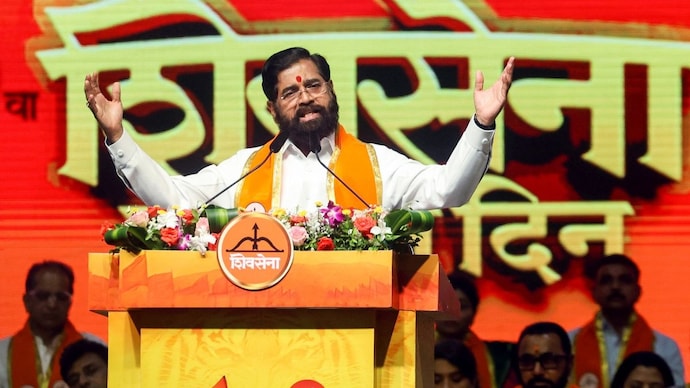
Elections to the Goa legislative assembly are due early next year, but grapevine suggests a preponement to late-2026. Shinde’s Goa plunge will pit the Sena against its senior Maharashtra ally BJP, which rules the coastal state.
The Shiv Sena has deputed former Lok Sabha MP Gajanan Kirtikar and former Mumbai corporators Dilip Naik and Raju Pednekar for the Goa mission. Pednekar and Naik are in charge of North and South Goa, respectively. The party will be focusing on a sons-of-the-soil plank as well as woo Hindu and pro-Marathi voters.
The only time a Shiv Sena nominee has been elected to a state assembly outside Maharashtra was in 1991 at the peak of the Ram Mandir movement. Pavan Kumar Pandey had won the Akbarpur seat in Uttar Pradesh.
Otherwise, the undivided Sena had remained constricted to Maharashtra because of the leadership’s inability to manage the contradictions between its nativist, pro-Marathi manoos position in the state and the subsequent shift to Hindutva politics in the 1980s when party supremo Bal Thackeray emerged as a Hindu mascot.
In the 2022 polls, the undivided Sena had fielded 10 candidates in Goa in an alliance with the undivided Nationalist Congress Party (NCP), which contested 13 seats. The Sena secured just 0.18 per cent (1,726 votes) of the total votes.
Maharashtra and Goa have strong historical and cultural linkages. Marathi-speaking Hindus from Goa are part of the Shiv Sena’s cohort in Mumbai and elsewhere. Leaders from the Shiv Sena (Uddhav Balasaheb Thackeray), such as Mumbai South Central Lok Sabha MP Anil Desai, MLA Sanjay Potnis and former MLA Prakash Phatarpekar, hail from Goa. In Shinde’s Sena, Naik and Pednekar have roots in Goa.
“We will be concentrating 30 assembly seats in Goa,” said Naik, adding that the party had launched an office in the state and undertaken activities such as stationing ambulances and distributing umbrellas.
Then, for the first time, the Shiv Sena’s 60th foundation day was celebrated in Porvorim on June 16. “Typically, we used to begin our work in Goa just before elections. This time, we are kickstarting several months earlier,” Naik said.
According to Kirtikar, the Sena’s booth-level campaign machinery would be in place soon and candidates finalised in three to four months. “The needs of the people of Goa, justice for sons of the soil the insulting treatment of locals and the aakraman (influx) of people from North [India] must be stopped,” he said, adding that the party aimed to prioritise locals for jobs in Goa. He accused the Dr Pramod Sawant-led BJP government in the state of arbitrary behaviour.
The Shiv Sena is planning to contest independently in Goa despite being part of the BJP-led National Democratic Alliance (NDA). A party leader said the leadership was betting on winnable candidates or established faces/rebels from mainstream parties who were looking for an alternative platform. “If the Trinamool Congress (TMC) found candidates in Goa in the last assembly polls, why can’t the Sena?” said the leader.
In 2022, the presence of players such as the Aam Aadmi Party (AAP), Revolutionary Goans Party (RGP) and TMC in the fray had led to splintering of the anti-incumbency vote and helped the BJP secure a victory. The TMC managed to draw heavyweights such as former chief ministers Churchill Alemao and Luizinho Faleiro into its fold, but drew a blank in the polls.
In Sanquelim, chief minister Sawant won by a wafer-thin margin of 666 votes against Dharmesh Saglani of the Congress in a contest where the RGP’s Sujay Gauns got 742 votes.
Sena leaders feel the BJP wouldn’t allow their party to grow in Goa as this would eat into their vote base. The presence of the Shiv Sena, a pro-Maharashtra and pro-Marathi party, may also sharpen the linguistic divide in Goa.
In 1967, the people of Goa had voted against the state’s merger with Maharashtra, a cause mooted by chief minister Dayanand Bandodkar of the Maharashtrawadi Gomantak Party (MGP), the first party in India to come to power on the bahujan samaj plank (1963). The MGP had pushed for an opinion poll on merging Goa with Maharashtra. But Goans voted in 1967 to keep their state separate.
The MGP’s pro-Marathi stance was based on the fear that Saraswats and Brahmins, including those from the Hindu and Catholic faiths, would dominate the bahujan samaj. While a section of the Hindu bahujan samaj supported Marathi, the Catholics supported Konkani. “Since the Official Language Act was passed, there have been two parallel movements, namely for Marathi and Romi Konkani,” observed a Sena leader.
The Marathi versus Konkani struggle in Goa is rooted in deeper conflicts around caste, resources and power. During the Portuguese era, Marathi aided the inclusion of Hindus in the Portuguese system. The author-politician Vishnu Surya Wagh had noted that in the 20th century, Marathi allowed bahujans to gain upward mobility while Konkani was used by Saraswats to propagate their social and cultural dominance.
The Konkani agitation was revived in 1985 to seek the recognition of Konkani as the official language of Goa. Marathi activists mobilised against this, claiming that Konkani wasn’t an independent language but a regional dialect of Marathi. Konkani activists, in turn, viewed the Marathi movement as part of Maharashtra’s expansionist agenda.
The language movement saw violence. In December 1986, Floriano Vaz, a tribal youngster, was killed in police firing. Seven pro-Konkani agitators in all were killed in the protests.
In February 1987, Konkani in the Devnagari script was recognised as the official language of Goa. The Goa, Daman and Diu Official Language Act, 1987, also provides that Marathi may be used “for all or any of the official purposes”. This was preceded by a two-year-long agitation by Konkani speakers. It was an event marked by violence and deaths.
The Marathi language movement has been revived by the Rashtriya Swayamsevak Sangh’s former Goa chief Subhash Velingkar, who is seeking co-official language status for Marathi. He has warned that if the demand was not fulfilled, the ‘Marathi vote-bank’ could go against the BJP in the assembly polls.
The 2011 Census records 159,000 people in Goa as listing Marathi to be their mother tongue. Konkani had 964,000 takers. However, Marathi is widely spoken and read in the state. A substantial number of Goan Hindus may speak Konkani at home but do their written communication in Marathi and also read Marathi newspapers.
The mobilisation and counter-mobilisation by Konkani and Marathi activists comes as a dj vu for the BJP government. In 2016, Velingkar, who was part of the Bharatiya Bhasha Suraksha Manch, had taken a position against the BJP government’s decision to allow English medium schools, including those run by the archdiocese, to get grants. This was a break from the previous policy to support regional languages as mediums of instruction.
Velingkar was sacked as Goa BJP chief. In the 2017 assembly elections, his Goa Suraksha Manch (GSM) allied with the MGP, Shiv Sena and smaller parties. Then chief minister Laxmikant Parsekar and five other ministers were defeated. The GSM’s campaign is said to have impacted the morale of BJP workers, leading to the debacle.
Velingkar and his Marathi Rajbhasha Nirdhar Samiti have now sought that the government approve a resolution in the next assembly session to accord official language status to Marathi alongside Konkani. He warned that else, they would create a Marathi and Hindu vote-bank and throw the BJP out of power.
The demand by Marathi groups was met with a counter-mobilisation by Konkani activists reaffirming Konkani as the sole official language. These groups have threatened to boycott political parties who support the demand for Marathi as the co-official language. Activists say there is a risk of the debate getting a communal contour during the elections.
Subscribe to India Today Magazine
Elections to the Goa legislative assembly are due early next year, but grapevine suggests a preponement to late-2026. Shinde’s Goa plunge will pit the Sena against its senior Maharashtra ally BJP, which rules the coastal state.
The Shiv Sena has deputed former Lok Sabha MP Gajanan Kirtikar and former Mumbai corporators Dilip Naik and Raju Pednekar for the Goa mission. Pednekar and Naik are in charge of North and South Goa, respectively. The party will be focusing on a sons-of-the-soil plank as well as woo Hindu and pro-Marathi voters.
The only time a Shiv Sena nominee has been elected to a state assembly outside Maharashtra was in 1991 at the peak of the Ram Mandir movement. Pavan Kumar Pandey had won the Akbarpur seat in Uttar Pradesh.
Otherwise, the undivided Sena had remained constricted to Maharashtra because of the leadership’s inability to manage the contradictions between its nativist, pro-Marathi manoos position in the state and the subsequent shift to Hindutva politics in the 1980s when party supremo Bal Thackeray emerged as a Hindu mascot.
In the 2022 polls, the undivided Sena had fielded 10 candidates in Goa in an alliance with the undivided Nationalist Congress Party (NCP), which contested 13 seats. The Sena secured just 0.18 per cent (1,726 votes) of the total votes.
Maharashtra and Goa have strong historical and cultural linkages. Marathi-speaking Hindus from Goa are part of the Shiv Sena’s cohort in Mumbai and elsewhere. Leaders from the Shiv Sena (Uddhav Balasaheb Thackeray), such as Mumbai South Central Lok Sabha MP Anil Desai, MLA Sanjay Potnis and former MLA Prakash Phatarpekar, hail from Goa. In Shinde’s Sena, Naik and Pednekar have roots in Goa.
“We will be concentrating 30 assembly seats in Goa,” said Naik, adding that the party had launched an office in the state and undertaken activities such as stationing ambulances and distributing umbrellas.
Then, for the first time, the Shiv Sena’s 60th foundation day was celebrated in Porvorim on June 16. “Typically, we used to begin our work in Goa just before elections. This time, we are kickstarting several months earlier,” Naik said.
According to Kirtikar, the Sena’s booth-level campaign machinery would be in place soon and candidates finalised in three to four months. “The needs of the people of Goa, justice for sons of the soil the insulting treatment of locals and the aakraman (influx) of people from North [India] must be stopped,” he said, adding that the party aimed to prioritise locals for jobs in Goa. He accused the Dr Pramod Sawant-led BJP government in the state of arbitrary behaviour.
The Shiv Sena is planning to contest independently in Goa despite being part of the BJP-led National Democratic Alliance (NDA). A party leader said the leadership was betting on winnable candidates or established faces/rebels from mainstream parties who were looking for an alternative platform. “If the Trinamool Congress (TMC) found candidates in Goa in the last assembly polls, why can’t the Sena?” said the leader.
In 2022, the presence of players such as the Aam Aadmi Party (AAP), Revolutionary Goans Party (RGP) and TMC in the fray had led to splintering of the anti-incumbency vote and helped the BJP secure a victory. The TMC managed to draw heavyweights such as former chief ministers Churchill Alemao and Luizinho Faleiro into its fold, but drew a blank in the polls.
In Sanquelim, chief minister Sawant won by a wafer-thin margin of 666 votes against Dharmesh Saglani of the Congress in a contest where the RGP’s Sujay Gauns got 742 votes.
Sena leaders feel the BJP wouldn’t allow their party to grow in Goa as this would eat into their vote base. The presence of the Shiv Sena, a pro-Maharashtra and pro-Marathi party, may also sharpen the linguistic divide in Goa.
In 1967, the people of Goa had voted against the state’s merger with Maharashtra, a cause mooted by chief minister Dayanand Bandodkar of the Maharashtrawadi Gomantak Party (MGP), the first party in India to come to power on the bahujan samaj plank (1963). The MGP had pushed for an opinion poll on merging Goa with Maharashtra. But Goans voted in 1967 to keep their state separate.
The MGP’s pro-Marathi stance was based on the fear that Saraswats and Brahmins, including those from the Hindu and Catholic faiths, would dominate the bahujan samaj. While a section of the Hindu bahujan samaj supported Marathi, the Catholics supported Konkani. “Since the Official Language Act was passed, there have been two parallel movements, namely for Marathi and Romi Konkani,” observed a Sena leader.
The Marathi versus Konkani struggle in Goa is rooted in deeper conflicts around caste, resources and power. During the Portuguese era, Marathi aided the inclusion of Hindus in the Portuguese system. The author-politician Vishnu Surya Wagh had noted that in the 20th century, Marathi allowed bahujans to gain upward mobility while Konkani was used by Saraswats to propagate their social and cultural dominance.
The Konkani agitation was revived in 1985 to seek the recognition of Konkani as the official language of Goa. Marathi activists mobilised against this, claiming that Konkani wasn’t an independent language but a regional dialect of Marathi. Konkani activists, in turn, viewed the Marathi movement as part of Maharashtra’s expansionist agenda.
The language movement saw violence. In December 1986, Floriano Vaz, a tribal youngster, was killed in police firing. Seven pro-Konkani agitators in all were killed in the protests.
In February 1987, Konkani in the Devnagari script was recognised as the official language of Goa. The Goa, Daman and Diu Official Language Act, 1987, also provides that Marathi may be used “for all or any of the official purposes”. This was preceded by a two-year-long agitation by Konkani speakers. It was an event marked by violence and deaths.
The Marathi language movement has been revived by the Rashtriya Swayamsevak Sangh’s former Goa chief Subhash Velingkar, who is seeking co-official language status for Marathi. He has warned that if the demand was not fulfilled, the ‘Marathi vote-bank’ could go against the BJP in the assembly polls.
The 2011 Census records 159,000 people in Goa as listing Marathi to be their mother tongue. Konkani had 964,000 takers. However, Marathi is widely spoken and read in the state. A substantial number of Goan Hindus may speak Konkani at home but do their written communication in Marathi and also read Marathi newspapers.
The mobilisation and counter-mobilisation by Konkani and Marathi activists comes as a dj vu for the BJP government. In 2016, Velingkar, who was part of the Bharatiya Bhasha Suraksha Manch, had taken a position against the BJP government’s decision to allow English medium schools, including those run by the archdiocese, to get grants. This was a break from the previous policy to support regional languages as mediums of instruction.
Velingkar was sacked as Goa BJP chief. In the 2017 assembly elections, his Goa Suraksha Manch (GSM) allied with the MGP, Shiv Sena and smaller parties. Then chief minister Laxmikant Parsekar and five other ministers were defeated. The GSM’s campaign is said to have impacted the morale of BJP workers, leading to the debacle.
Velingkar and his Marathi Rajbhasha Nirdhar Samiti have now sought that the government approve a resolution in the next assembly session to accord official language status to Marathi alongside Konkani. He warned that else, they would create a Marathi and Hindu vote-bank and throw the BJP out of power.
The demand by Marathi groups was met with a counter-mobilisation by Konkani activists reaffirming Konkani as the sole official language. These groups have threatened to boycott political parties who support the demand for Marathi as the co-official language. Activists say there is a risk of the debate getting a communal contour during the elections.
Subscribe to India Today Magazine

