How govt schools are facing a trust deficit: NITI Aayog report says…
The NITI Aayog's latest findings indicate a deepening credibility crisis in public education and raise pertinent questions about quality, equity and the future of learning
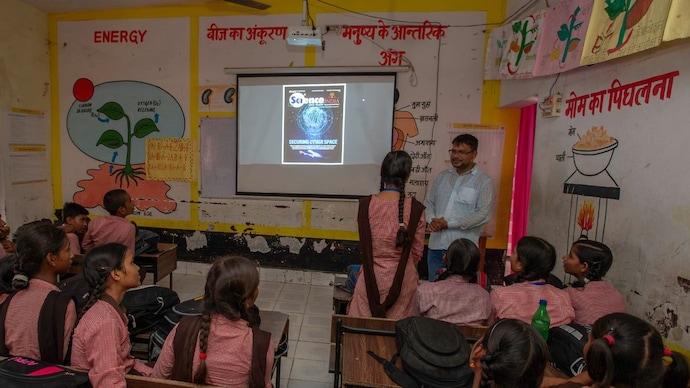
According to the report, ‘School Education System in India: Temporal Analysis and Policy Roadmap for Quality Enhancement’, government schools, which educated 71 per cent of students in 2005, now account for 49.24 per cent of enrolment. For the first time, they no longer educate the majority of the country’s children. Behind this statistic lies a deeper question: are families losing faith in public education?
According to Kushal Raj Chakravorty, founder and managing trustee of Lotus Petal Foundation, a non-profit organisation that provides holistic support to underprivileged children, the decline reflects more than shifting enrolment patterns. “What this fundamentally reveals is an erosion of trust,” he says. “Families who can barely afford private schooling are still choosing to pay for it because they associate quality education with better learning outcomes, stronger discipline, technology exposure and improved career prospects.”
The trend is not simply about access. India has spent decades expanding school infrastructure and increasing enrolment. Yet learning outcomes remain stubbornly weak. The NITI Aayog’s report points to a stark reality: a significant proportion of Class 5 students still struggle to read Class 2-level text or solve basic arithmetic problems. “This is the central paradox of Indian school education,” says Chakravorty. “The assumption was that if a child is in school and the school has a building, learning would follow. Reality has proved otherwise.”
Chitralekha Patil, founder and mentor trustee of the Centre For Transforming India (CFTI), a grassroots NGO, agrees that infrastructure alone cannot guarantee learning. “Many rural classrooms still lack adequate teaching support for foundational literacy and numeracy,” she notes. “True improvement requires investment in teacher capacity, learning tools and continuous assessment, not just buildings and facilities.”
The challenge becomes even more pronounced as students progress through the system. While primary school enrolment remains relatively strong, dropout rates rise sharply at secondary and higher secondary levels. Economic pressures remain one of the biggest reasons. For many low-income families, keeping a teenager in school comes with significant costs—not only books, uniforms and transport but also the loss of potential household income.
Access is another major barrier. Secondary schools are often located farther away, especially in rural and tribal regions. For girls, concerns around safety, sanitation and long commutes frequently become deciding factors.
Patil points out that seemingly simple interventions can make a significant difference. Through CFTI’s initiatives, including the distribution of more than 35,000 bicycles, many rural girls have been able to continue their education by overcoming transport challenges.
Yet infrastructure gaps continue to affect millions of students. The report notes that nearly 100,000 schools still lack functional girls’ toilets. For adolescent girls, this can directly influence attendance and retention. “The absence of safe sanitation facilities often leads to withdrawal from schooling after puberty,” says Patil. “Menstrual hygiene challenges, combined with social stigma and inadequate facilities, remain a major barrier to continued education.”
Meanwhile, the urban-rural education divide is widening. Despite improvements in national pupil-teacher ratios, teacher shortages remain acute in remote regions. More than 100,000 schools continue to operate with only a single teacher. “On paper, the numbers may look better,” says Chakravorty, “but the distribution of teachers remains highly uneven. Rural schools often struggle to attract and retain qualified educators.”
Digital inequality compounds the problem. While urban schools increasingly integrate technology into everyday learning, many rural schools are still grappling with basic infrastructure needs. At the same time, technology itself is becoming central to India’s education strategy. The NITI Aayog report strongly advocates AI-driven and digital learning reforms, aligning with broader efforts under the National Education Policy.
Both experts, however, urge caution. “Technology is not a substitute for teachers,” says Patil. “If classrooms lack basic readiness, digital interventions risk becoming underutilised.”
Chakravorty believes AI can play an important role, but only as part of a broader ecosystem. “Technology works best when it strengthens teachers rather than replace them. The future lies in blended models where AI supports assessments, practice and content delivery while teachers provide instruction, mentorship and emotional support.”
Another key theme emerging from the report is the growing emphasis on foundational literacy and numeracy. While experts welcome this focus, Patil warns against equating learning solely with test scores. “India remains heavily exam-driven,” she says. “Students are still evaluated primarily through marks and rankings. We need a shift towards competency-based and experiential learning that measures understanding rather than memorisation.”
At its core, the debate surrounding school education is not merely about enrolment figures or technological upgrades. It is about rebuilding confidence in a system that remains the primary pathway to opportunity for millions of children.
The decline in government school enrolment is a warning signal rather than an argument for greater privatisation. “Public education remains India’s most important social equaliser,” says Chakravorty. “For millions of children, government schools are not one option among many, they are the only viable route to upward mobility.”
Patil echoes that sentiment. “The solution is not shifting responsibility to private providers. It is strengthening public schools through better infrastructure, stronger learning support systems, improved teacher capacity and community trust.”
The message from the report is clear. India’s education challenge is no longer about getting children into classrooms. It is about ensuring that every child, regardless of geography, gender or economic background, receives a meaningful education once they get there.
Subscribe to India Today Magazine
According to the report, ‘School Education System in India: Temporal Analysis and Policy Roadmap for Quality Enhancement’, government schools, which educated 71 per cent of students in 2005, now account for 49.24 per cent of enrolment. For the first time, they no longer educate the majority of the country’s children. Behind this statistic lies a deeper question: are families losing faith in public education?
According to Kushal Raj Chakravorty, founder and managing trustee of Lotus Petal Foundation, a non-profit organisation that provides holistic support to underprivileged children, the decline reflects more than shifting enrolment patterns. “What this fundamentally reveals is an erosion of trust,” he says. “Families who can barely afford private schooling are still choosing to pay for it because they associate quality education with better learning outcomes, stronger discipline, technology exposure and improved career prospects.”
The trend is not simply about access. India has spent decades expanding school infrastructure and increasing enrolment. Yet learning outcomes remain stubbornly weak. The NITI Aayog’s report points to a stark reality: a significant proportion of Class 5 students still struggle to read Class 2-level text or solve basic arithmetic problems. “This is the central paradox of Indian school education,” says Chakravorty. “The assumption was that if a child is in school and the school has a building, learning would follow. Reality has proved otherwise.”
Chitralekha Patil, founder and mentor trustee of the Centre For Transforming India (CFTI), a grassroots NGO, agrees that infrastructure alone cannot guarantee learning. “Many rural classrooms still lack adequate teaching support for foundational literacy and numeracy,” she notes. “True improvement requires investment in teacher capacity, learning tools and continuous assessment, not just buildings and facilities.”
The challenge becomes even more pronounced as students progress through the system. While primary school enrolment remains relatively strong, dropout rates rise sharply at secondary and higher secondary levels. Economic pressures remain one of the biggest reasons. For many low-income families, keeping a teenager in school comes with significant costs—not only books, uniforms and transport but also the loss of potential household income.
Access is another major barrier. Secondary schools are often located farther away, especially in rural and tribal regions. For girls, concerns around safety, sanitation and long commutes frequently become deciding factors.
Patil points out that seemingly simple interventions can make a significant difference. Through CFTI’s initiatives, including the distribution of more than 35,000 bicycles, many rural girls have been able to continue their education by overcoming transport challenges.
Yet infrastructure gaps continue to affect millions of students. The report notes that nearly 100,000 schools still lack functional girls’ toilets. For adolescent girls, this can directly influence attendance and retention. “The absence of safe sanitation facilities often leads to withdrawal from schooling after puberty,” says Patil. “Menstrual hygiene challenges, combined with social stigma and inadequate facilities, remain a major barrier to continued education.”
Meanwhile, the urban-rural education divide is widening. Despite improvements in national pupil-teacher ratios, teacher shortages remain acute in remote regions. More than 100,000 schools continue to operate with only a single teacher. “On paper, the numbers may look better,” says Chakravorty, “but the distribution of teachers remains highly uneven. Rural schools often struggle to attract and retain qualified educators.”
Digital inequality compounds the problem. While urban schools increasingly integrate technology into everyday learning, many rural schools are still grappling with basic infrastructure needs. At the same time, technology itself is becoming central to India’s education strategy. The NITI Aayog report strongly advocates AI-driven and digital learning reforms, aligning with broader efforts under the National Education Policy.
Both experts, however, urge caution. “Technology is not a substitute for teachers,” says Patil. “If classrooms lack basic readiness, digital interventions risk becoming underutilised.”
Chakravorty believes AI can play an important role, but only as part of a broader ecosystem. “Technology works best when it strengthens teachers rather than replace them. The future lies in blended models where AI supports assessments, practice and content delivery while teachers provide instruction, mentorship and emotional support.”
Another key theme emerging from the report is the growing emphasis on foundational literacy and numeracy. While experts welcome this focus, Patil warns against equating learning solely with test scores. “India remains heavily exam-driven,” she says. “Students are still evaluated primarily through marks and rankings. We need a shift towards competency-based and experiential learning that measures understanding rather than memorisation.”
At its core, the debate surrounding school education is not merely about enrolment figures or technological upgrades. It is about rebuilding confidence in a system that remains the primary pathway to opportunity for millions of children.
The decline in government school enrolment is a warning signal rather than an argument for greater privatisation. “Public education remains India’s most important social equaliser,” says Chakravorty. “For millions of children, government schools are not one option among many, they are the only viable route to upward mobility.”
Patil echoes that sentiment. “The solution is not shifting responsibility to private providers. It is strengthening public schools through better infrastructure, stronger learning support systems, improved teacher capacity and community trust.”
The message from the report is clear. India’s education challenge is no longer about getting children into classrooms. It is about ensuring that every child, regardless of geography, gender or economic background, receives a meaningful education once they get there.
Subscribe to India Today Magazine

