How Mayawati is reasserting total authority over BSP
While younger leaders like Akash Anand are being given a bigger role for UP polls, Mayawati underlines she is the undisputed power centre in the party
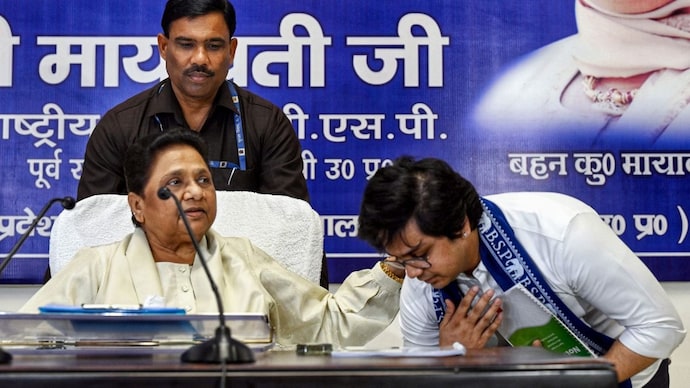
Mayawati’s latest decision to expel senior leader and former Rajya Sabha MP Ashok Siddharth once again, while simultaneously reiterating that all key decisions are taken by her alone, reinforces that message.
The development comes at a time when speculation within the BSP had grown over the widening role of Mayawati’s nephew Akash Anand. Over the past year, he has addressed major rallies, reviewed the organisation across states, announced candidates at public meetings and been projected as the face of the party's outreach ahead of the UP elections. Yet, Mayawati has repeatedly clarified that visibility should not be mistaken for authority.
In a fresh statement, Mayawati underlined that she alone finalises candidates for Lok Sabha and assembly elections not just in UP but across the country. She said Akash was only announcing candidates approved by her and there was no question of anyone else taking these decisions. The message appeared directed at those who have been speculating Akash to be Mayawati's political successor.
Mayawati’s organisational reshuffle carries a similar message. Siddharth, who had been brought back into the party after expulsion, has been removed from all responsibilities and expelled once again. According to Mayawati, Siddharth continued violating party discipline despite repeated warnings while serving as coordinator in Karnataka, Odisha and West Bengal. She accused him of repeatedly ignoring party guidelines and declared he would never be taken back into the BSP.
Another senior leader, Randhir Singh Beniwal, has been expelled on similar charges of indiscipline. At the same time, Rajya Sabha MP Ramji Gautam has again been entrusted with organisational responsibility in Punjab and other states until both the Punjab assembly elections in 2027 and the next Lok Sabha elections.
Beyond the expulsions themselves, Mayawati announced an important organisational policy. Leaders from UP who have been assigned responsibilities outside the state will not be given organisational responsibilities within UP. The move is being seen as another attempt to tighten control over the party's most important unit ahead of the assembly elections.
The repeated action against Siddharth also highlights the contradictions that have marked the BSP over the past year. In February 2025, Mayawati expelled Siddharth, accusing him of encouraging factionalism. A month later, she removed Akash as well, alleging that Siddharth's influence had adversely affected him. Soon afterwards, however, she reversed course on Akash. Following a public apology in which Akash accepted his mistakes and pledged complete loyalty to Mayawati, he was reinstated and gradually entrusted with increasingly important responsibilities.
The rehabilitation did not stop there. Siddharth too was eventually brought back, although with restrictions. Mayawati had then made it clear that he would work only outside UP and not be involved in the state's organisation. His latest expulsion represents another reversal, adding to the perception among party workers that organisational decisions within the BSP can change quickly depending on Mayawati's assessment.
At the same time, Akash’s trajectory has moved in the opposite direction. Since his return, he has steadily emerged as the party's most visible campaigner. He was elevated as chief national coordinator, effectively making him the second most prominent organisational face after Mayawati. Party insiders have also indicated that he is expected to spearhead extensive tours across UP, holding rallies, organisational meetings and outreach programmes aimed at reviving the BSP before the elections.
His prominence has nevertheless been carefully balanced by Mayawati's repeated assertions of authority. Even while praising Akash's dedication, she has consistently stated that no successor will be named during her lifetime. Her latest statement continues that approach by making it clear that every major electoral decision, including the selection of candidates, rests solely with her.
The backdrop to these developments is the BSP's prolonged electoral decline. The party failed to win a single Lok Sabha seat in Uttar Pradesh in 2024 and managed just one seat in the 2022 assembly elections. At the same time, the Samajwadi Party's strategy to woo backward, Dalit and minority communities has intensified competition for Dalit voters. This even as Azad Samaj Party chief Chandrashekhar Azad has emerged as an alternative voice among sections of younger Dalits.
Against that backdrop, Mayawati appears to be attempting two objectives simultaneously. One is to use Akash’s youth and visibility to reconnect with workers and younger voters. The other is to leave no room for doubt that the BSP remains firmly under her command.
The latest expulsion of Siddharth is not merely another disciplinary action. It reinforces a pattern that has defined the BSP in recent years. Leaders may rise, fall, return and rise again, but the final authority continues to rest with Mayawati. As the party prepares for what could be its most important electoral battle in years, she appears determined to ensure that there is no ambiguity about who remains in complete control of the organisation.
Subscribe to India Today Magazine
Mayawati’s latest decision to expel senior leader and former Rajya Sabha MP Ashok Siddharth once again, while simultaneously reiterating that all key decisions are taken by her alone, reinforces that message.
The development comes at a time when speculation within the BSP had grown over the widening role of Mayawati’s nephew Akash Anand. Over the past year, he has addressed major rallies, reviewed the organisation across states, announced candidates at public meetings and been projected as the face of the party's outreach ahead of the UP elections. Yet, Mayawati has repeatedly clarified that visibility should not be mistaken for authority.
In a fresh statement, Mayawati underlined that she alone finalises candidates for Lok Sabha and assembly elections not just in UP but across the country. She said Akash was only announcing candidates approved by her and there was no question of anyone else taking these decisions. The message appeared directed at those who have been speculating Akash to be Mayawati's political successor.
Mayawati’s organisational reshuffle carries a similar message. Siddharth, who had been brought back into the party after expulsion, has been removed from all responsibilities and expelled once again. According to Mayawati, Siddharth continued violating party discipline despite repeated warnings while serving as coordinator in Karnataka, Odisha and West Bengal. She accused him of repeatedly ignoring party guidelines and declared he would never be taken back into the BSP.
Another senior leader, Randhir Singh Beniwal, has been expelled on similar charges of indiscipline. At the same time, Rajya Sabha MP Ramji Gautam has again been entrusted with organisational responsibility in Punjab and other states until both the Punjab assembly elections in 2027 and the next Lok Sabha elections.
Beyond the expulsions themselves, Mayawati announced an important organisational policy. Leaders from UP who have been assigned responsibilities outside the state will not be given organisational responsibilities within UP. The move is being seen as another attempt to tighten control over the party's most important unit ahead of the assembly elections.
The repeated action against Siddharth also highlights the contradictions that have marked the BSP over the past year. In February 2025, Mayawati expelled Siddharth, accusing him of encouraging factionalism. A month later, she removed Akash as well, alleging that Siddharth's influence had adversely affected him. Soon afterwards, however, she reversed course on Akash. Following a public apology in which Akash accepted his mistakes and pledged complete loyalty to Mayawati, he was reinstated and gradually entrusted with increasingly important responsibilities.
The rehabilitation did not stop there. Siddharth too was eventually brought back, although with restrictions. Mayawati had then made it clear that he would work only outside UP and not be involved in the state's organisation. His latest expulsion represents another reversal, adding to the perception among party workers that organisational decisions within the BSP can change quickly depending on Mayawati's assessment.
At the same time, Akash’s trajectory has moved in the opposite direction. Since his return, he has steadily emerged as the party's most visible campaigner. He was elevated as chief national coordinator, effectively making him the second most prominent organisational face after Mayawati. Party insiders have also indicated that he is expected to spearhead extensive tours across UP, holding rallies, organisational meetings and outreach programmes aimed at reviving the BSP before the elections.
His prominence has nevertheless been carefully balanced by Mayawati's repeated assertions of authority. Even while praising Akash's dedication, she has consistently stated that no successor will be named during her lifetime. Her latest statement continues that approach by making it clear that every major electoral decision, including the selection of candidates, rests solely with her.
The backdrop to these developments is the BSP's prolonged electoral decline. The party failed to win a single Lok Sabha seat in Uttar Pradesh in 2024 and managed just one seat in the 2022 assembly elections. At the same time, the Samajwadi Party's strategy to woo backward, Dalit and minority communities has intensified competition for Dalit voters. This even as Azad Samaj Party chief Chandrashekhar Azad has emerged as an alternative voice among sections of younger Dalits.
Against that backdrop, Mayawati appears to be attempting two objectives simultaneously. One is to use Akash’s youth and visibility to reconnect with workers and younger voters. The other is to leave no room for doubt that the BSP remains firmly under her command.
The latest expulsion of Siddharth is not merely another disciplinary action. It reinforces a pattern that has defined the BSP in recent years. Leaders may rise, fall, return and rise again, but the final authority continues to rest with Mayawati. As the party prepares for what could be its most important electoral battle in years, she appears determined to ensure that there is no ambiguity about who remains in complete control of the organisation.
Subscribe to India Today Magazine
Mayawati’s latest decision to expel senior leader and former Rajya Sabha MP Ashok Siddharth once again, while simultaneously reiterating that all key decisions are taken by her alone, reinforces that message.
The development comes at a time when speculation within the BSP had grown over the widening role of Mayawati’s nephew Akash Anand. Over the past year, he has addressed major rallies, reviewed the organisation across states, announced candidates at public meetings and been projected as the face of the party's outreach ahead of the UP elections. Yet, Mayawati has repeatedly clarified that visibility should not be mistaken for authority.
In a fresh statement, Mayawati underlined that she alone finalises candidates for Lok Sabha and assembly elections not just in UP but across the country. She said Akash was only announcing candidates approved by her and there was no question of anyone else taking these decisions. The message appeared directed at those who have been speculating Akash to be Mayawati's political successor.
Mayawati’s organisational reshuffle carries a similar message. Siddharth, who had been brought back into the party after expulsion, has been removed from all responsibilities and expelled once again. According to Mayawati, Siddharth continued violating party discipline despite repeated warnings while serving as coordinator in Karnataka, Odisha and West Bengal. She accused him of repeatedly ignoring party guidelines and declared he would never be taken back into the BSP.
Another senior leader, Randhir Singh Beniwal, has been expelled on similar charges of indiscipline. At the same time, Rajya Sabha MP Ramji Gautam has again been entrusted with organisational responsibility in Punjab and other states until both the Punjab assembly elections in 2027 and the next Lok Sabha elections.
Beyond the expulsions themselves, Mayawati announced an important organisational policy. Leaders from UP who have been assigned responsibilities outside the state will not be given organisational responsibilities within UP. The move is being seen as another attempt to tighten control over the party's most important unit ahead of the assembly elections.
The repeated action against Siddharth also highlights the contradictions that have marked the BSP over the past year. In February 2025, Mayawati expelled Siddharth, accusing him of encouraging factionalism. A month later, she removed Akash as well, alleging that Siddharth's influence had adversely affected him. Soon afterwards, however, she reversed course on Akash. Following a public apology in which Akash accepted his mistakes and pledged complete loyalty to Mayawati, he was reinstated and gradually entrusted with increasingly important responsibilities.
The rehabilitation did not stop there. Siddharth too was eventually brought back, although with restrictions. Mayawati had then made it clear that he would work only outside UP and not be involved in the state's organisation. His latest expulsion represents another reversal, adding to the perception among party workers that organisational decisions within the BSP can change quickly depending on Mayawati's assessment.
At the same time, Akash’s trajectory has moved in the opposite direction. Since his return, he has steadily emerged as the party's most visible campaigner. He was elevated as chief national coordinator, effectively making him the second most prominent organisational face after Mayawati. Party insiders have also indicated that he is expected to spearhead extensive tours across UP, holding rallies, organisational meetings and outreach programmes aimed at reviving the BSP before the elections.
His prominence has nevertheless been carefully balanced by Mayawati's repeated assertions of authority. Even while praising Akash's dedication, she has consistently stated that no successor will be named during her lifetime. Her latest statement continues that approach by making it clear that every major electoral decision, including the selection of candidates, rests solely with her.
The backdrop to these developments is the BSP's prolonged electoral decline. The party failed to win a single Lok Sabha seat in Uttar Pradesh in 2024 and managed just one seat in the 2022 assembly elections. At the same time, the Samajwadi Party's strategy to woo backward, Dalit and minority communities has intensified competition for Dalit voters. This even as Azad Samaj Party chief Chandrashekhar Azad has emerged as an alternative voice among sections of younger Dalits.
Against that backdrop, Mayawati appears to be attempting two objectives simultaneously. One is to use Akash’s youth and visibility to reconnect with workers and younger voters. The other is to leave no room for doubt that the BSP remains firmly under her command.
The latest expulsion of Siddharth is not merely another disciplinary action. It reinforces a pattern that has defined the BSP in recent years. Leaders may rise, fall, return and rise again, but the final authority continues to rest with Mayawati. As the party prepares for what could be its most important electoral battle in years, she appears determined to ensure that there is no ambiguity about who remains in complete control of the organisation.
Subscribe to India Today Magazine

