How Mehar Malhotra is eyeing a three-peat for FTII at Cannes
An exclusive conversation with Malhotra whose diploma film 'Shadows of the Moonless Nights' is competing in the La Cinef category at Cannes Film Festival
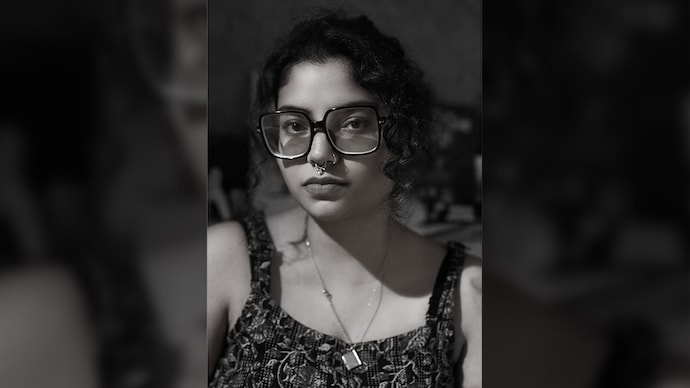
Of late, FTII has had a good track record in the La Cinef category, which rewards the best of student short films representing renowned film institutes from around the world. Ashmita Guha Neogi (2020) and Chidananda S. Naik (2024) won the top prize with their respective films. Like theirs, Malhotra’s too is an FTII-produced final diploma film.
The 78th edition of the Cannes Film Festival will be held from May 13 to 24.
“I am really grateful for all of them to have created that pathway for us,” Malhotra tells INDIA TODAY in an exclusive conversation. “It is very inspiring when you know these are the people you have to look up to and ask for guidance. Cannes is such a big festival, and it can be really intimidating and the experience overwhelming. But with people like Payal and Chidananda, who have so much grace and success, been through all of this, it gives a lot of hope that you too can get through it.”
For guidance, Malhotra had already reached out to Kapadia, who will be at Cannes as president of the Cannes Critics Week sidebar. “She’s the sweetest person, honestly. It was absolutely lovely to talk to her. It helped calm me down a lot,” says Malhotra.
Born and raised in New Delhi, Malhotra joined FTII with little exposure to cinema. A journalism student, she was more inclined to theatre, having written and directed plays for Aflatoon, the theatre society of Vivekananda Institute of Professional Studies. “My seniors used to watch a lot of films and through them, I used to get to know what is considered good cinema,” she says.
It is while pursuing a summer internship with a production house in Mumbai that Malhotra realised where she wants to be. “I felt so alive; something just clicked. I thought that instead of writing for newspapers, why not write fiction and write for the movies?” she says. She got through the rigorous FTII entrance in her very first attempt, and unlike most came to the campus in Pune immediately after completing her graduation.
In her interview just days before departing for Cannes, Malhotra, a student of the direction and screenwriting programme at FTII, speaks about her cinematic journey thus far. “I believe cinema should absolutely succeed in making you feel something. It could be any feeling—happiness, sadness, rage, anything. That’s the biggest power of cinema, that you go on a rollercoaster of emotions,” she says. Edited excerpts:
Q. Tell us about your FTII years.
A. I was only 21 [when I got through], so I was quite nervous but very happy as well. It has been a brilliant journey. I was exposed to so many images, so much world cinema and so many great filmmakers. I was always on the lookout as to how do I make sense of so much information being thrown at me. Thankfully, we have really lovely professors, who just hold your hand and give you the space and time and also the opportunity to find your voice and understand what you really want to make. The FTII journey was quite beautiful, very encouraging and nurturing.
Q. What did you learn about yourself at FTII? What kind of cinema you realised you liked?
A. When I entered FTII, I used to watch a lot of disturbing, gory films. I have no idea why I was inclined towards them. The best part about FTII is the daily screenings as well as those at the National Film Archive of India down the road. The feeling of every evening being able to sit in that dark room with this big screen and just watching brilliant cinema unfold, and that feeling that someday you’ll get the opportunity to maybe make something half as good as this is quite surreal. Once the screening got over, we would have tea and just talk about how the film was.
I explored a lot of cinema. A few filmmakers still resonate with me, and I really look up to them. I absolutely adore the movies of Finish filmmaker Aki Kaurismaki. Then there’s Andrea Arnold, Claire Denis, Lynne Ramsay and Lucrecia Martel. Their films can’t be put in a box. It is just an ever-evolving piece of cinema; anytime you watch it, it says something different and evokes different things for different people.
Q. A little bit of the personal always seeps into the first narratives. Tell us about the genesis of the protagonist Rajan in Shadows of the Moonless Nights, a young man in a desperate quest to get some much-needed sleep.
A. I feel my generation has been told that you have to hustle. At the age of 20, they think it’s too late for them, that they have to catch up, and they feel like they are not successful. I could see a shift where the generation started taking pride in not sleeping, in pulling an all-nighter, sleeping less or not sleeping for days.
Having toiled in Bombay myself in my late teens as an assistant director, I realised all of us are striving for a good night’s sleep. Bombay is such a fast-paced city and at the end of the day, I used to think, ‘I haven’t slept, I am losing my mind, and all I can wish for right now is just to lie down and get some sleep’.
My protagonist Rajan, while roaming around the city, sees other people mirroring his own experiences. People finding pockets in the city to actually sleep in, places where they can just take a nap and then go back to work. It was a harsh realisation that sleep is such a big luxury and getting rest is something people either take for granted or just cannot get at all.
Q. You end the director’s note stating, “I hope audiences leave unsettled, recognising their own exhaustion in Rajan’s and questioning the systems that demand we endure without pause”. Apart from touching on how sleep is a luxury, is the attempt also to show the socio-economic disparity?
A. I wanted to use Rajan not being able to sleep as the main thread. I also wanted to unfold more layers, such as how our working class is treated, the conditions factory workers work in, the socio-economic disparity, the behaviours and challenges they face.
Q. Did you always envision that your FTII diploma film would be in Punjabi?
A. Definitely. Because while I come from Delhi, my mother is from Ludhiana, with her entire family still living there. Initially, I felt I had no roots. I used to feel very lost because I felt I didn’t know my own culture. That feeling got amplified at FTII because it makes you go back to your roots, makes you more grounded and tries to help you find your own voice.
I looked at my mother’s side to find my culture. I have a connection with them, so I wanted to explore that. That the final film would be in Punjabi was very clear to me. Not because I have an intuitive connection with Punjabi, but also because of the emotional connection, which I wanted to deepen. This film was my way to see and explore more of the culture I come from. I hope to keep making films in Punjabi and through them, explore more of my own roots.
Q. You recently moved to Mumbai. What’s next for you?
A. I am just figuring it out right now. After FTII, I took a break, went home, came back and got a house, and now I am finally settled in and have started looking for work. I met some very beautiful people in Mumbai. I was just starting when the Cannes news came and then everything sort of came to a halt.
I would absolutely love to write my own feature. I have a few ideas and really hope I am able to come up with something nice that excites me and direct it. This is what really keeps me going—to take out the stories inside me and put it out there.
Subscribe to India Today Magazine
Of late, FTII has had a good track record in the La Cinef category, which rewards the best of student short films representing renowned film institutes from around the world. Ashmita Guha Neogi (2020) and Chidananda S. Naik (2024) won the top prize with their respective films. Like theirs, Malhotra’s too is an FTII-produced final diploma film.
The 78th edition of the Cannes Film Festival will be held from May 13 to 24.
“I am really grateful for all of them to have created that pathway for us,” Malhotra tells INDIA TODAY in an exclusive conversation. “It is very inspiring when you know these are the people you have to look up to and ask for guidance. Cannes is such a big festival, and it can be really intimidating and the experience overwhelming. But with people like Payal and Chidananda, who have so much grace and success, been through all of this, it gives a lot of hope that you too can get through it.”
For guidance, Malhotra had already reached out to Kapadia, who will be at Cannes as president of the Cannes Critics Week sidebar. “She’s the sweetest person, honestly. It was absolutely lovely to talk to her. It helped calm me down a lot,” says Malhotra.
Born and raised in New Delhi, Malhotra joined FTII with little exposure to cinema. A journalism student, she was more inclined to theatre, having written and directed plays for Aflatoon, the theatre society of Vivekananda Institute of Professional Studies. “My seniors used to watch a lot of films and through them, I used to get to know what is considered good cinema,” she says.
It is while pursuing a summer internship with a production house in Mumbai that Malhotra realised where she wants to be. “I felt so alive; something just clicked. I thought that instead of writing for newspapers, why not write fiction and write for the movies?” she says. She got through the rigorous FTII entrance in her very first attempt, and unlike most came to the campus in Pune immediately after completing her graduation.
In her interview just days before departing for Cannes, Malhotra, a student of the direction and screenwriting programme at FTII, speaks about her cinematic journey thus far. “I believe cinema should absolutely succeed in making you feel something. It could be any feeling—happiness, sadness, rage, anything. That’s the biggest power of cinema, that you go on a rollercoaster of emotions,” she says. Edited excerpts:
Q. Tell us about your FTII years.
A. I was only 21 [when I got through], so I was quite nervous but very happy as well. It has been a brilliant journey. I was exposed to so many images, so much world cinema and so many great filmmakers. I was always on the lookout as to how do I make sense of so much information being thrown at me. Thankfully, we have really lovely professors, who just hold your hand and give you the space and time and also the opportunity to find your voice and understand what you really want to make. The FTII journey was quite beautiful, very encouraging and nurturing.
Q. What did you learn about yourself at FTII? What kind of cinema you realised you liked?
A. When I entered FTII, I used to watch a lot of disturbing, gory films. I have no idea why I was inclined towards them. The best part about FTII is the daily screenings as well as those at the National Film Archive of India down the road. The feeling of every evening being able to sit in that dark room with this big screen and just watching brilliant cinema unfold, and that feeling that someday you’ll get the opportunity to maybe make something half as good as this is quite surreal. Once the screening got over, we would have tea and just talk about how the film was.
I explored a lot of cinema. A few filmmakers still resonate with me, and I really look up to them. I absolutely adore the movies of Finish filmmaker Aki Kaurismaki. Then there’s Andrea Arnold, Claire Denis, Lynne Ramsay and Lucrecia Martel. Their films can’t be put in a box. It is just an ever-evolving piece of cinema; anytime you watch it, it says something different and evokes different things for different people.
Q. A little bit of the personal always seeps into the first narratives. Tell us about the genesis of the protagonist Rajan in Shadows of the Moonless Nights, a young man in a desperate quest to get some much-needed sleep.
A. I feel my generation has been told that you have to hustle. At the age of 20, they think it’s too late for them, that they have to catch up, and they feel like they are not successful. I could see a shift where the generation started taking pride in not sleeping, in pulling an all-nighter, sleeping less or not sleeping for days.
Having toiled in Bombay myself in my late teens as an assistant director, I realised all of us are striving for a good night’s sleep. Bombay is such a fast-paced city and at the end of the day, I used to think, ‘I haven’t slept, I am losing my mind, and all I can wish for right now is just to lie down and get some sleep’.
My protagonist Rajan, while roaming around the city, sees other people mirroring his own experiences. People finding pockets in the city to actually sleep in, places where they can just take a nap and then go back to work. It was a harsh realisation that sleep is such a big luxury and getting rest is something people either take for granted or just cannot get at all.
Q. You end the director’s note stating, “I hope audiences leave unsettled, recognising their own exhaustion in Rajan’s and questioning the systems that demand we endure without pause”. Apart from touching on how sleep is a luxury, is the attempt also to show the socio-economic disparity?
A. I wanted to use Rajan not being able to sleep as the main thread. I also wanted to unfold more layers, such as how our working class is treated, the conditions factory workers work in, the socio-economic disparity, the behaviours and challenges they face.
Q. Did you always envision that your FTII diploma film would be in Punjabi?
A. Definitely. Because while I come from Delhi, my mother is from Ludhiana, with her entire family still living there. Initially, I felt I had no roots. I used to feel very lost because I felt I didn’t know my own culture. That feeling got amplified at FTII because it makes you go back to your roots, makes you more grounded and tries to help you find your own voice.
I looked at my mother’s side to find my culture. I have a connection with them, so I wanted to explore that. That the final film would be in Punjabi was very clear to me. Not because I have an intuitive connection with Punjabi, but also because of the emotional connection, which I wanted to deepen. This film was my way to see and explore more of the culture I come from. I hope to keep making films in Punjabi and through them, explore more of my own roots.
Q. You recently moved to Mumbai. What’s next for you?
A. I am just figuring it out right now. After FTII, I took a break, went home, came back and got a house, and now I am finally settled in and have started looking for work. I met some very beautiful people in Mumbai. I was just starting when the Cannes news came and then everything sort of came to a halt.
I would absolutely love to write my own feature. I have a few ideas and really hope I am able to come up with something nice that excites me and direct it. This is what really keeps me going—to take out the stories inside me and put it out there.
Subscribe to India Today Magazine
Of late, FTII has had a good track record in the La Cinef category, which rewards the best of student short films representing renowned film institutes from around the world. Ashmita Guha Neogi (2020) and Chidananda S. Naik (2024) won the top prize with their respective films. Like theirs, Malhotra’s too is an FTII-produced final diploma film.
The 78th edition of the Cannes Film Festival will be held from May 13 to 24.
“I am really grateful for all of them to have created that pathway for us,” Malhotra tells INDIA TODAY in an exclusive conversation. “It is very inspiring when you know these are the people you have to look up to and ask for guidance. Cannes is such a big festival, and it can be really intimidating and the experience overwhelming. But with people like Payal and Chidananda, who have so much grace and success, been through all of this, it gives a lot of hope that you too can get through it.”
For guidance, Malhotra had already reached out to Kapadia, who will be at Cannes as president of the Cannes Critics Week sidebar. “She’s the sweetest person, honestly. It was absolutely lovely to talk to her. It helped calm me down a lot,” says Malhotra.
Born and raised in New Delhi, Malhotra joined FTII with little exposure to cinema. A journalism student, she was more inclined to theatre, having written and directed plays for Aflatoon, the theatre society of Vivekananda Institute of Professional Studies. “My seniors used to watch a lot of films and through them, I used to get to know what is considered good cinema,” she says.
It is while pursuing a summer internship with a production house in Mumbai that Malhotra realised where she wants to be. “I felt so alive; something just clicked. I thought that instead of writing for newspapers, why not write fiction and write for the movies?” she says. She got through the rigorous FTII entrance in her very first attempt, and unlike most came to the campus in Pune immediately after completing her graduation.
In her interview just days before departing for Cannes, Malhotra, a student of the direction and screenwriting programme at FTII, speaks about her cinematic journey thus far. “I believe cinema should absolutely succeed in making you feel something. It could be any feeling—happiness, sadness, rage, anything. That’s the biggest power of cinema, that you go on a rollercoaster of emotions,” she says. Edited excerpts:
Q. Tell us about your FTII years.
A. I was only 21 [when I got through], so I was quite nervous but very happy as well. It has been a brilliant journey. I was exposed to so many images, so much world cinema and so many great filmmakers. I was always on the lookout as to how do I make sense of so much information being thrown at me. Thankfully, we have really lovely professors, who just hold your hand and give you the space and time and also the opportunity to find your voice and understand what you really want to make. The FTII journey was quite beautiful, very encouraging and nurturing.
Q. What did you learn about yourself at FTII? What kind of cinema you realised you liked?
A. When I entered FTII, I used to watch a lot of disturbing, gory films. I have no idea why I was inclined towards them. The best part about FTII is the daily screenings as well as those at the National Film Archive of India down the road. The feeling of every evening being able to sit in that dark room with this big screen and just watching brilliant cinema unfold, and that feeling that someday you’ll get the opportunity to maybe make something half as good as this is quite surreal. Once the screening got over, we would have tea and just talk about how the film was.
I explored a lot of cinema. A few filmmakers still resonate with me, and I really look up to them. I absolutely adore the movies of Finish filmmaker Aki Kaurismaki. Then there’s Andrea Arnold, Claire Denis, Lynne Ramsay and Lucrecia Martel. Their films can’t be put in a box. It is just an ever-evolving piece of cinema; anytime you watch it, it says something different and evokes different things for different people.
Q. A little bit of the personal always seeps into the first narratives. Tell us about the genesis of the protagonist Rajan in Shadows of the Moonless Nights, a young man in a desperate quest to get some much-needed sleep.
A. I feel my generation has been told that you have to hustle. At the age of 20, they think it’s too late for them, that they have to catch up, and they feel like they are not successful. I could see a shift where the generation started taking pride in not sleeping, in pulling an all-nighter, sleeping less or not sleeping for days.
Having toiled in Bombay myself in my late teens as an assistant director, I realised all of us are striving for a good night’s sleep. Bombay is such a fast-paced city and at the end of the day, I used to think, ‘I haven’t slept, I am losing my mind, and all I can wish for right now is just to lie down and get some sleep’.
My protagonist Rajan, while roaming around the city, sees other people mirroring his own experiences. People finding pockets in the city to actually sleep in, places where they can just take a nap and then go back to work. It was a harsh realisation that sleep is such a big luxury and getting rest is something people either take for granted or just cannot get at all.
Q. You end the director’s note stating, “I hope audiences leave unsettled, recognising their own exhaustion in Rajan’s and questioning the systems that demand we endure without pause”. Apart from touching on how sleep is a luxury, is the attempt also to show the socio-economic disparity?
A. I wanted to use Rajan not being able to sleep as the main thread. I also wanted to unfold more layers, such as how our working class is treated, the conditions factory workers work in, the socio-economic disparity, the behaviours and challenges they face.
Q. Did you always envision that your FTII diploma film would be in Punjabi?
A. Definitely. Because while I come from Delhi, my mother is from Ludhiana, with her entire family still living there. Initially, I felt I had no roots. I used to feel very lost because I felt I didn’t know my own culture. That feeling got amplified at FTII because it makes you go back to your roots, makes you more grounded and tries to help you find your own voice.
I looked at my mother’s side to find my culture. I have a connection with them, so I wanted to explore that. That the final film would be in Punjabi was very clear to me. Not because I have an intuitive connection with Punjabi, but also because of the emotional connection, which I wanted to deepen. This film was my way to see and explore more of the culture I come from. I hope to keep making films in Punjabi and through them, explore more of my own roots.
Q. You recently moved to Mumbai. What’s next for you?
A. I am just figuring it out right now. After FTII, I took a break, went home, came back and got a house, and now I am finally settled in and have started looking for work. I met some very beautiful people in Mumbai. I was just starting when the Cannes news came and then everything sort of came to a halt.
I would absolutely love to write my own feature. I have a few ideas and really hope I am able to come up with something nice that excites me and direct it. This is what really keeps me going—to take out the stories inside me and put it out there.
Subscribe to India Today Magazine

