How Nitin Nabin's Bankipur is poised for an intensely watched bypoll
The BJP president is not in the fray in the seat he held for 20 years, but his party is confident its dominance there is now institutional
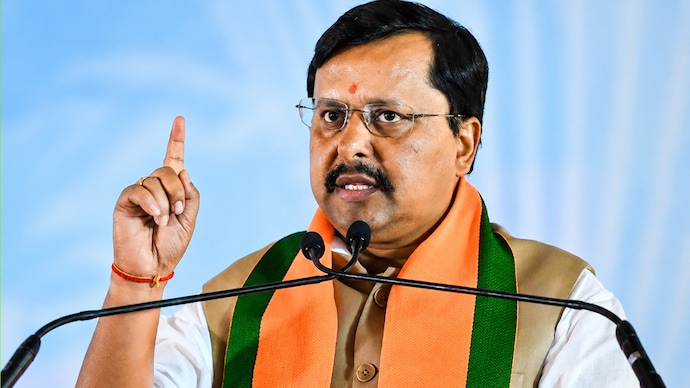
Since 2006, when Nitin entered the Bihar legislative assembly through a by-election following his father’s demise, the constituency has reaffirmed its faith in him, election after election. Now, on July 30, and for the first time in nearly two decades, the people of Bankipur will vote to elect an MLA without the name ‘Nitin Nabin’ on the EVM.
The vacancy was created after Nabin resigned from the assembly seat on March 30 following his election to the Rajya Sabha. His elevation as BJP national president last December has transformed what would ordinarily have been a routine bypoll into one of Bihar’s most significant contests this year.
The bypoll will be closely watched not because it can alter the government’s arithmetic but because of the larger political questions it seeks to answer. Can Nabin’s electoral dominance in Bankipur hold without him being in the fray? Is his goodwill—painstakingly cultivated over two decades—transferable to another face? And can an emerging challenger, such as Prashant Kishor’s Jan Suraaj, convert public curiosity into a credible electoral challenge?
Bankipur as Nabin’s own
Few assembly constituencies in Bihar have become so closely identified with a single politician as Bankipur has with Nabin. Born in May 1980, Nabin inherited a formidable political legacy. His father was a senior BJP leader and four-time legislator from the Patna West constituency. Yet, political inheritance alone rarely explains electoral longevity. Dynastic advantage may open the first door, but sustained success depends on the ability to build an independent identity.
Nabin has done precisely that. His entry into electoral politics came under difficult circumstances. In 2006, following his father’s demise, he contested the by-election from Patna West and won comfortably. When the Delimitation Commission redrew constituency boundaries four years later, Bankipur emerged in Patna West’s place. Nabin shifted seamlessly to the new constituency and proceeded to make it his political home.
He retained the seat in 2010, defended it against a Nitish Kumar-Lalu Yadav wave in 2015, weathered the extraordinary circumstances of the Covid-hit election in 2020, and secured an even more emphatic mandate in 2025. Five consecutive victories transformed him from a second-generation politician into one of the BJP’s most durable leaders in Bihar.
Nabin’s rise in the Bihar government was equally steady. Over the years, he handled key portfolios, including road construction, urban development and housing, gaining reputation as an administrator with a close understanding of urban infrastructure. Simultaneously, his responsibilities within the BJP expanded beyond Bihar. Organisational assignments in states such as Sikkim and Chhattisgarh reflected the party leadership’s growing confidence in his managerial abilities, culminating in his appointment as the BJP’s national president.
The numbers tell their own story
If Nabin’s political career illustrates longevity, his electoral record demonstrates steadily expanding public support. When he first sought a mandate in the 2006 by-election, he had secured 76,025 votes. Four years later, contesting the newly carved Bankipur constituency, his tally rose to 78,771.
The real measure of his political standing, however, came in 2015. That election witnessed one of the BJP’s most significant setbacks in Bihar as the grand alliance of Nitish and Lalu overwhelmed the National Democratic Alliance (NDA) across much of the state.
Yet Bankipur remained an outlier. Nabin not only retained the seat with ease but increased his vote tally to 86,759, underlining the distinction between the BJP’s statewide fortunes and his personal standing in the constituency. The only interruption in that upward trajectory came in 2020 when Bihar voted under the shadow of the Covid-19 pandemic. Lower voter turnout across the state saw his tally dip marginally to 83,068. But by 2025, the upward curve had resumed. Nabin registered his biggest electoral victory yet, polling 98,299 votes—the highest tally of his career.
The pattern is difficult to ignore. Every election, barring the pandemic-disrupted contest of 2020, brought him a larger mandate than the previous one. Bankipur consistently defied the trend. Rather than diminishing with time, Nabin’s support appeared to deepen, election after election.
The statistics suggest Bankipur’s repeated endorsement was not merely an expression of party loyalty but confidence in the individual who had represented the constituency for nearly 20 years. Bankipur—home to an electorate of traders, professionals, government employees and an expanding middle class—has been one of the BJP’s safest urban constituencies, where the party’s organisational strength and Nabin’s personal popularity became almost inseparable.
The BJP’s challenge, therefore, extends beyond securing victory. It must demonstrate that the political capital accumulated through Nabin’s tenure belongs not only to the man who built it but the organisation as a whole.
Can Nabin’s goodwill be transferred?
Nabin’s identity and the BJP’s organisation have become closely intertwined. Residents speak of him as someone who remained accessible long after election campaigns ended, maintained regular contact with traders’ associations, resident welfare groups and party workers, and developed a reputation for responding to civic grievances without bureaucratic delay.
Political goodwill, unlike vote share, cannot be quantified. Yet its presence often reveals itself through electoral consistency. Bankipur did not merely return Nabin to the assembly five consecutive times; it repeatedly increased his mandate. In electoral politics, where anti-incumbency is often regarded as inevitable, that is no ordinary achievement.
For the BJP, Nabin’s departure from Bankipur is a promotion. His elevation to the presidency of the BJP is being projected not as a loss for the constituency but as recognition that a leader shaped in Bankipur has graduated to the national stage.
The BJP’s Bihar president Sanjay Saraogi believes voters will see it in precisely those terms. Speaking to INDIA TODAY, he said Nabin’s rise was a matter of pride not merely for the BJP but the people of Bankipur themselves. “The people of Bankipur have always stood with Nitin Nabin. Today, the BJP has chosen their representative for the party’s topmost organisational post—the national president. I am confident the electorate will reward the BJP once again,” Saraogi said.
Saraogi is dismissive of suggestions that Nabin’s move to national politics has weakened his connect with the constituency. “Nitin Nabin is in the heart of Bankipur, and Bankipur is in Nitin ji’s heart. Although he now carries much larger responsibilities as the BJP’s national president, he remains deeply concerned about the constituency’s progress. The NDA government is fully committed to continuing the development work that people here have witnessed over the years,” he said.
That message will form the central plank of the BJP’s campaign: the face may change, but the relationship between Bankipur and BJP won’t.
The organiser behind the politician
Within BJP circles, Nabin’s reputation has never rested solely on electoral victories. Long before his elevation as national president, he had established himself as one of the party’s most effective organisational managers. His responsibilities outside Bihar reflected the central leadership’s confidence in his ability to build organisation, manage campaigns and resolve political challenges.
Saraogi points to his role in West Bengal as further evidence of that organisational capability. “Under Nitin Nabin ji’s leadership, the BJP achieved a historic breakthrough in West Bengal. It has made the BJP proud, and it has also made the people of his constituency proud,” he said.
This explains why the BJP believes Nabin’s rise to the party presidency will strengthen the party’s position in Bankipur. A comfortable BJP victory would reinforce the perception that the party’s organisational foundations have matured beyond dependence on individual leaders. It would suggest that the political capital accumulated over two decades has become institutional.
A reduced margin, however, would invite uncomfortable questions. Did voters support Nabin more than they supported the BJP? Can organisational strength compensate for the departure of a popular incumbent? Has the constituency entered a phase where personality once again outweighs party? Those are questions no opinion poll can answer. Only the voters of Bankipur can.
Subscribe to India Today Magazine
Since 2006, when Nitin entered the Bihar legislative assembly through a by-election following his father’s demise, the constituency has reaffirmed its faith in him, election after election. Now, on July 30, and for the first time in nearly two decades, the people of Bankipur will vote to elect an MLA without the name ‘Nitin Nabin’ on the EVM.
The vacancy was created after Nabin resigned from the assembly seat on March 30 following his election to the Rajya Sabha. His elevation as BJP national president last December has transformed what would ordinarily have been a routine bypoll into one of Bihar’s most significant contests this year.
The bypoll will be closely watched not because it can alter the government’s arithmetic but because of the larger political questions it seeks to answer. Can Nabin’s electoral dominance in Bankipur hold without him being in the fray? Is his goodwill—painstakingly cultivated over two decades—transferable to another face? And can an emerging challenger, such as Prashant Kishor’s Jan Suraaj, convert public curiosity into a credible electoral challenge?
Bankipur as Nabin’s own
Few assembly constituencies in Bihar have become so closely identified with a single politician as Bankipur has with Nabin. Born in May 1980, Nabin inherited a formidable political legacy. His father was a senior BJP leader and four-time legislator from the Patna West constituency. Yet, political inheritance alone rarely explains electoral longevity. Dynastic advantage may open the first door, but sustained success depends on the ability to build an independent identity.
Nabin has done precisely that. His entry into electoral politics came under difficult circumstances. In 2006, following his father’s demise, he contested the by-election from Patna West and won comfortably. When the Delimitation Commission redrew constituency boundaries four years later, Bankipur emerged in Patna West’s place. Nabin shifted seamlessly to the new constituency and proceeded to make it his political home.
He retained the seat in 2010, defended it against a Nitish Kumar-Lalu Yadav wave in 2015, weathered the extraordinary circumstances of the Covid-hit election in 2020, and secured an even more emphatic mandate in 2025. Five consecutive victories transformed him from a second-generation politician into one of the BJP’s most durable leaders in Bihar.
Nabin’s rise in the Bihar government was equally steady. Over the years, he handled key portfolios, including road construction, urban development and housing, gaining reputation as an administrator with a close understanding of urban infrastructure. Simultaneously, his responsibilities within the BJP expanded beyond Bihar. Organisational assignments in states such as Sikkim and Chhattisgarh reflected the party leadership’s growing confidence in his managerial abilities, culminating in his appointment as the BJP’s national president.
The numbers tell their own story
If Nabin’s political career illustrates longevity, his electoral record demonstrates steadily expanding public support. When he first sought a mandate in the 2006 by-election, he had secured 76,025 votes. Four years later, contesting the newly carved Bankipur constituency, his tally rose to 78,771.
The real measure of his political standing, however, came in 2015. That election witnessed one of the BJP’s most significant setbacks in Bihar as the grand alliance of Nitish and Lalu overwhelmed the National Democratic Alliance (NDA) across much of the state.
Yet Bankipur remained an outlier. Nabin not only retained the seat with ease but increased his vote tally to 86,759, underlining the distinction between the BJP’s statewide fortunes and his personal standing in the constituency. The only interruption in that upward trajectory came in 2020 when Bihar voted under the shadow of the Covid-19 pandemic. Lower voter turnout across the state saw his tally dip marginally to 83,068. But by 2025, the upward curve had resumed. Nabin registered his biggest electoral victory yet, polling 98,299 votes—the highest tally of his career.
The pattern is difficult to ignore. Every election, barring the pandemic-disrupted contest of 2020, brought him a larger mandate than the previous one. Bankipur consistently defied the trend. Rather than diminishing with time, Nabin’s support appeared to deepen, election after election.
The statistics suggest Bankipur’s repeated endorsement was not merely an expression of party loyalty but confidence in the individual who had represented the constituency for nearly 20 years. Bankipur—home to an electorate of traders, professionals, government employees and an expanding middle class—has been one of the BJP’s safest urban constituencies, where the party’s organisational strength and Nabin’s personal popularity became almost inseparable.
The BJP’s challenge, therefore, extends beyond securing victory. It must demonstrate that the political capital accumulated through Nabin’s tenure belongs not only to the man who built it but the organisation as a whole.
Can Nabin’s goodwill be transferred?
Nabin’s identity and the BJP’s organisation have become closely intertwined. Residents speak of him as someone who remained accessible long after election campaigns ended, maintained regular contact with traders’ associations, resident welfare groups and party workers, and developed a reputation for responding to civic grievances without bureaucratic delay.
Political goodwill, unlike vote share, cannot be quantified. Yet its presence often reveals itself through electoral consistency. Bankipur did not merely return Nabin to the assembly five consecutive times; it repeatedly increased his mandate. In electoral politics, where anti-incumbency is often regarded as inevitable, that is no ordinary achievement.
For the BJP, Nabin’s departure from Bankipur is a promotion. His elevation to the presidency of the BJP is being projected not as a loss for the constituency but as recognition that a leader shaped in Bankipur has graduated to the national stage.
The BJP’s Bihar president Sanjay Saraogi believes voters will see it in precisely those terms. Speaking to INDIA TODAY, he said Nabin’s rise was a matter of pride not merely for the BJP but the people of Bankipur themselves. “The people of Bankipur have always stood with Nitin Nabin. Today, the BJP has chosen their representative for the party’s topmost organisational post—the national president. I am confident the electorate will reward the BJP once again,” Saraogi said.
Saraogi is dismissive of suggestions that Nabin’s move to national politics has weakened his connect with the constituency. “Nitin Nabin is in the heart of Bankipur, and Bankipur is in Nitin ji’s heart. Although he now carries much larger responsibilities as the BJP’s national president, he remains deeply concerned about the constituency’s progress. The NDA government is fully committed to continuing the development work that people here have witnessed over the years,” he said.
That message will form the central plank of the BJP’s campaign: the face may change, but the relationship between Bankipur and BJP won’t.
The organiser behind the politician
Within BJP circles, Nabin’s reputation has never rested solely on electoral victories. Long before his elevation as national president, he had established himself as one of the party’s most effective organisational managers. His responsibilities outside Bihar reflected the central leadership’s confidence in his ability to build organisation, manage campaigns and resolve political challenges.
Saraogi points to his role in West Bengal as further evidence of that organisational capability. “Under Nitin Nabin ji’s leadership, the BJP achieved a historic breakthrough in West Bengal. It has made the BJP proud, and it has also made the people of his constituency proud,” he said.
This explains why the BJP believes Nabin’s rise to the party presidency will strengthen the party’s position in Bankipur. A comfortable BJP victory would reinforce the perception that the party’s organisational foundations have matured beyond dependence on individual leaders. It would suggest that the political capital accumulated over two decades has become institutional.
A reduced margin, however, would invite uncomfortable questions. Did voters support Nabin more than they supported the BJP? Can organisational strength compensate for the departure of a popular incumbent? Has the constituency entered a phase where personality once again outweighs party? Those are questions no opinion poll can answer. Only the voters of Bankipur can.
Subscribe to India Today Magazine

