How oil shock quietly rewrote India's monetary policy
The RBI's Monetary Policy Committee held the repo rate at 5.25 per cent. But in a first, the rupee has moved from the margins of policy imagination to its centre
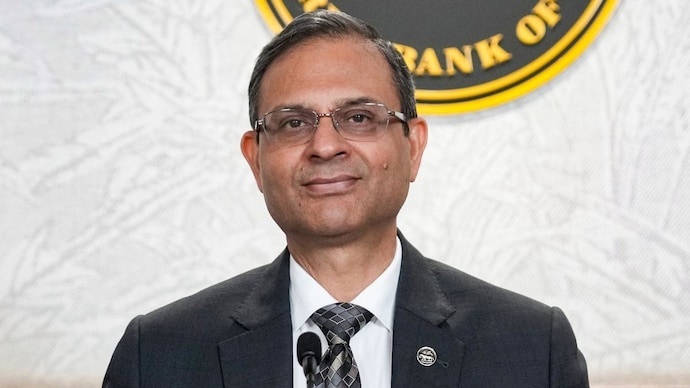
The Reserve Bank of India (RBI) did nothing on June 5, and that was the story. The repo rate stayed at 5.25 per cent, a third consecutive hold; the standing deposit facility anchored at 5.00 per cent and the marginal standing facility at 5.50 per cent. The stance remained neutral. The media statement arrived clad in the familiar grey flannel of central banking: balanced risks, data dependence, vigilance. On the surface, continuity.
But continuity is not the same as calm, and the June review by the RBI’s Monetary Policy Committee (MPC) was not a pause so much as a reordering. Beneath the unchanged headline, the RBI signalled a shift in what it is actually trying to manage. For the first time in this cycle, the rupee has moved from the margins of the policy imagination to its centre.
RBI governor Sanjay Malhotra set the register early. “We remain vigilant to evolving global uncertainties and their spillover effects on inflation and financial stability,” he said, a line that would have read as boilerplate in a quieter year. In June 2026, it reads as a thesis. With crude oil prices elevated, the rupee at record lows and foreign capital leaving in a steady drip, the external world is no longer the backdrop to Indian monetary policy. It has become the principal input.
The numbers behind the stillness
The strain is not abstract. Since a conflict erupted in West Asia at the end of February, Brent crude prices have spiked as much as 65 per cent—touching roughly $120 a barrel at the peak and holding stubbornly near $110—as fears over the Strait of Hormuz, through which a large share of the world’s seaborne oil passes, refuse to subside. For a country that imports close to 90 per cent of the crude it burns, every dollar of that move lands directly on the import bill, and every barrel is paid for in dollars that are themselves becoming dearer.
That is the second front. The rupee has been the worst-performing major Asian currency of 2026, sliding from around 90 to the dollar at the start of the year to brush 96, a string of record lows set almost weekly. It has shed roughly 6 per cent year to date, with the bulk of that decline—close to 5 per cent—arriving after the conflict began. Long-dated government bond yields have hardened back towards 7 per cent as foreign portfolio investors sell both equities and debt and buy dollars on the way out.
The RBI has not watched passively. It has leaned against disorderly depreciation through intervention and liquidity operations since late February, draining its own reserves to do so: foreign exchange holdings have fallen by roughly $33 billion since the conflict began, to about $690 billion.
Crucially, though, the RBI has refused to formally defend any level of the exchange rate—and, more tellingly, has refused to defend it with interest rates. June institutionalises that choice rather than reverse it. Currency stability is being pursued through a wider toolkit—capital-flow incentives, reserves, market operations—and pointedly not through the policy rate.
“We expect reasonable and healthy capital inflows supported by the measures announced today,” Malhotra said, gesturing at the RBI’s preference for pulling dollars into the system rather than squeezing domestic conditions to ration them. The logic is deliberate: stabilise the currency without throttling an economy that is already absorbing a shock.
A new hierarchy of risk
What changed between April and June is not direction but gravity. April’s policy still lived inside the old domestic frame—moderating inflation, steady growth, cautious optimism about eventual easing. The rupee was monitored; it was not yet the organising principle. The MPC’s own forecasts mark the break. Growth for FY27, pencilled at 6.9 per cent in April, has been cut to 6.6. Inflation, which the RBI had already nudged up to 4.6 per cent in April from 4.2 per cent, was lifted again in June by half a percentage point to roughly 5.1 per cent—a meaningful step back towards the upper reaches of the tolerance band.
Read together, those revisions describe a clear new chain of causation: oil leads, the rupee transmits, inflation absorbs, growth adjusts. Rising crude price widens the import bill on impact. A weaker rupee magnifies it, raising the domestic cost of energy before it has even reached transport, logistics, fertiliser subsidies and the broad base of industrial inputs. The result is an inflation pass-through that is sharper and more persistent—and, critically, driven less by domestic demand than by external volatility.
It is precisely that diagnosis that explains the hold. The textbook response to currency pressure is to tighten: raise rates, attract capital, defend the exchange rate. Oil-importing peers have done exactly that—Indonesia, the Philippines and Sri Lanka among them—and their moves have fed market bets that India will eventually be forced down the same road. But that route carries its own bill: tighter credit, weaker consumption, a drag on sentiment already strained by global uncertainty. The RBI has chosen the other balance—protect domestic momentum, manage the currency through the external sector.
Resilience is no longer the point
Malhotra leaned, as he tends to, on India’s structural strength—a “stable and resilient” macroeconomy, well-capitalised banks, healthier corporate balance-sheets. The reassurance is genuine. But the subtext of the June policy is that resilience, on its own, no longer settles the question. The task has migrated from managing a cycle to absorbing a shock.
Nor is the inflation mandate being quietly abandoned. If anything, Malhotra’s insistence that the 4 per cent target remains “sacrosanct” reaffirms it. What has changed is the road there. Inflation is increasingly imported—arriving through oil and the exchange rate rather than manufactured by domestic demand—which makes the policy rate a blunter instrument against it and pushes the RBI towards the currency and the capital account instead.
So, the meaning of the June 5 meeting sits less in what the RBI did than in what it now has to manage. The repo rate did not move. The policy’s centre of gravity unmistakably has. The rupee is no longer merely an output of monetary policy in India. It is becoming one of its binding constraints. And in a world where geopolitics increasingly sets the terms of economic stability, that quiet relocation may prove the most consequential signal the RBI sent all day.
Subscribe to India Today Magazine
The Reserve Bank of India (RBI) did nothing on June 5, and that was the story. The repo rate stayed at 5.25 per cent, a third consecutive hold; the standing deposit facility anchored at 5.00 per cent and the marginal standing facility at 5.50 per cent. The stance remained neutral. The media statement arrived clad in the familiar grey flannel of central banking: balanced risks, data dependence, vigilance. On the surface, continuity.
But continuity is not the same as calm, and the June review by the RBI’s Monetary Policy Committee (MPC) was not a pause so much as a reordering. Beneath the unchanged headline, the RBI signalled a shift in what it is actually trying to manage. For the first time in this cycle, the rupee has moved from the margins of the policy imagination to its centre.
RBI governor Sanjay Malhotra set the register early. “We remain vigilant to evolving global uncertainties and their spillover effects on inflation and financial stability,” he said, a line that would have read as boilerplate in a quieter year. In June 2026, it reads as a thesis. With crude oil prices elevated, the rupee at record lows and foreign capital leaving in a steady drip, the external world is no longer the backdrop to Indian monetary policy. It has become the principal input.
The numbers behind the stillness
The strain is not abstract. Since a conflict erupted in West Asia at the end of February, Brent crude prices have spiked as much as 65 per cent—touching roughly $120 a barrel at the peak and holding stubbornly near $110—as fears over the Strait of Hormuz, through which a large share of the world’s seaborne oil passes, refuse to subside. For a country that imports close to 90 per cent of the crude it burns, every dollar of that move lands directly on the import bill, and every barrel is paid for in dollars that are themselves becoming dearer.
That is the second front. The rupee has been the worst-performing major Asian currency of 2026, sliding from around 90 to the dollar at the start of the year to brush 96, a string of record lows set almost weekly. It has shed roughly 6 per cent year to date, with the bulk of that decline—close to 5 per cent—arriving after the conflict began. Long-dated government bond yields have hardened back towards 7 per cent as foreign portfolio investors sell both equities and debt and buy dollars on the way out.
The RBI has not watched passively. It has leaned against disorderly depreciation through intervention and liquidity operations since late February, draining its own reserves to do so: foreign exchange holdings have fallen by roughly $33 billion since the conflict began, to about $690 billion.
Crucially, though, the RBI has refused to formally defend any level of the exchange rate—and, more tellingly, has refused to defend it with interest rates. June institutionalises that choice rather than reverse it. Currency stability is being pursued through a wider toolkit—capital-flow incentives, reserves, market operations—and pointedly not through the policy rate.
“We expect reasonable and healthy capital inflows supported by the measures announced today,” Malhotra said, gesturing at the RBI’s preference for pulling dollars into the system rather than squeezing domestic conditions to ration them. The logic is deliberate: stabilise the currency without throttling an economy that is already absorbing a shock.
A new hierarchy of risk
What changed between April and June is not direction but gravity. April’s policy still lived inside the old domestic frame—moderating inflation, steady growth, cautious optimism about eventual easing. The rupee was monitored; it was not yet the organising principle. The MPC’s own forecasts mark the break. Growth for FY27, pencilled at 6.9 per cent in April, has been cut to 6.6. Inflation, which the RBI had already nudged up to 4.6 per cent in April from 4.2 per cent, was lifted again in June by half a percentage point to roughly 5.1 per cent—a meaningful step back towards the upper reaches of the tolerance band.
Read together, those revisions describe a clear new chain of causation: oil leads, the rupee transmits, inflation absorbs, growth adjusts. Rising crude price widens the import bill on impact. A weaker rupee magnifies it, raising the domestic cost of energy before it has even reached transport, logistics, fertiliser subsidies and the broad base of industrial inputs. The result is an inflation pass-through that is sharper and more persistent—and, critically, driven less by domestic demand than by external volatility.
It is precisely that diagnosis that explains the hold. The textbook response to currency pressure is to tighten: raise rates, attract capital, defend the exchange rate. Oil-importing peers have done exactly that—Indonesia, the Philippines and Sri Lanka among them—and their moves have fed market bets that India will eventually be forced down the same road. But that route carries its own bill: tighter credit, weaker consumption, a drag on sentiment already strained by global uncertainty. The RBI has chosen the other balance—protect domestic momentum, manage the currency through the external sector.
Resilience is no longer the point
Malhotra leaned, as he tends to, on India’s structural strength—a “stable and resilient” macroeconomy, well-capitalised banks, healthier corporate balance-sheets. The reassurance is genuine. But the subtext of the June policy is that resilience, on its own, no longer settles the question. The task has migrated from managing a cycle to absorbing a shock.
Nor is the inflation mandate being quietly abandoned. If anything, Malhotra’s insistence that the 4 per cent target remains “sacrosanct” reaffirms it. What has changed is the road there. Inflation is increasingly imported—arriving through oil and the exchange rate rather than manufactured by domestic demand—which makes the policy rate a blunter instrument against it and pushes the RBI towards the currency and the capital account instead.
So, the meaning of the June 5 meeting sits less in what the RBI did than in what it now has to manage. The repo rate did not move. The policy’s centre of gravity unmistakably has. The rupee is no longer merely an output of monetary policy in India. It is becoming one of its binding constraints. And in a world where geopolitics increasingly sets the terms of economic stability, that quiet relocation may prove the most consequential signal the RBI sent all day.
Subscribe to India Today Magazine

