If a passport doesn't prove you are Indian, what does?
A passport is only strong evidence of citizenship, exposing the lack of a single citizenship document and forcing reliance on layered records and case-specific verifications
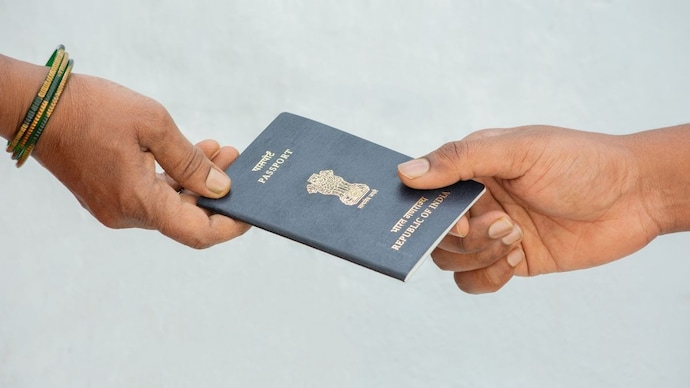
The official’s point was narrow. A passport attests an Indian’s nationality before immigration authorities abroad and secures consular protection in a foreign country. Its purpose is to move a person across borders, not to settle their status at home. The MEA’s position draws a distinction between a document being evidence of citizenship and being conclusive proof of it.
The statement sounds counter-intuitive, and that is why it landed as it did. Rajya Sabha MP Kapil Sibal asked on X: “Which document then is proof of citizenship?” Lyricist Javed Akhtar called the remark absurd, questioning how passports could be issued at all if authorities were not satisfied that the holder was Indian.
The objection has force because the Passports Act, 1967, proceeds on the premise that the holder is a citizen. Under Section 5, a passport authority issues a passport only after such inquiry as it deems necessary. Section 6(2)(a) requires the authority to refuse one if the applicant is not a citizen of India. Applicants undergo police verification and scrutiny of multiple government records before a passport is granted.
So, the law contemplates that a passport is issued only after the state has satisfied itself about citizenship. The government’s clarification rests on a single provision that cuts the other way. Section 20 of the Passports Act empowers the central government to issue a passport or travel document to a person who is not a citizen of India, if it considers this necessary in the public interest. That one provision is enough to establish that possession of a passport is not, in law, conclusive proof of citizenship.
The courts have said as much. In 2013, the Bombay High Court held that citizenship is determined under the Citizenship Act, 1955, on the basis of eligibility and supporting evidence, not by the mere possession of a single document. The government also retains the power to impound or revoke a passport if it finds citizenship was wrongly claimed or obtained through misrepresentation. A passport is strong evidence that the state has accepted a citizenship claim. It is not an unassailable determination of it.
The SIR debate
During the recent special intensive revision (SIR) of electoral rolls, a central issue before the Supreme Court was whether existing electors could be asked to furnish fresh documents establishing eligibility.
The exercise exposed a distinction embedded in Indian law. A voter identity card establishes that a person is enrolled as an elector. It does not independently establish citizenship. Under the Representation of the People Act, 1950, only citizens can be registered as voters but registration authorities retain the power to inquire whether a person's inclusion in the rolls meets the statutory requirements. Possession of an old voter card, by itself, did not answer the citizenship question during SIR.
In September 2025, the Supreme Court declined requests from political parties seeking a direction to the Election Commission to treat Aadhaar as a standalone document for establishing citizenship during the Bihar SIR. The court observed that Aadhaar’s legal status could not be expanded beyond what the existing law provided, and refused to mandate its acceptance as sole proof of citizenship for voter enrolment.
The MEA’s clarification pushes the same logic one step further. If voter cards are not definitive proof, and passports are not either, citizens may reasonably ask which document carries that status.
Why no single document settles it
The answer is that India does not issue one. Unlike many countries, it has never adopted a national citizenship card automatically held by every citizen. Citizenship flows from the Constitution and the Citizenship Act, and a person’s status may arise through one of several routes: birth, descent, registration, naturalisation or incorporation of territory.
The government’s own position reflects this. In February 2020, asked in Parliament whether Aadhaar, passport, voter ID, PAN (Permanent Account Number) or birth certificate could be treated as valid proof of citizenship, the ministry of home affairs declined to identify any of them as definitive. Acquisition and determination of citizenship, it said, are governed by the Citizenship Act and the rules framed under it, and eligibility is to be assessed under that Act.
Since the route determines the proof, the documents that matter vary from person to person. The only document that specifically certifies citizenship is a certificate of registration or naturalisation issued by the central government under Sections 5 and 6 of the Citizenship Act. Experts regard these as the most definitive proof available.
But they exist only for those who acquired citizenship through registration or naturalisation, not for the overwhelming majority of Indians who are citizens by birth or descent and may never hold such a certificate.
For everyone else, citizenship is assembled from records. A birth certificate is the primary document for those born before July 1, 1987. For those born after that date, it must be read alongside proof of a parent's citizenship status, because the law changed: a person born in India between July 1, 1987 and December 3, 2004 is a citizen only if at least one parent was an Indian citizen at birth, and a person born on or after December 3, 2004 only if both parents are Indian citizens, or one is and the other is not an illegal migrant. A child born abroad claiming citizenship by descent relies on consular birth registration. Registration cases turn on proof of the Indian nationality of a spouse or parent.
The supporting documents stack up from there: parents’ Indian passports, birth certificates or citizenship certificates; school certificates; electoral records. Each proves a discrete fact. None settles the citizenship question on its own. Courts examine the totality of the evidence rather than treating any single document as universally conclusive.
The contrast with the lesser documents is sharper still. Aadhaar, by the terms of its own governing Act, enrols residents rather than citizens and is not proof of citizenship. PAN card is a tax identifier. A ration card evidences inclusion in a welfare scheme. A voter card establishes electoral registration. Each is issued for a specific purpose, and none was designed to determine citizenship.
The structural problem
The controversy points to a feature built into the system rather than a gap in it. India has historically operated on a presumption that most people are citizens unless a specific dispute arises. Citizenship is inferred from a raft of records, not founded on a single document.
That model held for decades because citizens were rarely required to affirmatively prove their status. It is the verification exercises of recent years—electoral roll scrutiny, the National Register of Citizens, migration control—that have exposed the absence of a universally accepted citizenship document. The framework also carries its own historical exceptions, such as the Assam Accord cut-offs, under which those who entered the state before January 1, 1966 and those who entered between then and March 25, 1971 and were detected and registered as required, are treated as citizens.
The result is a peculiar situation. A person may hold a passport, a voter card, an Aadhaar card, PAN and a birth certificate, and still face demands for further evidence in a proceeding that questions their citizenship.
The solution to this situation perhaps lies in a National Register of Citizens (NRC). The idea of a countrywide NRC first emerged in 2003 under the BJP-led NDA government headed by Atal Bihari Vajpayee. Following the recommendations of a Group of Ministers set up to review national security after the 1999 Kargil War, the Citizenship Act was amended to provide for identity cards for every citizen, especially those living in border areas.
The Union home ministry also framed rules for a nationwide NRC. These rules state that for preparing the NRC, the central government shall carry out house-to-house enumeration to collect specified details about every family and individual residing in a local area, including their citizenship status.
In 2004, after the Congress-led UPA came to power, Section 14A was inserted into the Citizenship Act, making registration compulsory for every Indian citizen and providing for the creation of a NRC. However, the rules needed to implement this provision have never been put into effect.
The MEA may have intended only a technical explanation of what a passport is for. But the clarification touches the deeper question it was not trying to answer. In a country where citizenship is the gateway to voting, public office and constitutional protection, the unresolved issue is no longer just which document proves it. It is whether a modern democracy should keep resting the most fundamental relationship between an individual and the state on a patchwork of records and presumptions.
WHO IS AN INDIAN CITIZEN?
A person became an Indian citizen if they had domicile in India and were born in India, or either parent was born in India, or they had been ordinarily resident in India for at least five years before the Constitution began.
At the commencement of the Constitution, January 26, 1950
Migrants from Pakistan at Partition
Persons who migrated from Pakistan to India could be citizens if they satisfied the conditions in Article 6 of the Constitution, including birth/parentage/grandparent link with India and residence/registration requirements.
Persons of Indian origin living abroad
Those with a parent/grandparent link to India could be treated as citizens if registered by an Indian diplomatic or consular representative.
By birth under the Citizenship Act
Born in India between January 26, 1950 and July 1, 1987: Citizen by birth.
Born in India between July 1, 1987 and December 3, 2004: Citizen if either parent was an Indian citizen at birth.
Born in India on/after December 3, 2004: Citizen only if both parents are Indian citizens, or one parent is an Indian citizen, and the other is not an illegal migrant.
By descent
A person born outside India can be a citizen if the relevant parent was an Indian citizen at birth, but for births after the 2003 amendment, the birth must be registered at an Indian consulate within the prescribed period, unless permitted later by the central government.
By registration
Certain categories, such as persons of Indian origin, spouses of Indian citizens, minor children of Indian citizens, and eligible OCI (Overseas Citizen of India) cardholders, may be registered as citizens if they meet the conditions under Section 5 of the Citizenship Act.
By naturalisation
A foreigner of full age and capacity, who is not an illegal migrant and fulfils the legal qualifications, may be granted a certificate of naturalisation by the central government.
By incorporation of territory
If a territory becomes part of India, the central government may notify who will become Indian citizens because of their connection with that territory.
Special Assam Accord category
Persons of Indian origin who entered Assam from the specified territory before January 1, 1966 and those who entered between January 1, 1966 and March 25, 1971 and were detected/registered as required, are Indian citizens.
Citizenship (Amendment) Act, 2019 / Section 6B category
Eligible persons covered by the special provision relating to Afghanistan, Pakistan and Bangladesh may be granted citizenship by registration or naturalisation, subject to conditions and exclusions for Sixth Schedule and Inner Line areas.
DOCUMENTS TO PROVE CITIZENSHIP
- Certificate of registration as an Indian citizen issued under the Citizenship Act.
- Certificate of naturalisation issued by the central government.
- Indian passport. But if citizenship is legally disputed, the underlying citizenship must be tested under the Citizenship Act.
- Birth certificate for those born before July 1, 1987. For those born after that, it must be combined with proof of parents’ citizenship status.
- Parents’ Indian passport / birth certificate / citizenship certificate: crucial supporting documents, especially for persons born after July 1, 1987, and for children born abroad.
- Consular birth registration certificate / record for a child born outside India who claims Indian citizenship by descent.
- Proof of Indian nationality of spouse or parents: relevant in registration cases, such as citizenship by marriage or for minor children.
- Electoral roll/voter ID, although it is not, by itself, conclusive proof of citizenship if the citizenship status is disputed.
Subscribe to India Today Magazine
The official’s point was narrow. A passport attests an Indian’s nationality before immigration authorities abroad and secures consular protection in a foreign country. Its purpose is to move a person across borders, not to settle their status at home. The MEA’s position draws a distinction between a document being evidence of citizenship and being conclusive proof of it.
The statement sounds counter-intuitive, and that is why it landed as it did. Rajya Sabha MP Kapil Sibal asked on X: “Which document then is proof of citizenship?” Lyricist Javed Akhtar called the remark absurd, questioning how passports could be issued at all if authorities were not satisfied that the holder was Indian.
The objection has force because the Passports Act, 1967, proceeds on the premise that the holder is a citizen. Under Section 5, a passport authority issues a passport only after such inquiry as it deems necessary. Section 6(2)(a) requires the authority to refuse one if the applicant is not a citizen of India. Applicants undergo police verification and scrutiny of multiple government records before a passport is granted.
So, the law contemplates that a passport is issued only after the state has satisfied itself about citizenship. The government’s clarification rests on a single provision that cuts the other way. Section 20 of the Passports Act empowers the central government to issue a passport or travel document to a person who is not a citizen of India, if it considers this necessary in the public interest. That one provision is enough to establish that possession of a passport is not, in law, conclusive proof of citizenship.
The courts have said as much. In 2013, the Bombay High Court held that citizenship is determined under the Citizenship Act, 1955, on the basis of eligibility and supporting evidence, not by the mere possession of a single document. The government also retains the power to impound or revoke a passport if it finds citizenship was wrongly claimed or obtained through misrepresentation. A passport is strong evidence that the state has accepted a citizenship claim. It is not an unassailable determination of it.
The SIR debate
During the recent special intensive revision (SIR) of electoral rolls, a central issue before the Supreme Court was whether existing electors could be asked to furnish fresh documents establishing eligibility.
The exercise exposed a distinction embedded in Indian law. A voter identity card establishes that a person is enrolled as an elector. It does not independently establish citizenship. Under the Representation of the People Act, 1950, only citizens can be registered as voters but registration authorities retain the power to inquire whether a person's inclusion in the rolls meets the statutory requirements. Possession of an old voter card, by itself, did not answer the citizenship question during SIR.
In September 2025, the Supreme Court declined requests from political parties seeking a direction to the Election Commission to treat Aadhaar as a standalone document for establishing citizenship during the Bihar SIR. The court observed that Aadhaar’s legal status could not be expanded beyond what the existing law provided, and refused to mandate its acceptance as sole proof of citizenship for voter enrolment.
The MEA’s clarification pushes the same logic one step further. If voter cards are not definitive proof, and passports are not either, citizens may reasonably ask which document carries that status.
Why no single document settles it
The answer is that India does not issue one. Unlike many countries, it has never adopted a national citizenship card automatically held by every citizen. Citizenship flows from the Constitution and the Citizenship Act, and a person’s status may arise through one of several routes: birth, descent, registration, naturalisation or incorporation of territory.
The government’s own position reflects this. In February 2020, asked in Parliament whether Aadhaar, passport, voter ID, PAN (Permanent Account Number) or birth certificate could be treated as valid proof of citizenship, the ministry of home affairs declined to identify any of them as definitive. Acquisition and determination of citizenship, it said, are governed by the Citizenship Act and the rules framed under it, and eligibility is to be assessed under that Act.
Since the route determines the proof, the documents that matter vary from person to person. The only document that specifically certifies citizenship is a certificate of registration or naturalisation issued by the central government under Sections 5 and 6 of the Citizenship Act. Experts regard these as the most definitive proof available.
But they exist only for those who acquired citizenship through registration or naturalisation, not for the overwhelming majority of Indians who are citizens by birth or descent and may never hold such a certificate.
For everyone else, citizenship is assembled from records. A birth certificate is the primary document for those born before July 1, 1987. For those born after that date, it must be read alongside proof of a parent's citizenship status, because the law changed: a person born in India between July 1, 1987 and December 3, 2004 is a citizen only if at least one parent was an Indian citizen at birth, and a person born on or after December 3, 2004 only if both parents are Indian citizens, or one is and the other is not an illegal migrant. A child born abroad claiming citizenship by descent relies on consular birth registration. Registration cases turn on proof of the Indian nationality of a spouse or parent.
The supporting documents stack up from there: parents’ Indian passports, birth certificates or citizenship certificates; school certificates; electoral records. Each proves a discrete fact. None settles the citizenship question on its own. Courts examine the totality of the evidence rather than treating any single document as universally conclusive.
The contrast with the lesser documents is sharper still. Aadhaar, by the terms of its own governing Act, enrols residents rather than citizens and is not proof of citizenship. PAN card is a tax identifier. A ration card evidences inclusion in a welfare scheme. A voter card establishes electoral registration. Each is issued for a specific purpose, and none was designed to determine citizenship.
The structural problem
The controversy points to a feature built into the system rather than a gap in it. India has historically operated on a presumption that most people are citizens unless a specific dispute arises. Citizenship is inferred from a raft of records, not founded on a single document.
That model held for decades because citizens were rarely required to affirmatively prove their status. It is the verification exercises of recent years—electoral roll scrutiny, the National Register of Citizens, migration control—that have exposed the absence of a universally accepted citizenship document. The framework also carries its own historical exceptions, such as the Assam Accord cut-offs, under which those who entered the state before January 1, 1966 and those who entered between then and March 25, 1971 and were detected and registered as required, are treated as citizens.
The result is a peculiar situation. A person may hold a passport, a voter card, an Aadhaar card, PAN and a birth certificate, and still face demands for further evidence in a proceeding that questions their citizenship.
The solution to this situation perhaps lies in a National Register of Citizens (NRC). The idea of a countrywide NRC first emerged in 2003 under the BJP-led NDA government headed by Atal Bihari Vajpayee. Following the recommendations of a Group of Ministers set up to review national security after the 1999 Kargil War, the Citizenship Act was amended to provide for identity cards for every citizen, especially those living in border areas.
The Union home ministry also framed rules for a nationwide NRC. These rules state that for preparing the NRC, the central government shall carry out house-to-house enumeration to collect specified details about every family and individual residing in a local area, including their citizenship status.
In 2004, after the Congress-led UPA came to power, Section 14A was inserted into the Citizenship Act, making registration compulsory for every Indian citizen and providing for the creation of a NRC. However, the rules needed to implement this provision have never been put into effect.
The MEA may have intended only a technical explanation of what a passport is for. But the clarification touches the deeper question it was not trying to answer. In a country where citizenship is the gateway to voting, public office and constitutional protection, the unresolved issue is no longer just which document proves it. It is whether a modern democracy should keep resting the most fundamental relationship between an individual and the state on a patchwork of records and presumptions.
WHO IS AN INDIAN CITIZEN?
A person became an Indian citizen if they had domicile in India and were born in India, or either parent was born in India, or they had been ordinarily resident in India for at least five years before the Constitution began.
At the commencement of the Constitution, January 26, 1950
Migrants from Pakistan at Partition
Persons who migrated from Pakistan to India could be citizens if they satisfied the conditions in Article 6 of the Constitution, including birth/parentage/grandparent link with India and residence/registration requirements.
Persons of Indian origin living abroad
Those with a parent/grandparent link to India could be treated as citizens if registered by an Indian diplomatic or consular representative.
By birth under the Citizenship Act
Born in India between January 26, 1950 and July 1, 1987: Citizen by birth.
Born in India between July 1, 1987 and December 3, 2004: Citizen if either parent was an Indian citizen at birth.
Born in India on/after December 3, 2004: Citizen only if both parents are Indian citizens, or one parent is an Indian citizen, and the other is not an illegal migrant.
By descent
A person born outside India can be a citizen if the relevant parent was an Indian citizen at birth, but for births after the 2003 amendment, the birth must be registered at an Indian consulate within the prescribed period, unless permitted later by the central government.
By registration
Certain categories, such as persons of Indian origin, spouses of Indian citizens, minor children of Indian citizens, and eligible OCI (Overseas Citizen of India) cardholders, may be registered as citizens if they meet the conditions under Section 5 of the Citizenship Act.
By naturalisation
A foreigner of full age and capacity, who is not an illegal migrant and fulfils the legal qualifications, may be granted a certificate of naturalisation by the central government.
By incorporation of territory
If a territory becomes part of India, the central government may notify who will become Indian citizens because of their connection with that territory.
Special Assam Accord category
Persons of Indian origin who entered Assam from the specified territory before January 1, 1966 and those who entered between January 1, 1966 and March 25, 1971 and were detected/registered as required, are Indian citizens.
Citizenship (Amendment) Act, 2019 / Section 6B category
Eligible persons covered by the special provision relating to Afghanistan, Pakistan and Bangladesh may be granted citizenship by registration or naturalisation, subject to conditions and exclusions for Sixth Schedule and Inner Line areas.
DOCUMENTS TO PROVE CITIZENSHIP
- Certificate of registration as an Indian citizen issued under the Citizenship Act.
- Certificate of naturalisation issued by the central government.
- Indian passport. But if citizenship is legally disputed, the underlying citizenship must be tested under the Citizenship Act.
- Birth certificate for those born before July 1, 1987. For those born after that, it must be combined with proof of parents’ citizenship status.
- Parents’ Indian passport / birth certificate / citizenship certificate: crucial supporting documents, especially for persons born after July 1, 1987, and for children born abroad.
- Consular birth registration certificate / record for a child born outside India who claims Indian citizenship by descent.
- Proof of Indian nationality of spouse or parents: relevant in registration cases, such as citizenship by marriage or for minor children.
- Electoral roll/voter ID, although it is not, by itself, conclusive proof of citizenship if the citizenship status is disputed.
Subscribe to India Today Magazine

