In BJP's sweep of Gujarat local body polls, an existential audit for Opposition
The 736 uncontested victories for the BJP even before polling are a reality check for the Congress and AAP in the run-up to assembly elections in 2027
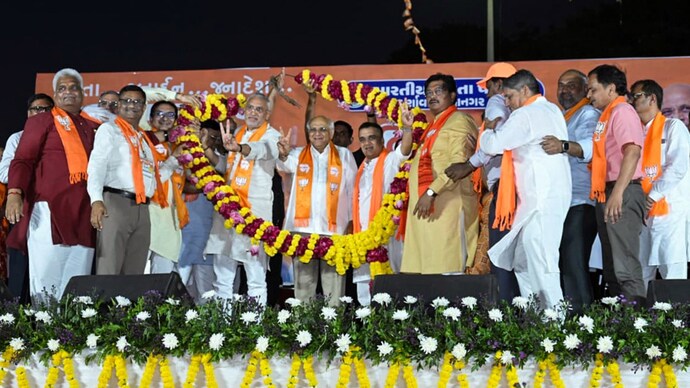
The elections covered approximately 9,200 seats. Over 41.8 million voters were eligible to participate, 95 per cent of the state’s total electorate. Around 32,000 candidates were in the fray, making this one of the largest grassroots electoral exercises in the state’s history.
The BJP's dominance was total. In the Ahmedabad Municipal Corporation, the party won 160 of the 192 seats; the Congress managed the remaining 32. In Surat, the BJP swept 115 of the 120 seats; AAP won four and the Congress one. This was a dramatic reversal from 2021 when AAP had won 27 seats in the same corporation.
In the district panchayats, across 32 of the 34 districts that went to polls, the BJP won 886 seats against the Congress's 124 and AAP's 51. The sweep was so comprehensive that only Narmada district bucked the trend. Here, AAP won 15 of the 22 seats and will now govern the district panchayat. This is noteworthy for the rising popularity of AAP’s tribal legislator Chaitra Vasava, who helmed the campaign.
A comparison of the 2015, 2021 and 2026 district panchayat maps reveals without ambiguity that Gujarat has turned more and more saffron with every local body election cycle. The countryside, despite simmering discontent among farmers over flood-related crop losses and infrastructure gaps, once again rallied behind the BJP. A weak Congress failed to convert rural grievances into votes.
The numbers that cut deepest for the Opposition, however, were from before polling even began. As many as 736 seats across different tiers were decided uncontested—a sharp rise from 220 in 2021 and just 37 in 2015. In seat after seat, the BJP faced no challenger. The figure signals an Opposition too hollowed out to even field candidates.
AAP was a distant third challenger, contesting approximately 5,000 seats across all categories and winning only 185. Its footprint was mostly confined to taluka panchayats in Saurashtra's Amreli, Junagadh and Gir Somnath districts, and the anomalous Narmada result. AAP's performance in urban bodies was near-invisible. In Surat, it was reduced to four—the party’s Gujarat general secretary Manoj Sorathia lost his ward here.
After the 2022 assembly elections, AAP had briefly looked poised to become the primary Opposition as it bagged a 13 per cent vote share and five seats whereas the Congress got 26.9 per cent votes and won 17 of 182 seats. The local body poll debacle gives AAP much to introspect about.
For the Congress, the picture is different in texture but similar in conclusion. The party won 32 seats in Ahmedabad, including, for the first time, all four seats in the historically resistant Khadia ward. The party also opened its account in pockets across the state, notably picking up 16 seats in Banaskantha and 13 in Patan district panchayats. However, its city president in Vadodara Amiben Rawat and senior leader Dr Nikul Patel suffered crushing defeats in their respective wards. In three of the newly upgraded municipal corporations of Mehsana, Morbi and Nadiad, the Congress failed to win a single seat.
The All India Majlis-e-Ittehadul Muslimeen (AIMIM) dipped from seven seats in Ahmedabad in 2021 to zero. Its only wins were three seats in Bhuj. AIMIM’s presence in select urban constituencies with significant Muslim populations was enough for BJP campaigners to invoke it as a polarising foil throughout the campaign.
The issues these elections were fought on ranged nominally from local governance—roads, water, drainage and civic amenities—but the BJP's campaign apparatus also leaned heavily on national and identity-driven themes. The 2025 Pahalgam terror attack, whose first anniversary was observed in the run-up to the polling, was deployed as a reminder of the party's national security narrative.
The amended waqf laws and the broader framing of protecting Hindu interests dominated the BJP’s rhetoric in urban wards with mixed populations. AIMIM's presence in a few Ahmedabad constituencies gave the saffron campaign an additional lever, sharpening the communal messaging in Old City-adjacent areas. The Congress, constrained by its compulsion to avoid alienating any constituency, offered no coherent counter-narrative on any issue.
The results will be closely watched as a precursor to the 2027 assembly elections. What they reveal, at minimum, is that the BJP's ground machinery has no challenger. But the fall of Khadia will pinch the party as it breaks its five decades of uninterrupted control of the area. The Jana Sangh held Khadia from the early 1970s in the Ahmedabad Municipal Corporation. When it dissolved into the BJP in 1980, the seat transferred seamlessly. The 2026 result is the first time in over 50 years that the saffron front has lost Khadia at the civic body level.
BJP analysts would be dissecting the reasons for the loss of face in Khadia. The ward has 30,000 Muslim voters and 40,000 Hindu voters. One of the Congress’s four candidates was a Muslim.
Overall, the results show that the Congress maintains a presence without a project while AAP's Gujarat experiment still has much work to do. The 736 uncontested victories for the BJP are perhaps the most damning single number for an Opposition beaten even before the race begins.
Subscribe to India Today Magazine
The elections covered approximately 9,200 seats. Over 41.8 million voters were eligible to participate, 95 per cent of the state’s total electorate. Around 32,000 candidates were in the fray, making this one of the largest grassroots electoral exercises in the state’s history.
The BJP's dominance was total. In the Ahmedabad Municipal Corporation, the party won 160 of the 192 seats; the Congress managed the remaining 32. In Surat, the BJP swept 115 of the 120 seats; AAP won four and the Congress one. This was a dramatic reversal from 2021 when AAP had won 27 seats in the same corporation.
In the district panchayats, across 32 of the 34 districts that went to polls, the BJP won 886 seats against the Congress's 124 and AAP's 51. The sweep was so comprehensive that only Narmada district bucked the trend. Here, AAP won 15 of the 22 seats and will now govern the district panchayat. This is noteworthy for the rising popularity of AAP’s tribal legislator Chaitra Vasava, who helmed the campaign.
A comparison of the 2015, 2021 and 2026 district panchayat maps reveals without ambiguity that Gujarat has turned more and more saffron with every local body election cycle. The countryside, despite simmering discontent among farmers over flood-related crop losses and infrastructure gaps, once again rallied behind the BJP. A weak Congress failed to convert rural grievances into votes.
The numbers that cut deepest for the Opposition, however, were from before polling even began. As many as 736 seats across different tiers were decided uncontested—a sharp rise from 220 in 2021 and just 37 in 2015. In seat after seat, the BJP faced no challenger. The figure signals an Opposition too hollowed out to even field candidates.
AAP was a distant third challenger, contesting approximately 5,000 seats across all categories and winning only 185. Its footprint was mostly confined to taluka panchayats in Saurashtra's Amreli, Junagadh and Gir Somnath districts, and the anomalous Narmada result. AAP's performance in urban bodies was near-invisible. In Surat, it was reduced to four—the party’s Gujarat general secretary Manoj Sorathia lost his ward here.
After the 2022 assembly elections, AAP had briefly looked poised to become the primary Opposition as it bagged a 13 per cent vote share and five seats whereas the Congress got 26.9 per cent votes and won 17 of 182 seats. The local body poll debacle gives AAP much to introspect about.
For the Congress, the picture is different in texture but similar in conclusion. The party won 32 seats in Ahmedabad, including, for the first time, all four seats in the historically resistant Khadia ward. The party also opened its account in pockets across the state, notably picking up 16 seats in Banaskantha and 13 in Patan district panchayats. However, its city president in Vadodara Amiben Rawat and senior leader Dr Nikul Patel suffered crushing defeats in their respective wards. In three of the newly upgraded municipal corporations of Mehsana, Morbi and Nadiad, the Congress failed to win a single seat.
The All India Majlis-e-Ittehadul Muslimeen (AIMIM) dipped from seven seats in Ahmedabad in 2021 to zero. Its only wins were three seats in Bhuj. AIMIM’s presence in select urban constituencies with significant Muslim populations was enough for BJP campaigners to invoke it as a polarising foil throughout the campaign.
The issues these elections were fought on ranged nominally from local governance—roads, water, drainage and civic amenities—but the BJP's campaign apparatus also leaned heavily on national and identity-driven themes. The 2025 Pahalgam terror attack, whose first anniversary was observed in the run-up to the polling, was deployed as a reminder of the party's national security narrative.
The amended waqf laws and the broader framing of protecting Hindu interests dominated the BJP’s rhetoric in urban wards with mixed populations. AIMIM's presence in a few Ahmedabad constituencies gave the saffron campaign an additional lever, sharpening the communal messaging in Old City-adjacent areas. The Congress, constrained by its compulsion to avoid alienating any constituency, offered no coherent counter-narrative on any issue.
The results will be closely watched as a precursor to the 2027 assembly elections. What they reveal, at minimum, is that the BJP's ground machinery has no challenger. But the fall of Khadia will pinch the party as it breaks its five decades of uninterrupted control of the area. The Jana Sangh held Khadia from the early 1970s in the Ahmedabad Municipal Corporation. When it dissolved into the BJP in 1980, the seat transferred seamlessly. The 2026 result is the first time in over 50 years that the saffron front has lost Khadia at the civic body level.
BJP analysts would be dissecting the reasons for the loss of face in Khadia. The ward has 30,000 Muslim voters and 40,000 Hindu voters. One of the Congress’s four candidates was a Muslim.
Overall, the results show that the Congress maintains a presence without a project while AAP's Gujarat experiment still has much work to do. The 736 uncontested victories for the BJP are perhaps the most damning single number for an Opposition beaten even before the race begins.
Subscribe to India Today Magazine

