RBI's record dividend: When central bank becomes Centre's silent financier
The Rs 2.87 lakh crore dividend—biggest in RBI's history—raises the question: is the central bank's role in India's fiscal architecture being redefined?
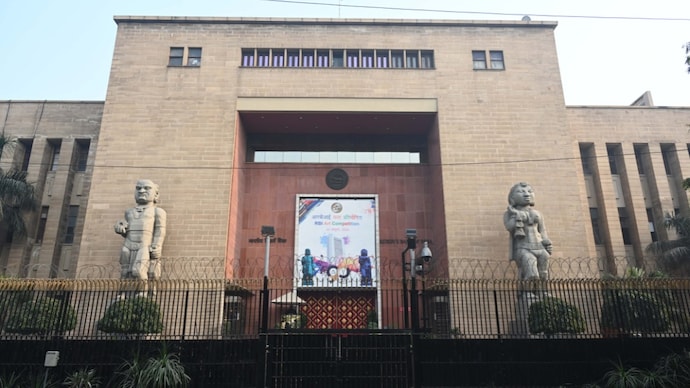
To put this in context, in FY2022-23, the transfer was Rs 87,416 crore. The year after, it jumped to Rs 2.10 lakh crore. Then Rs 2.69 lakh crore in the last fiscal. Now this. What was once a windfall has become a pattern—three consecutive years of transfers that dwarf everything before. The question: why?
The answer has three parts, and each carries its own implications. The first is the extraordinary post-pandemic global interest rate environment. When central banks worldwide raised rates aggressively to fight inflation after Covid, India’s foreign exchange reserves, sitting near $700 billion, were largely parked in foreign sovereign assets, primarily US treasuries and other high-grade bonds.
As global yields surged, the returns on those holdings surged with them. For much of FY24, FY25 and FY26, the RBI was earning substantially higher interest income on its foreign currency assets than at any point in its recent history. This was not the result of any policy choice. It was a windfall produced by the global rate cycle, and it flowed directly into the RBI’s income statement.
The second factor is currency operations. The RBI has intervened heavily in foreign exchange markets over the past three years to manage rupee volatility, selling dollars during depreciation episodes. The critical point is that many of those dollars were originally accumulated at much lower exchange rates over years of reserve-building. When they are sold at prevailing market rates during a depreciation cycle, the difference between the historical acquisition cost and the current sale price registers as a realised gain on the RBI’s books.
A major contributor this year was the nearly 10 per cent depreciation of the rupee against the US dollar during FY26, which generated substantial valuation gains on the RBI’s foreign currency assets. This mechanism is arithmetically straightforward, but it raises a question worth sitting with: these gains are, in part, a direct product of the same rupee weakness that has raised the cost of every imported good for every Indian household and business. The RBI profits, at least in accounting terms, from the currency stress it is simultaneously trying to contain.
The third factor is the expansion of the RBI’s balance-sheet itself, which ballooned to Rs 91.97 lakh crore in FY26, up over 20 per cent year on year. A larger balance-sheet, all else being equal, generates larger absolute surpluses even without any change in yield or return. The math is clean. But, again, it is not the whole story.
Now to the question of why the RBI was conservative for so long. The institutional memory that shaped RBI behaviour for decades was written in crisis. The 1991 balance-of-payments emergency—when India’s foreign exchange reserves fell to barely three weeks of import cover and gold had to be physically airlifted to London as collateral—left a lasting imprint on the institution’s culture.
Every subsequent generation of RBI leadership internalised a version of the same lesson: for an emerging economy with a convertible current account, large foreign exchange reserves and robust capital buffers are not excess caution but existential insurance. The Asian Financial Crisis of 1997, the global financial meltdown of 2008 and repeated episodes of capital flight from emerging markets during US rate cycles reinforced that instinct each time.
Transfers were kept modest not because the RBI lacked the legal authority to pay more, but because the institutional consensus held that the downside risk of under-capitalisation far outweighed the upside of maximising payouts to the government. The RBI was, in the language of central banking, running a precautionary buffer. It was not being obstinate. It was being conservative in the precise technical sense of that word.
The confrontation of 2018 cracked that consensus open. That year, the RBI under Governor Urjit Patel and the finance ministry under secretary Subhash Chandra Garg collided over one fundamental question: who owns the sovereign’s financial capital? The government’s position was that the RBI was sitting on far too much capital while the economy slowed, liquidity dried up and the IL&FS collapse sent shockwaves through the financial system.
The RBI’s position was that dipping aggressively into central-bank reserves would weaken institutional credibility and set a dangerous precedent. The standoff escalated through the year. Differences emerged over bank regulation, NBFC liquidity support, Prompt Corrective Action norms and the possible invocation of Section 7 of the RBI Act, which allows the government to issue directions to the central bank. The mere discussion of Section 7 rattled markets. It signalled a strain in the institutional relationship between Mint Street (nomenclature for RBI, which is headquartered on Mint Road, Mumbai) and North Block (finance ministry) that had rarely been visible before.
The ending was consequential. Patel’s resignation was accepted on December 10 that year, before completion of his term. Garg was transferred out of the finance ministry months later and subsequently took voluntary retirement. The compromise that followed was the Bimal Jalan committee’s Economic Capital Framework of 2019, which formalised how much the RBI must retain and how much it can transfer, giving large transfers rule-based legitimacy and making the conversation considerably less fraught. In institutional terms, that framework marked the end of the RBI’s long era of voluntary conservatism. Transfers would henceforth be calibrated by formula rather than discretion.
Former RBI deputy governor Viral Acharya, in his account of that period, noted that the government had sought Rs 2 to 3 trillion from the RBI ahead of the 2019 elections and described it as an attempt at back-door monetisation of the fiscal deficit. His concern was structural rather than partisan. Once a government begins to count on the central bank as a recurring revenue stream, the institutional incentives shift in ways that are gradual but meaningful.
Former RBI governor Raghuram Rajan has made a related argument: reserves are not idle cash but insurance against capital-flight shocks that emerging economies remain acutely vulnerable to. The cost of under-capitalisation reveals itself only in crises. And crises arrive without warning.
Yet the conservative view has its own serious critics, and they make a case that deserves to be heard. A broad school of macroeconomists argues that critics of large RBI transfers often romanticise central-bank conservatism without fully accounting for the realities of a developing economy. Their argument is pointed: if the RBI has already provisioned adequately for risks, then excessively large idle capital buffers inside the central bank are simply underutilised sovereign resources in a country still facing major infrastructure, welfare and developmental financing needs. Why should scarce public capital sit locked inside a balance-sheet when it can be productively deployed?
Supporters also point to the global comparison. The US Federal Reserve, the European Central Bank and the Bank of Japan massively expanded their balance-sheets during the pandemic and took on far greater market and sovereign-risk exposure than the RBI ever has. India’s transfers, by contrast, remain within a structured framework with explicit contingency provisioning.
Even this year, the RBI strengthened its Contingent Risk Buffer to 6.5 per cent of the balance-sheet, the upper end of the prescribed range, while paying out a record surplus. The institution remains more conservatively capitalised than most of its global peers, and Governor Sanjay Malhotra has shown no signs of departing from institutional orthodoxy.
What is notable is that support for the transfer today is not ideological enthusiasm for fiscal extraction. It is conditional and technocratic. Even economists broadly supportive of the payout attach the same consistent caveats: the Economic Capital Framework must remain rules-based, buffers must remain adequate, the RBI’s inflation mandate must not weaken, and governments must not become permanently dependent on such payouts. That nuance explains why the debate today is far less polarised than in 2018. The Jalan framework, in a real sense, transformed a political confrontation into a technical one.
This brings us to the question of timing. The RBI’s record payout lands at a moment of compounding fiscal stress. Crude oil prices have crossed $110 per barrel amidst the West Asia crisis. The rupee has touched a record low. The fertiliser subsidy bill, budgeted at Rs 1.7 lakh crore for FY2026-27, is expected to exceed estimates by close to 10 per cent as global urea prices have surged from around $490 per tonne to nearly $700 per tonne. LPG and fuel pricing pressures add further strain. Dividends from oil marketing companies are likely to disappoint given the squeeze on their margins. On nearly every front where the government expected revenue comfort this year, the West Asia crisis has introduced uncertainty or outright shortfall.
There is also the accounting dimension that rarely gets explained clearly. The surplus approved on Friday, adds some relief to policymakers as the total non-tax revenue for FY2026-27 is budgeted at roughly Rs 6.66 lakh crore. payout alone at Rs 2.87 lakh crore, amounts to nearly 43 per cent of that pool. It is equivalent to almost the entire annual combined subsidy bill on food, fertiliser and fuel. It exceeds the Centre’s defence capital expenditure for the year. Against the backdrop of West Asian turbulence, this is not merely a dividend. It is a fiscal rescue at precisely the right moment.
And yet, this is exactly where the harder questions must be asked, including the one about taxation by proxy. When the RBI earns large surpluses and transfers them to the government, who ultimately bears the cost? The answer is not straightforward, but it is not comfortable either. Elevated inflation, the very condition that drove global rate hikes and fattened RBI earnings, erodes the real purchasing power of every household that holds rupees. Higher domestic interest rates, which boosted the RBI’s returns on government securities and liquidity operations, simultaneously raised the EMI burden for home loan borrowers, increased working capital costs for small businesses and compressed margins for corporates.
The rupee depreciation that generated valuation gains for the RBI made every import more expensive for Indian consumers and every dollar-denominated input costlier for Indian industry. Currency-defence operations that produced treasury gains tightened liquidity conditions across the economy. The RBI did not design any of these outcomes to generate fiscal revenue.
But the institutional arithmetic means that macroeconomic stress for ordinary citizens and businesses translates, at least in part, into surplus for the central bank and, through the surplus transfer, into revenue for the government. Economists describe inflation as a form of silent taxation because it reduces real incomes without explicit legislation. In a meaningful sense, the RBI’s record surplus is a product of exactly that silence.
The implications for financial stability deserve separate examination. The Contingent Risk Buffer exists for a reason. Central banks in emerging markets face risks that do not always appear on the radar during benign cycles: sudden capital outflows, currency crises, banking system stress, sovereign debt shocks. India’s external sector, while stronger than in 1991, is not immune to these risks. The current West Asia crisis is itself a reminder of how quickly geopolitical shocks can cascade into currency pressure, import bill expansion and financial market volatility.
If the RBI were to face a serious external shock requiring large-scale currency intervention or emergency liquidity support to the banking system in the same period that its buffers have been drawn down to fund record transfers, the institution’s capacity to respond would be meaningfully reduced. This is not a prediction. It is a risk that needs to be named.
Markets and fiscal analysts are now building large RBI dividend assumptions directly into sovereign fiscal projections as a matter of course. The institution is no longer being read solely as a monetary authority. It is being read as a dependable annual revenue line. That perceptual shift has a logic of its own. Once expectations are anchored, they are difficult to dislodge without fiscal pain. A year in which the RBI were to transfer significantly less than Rs 2 lakh crore would today be treated not as a return to historical norms but as a fiscal shock requiring explanation.
Which brings us to the central question. Is giving record dividends to the government turning out to be a major objective of the RBI, in the process compromising or diluting its core mandates? Or is it simply the natural outcome of an extraordinary global playbook that the RBI has navigated competently? The honest answer is: it is both, and that is precisely what makes it worth worrying about. The surpluses are, for now, a genuine product of global conditions rather than manufactured extraction. The Jalan framework provides legitimate guardrails. The RBI has not visibly compromised inflation control or banking supervision to pad its income. On those measures, the institution’s integrity is intact.
But integrity of process is not the same as integrity of outcome. The concern is not that the RBI is doing something wrong. The concern is that the line between what the RBI does for monetary reasons and what it produces for fiscal reasons is becoming progressively harder to draw, and that no one in authority appears particularly motivated to draw it.
The RBI’s mandate, as written in its own Act, is monetary stability. It has acquired, through a combination of global accident and domestic political evolution, an additional role as the government’s most reliable fiscal shock absorber. That role was not assigned by Parliament. It was not debated in public. It emerged gradually, normalised quietly, and is now embedded in budget arithmetic.
The real question is not whether India should allow the RBI to transfer large surpluses. Under the right conditions, with adequate provisioning and intact institutional credibility, the case for doing so is defensible. The real question is whether India is wise to build its annual fiscal architecture around the assumption that such surpluses will always arrive. Cyclical windfalls are one thing.
Structural dependency is quite another. The difference between the two is not always visible in good years. It becomes visible in the year the surplus disappoints, the subsidy bill swells, the deficit widens and the government discovers it has quietly surrendered a degree of fiscal resilience it did not know it had given away. That moment has not arrived. But the architecture being built today will determine how badly it hurts when it does.
Subscribe to India Today Magazine
To put this in context, in FY2022-23, the transfer was Rs 87,416 crore. The year after, it jumped to Rs 2.10 lakh crore. Then Rs 2.69 lakh crore in the last fiscal. Now this. What was once a windfall has become a pattern—three consecutive years of transfers that dwarf everything before. The question: why?
The answer has three parts, and each carries its own implications. The first is the extraordinary post-pandemic global interest rate environment. When central banks worldwide raised rates aggressively to fight inflation after Covid, India’s foreign exchange reserves, sitting near $700 billion, were largely parked in foreign sovereign assets, primarily US treasuries and other high-grade bonds.
As global yields surged, the returns on those holdings surged with them. For much of FY24, FY25 and FY26, the RBI was earning substantially higher interest income on its foreign currency assets than at any point in its recent history. This was not the result of any policy choice. It was a windfall produced by the global rate cycle, and it flowed directly into the RBI’s income statement.
The second factor is currency operations. The RBI has intervened heavily in foreign exchange markets over the past three years to manage rupee volatility, selling dollars during depreciation episodes. The critical point is that many of those dollars were originally accumulated at much lower exchange rates over years of reserve-building. When they are sold at prevailing market rates during a depreciation cycle, the difference between the historical acquisition cost and the current sale price registers as a realised gain on the RBI’s books.
A major contributor this year was the nearly 10 per cent depreciation of the rupee against the US dollar during FY26, which generated substantial valuation gains on the RBI’s foreign currency assets. This mechanism is arithmetically straightforward, but it raises a question worth sitting with: these gains are, in part, a direct product of the same rupee weakness that has raised the cost of every imported good for every Indian household and business. The RBI profits, at least in accounting terms, from the currency stress it is simultaneously trying to contain.
The third factor is the expansion of the RBI’s balance-sheet itself, which ballooned to Rs 91.97 lakh crore in FY26, up over 20 per cent year on year. A larger balance-sheet, all else being equal, generates larger absolute surpluses even without any change in yield or return. The math is clean. But, again, it is not the whole story.
Now to the question of why the RBI was conservative for so long. The institutional memory that shaped RBI behaviour for decades was written in crisis. The 1991 balance-of-payments emergency—when India’s foreign exchange reserves fell to barely three weeks of import cover and gold had to be physically airlifted to London as collateral—left a lasting imprint on the institution’s culture.
Every subsequent generation of RBI leadership internalised a version of the same lesson: for an emerging economy with a convertible current account, large foreign exchange reserves and robust capital buffers are not excess caution but existential insurance. The Asian Financial Crisis of 1997, the global financial meltdown of 2008 and repeated episodes of capital flight from emerging markets during US rate cycles reinforced that instinct each time.
Transfers were kept modest not because the RBI lacked the legal authority to pay more, but because the institutional consensus held that the downside risk of under-capitalisation far outweighed the upside of maximising payouts to the government. The RBI was, in the language of central banking, running a precautionary buffer. It was not being obstinate. It was being conservative in the precise technical sense of that word.
The confrontation of 2018 cracked that consensus open. That year, the RBI under Governor Urjit Patel and the finance ministry under secretary Subhash Chandra Garg collided over one fundamental question: who owns the sovereign’s financial capital? The government’s position was that the RBI was sitting on far too much capital while the economy slowed, liquidity dried up and the IL&FS collapse sent shockwaves through the financial system.
The RBI’s position was that dipping aggressively into central-bank reserves would weaken institutional credibility and set a dangerous precedent. The standoff escalated through the year. Differences emerged over bank regulation, NBFC liquidity support, Prompt Corrective Action norms and the possible invocation of Section 7 of the RBI Act, which allows the government to issue directions to the central bank. The mere discussion of Section 7 rattled markets. It signalled a strain in the institutional relationship between Mint Street (nomenclature for RBI, which is headquartered on Mint Road, Mumbai) and North Block (finance ministry) that had rarely been visible before.
The ending was consequential. Patel’s resignation was accepted on December 10 that year, before completion of his term. Garg was transferred out of the finance ministry months later and subsequently took voluntary retirement. The compromise that followed was the Bimal Jalan committee’s Economic Capital Framework of 2019, which formalised how much the RBI must retain and how much it can transfer, giving large transfers rule-based legitimacy and making the conversation considerably less fraught. In institutional terms, that framework marked the end of the RBI’s long era of voluntary conservatism. Transfers would henceforth be calibrated by formula rather than discretion.
Former RBI deputy governor Viral Acharya, in his account of that period, noted that the government had sought Rs 2 to 3 trillion from the RBI ahead of the 2019 elections and described it as an attempt at back-door monetisation of the fiscal deficit. His concern was structural rather than partisan. Once a government begins to count on the central bank as a recurring revenue stream, the institutional incentives shift in ways that are gradual but meaningful.
Former RBI governor Raghuram Rajan has made a related argument: reserves are not idle cash but insurance against capital-flight shocks that emerging economies remain acutely vulnerable to. The cost of under-capitalisation reveals itself only in crises. And crises arrive without warning.
Yet the conservative view has its own serious critics, and they make a case that deserves to be heard. A broad school of macroeconomists argues that critics of large RBI transfers often romanticise central-bank conservatism without fully accounting for the realities of a developing economy. Their argument is pointed: if the RBI has already provisioned adequately for risks, then excessively large idle capital buffers inside the central bank are simply underutilised sovereign resources in a country still facing major infrastructure, welfare and developmental financing needs. Why should scarce public capital sit locked inside a balance-sheet when it can be productively deployed?
Supporters also point to the global comparison. The US Federal Reserve, the European Central Bank and the Bank of Japan massively expanded their balance-sheets during the pandemic and took on far greater market and sovereign-risk exposure than the RBI ever has. India’s transfers, by contrast, remain within a structured framework with explicit contingency provisioning.
Even this year, the RBI strengthened its Contingent Risk Buffer to 6.5 per cent of the balance-sheet, the upper end of the prescribed range, while paying out a record surplus. The institution remains more conservatively capitalised than most of its global peers, and Governor Sanjay Malhotra has shown no signs of departing from institutional orthodoxy.
What is notable is that support for the transfer today is not ideological enthusiasm for fiscal extraction. It is conditional and technocratic. Even economists broadly supportive of the payout attach the same consistent caveats: the Economic Capital Framework must remain rules-based, buffers must remain adequate, the RBI’s inflation mandate must not weaken, and governments must not become permanently dependent on such payouts. That nuance explains why the debate today is far less polarised than in 2018. The Jalan framework, in a real sense, transformed a political confrontation into a technical one.
This brings us to the question of timing. The RBI’s record payout lands at a moment of compounding fiscal stress. Crude oil prices have crossed $110 per barrel amidst the West Asia crisis. The rupee has touched a record low. The fertiliser subsidy bill, budgeted at Rs 1.7 lakh crore for FY2026-27, is expected to exceed estimates by close to 10 per cent as global urea prices have surged from around $490 per tonne to nearly $700 per tonne. LPG and fuel pricing pressures add further strain. Dividends from oil marketing companies are likely to disappoint given the squeeze on their margins. On nearly every front where the government expected revenue comfort this year, the West Asia crisis has introduced uncertainty or outright shortfall.
There is also the accounting dimension that rarely gets explained clearly. The surplus approved on Friday, adds some relief to policymakers as the total non-tax revenue for FY2026-27 is budgeted at roughly Rs 6.66 lakh crore. payout alone at Rs 2.87 lakh crore, amounts to nearly 43 per cent of that pool. It is equivalent to almost the entire annual combined subsidy bill on food, fertiliser and fuel. It exceeds the Centre’s defence capital expenditure for the year. Against the backdrop of West Asian turbulence, this is not merely a dividend. It is a fiscal rescue at precisely the right moment.
And yet, this is exactly where the harder questions must be asked, including the one about taxation by proxy. When the RBI earns large surpluses and transfers them to the government, who ultimately bears the cost? The answer is not straightforward, but it is not comfortable either. Elevated inflation, the very condition that drove global rate hikes and fattened RBI earnings, erodes the real purchasing power of every household that holds rupees. Higher domestic interest rates, which boosted the RBI’s returns on government securities and liquidity operations, simultaneously raised the EMI burden for home loan borrowers, increased working capital costs for small businesses and compressed margins for corporates.
The rupee depreciation that generated valuation gains for the RBI made every import more expensive for Indian consumers and every dollar-denominated input costlier for Indian industry. Currency-defence operations that produced treasury gains tightened liquidity conditions across the economy. The RBI did not design any of these outcomes to generate fiscal revenue.
But the institutional arithmetic means that macroeconomic stress for ordinary citizens and businesses translates, at least in part, into surplus for the central bank and, through the surplus transfer, into revenue for the government. Economists describe inflation as a form of silent taxation because it reduces real incomes without explicit legislation. In a meaningful sense, the RBI’s record surplus is a product of exactly that silence.
The implications for financial stability deserve separate examination. The Contingent Risk Buffer exists for a reason. Central banks in emerging markets face risks that do not always appear on the radar during benign cycles: sudden capital outflows, currency crises, banking system stress, sovereign debt shocks. India’s external sector, while stronger than in 1991, is not immune to these risks. The current West Asia crisis is itself a reminder of how quickly geopolitical shocks can cascade into currency pressure, import bill expansion and financial market volatility.
If the RBI were to face a serious external shock requiring large-scale currency intervention or emergency liquidity support to the banking system in the same period that its buffers have been drawn down to fund record transfers, the institution’s capacity to respond would be meaningfully reduced. This is not a prediction. It is a risk that needs to be named.
Markets and fiscal analysts are now building large RBI dividend assumptions directly into sovereign fiscal projections as a matter of course. The institution is no longer being read solely as a monetary authority. It is being read as a dependable annual revenue line. That perceptual shift has a logic of its own. Once expectations are anchored, they are difficult to dislodge without fiscal pain. A year in which the RBI were to transfer significantly less than Rs 2 lakh crore would today be treated not as a return to historical norms but as a fiscal shock requiring explanation.
Which brings us to the central question. Is giving record dividends to the government turning out to be a major objective of the RBI, in the process compromising or diluting its core mandates? Or is it simply the natural outcome of an extraordinary global playbook that the RBI has navigated competently? The honest answer is: it is both, and that is precisely what makes it worth worrying about. The surpluses are, for now, a genuine product of global conditions rather than manufactured extraction. The Jalan framework provides legitimate guardrails. The RBI has not visibly compromised inflation control or banking supervision to pad its income. On those measures, the institution’s integrity is intact.
But integrity of process is not the same as integrity of outcome. The concern is not that the RBI is doing something wrong. The concern is that the line between what the RBI does for monetary reasons and what it produces for fiscal reasons is becoming progressively harder to draw, and that no one in authority appears particularly motivated to draw it.
The RBI’s mandate, as written in its own Act, is monetary stability. It has acquired, through a combination of global accident and domestic political evolution, an additional role as the government’s most reliable fiscal shock absorber. That role was not assigned by Parliament. It was not debated in public. It emerged gradually, normalised quietly, and is now embedded in budget arithmetic.
The real question is not whether India should allow the RBI to transfer large surpluses. Under the right conditions, with adequate provisioning and intact institutional credibility, the case for doing so is defensible. The real question is whether India is wise to build its annual fiscal architecture around the assumption that such surpluses will always arrive. Cyclical windfalls are one thing.
Structural dependency is quite another. The difference between the two is not always visible in good years. It becomes visible in the year the surplus disappoints, the subsidy bill swells, the deficit widens and the government discovers it has quietly surrendered a degree of fiscal resilience it did not know it had given away. That moment has not arrived. But the architecture being built today will determine how badly it hurts when it does.
Subscribe to India Today Magazine

