Teejan Bai, Chhattisgarh's folk art icon who broke all barriers with audience
A not-so-known feature about Pandavani legend Teejan Bai was that during performances, she constantly took feedback from the audience to improvise
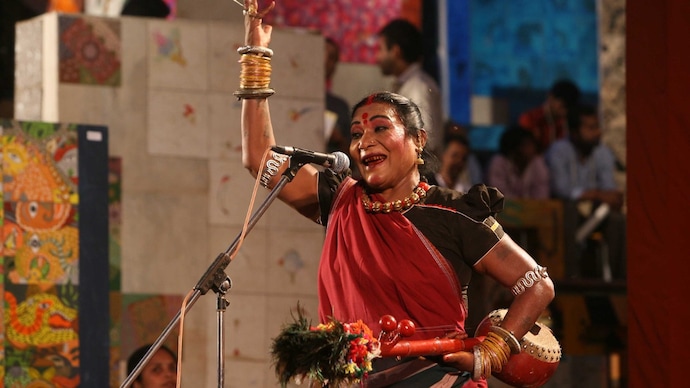
A recipient of the Padma Vibhushan in 2019, Padma Bhushan in 2003 and Padma Shri in 1988, Teejan Bai was a legendary exponent of the Pandavani art form. Pandavani literally means the story of the Pandavas, and is an enactment of sections of the epic Mahabharata.
Born in Ganiyari village near Bhilai, Teejan Bai had first heard her maternal grandfather recite the Mahabharata, and got inspired to memorise it. She belonged to the Pardhi community, listed as a Scheduled Tribe and now a denotified criminal tribe. Her art had her expelled from the community, which largely saw her as an iconoclast entering what was until then a male preserve.
Teejan Bai’s Pandavani was in Kapalik style, or while standing, whereas all women before her had performed in the Vedamati style, which is done sitting. Teejan Bai would perform just with an ektara, moving around and singing loudly.
Fellow Chhattisgarhi and theatre personality Habib Tanvir had a role in bringing forth her talent. It is said that Tanvir made her perform before prime minister Indira Gandhi, which brought her major recognition within the country and later internationally. She also did performances for Shyam Benegal’s Bharat Ek Khoj, a television adaptation of Jawaharlal Nehru’s The Discovery of India.
“Teejan Bai earned her name as a Pandavani performer. The emphasis on Pandavani prevented her from performing in other Chhattisgarhi forms, such as Bharthari and Sohar, in which she was good too,” says Rahul Singh, former director in the department of culture, Chhattisgarh.
Singh narrates a not-so-known feature about Teejan Bai—that during performances, she constantly took feedback from the audience in order to improvise. He mentions the concept of the Fourth Wall in theatre, which a lot of accomplished artistes use to shield themselves from the audience’s view during a performance.
“Teejan Bai was against the imposition of the Fourth Wall in theatre. In other words, she did not want a barrier between her and the audience. Once, when the lights were switched off, she demanded that they be put on again so that she could see the expressions on the face of the audience. Her performances would be improvised based on this live feedback,” recalls Singh.
Prime Minister Narendra Modi, in his condolence message, wrote that Teejan Bai had given the Pandavani folk art form “a unique identity across the world”. Chhattisgarh chief minister Vishnu Deo Sai remembered Teejan Bai as the state’s “pride and honour”.
Subscribe to India Today Magazine
A recipient of the Padma Vibhushan in 2019, Padma Bhushan in 2003 and Padma Shri in 1988, Teejan Bai was a legendary exponent of the Pandavani art form. Pandavani literally means the story of the Pandavas, and is an enactment of sections of the epic Mahabharata.
Born in Ganiyari village near Bhilai, Teejan Bai had first heard her maternal grandfather recite the Mahabharata, and got inspired to memorise it. She belonged to the Pardhi community, listed as a Scheduled Tribe and now a denotified criminal tribe. Her art had her expelled from the community, which largely saw her as an iconoclast entering what was until then a male preserve.
Teejan Bai’s Pandavani was in Kapalik style, or while standing, whereas all women before her had performed in the Vedamati style, which is done sitting. Teejan Bai would perform just with an ektara, moving around and singing loudly.
Fellow Chhattisgarhi and theatre personality Habib Tanvir had a role in bringing forth her talent. It is said that Tanvir made her perform before prime minister Indira Gandhi, which brought her major recognition within the country and later internationally. She also did performances for Shyam Benegal’s Bharat Ek Khoj, a television adaptation of Jawaharlal Nehru’s The Discovery of India.
“Teejan Bai earned her name as a Pandavani performer. The emphasis on Pandavani prevented her from performing in other Chhattisgarhi forms, such as Bharthari and Sohar, in which she was good too,” says Rahul Singh, former director in the department of culture, Chhattisgarh.
Singh narrates a not-so-known feature about Teejan Bai—that during performances, she constantly took feedback from the audience in order to improvise. He mentions the concept of the Fourth Wall in theatre, which a lot of accomplished artistes use to shield themselves from the audience’s view during a performance.
“Teejan Bai was against the imposition of the Fourth Wall in theatre. In other words, she did not want a barrier between her and the audience. Once, when the lights were switched off, she demanded that they be put on again so that she could see the expressions on the face of the audience. Her performances would be improvised based on this live feedback,” recalls Singh.
Prime Minister Narendra Modi, in his condolence message, wrote that Teejan Bai had given the Pandavani folk art form “a unique identity across the world”. Chhattisgarh chief minister Vishnu Deo Sai remembered Teejan Bai as the state’s “pride and honour”.
Subscribe to India Today Magazine

