Temple donations: Kamakhya's informal accounting contrasts crores received as offerings
How the accounts are kept is where the system shows its age. Audits are done roughly every six months, but the arrangement is ad hoc rather than institutionalised
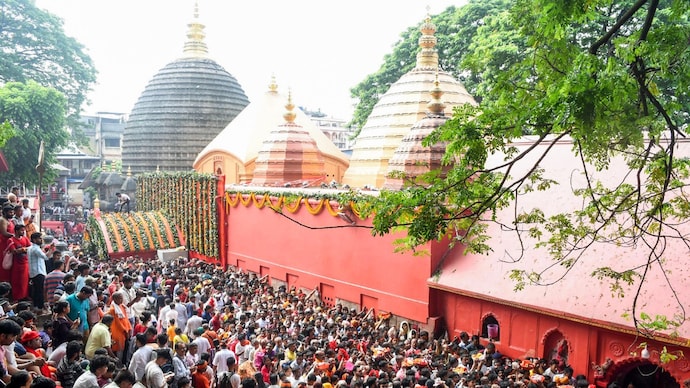
During auspicious periods, it swells to 30,000-35,000. On January 1 this year, the temple recorded close to 50,000 visitors in a single day. And during the Ambubachi Mela, the temple’s signature festival, the count runs into hundreds of thousands of pilgrims.
Each of these footfalls carries an economic tail: offerings in the donation boxes, cash handed over at the sanctum, gold and silver gifted to the goddess, and the daily cost of feeding, housing and managing a religious institution that never really shuts.
Yet, for all the money that moves through Kamakhya, the system that manages it remains, by the admission of those close to it, largely informal. Understanding this is relevant in the backdrop of the ongoing donation pilferage probe at the Ram Temple in Ayodhya, where investigators estimate Rs 7.9 crore worth of devotee offerings were siphoned off.
How the Kamakhya Temple handles its finances means separating two distinct streams that public discussion often blurs. The first is the temple’s own money: the offerings, donations and special-darshan fees of Rs 501 flowing in directly from devotees. Bank deposits are held with the State Bank of India (SBI).
Cash collected at the temple, however, is handled differently. It is gathered, counted and maintained by the Bor Doloi (chief priest) and his team. Gold, other metals and precious items donated to the goddess are stored in a bharal, the temple’s traditional storehouse, under the custody of designated functionaries.
The temple’s recurring expenses are sizeable. Kamakhya employs around 500 people, all of whom draw monthly salaries. On top of payroll, the temple pays for electricity, routine maintenance and repairs to its buildings and infrastructure. These are ongoing commitments that have to be met, irrespective of the number of footfalls.
How the account books are kept is where the system shows its age. Audits are conducted roughly every six months by accountants, but the arrangement is ad hoc rather than institutionalised. There is no publicly accessible annual audit, no financial dashboard, and no routine publication of donation totals or expenditure heads.
A researcher can readily find the value of government-funded projects around the temple but cannot easily establish how much the temple itself collects and spends in a year. That gap, between the relative transparency of public money and the opacity of the temple’s own money, is the defining feature of Kamakhya’s financial picture.
The man at the centre of that system is the Bor Doloi, Kabindra Prasad Sarma, the seniormost office-bearer of the temple’s executive committee. He describes the money trail in straightforward terms. Devotees wishing to contribute towards temple management, rituals, pujas and related activities can deposit funds directly into the official bank account. “Temple bank account details are available on the official website and may also be independently verified through the concerned bank,” Sarma says, pointing to the SBI channel as the verifiable route for donations.
On daily collections, his account is similarly procedural. “Donations received from daily devotees are collected through established ceremonial procedures under the supervision of the temple trust and subsequently deposited into the temple bank account. The Temple Committee withdraws funds as required for maintenance, developmental activities and payment of salaries to temple staff,” he says.
What is the money spent on? By his account, the deposited funds are used for pujas, religious ceremonies, temple repair and maintenance, procurement of puja materials, annual rituals, security arrangements, insurance and other operational needs. He also says the temple is not indifferent to statutory compliance. “Annual financial calculations are carried out and applicable income tax liabilities are deposited within the prescribed timelines,” he says.
This internal economy is not run by the executive committee alone. Kamakhya’s administration is distributed across a traditional service hierarchy with very specific roles. The Bharalis are responsible for keeping the temple’s accounts and tracking expenditure. The Bharalkanths run the bhandar or warehouse. The Sonaris look after ornaments, and other shebait groups handle offerings, bhog, access control and ritual logistics.
The structure has legal backing. In 2015, the Supreme Court upheld the customary rights of the Bordeuri Samaj and its elected Dolois to manage both the religious and secular affairs of the temple, rejecting the authority claimed under the Kamakhya Debutter Regulation, 1998.
It is within this otherwise stable structure that a concern has begun to surface, less about honesty than about how power is being held. “The General Body used to function in a democratic way earlier,” notes one observer familiar with the temple’s affairs. “But of late, too much power has been concentrated in Bordoloi’s hand. This is not good for the temple’s functioning as such big institutes can’t function ad hoc.”
The point is structural: an institution that handles crores in offerings and runs a 500-strong payroll cannot indefinitely rely on informal arrangements and concentrated discretion. Of course, no allegation of financial mismanagement has been levelled against the current committee.
The controversy that has dogged Kamakhya belongs to an earlier era. The Enforcement Directorate conducted raids at the residences of three former officials of a dissolved administrators’ board of the temple, investigating alleged misappropriation exceeding Rs 7 crore from temple funds. The raids followed a CID case filed against the officials.
Subscribe to India Today Magazine
During auspicious periods, it swells to 30,000-35,000. On January 1 this year, the temple recorded close to 50,000 visitors in a single day. And during the Ambubachi Mela, the temple’s signature festival, the count runs into hundreds of thousands of pilgrims.
Each of these footfalls carries an economic tail: offerings in the donation boxes, cash handed over at the sanctum, gold and silver gifted to the goddess, and the daily cost of feeding, housing and managing a religious institution that never really shuts.
Yet, for all the money that moves through Kamakhya, the system that manages it remains, by the admission of those close to it, largely informal. Understanding this is relevant in the backdrop of the ongoing donation pilferage probe at the Ram Temple in Ayodhya, where investigators estimate Rs 7.9 crore worth of devotee offerings were siphoned off.
How the Kamakhya Temple handles its finances means separating two distinct streams that public discussion often blurs. The first is the temple’s own money: the offerings, donations and special-darshan fees of Rs 501 flowing in directly from devotees. Bank deposits are held with the State Bank of India (SBI).
Cash collected at the temple, however, is handled differently. It is gathered, counted and maintained by the Bor Doloi (chief priest) and his team. Gold, other metals and precious items donated to the goddess are stored in a bharal, the temple’s traditional storehouse, under the custody of designated functionaries.
The temple’s recurring expenses are sizeable. Kamakhya employs around 500 people, all of whom draw monthly salaries. On top of payroll, the temple pays for electricity, routine maintenance and repairs to its buildings and infrastructure. These are ongoing commitments that have to be met, irrespective of the number of footfalls.
How the account books are kept is where the system shows its age. Audits are conducted roughly every six months by accountants, but the arrangement is ad hoc rather than institutionalised. There is no publicly accessible annual audit, no financial dashboard, and no routine publication of donation totals or expenditure heads.
A researcher can readily find the value of government-funded projects around the temple but cannot easily establish how much the temple itself collects and spends in a year. That gap, between the relative transparency of public money and the opacity of the temple’s own money, is the defining feature of Kamakhya’s financial picture.
The man at the centre of that system is the Bor Doloi, Kabindra Prasad Sarma, the seniormost office-bearer of the temple’s executive committee. He describes the money trail in straightforward terms. Devotees wishing to contribute towards temple management, rituals, pujas and related activities can deposit funds directly into the official bank account. “Temple bank account details are available on the official website and may also be independently verified through the concerned bank,” Sarma says, pointing to the SBI channel as the verifiable route for donations.
On daily collections, his account is similarly procedural. “Donations received from daily devotees are collected through established ceremonial procedures under the supervision of the temple trust and subsequently deposited into the temple bank account. The Temple Committee withdraws funds as required for maintenance, developmental activities and payment of salaries to temple staff,” he says.
What is the money spent on? By his account, the deposited funds are used for pujas, religious ceremonies, temple repair and maintenance, procurement of puja materials, annual rituals, security arrangements, insurance and other operational needs. He also says the temple is not indifferent to statutory compliance. “Annual financial calculations are carried out and applicable income tax liabilities are deposited within the prescribed timelines,” he says.
This internal economy is not run by the executive committee alone. Kamakhya’s administration is distributed across a traditional service hierarchy with very specific roles. The Bharalis are responsible for keeping the temple’s accounts and tracking expenditure. The Bharalkanths run the bhandar or warehouse. The Sonaris look after ornaments, and other shebait groups handle offerings, bhog, access control and ritual logistics.
The structure has legal backing. In 2015, the Supreme Court upheld the customary rights of the Bordeuri Samaj and its elected Dolois to manage both the religious and secular affairs of the temple, rejecting the authority claimed under the Kamakhya Debutter Regulation, 1998.
It is within this otherwise stable structure that a concern has begun to surface, less about honesty than about how power is being held. “The General Body used to function in a democratic way earlier,” notes one observer familiar with the temple’s affairs. “But of late, too much power has been concentrated in Bordoloi’s hand. This is not good for the temple’s functioning as such big institutes can’t function ad hoc.”
The point is structural: an institution that handles crores in offerings and runs a 500-strong payroll cannot indefinitely rely on informal arrangements and concentrated discretion. Of course, no allegation of financial mismanagement has been levelled against the current committee.
The controversy that has dogged Kamakhya belongs to an earlier era. The Enforcement Directorate conducted raids at the residences of three former officials of a dissolved administrators’ board of the temple, investigating alleged misappropriation exceeding Rs 7 crore from temple funds. The raids followed a CID case filed against the officials.
Subscribe to India Today Magazine

