This monsoon, potholes and flyovers are Delhi's new governance metric
The BJP government's message is unambiguous: greater scrutiny of road health, tougher accountability and lesser tolerance for poor workmanship
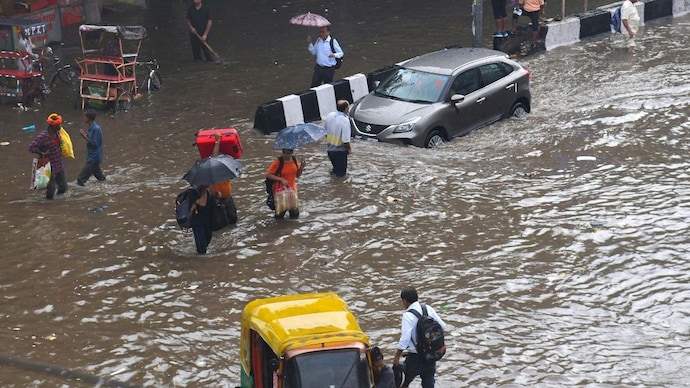
Back in 2024, 23-year-old Tanuja and her three-year-old son had drowned in a waterlogged drain in East Delhi’s Ghazipur, prompting the Delhi High Court to issue an ultimatum to the Municipal Corporation of Delhi (MCD) and Public Works Department (PWD).
As Delhi awaits its season of monsoon downpours, the BJP government, it seems, is working to cover all the bases. Teams of senior PWD engineers have been fanning out across the capital to inspect old roads, clogged drains and waterlogging hotspots before rains again expose the city’s infrastructure loopholes.
The message from the administration is unambiguous. This year, there will be greater scrutiny, tougher accountability and lesser tolerance for poor workmanship. “Senior officers, chief engineers and officials are inspecting roads across Delhi before the monsoon,” PWD minister Parvesh Verma said while reviewing preparedness earlier this month. “We are checking the desilting of PWD stormwater drains, but the real picture cannot be understood without physically checking the ground.”
Verma had last year earned eyeballs after announcing that his department would fill up some 3,400 potholes identified on Delhi’s 1,400-km-long road network. Not stopping there, the officials had claimed that all those potholes would be “geo-tagged” before monsoon.
Not to be left behind, the MCD has this time tied up with the Central Road Research Institute (CRRI) to, among other things, fill Delhi’s potholes with Ecofix, a recycled iron and steel slag aggregate-based rapid pothole repair technology developed by CRRI.
In the spirit of things, inspection teams have been deployed in all of Delhi’s 70 assembly constituencies in phases. Officials are assessing roads, stormwater drains, carriageways and vulnerable stretches where flooding and traffic disruption have historically occurred.
Verma has also sought to raise the stakes for both contractors and engineers. “If the work is found to be unsatisfactory, payments to contractors would be withheld. Strict action would be taken against engineers who fail to perform their duties properly,” he said. “Our objective is to ensure residents of Delhi do not face waterlogging this rainy season.”
These inspections are the latest manifestation of what has steadily become one of the BJP government’s most visible governance priorities: roads. From repairing potholes and resurfacing arterial corridors to auditing ageing flyovers and planning new expressway links, the government has made road infrastructure a face of its administrative agenda.
For a city with one of India’s largest registered-vehicle populations and among the country’s highest levels of private-vehicle ownership, there is rarely such a thing as too many roads, too many flyovers or too much carrying capacity. Existing infrastructure must constantly be repaired while new capacity needs to be created almost simultaneously to keep pace with the growing demand.
Last week, Verma announced structural audits of 44 flyovers more than 15 years old, with structures built before 2000 receiving priority. The PWD manages around 100 flyovers. “Public safety cannot wait for a crisis,” Verma said while announcing the exercise. “Many of our flyovers have been serving citizens for more than 15 years and carry hundreds of thousands of commuters every day.”
The preventive approach follows recent concerns over cracks reported on the Haiderpur flyover. The department said repairs were carried out promptly and that there was no structural threat to the bridge.
Field inspections make for good optics, too. Nearly a year ago, shortly after taking charge of the PWD, Verma put senior engineers and department officials on a bus and drove them around Delhi’s Ring Road. The inspection covered some of the capital’s busiest corridors as Verma pointed out potholes, damaged pavements, waterlogging hotspots, traffic bottlenecks, roadside horticulture, streetlights and surveillance cameras. Grim-faced PWD officials took notes.
“What officers tell us in air-conditioned meeting rooms and what actually exists on the ground are completely different,” Verma told officials. “That is why it was necessary to bring everyone out and show them the ground reality.”
That philosophy has increasingly shaped the government’s approach to road maintenance. Firstly, the PWD found 100 km of roads that needed immediate fixing. The target was then increased to 250 km before the monsoon and further increased to 600 km for the year. In its progress report for the first 100 days, the government said that by the end of May 2025, work on 66 km had been completed and a further 114 km was more than 95 per cent complete. Around half of the resurfacing exercise was performed at night to minimise traffic disruption.
The repaired stretches include the Akshardham flyover, Ring Road between Bhairon Marg and Ashram, Vikas Marg between Delhi Secretariat and ITO, Outer Ring Road between the Modi Mill and IIT flyovers, Africa Avenue in R.K. Puram, and flyovers near AIIMS and Safdarjung Hospital.
The financial commitment has accompanied the engineering push. The Delhi government’s first budget last year earmarked Rs 3,843 crore for roads and bridges. This year, it unveiled the capital’s first budget exceeding Rs 1 lakh crore. Of the total outlay of Rs 1.03 lakh crore, around Rs 28,000 crore was for infrastructure.
But roads as a manifest of governance in Delhi goes much further back. The roads of modern Delhi are the result of years of investment. Ahead of the 2010 Commonwealth Games, the capital saw one of its largest waves of transport infrastructure expansion. A plethora of flyovers, grade separators, underpasses and corridors converted many of the city’s most congested stretches into manageable ones. Most of the infrastructure constructed during that period is still carrying massive amounts of traffic today.
Over the years, however, that network has aged even as traffic volumes have continued to rise. The previous AAP government undertook several infrastructure projects but also repeatedly argued that disputes with the Centre, bureaucratic constraints and administrative hurdles slowed down the execution of larger road works.
The BJP government that replaced AAP’s is attempting to combine maintenance with expansion. Besides repairs, it has announced three major road connectivity works following a meeting between chief minister Rekha Gupta and Union road transport and highways minister Nitin Gadkari.
These are Rs 3,500 crore extension to connect Urban Extension Road-II (UER-II) and the Delhi-Dehradun Expressway; the proposed Rs 7,500 crore corridor linking the Delhi-Dehradun Expressway with Noida-Faridabad, including the Nilothi portion beyond UER-II to Ahmedabad; as also a separate Rs 1,500 crore link connecting UER-II to the ambitious Delhi-Amritsar-Katra road corridor.
Collectively, the projects seek to increase Delhi’s carrying capacity by improving links with the national highway network while easing pressure on existing urban corridors. The government has yet to publish a consolidated public dashboard tracking progress against its 600 km road repair target beyond the initial 100-day update. But the direction of travel is clear. In a capital where every resident encounters congestion, potholes, ageing flyovers and waterlogging firsthand, roads have become one of the BJP government’s clearest demonstrations of governance. The monsoon is, therefore, a test of not just road quality but also governance.
Subscribe to India Today Magazine
Back in 2024, 23-year-old Tanuja and her three-year-old son had drowned in a waterlogged drain in East Delhi’s Ghazipur, prompting the Delhi High Court to issue an ultimatum to the Municipal Corporation of Delhi (MCD) and Public Works Department (PWD).
As Delhi awaits its season of monsoon downpours, the BJP government, it seems, is working to cover all the bases. Teams of senior PWD engineers have been fanning out across the capital to inspect old roads, clogged drains and waterlogging hotspots before rains again expose the city’s infrastructure loopholes.
The message from the administration is unambiguous. This year, there will be greater scrutiny, tougher accountability and lesser tolerance for poor workmanship. “Senior officers, chief engineers and officials are inspecting roads across Delhi before the monsoon,” PWD minister Parvesh Verma said while reviewing preparedness earlier this month. “We are checking the desilting of PWD stormwater drains, but the real picture cannot be understood without physically checking the ground.”
Verma had last year earned eyeballs after announcing that his department would fill up some 3,400 potholes identified on Delhi’s 1,400-km-long road network. Not stopping there, the officials had claimed that all those potholes would be “geo-tagged” before monsoon.
Not to be left behind, the MCD has this time tied up with the Central Road Research Institute (CRRI) to, among other things, fill Delhi’s potholes with Ecofix, a recycled iron and steel slag aggregate-based rapid pothole repair technology developed by CRRI.
In the spirit of things, inspection teams have been deployed in all of Delhi’s 70 assembly constituencies in phases. Officials are assessing roads, stormwater drains, carriageways and vulnerable stretches where flooding and traffic disruption have historically occurred.
Verma has also sought to raise the stakes for both contractors and engineers. “If the work is found to be unsatisfactory, payments to contractors would be withheld. Strict action would be taken against engineers who fail to perform their duties properly,” he said. “Our objective is to ensure residents of Delhi do not face waterlogging this rainy season.”
These inspections are the latest manifestation of what has steadily become one of the BJP government’s most visible governance priorities: roads. From repairing potholes and resurfacing arterial corridors to auditing ageing flyovers and planning new expressway links, the government has made road infrastructure a face of its administrative agenda.
For a city with one of India’s largest registered-vehicle populations and among the country’s highest levels of private-vehicle ownership, there is rarely such a thing as too many roads, too many flyovers or too much carrying capacity. Existing infrastructure must constantly be repaired while new capacity needs to be created almost simultaneously to keep pace with the growing demand.
Last week, Verma announced structural audits of 44 flyovers more than 15 years old, with structures built before 2000 receiving priority. The PWD manages around 100 flyovers. “Public safety cannot wait for a crisis,” Verma said while announcing the exercise. “Many of our flyovers have been serving citizens for more than 15 years and carry hundreds of thousands of commuters every day.”
The preventive approach follows recent concerns over cracks reported on the Haiderpur flyover. The department said repairs were carried out promptly and that there was no structural threat to the bridge.
Field inspections make for good optics, too. Nearly a year ago, shortly after taking charge of the PWD, Verma put senior engineers and department officials on a bus and drove them around Delhi’s Ring Road. The inspection covered some of the capital’s busiest corridors as Verma pointed out potholes, damaged pavements, waterlogging hotspots, traffic bottlenecks, roadside horticulture, streetlights and surveillance cameras. Grim-faced PWD officials took notes.
“What officers tell us in air-conditioned meeting rooms and what actually exists on the ground are completely different,” Verma told officials. “That is why it was necessary to bring everyone out and show them the ground reality.”
That philosophy has increasingly shaped the government’s approach to road maintenance. Firstly, the PWD found 100 km of roads that needed immediate fixing. The target was then increased to 250 km before the monsoon and further increased to 600 km for the year. In its progress report for the first 100 days, the government said that by the end of May 2025, work on 66 km had been completed and a further 114 km was more than 95 per cent complete. Around half of the resurfacing exercise was performed at night to minimise traffic disruption.
The repaired stretches include the Akshardham flyover, Ring Road between Bhairon Marg and Ashram, Vikas Marg between Delhi Secretariat and ITO, Outer Ring Road between the Modi Mill and IIT flyovers, Africa Avenue in R.K. Puram, and flyovers near AIIMS and Safdarjung Hospital.
The financial commitment has accompanied the engineering push. The Delhi government’s first budget last year earmarked Rs 3,843 crore for roads and bridges. This year, it unveiled the capital’s first budget exceeding Rs 1 lakh crore. Of the total outlay of Rs 1.03 lakh crore, around Rs 28,000 crore was for infrastructure.
But roads as a manifest of governance in Delhi goes much further back. The roads of modern Delhi are the result of years of investment. Ahead of the 2010 Commonwealth Games, the capital saw one of its largest waves of transport infrastructure expansion. A plethora of flyovers, grade separators, underpasses and corridors converted many of the city’s most congested stretches into manageable ones. Most of the infrastructure constructed during that period is still carrying massive amounts of traffic today.
Over the years, however, that network has aged even as traffic volumes have continued to rise. The previous AAP government undertook several infrastructure projects but also repeatedly argued that disputes with the Centre, bureaucratic constraints and administrative hurdles slowed down the execution of larger road works.
The BJP government that replaced AAP’s is attempting to combine maintenance with expansion. Besides repairs, it has announced three major road connectivity works following a meeting between chief minister Rekha Gupta and Union road transport and highways minister Nitin Gadkari.
These are Rs 3,500 crore extension to connect Urban Extension Road-II (UER-II) and the Delhi-Dehradun Expressway; the proposed Rs 7,500 crore corridor linking the Delhi-Dehradun Expressway with Noida-Faridabad, including the Nilothi portion beyond UER-II to Ahmedabad; as also a separate Rs 1,500 crore link connecting UER-II to the ambitious Delhi-Amritsar-Katra road corridor.
Collectively, the projects seek to increase Delhi’s carrying capacity by improving links with the national highway network while easing pressure on existing urban corridors. The government has yet to publish a consolidated public dashboard tracking progress against its 600 km road repair target beyond the initial 100-day update. But the direction of travel is clear. In a capital where every resident encounters congestion, potholes, ageing flyovers and waterlogging firsthand, roads have become one of the BJP government’s clearest demonstrations of governance. The monsoon is, therefore, a test of not just road quality but also governance.
Subscribe to India Today Magazine

