What all Tirupati temple trust is doing to avoid another laddoo prasad row
The trust signed an MoU with the Central Food Technological Research Institute to integrate scientific methods into food safety. How this helps
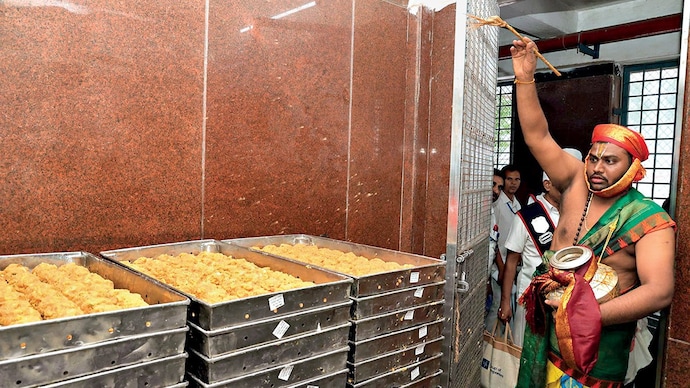
While the special investigation team (SIT) probe did find a massive scam in the procurement of ghee, “causing losses of Rs 234 crore over five years to the temple trust”, it indicated no evidence of animal fat—fish oil and lard—in the adulterated ghee.
However, investigators established the presence of vegetable oil and synthetic/chemical substances in the ghee supplied by contractors to the Tirumala Tirupati Devasthanams (TTD), the body managing the Lord Venkateshwara temple, whereas it was supposed to have been derived from pure cow milk.
Having learnt its lessons, the TTD has been putting in place various mechanisms to avoid adulteration of food materials going into the making of the laddoo prasad and other delicacies offered at the hilltop shrine.
The TTD has adopted Food Safety and Standards Authority of India (FSSAI) standards of testing. It has noted that some suppliers were indeed taking advantage of “poor quality control systems” and quoting very low, unviable rates (Rs 320 to Rs 411 per kg) for ghee supply in their tenders.
Having adopted stringent testing parameters, which now total to 24 against the eight previously, the TTD is now procuring ghee at around Rs 650 per kg from suppliers such as Indapur Dairy, Mother Dairy and Nandini.
Since March, the TTD has equipped itself with a Rs 23.5 crore state-of-the-art food testing lab at Tirumala, which adheres to FSSAI standards. It includes an AI-based e-nose and e-tongue—high-tech appliances that replace the human sensory organ-based testing done earlier. The system was prescribed by the Central Food Technological Research Institute (CFTRI), headquartered in Mysuru. The labs now detect the presence, if any, of Beta-sitosterol, fatty acids, preservatives, pesticides, etc. in ghee and other food materials supplied by contractors.
The latest in the series of corrective measures to ensure food safety is the TTD signing an MoU with CFTRI to integrate scientific methods into its food systems. The partnership, officials say, introduces scientific protocols across production, storage and testing, aimed at enhancing the safety, nutrition and quality of the prasadam.
The MoU is the first of its kind for a temple in the country. It was signed in the presence of Pralhad Joshi, Union minister for consumer affairs, food and public distribution, during the Research, Industry, Start-up and Entrepreneurship Conclave held in Bengaluru recently.
The key features of the MoU include strengthened safety and quality controls. Joint teams will develop and implement rigorous quality-control standards and monitoring mechanisms covering procurement, preparation and distribution. The safety net includes:
Modernisation of systems: CFTRI will advise on upgrading storage, testing and procurement processes, recommending scientifically validated technologies and best-practices to minimise contamination risk and improve consistency.
Preservation of prasadam: Research-led packaging and shelf-life interventions will be developed to extend food stability without compromising on its taste, texture or cultural value.
Capacity building: CFTRI will provide training for the TTD’s in-house food analysts and handlers in advanced analytical techniques, sampling protocols, contaminant detection and specialised assessments such as ghee purity and aroma profiling.
Expert engagement: Senior scientists from CFTRI will conduct regular visits to TTD facilities to support implementation, validation studies and improvements to storage and procurement planning.
Subscribe to India Today Magazine
While the special investigation team (SIT) probe did find a massive scam in the procurement of ghee, “causing losses of Rs 234 crore over five years to the temple trust”, it indicated no evidence of animal fat—fish oil and lard—in the adulterated ghee.
However, investigators established the presence of vegetable oil and synthetic/chemical substances in the ghee supplied by contractors to the Tirumala Tirupati Devasthanams (TTD), the body managing the Lord Venkateshwara temple, whereas it was supposed to have been derived from pure cow milk.
Having learnt its lessons, the TTD has been putting in place various mechanisms to avoid adulteration of food materials going into the making of the laddoo prasad and other delicacies offered at the hilltop shrine.
The TTD has adopted Food Safety and Standards Authority of India (FSSAI) standards of testing. It has noted that some suppliers were indeed taking advantage of “poor quality control systems” and quoting very low, unviable rates (Rs 320 to Rs 411 per kg) for ghee supply in their tenders.
Having adopted stringent testing parameters, which now total to 24 against the eight previously, the TTD is now procuring ghee at around Rs 650 per kg from suppliers such as Indapur Dairy, Mother Dairy and Nandini.
Since March, the TTD has equipped itself with a Rs 23.5 crore state-of-the-art food testing lab at Tirumala, which adheres to FSSAI standards. It includes an AI-based e-nose and e-tongue—high-tech appliances that replace the human sensory organ-based testing done earlier. The system was prescribed by the Central Food Technological Research Institute (CFTRI), headquartered in Mysuru. The labs now detect the presence, if any, of Beta-sitosterol, fatty acids, preservatives, pesticides, etc. in ghee and other food materials supplied by contractors.
The latest in the series of corrective measures to ensure food safety is the TTD signing an MoU with CFTRI to integrate scientific methods into its food systems. The partnership, officials say, introduces scientific protocols across production, storage and testing, aimed at enhancing the safety, nutrition and quality of the prasadam.
The MoU is the first of its kind for a temple in the country. It was signed in the presence of Pralhad Joshi, Union minister for consumer affairs, food and public distribution, during the Research, Industry, Start-up and Entrepreneurship Conclave held in Bengaluru recently.
The key features of the MoU include strengthened safety and quality controls. Joint teams will develop and implement rigorous quality-control standards and monitoring mechanisms covering procurement, preparation and distribution. The safety net includes:
Modernisation of systems: CFTRI will advise on upgrading storage, testing and procurement processes, recommending scientifically validated technologies and best-practices to minimise contamination risk and improve consistency.
Preservation of prasadam: Research-led packaging and shelf-life interventions will be developed to extend food stability without compromising on its taste, texture or cultural value.
Capacity building: CFTRI will provide training for the TTD’s in-house food analysts and handlers in advanced analytical techniques, sampling protocols, contaminant detection and specialised assessments such as ghee purity and aroma profiling.
Expert engagement: Senior scientists from CFTRI will conduct regular visits to TTD facilities to support implementation, validation studies and improvements to storage and procurement planning.
Subscribe to India Today Magazine

