What message is BJP sending through Bengal's 'most diverse' cabinet yet?
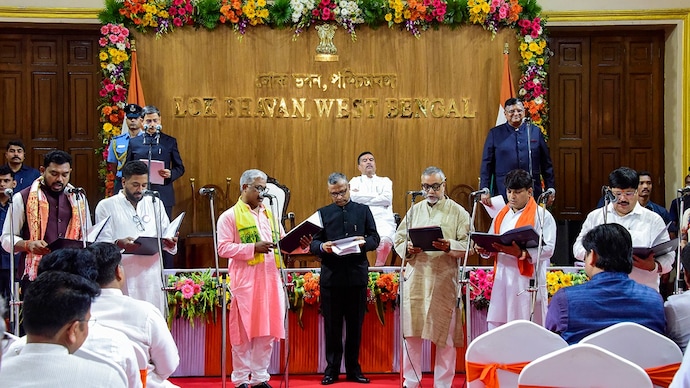
Linguistic, community and regional representation were the striking features of the Suvendu Adhikari-led cabinet's expansion on June1
Adhikari had taken charge on May 9 with five ministers—Dilip Ghosh, Agnimitra Paul, Nisith Pramanik, Ashok Kirtania and Khudiram Tudu. Prime Minister Narendra Modi and Union home minister Amit Shah were present at the swearing-in ceremony of the first BJP dispensation in Bengal.
One of the striking features of the cabinet expansion on June 1 was the linguistic diversity on display. Ministers took their oath in Bengali, Hindi, English, Nepali, Santali and Rajbanshi, showcasing representation across communities and regions.
Cabinet minister Ajay Kumar Poddar and minister of state Umesh Rai took their oaths in Hindi. Rajesh Mahato, a minister of state with independent charge, chose English. Ministers of state Joel Murmu and Amiya Kisku took oath in Santali. Anandamoy Barman used Rajbanshi while Bishal Lama took oath in Nepali, symbolically representing the linguistic and cultural diversity of north Bengal and the Hills.
Among the 13 cabinet ministers inducted, several are experienced politicians while others represent key social and regional constituencies. Tapas Roy, a veteran leader who began his career in the Congress before moving to the Trinamool Congress and finally the BJP, was the only cabinet minister from north Kolkata. Manoj Oraon represented north Bengal’s tribal communities. Arjun Singh came on board as one of the BJP’s most recognisable Hindi-speaking faces, from the Barrackpore industrial belt.
The ministerial list further included Murshidabad leader Gourishankar Ghosh, senior BJP organiser Dipak Barman, physician-turned-politician Sharadwat Mukhopadhyay, Purba Medinipur MLA Arup Kumar Das, former journalist and political commentator Swapan Dasgupta, RSS-trained leader and former journalist Jagannath Chattopadhyay, agricultural scientist Kalyan Chakraborty, former CPI(M) youth leader Shankar Ghosh and veteran BJP leader Dudhkumar Mondal, who had participated in the Ram Janmabhoomi movement during its initial years.
The three ministers of state with independent charge are Malati Rava Roy, a prominent Rajbanshi leader from Cooch Behar; Rajesh Mahato, a leading Kurmi community figure associated with reservation movements; and Indranil Khan, a doctor and youth leader who currently heads the BJP’s state youth wing.
The 19 ministers of state include former Indian cricketer Ashok Dinda, tribal leaders Joel Murmu, Amiya Kisku and Bishal Lama, physician Harekrishna Bera, teacher Shantanu Pramanik, lawyer Moumita Biswas Mishra and first-time MLA Purnima Chakraborty, who had defeated former minister Sashi Panja in Shyampukur.
Others inducted include lawyer Bhaskar Bhattacharya, senior MLA Dibakar Gharami, tribal leader Nadiyarchand Bauri, first-time MLA Gargi Das Ghosh, Dalit leader Kalita Maji, the state’s youngest legislator Biraj Biswas, former Trinamool Congress district leader Sumana Sarkar, Rajbanshi leader Anandamoy Barman and South 24 Parganas BJP face Dipankar Jana.
Alongside the cabinet expansion, another development generated considerable interest. None of the BJP’s four prominent Tollywood faces—Rudranil Ghosh, Papiya Adhikari, Rupa Ganguly and Hiran Chatterjee—found a place in the cabinet despite being elected legislators.
The absence of any film personality has prompted speculation about the government’s long-term strategy for the entertainment sector. Political observers believe the BJP may be attempting to avoid becoming entangled in the factional politics of the industry. Appointing one figure from within Tollywood could have upset existing balances and triggered fresh controversies. Instead, the government appears inclined to place the department under someone viewed as more detached from the industry’s internal rivalries.
At the same time, the exclusion of these four legislators does not necessarily diminish their importance. Many within political circles expect them to continue acting as informal advisors on cultural affairs and industry-related issues. Their experience and ongoing engagement with artistes and technicians could still influence future policy decisions, regardless of who ultimately receives charge of the information and cultural affairs department.
Attention will now shift to the allocation of portfolios, which is expected to be announced on June 3.
The cabinet expansion has highlighted two parallel stories unfolding in Bengal. On the one hand, the BJP government has sought to construct a cabinet that balances geography, caste, community, language and political experience. Probably no cabinet in the history of Bengal has seen such a significant representation from north Bengal. Legislative assembly speaker Rathin Ghosh is also from the region. On the other hand, the government faces the challenge of stabilising an entertainment industry still grappling with internal divisions and questions about its future direction.
Subscribe to India Today Magazine
Adhikari had taken charge on May 9 with five ministers—Dilip Ghosh, Agnimitra Paul, Nisith Pramanik, Ashok Kirtania and Khudiram Tudu. Prime Minister Narendra Modi and Union home minister Amit Shah were present at the swearing-in ceremony of the first BJP dispensation in Bengal.
One of the striking features of the cabinet expansion on June 1 was the linguistic diversity on display. Ministers took their oath in Bengali, Hindi, English, Nepali, Santali and Rajbanshi, showcasing representation across communities and regions.
Cabinet minister Ajay Kumar Poddar and minister of state Umesh Rai took their oaths in Hindi. Rajesh Mahato, a minister of state with independent charge, chose English. Ministers of state Joel Murmu and Amiya Kisku took oath in Santali. Anandamoy Barman used Rajbanshi while Bishal Lama took oath in Nepali, symbolically representing the linguistic and cultural diversity of north Bengal and the Hills.
Among the 13 cabinet ministers inducted, several are experienced politicians while others represent key social and regional constituencies. Tapas Roy, a veteran leader who began his career in the Congress before moving to the Trinamool Congress and finally the BJP, was the only cabinet minister from north Kolkata. Manoj Oraon represented north Bengal’s tribal communities. Arjun Singh came on board as one of the BJP’s most recognisable Hindi-speaking faces, from the Barrackpore industrial belt.
The ministerial list further included Murshidabad leader Gourishankar Ghosh, senior BJP organiser Dipak Barman, physician-turned-politician Sharadwat Mukhopadhyay, Purba Medinipur MLA Arup Kumar Das, former journalist and political commentator Swapan Dasgupta, RSS-trained leader and former journalist Jagannath Chattopadhyay, agricultural scientist Kalyan Chakraborty, former CPI(M) youth leader Shankar Ghosh and veteran BJP leader Dudhkumar Mondal, who had participated in the Ram Janmabhoomi movement during its initial years.
The three ministers of state with independent charge are Malati Rava Roy, a prominent Rajbanshi leader from Cooch Behar; Rajesh Mahato, a leading Kurmi community figure associated with reservation movements; and Indranil Khan, a doctor and youth leader who currently heads the BJP’s state youth wing.
The 19 ministers of state include former Indian cricketer Ashok Dinda, tribal leaders Joel Murmu, Amiya Kisku and Bishal Lama, physician Harekrishna Bera, teacher Shantanu Pramanik, lawyer Moumita Biswas Mishra and first-time MLA Purnima Chakraborty, who had defeated former minister Sashi Panja in Shyampukur.
Others inducted include lawyer Bhaskar Bhattacharya, senior MLA Dibakar Gharami, tribal leader Nadiyarchand Bauri, first-time MLA Gargi Das Ghosh, Dalit leader Kalita Maji, the state’s youngest legislator Biraj Biswas, former Trinamool Congress district leader Sumana Sarkar, Rajbanshi leader Anandamoy Barman and South 24 Parganas BJP face Dipankar Jana.
Alongside the cabinet expansion, another development generated considerable interest. None of the BJP’s four prominent Tollywood faces—Rudranil Ghosh, Papiya Adhikari, Rupa Ganguly and Hiran Chatterjee—found a place in the cabinet despite being elected legislators.
The absence of any film personality has prompted speculation about the government’s long-term strategy for the entertainment sector. Political observers believe the BJP may be attempting to avoid becoming entangled in the factional politics of the industry. Appointing one figure from within Tollywood could have upset existing balances and triggered fresh controversies. Instead, the government appears inclined to place the department under someone viewed as more detached from the industry’s internal rivalries.
At the same time, the exclusion of these four legislators does not necessarily diminish their importance. Many within political circles expect them to continue acting as informal advisors on cultural affairs and industry-related issues. Their experience and ongoing engagement with artistes and technicians could still influence future policy decisions, regardless of who ultimately receives charge of the information and cultural affairs department.
Attention will now shift to the allocation of portfolios, which is expected to be announced on June 3.
The cabinet expansion has highlighted two parallel stories unfolding in Bengal. On the one hand, the BJP government has sought to construct a cabinet that balances geography, caste, community, language and political experience. Probably no cabinet in the history of Bengal has seen such a significant representation from north Bengal. Legislative assembly speaker Rathin Ghosh is also from the region. On the other hand, the government faces the challenge of stabilising an entertainment industry still grappling with internal divisions and questions about its future direction.
Subscribe to India Today Magazine

