Who is Parimal Nathwani, the four-time Rajya Sabha MP who rattled INDIA bloc in Jharkhand?
Nathwani has built a unique career straddling corporate boardrooms, temple trusts, sports administration and politics, and describes Jharkhand as his karmabhoomi
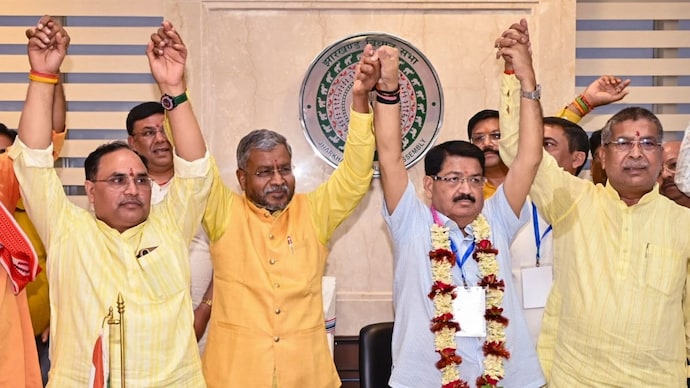
Nathwani, an independent candidate backed by the BJP-led National Democratic Alliance (NDA), secured victory in Jharkhand despite the ruling INDIA bloc appearing to have sufficient legislative strength to win both Rajya Sabha seats from the state. While one seat went to the Jharkhand Mukti Morcha (JMM), Congress nominee Pranav Jha lost out, triggering allegations of cross-voting and sparking questions about the alliance's internal cohesion ahead of future electoral battles.
The outcome also brought renewed attention on Nathwani himself, a man who has built a unique career straddling corporate boardrooms, temple trusts, sports administration and national politics. He also holds the distinct record of being the longest-serving independent MP in the history of the Rajya Sabha.
“Jharkhand is my karmabhoomi. My primary focus will be rural areas, where we work on robust skill development programmes and revitalising the cottage industry to create sustainable livelihood at the grassroots. Developing rural infrastructure, healthcare facilities and education in rural areas will be my thrust areas,” he said.
At 70, Nathwani is serving his fourth term in the Rajya Sabha and his third from Jharkhand. Between 2020 and 2026, he shifted to Andhra Pradesh and was supported by Jagan Mohan Reddy’s Yuvajana Sramika Rythu Congress Party (YSRCP) to the Upper House.
Yet, unlike most parliamentarians, Nathwani has never fought a direct election. Nor does he fit the profile of a conventional politician. He is best known as a senior Reliance Industries executive who spent decades handling the conglomerate's corporate affairs, government relations and strategic projects, particularly in Gujarat.
Nathwani was born and studied in Mumbai, but his family belongs to Khambaliya town in Jamnagar district of Gujarat. He rose through the ranks under Reliance founder Dhirubhai Ambani and later became one of Mukesh Ambani's close associates. Over the years, he has publicly described himself as being akin to Dhirubhai Ambani's ‘third son’—a reflection of the trust he enjoyed within the Ambani family and the role he played in expanding the group's footprint across the country.
Industry insiders credit Nathwani with helping Reliance navigate one of its most consequential projects—establishment of the Jamnagar refinery complex. His role reportedly involved managing land acquisition, negotiations with local stakeholders and securing administrative clearances—tasks that required not only corporate expertise but also political finesse. The Jamnagar complex would eventually become the world's largest refining hub and a cornerstone of Reliance's growth story.
That experience helped shape Nathwani's reputation as Reliance's chief troubleshooter in Gujarat. Whether dealing with bureaucrats, village leaders or politicians from competing parties, he became known as a consensus-builder capable of maintaining relationships across ideological divides.
Nathwani has been closely associated with the Dwarka pilgrimage town and Dwarkadhish Temple. Over the past two decades, he has played an active role in the development of the town, supporting infrastructure projects, heritage conservation efforts and pilgrim facilities.
Nathwani also became a significant figure in Gujarat's sporting ecosystem. As vice-president of the Gujarat Cricket Association, he was associated with the transformation of Motera into the Narendra Modi Stadium, now the world's largest cricket arena. More recently, he has shifted his focus towards football and been involved in efforts to promote the sport in Gujarat through the state's football association.
The question that continues to intrigue political observers is why a Gujarati businessman repeatedly chooses to represent Jharkhand in Parliament instead of Gujarat. The short answer is that Gujarat's seats go to party organisation men and loyalists, and Nathwani has chosen to retain his identity as a corporate figure who does not carry a BJP card.
In Gujarat, Nathwani would simply be another ruling-party nominee. In Jharkhand, he occupies an unusual position—as a corporate executive who commands political goodwill across party lines.
Nathwani has invested heavily in Jharkhand, funding development initiatives, adopting villages and maintaining personal contact with legislators. His single-largest contribution was the Rs 15 crore donated from his MP funds as well as from his personal funds for setting up a state-of-the-art seminar hall with a seating capacity of 600 people for the Indian Institute of Management Ranchi.
Nathwani rebuilt the dilapidated Ranchi Municipal Corporation hospital with an investment of Rs 1.07 crore from his personal fund. He extensively beautified and restored sacred tribal religious sites while also building stadiums, sports galleries and community parks.
The Andhra detour explains itself through the numbers. When his second Jharkhand term ended in 2020, the state had a JMM-Congress government and the requisite votes were no longer there. Nathwani joined the YSRCP and entered the Upper House through Andhra. With the Andhra route closed this cycle, he returned to Jharkhand, this time with NDA backing. The cross-voting did the rest.
The return to Jharkhand suggests the state remains Nathwani’s preferred political base. Unlike Andhra Pradesh, where he was effectively a nominee of the ruling party, Jharkhand is where Nathwani has cultivated an independent political identity. His latest victory underscored the distinction of a corporate honcho who bridges the political gap without entering electoral politics. Nathwani remains one of the few figures who can draw support from leaders who publicly oppose one another.
Subscribe to India Today Magazine
Nathwani, an independent candidate backed by the BJP-led National Democratic Alliance (NDA), secured victory in Jharkhand despite the ruling INDIA bloc appearing to have sufficient legislative strength to win both Rajya Sabha seats from the state. While one seat went to the Jharkhand Mukti Morcha (JMM), Congress nominee Pranav Jha lost out, triggering allegations of cross-voting and sparking questions about the alliance's internal cohesion ahead of future electoral battles.
The outcome also brought renewed attention on Nathwani himself, a man who has built a unique career straddling corporate boardrooms, temple trusts, sports administration and national politics. He also holds the distinct record of being the longest-serving independent MP in the history of the Rajya Sabha.
“Jharkhand is my karmabhoomi. My primary focus will be rural areas, where we work on robust skill development programmes and revitalising the cottage industry to create sustainable livelihood at the grassroots. Developing rural infrastructure, healthcare facilities and education in rural areas will be my thrust areas,” he said.
At 70, Nathwani is serving his fourth term in the Rajya Sabha and his third from Jharkhand. Between 2020 and 2026, he shifted to Andhra Pradesh and was supported by Jagan Mohan Reddy’s Yuvajana Sramika Rythu Congress Party (YSRCP) to the Upper House.
Yet, unlike most parliamentarians, Nathwani has never fought a direct election. Nor does he fit the profile of a conventional politician. He is best known as a senior Reliance Industries executive who spent decades handling the conglomerate's corporate affairs, government relations and strategic projects, particularly in Gujarat.
Nathwani was born and studied in Mumbai, but his family belongs to Khambaliya town in Jamnagar district of Gujarat. He rose through the ranks under Reliance founder Dhirubhai Ambani and later became one of Mukesh Ambani's close associates. Over the years, he has publicly described himself as being akin to Dhirubhai Ambani's ‘third son’—a reflection of the trust he enjoyed within the Ambani family and the role he played in expanding the group's footprint across the country.
Industry insiders credit Nathwani with helping Reliance navigate one of its most consequential projects—establishment of the Jamnagar refinery complex. His role reportedly involved managing land acquisition, negotiations with local stakeholders and securing administrative clearances—tasks that required not only corporate expertise but also political finesse. The Jamnagar complex would eventually become the world's largest refining hub and a cornerstone of Reliance's growth story.
That experience helped shape Nathwani's reputation as Reliance's chief troubleshooter in Gujarat. Whether dealing with bureaucrats, village leaders or politicians from competing parties, he became known as a consensus-builder capable of maintaining relationships across ideological divides.
Nathwani has been closely associated with the Dwarka pilgrimage town and Dwarkadhish Temple. Over the past two decades, he has played an active role in the development of the town, supporting infrastructure projects, heritage conservation efforts and pilgrim facilities.
Nathwani also became a significant figure in Gujarat's sporting ecosystem. As vice-president of the Gujarat Cricket Association, he was associated with the transformation of Motera into the Narendra Modi Stadium, now the world's largest cricket arena. More recently, he has shifted his focus towards football and been involved in efforts to promote the sport in Gujarat through the state's football association.
The question that continues to intrigue political observers is why a Gujarati businessman repeatedly chooses to represent Jharkhand in Parliament instead of Gujarat. The short answer is that Gujarat's seats go to party organisation men and loyalists, and Nathwani has chosen to retain his identity as a corporate figure who does not carry a BJP card.
In Gujarat, Nathwani would simply be another ruling-party nominee. In Jharkhand, he occupies an unusual position—as a corporate executive who commands political goodwill across party lines.
Nathwani has invested heavily in Jharkhand, funding development initiatives, adopting villages and maintaining personal contact with legislators. His single-largest contribution was the Rs 15 crore donated from his MP funds as well as from his personal funds for setting up a state-of-the-art seminar hall with a seating capacity of 600 people for the Indian Institute of Management Ranchi.
Nathwani rebuilt the dilapidated Ranchi Municipal Corporation hospital with an investment of Rs 1.07 crore from his personal fund. He extensively beautified and restored sacred tribal religious sites while also building stadiums, sports galleries and community parks.
The Andhra detour explains itself through the numbers. When his second Jharkhand term ended in 2020, the state had a JMM-Congress government and the requisite votes were no longer there. Nathwani joined the YSRCP and entered the Upper House through Andhra. With the Andhra route closed this cycle, he returned to Jharkhand, this time with NDA backing. The cross-voting did the rest.
The return to Jharkhand suggests the state remains Nathwani’s preferred political base. Unlike Andhra Pradesh, where he was effectively a nominee of the ruling party, Jharkhand is where Nathwani has cultivated an independent political identity. His latest victory underscored the distinction of a corporate honcho who bridges the political gap without entering electoral politics. Nathwani remains one of the few figures who can draw support from leaders who publicly oppose one another.
Subscribe to India Today Magazine

