Why Anandiben Patel's 'expert mother first' idea of women kicked up a storm
Why should a mother be an 'expert' and be subjected to societal examination?
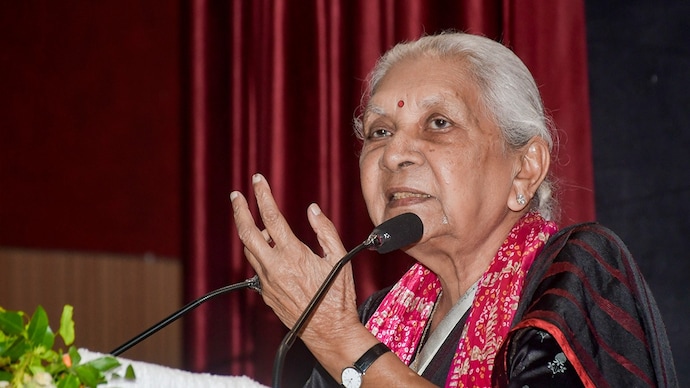
At the 41st convocation ceremony at Kanpur’s Chhatrapati Shahu Ji Maharaj University earlier this month, Uttar Pradesh governor Anandiben Patel, who is a former Gujarat chief minister too, said, in a nutshell, that women “should learn how to cook for their families; whether you become a teacher or an IAS officer, you should first become an expert mother”.
Patel also said: “What is a mother’s duty? To train her daughter in every way. She should not face any difficulties at her in-laws’. And if she does, she should deal with them on her own merit. We need to give that strength to daughters.”
So then, should women be ‘expert’ (read: good) mothers? Yes. And so should men be good fathers. Should women learn how to cook? Why not, it's a survival skill. And so should men.
The reason Patel’s comments have kicked up a storm is the underlying implication of parenting and housekeeping being the woman’s duty—the assigned gender role. That this should be irrespective of whether she is working is deeply problematic.
In the same speech, Patel raised the issue of the rise in domestic violence and crimes against women, saying this “raises questions about the quality of education being imparted”. Her prescription for that is better mothering and parental monitoring. The shocking deduction would be that male violence is bred by maternal failure.
Women around the country and age groups are protesting against the comments, saying the statements reinforce exploitative patriarchal biases that, on the one hand, expect women to carry the burden of unpaid housework without appreciation and yet, on the other, blame her for any unfortunate future choices of the child—be it the new daughter-in-law who is expected to make ‘halwa’ to get validation of her cooking skills from in-laws or the son who practises domestic violence.
The comments are unfortunate because at their core, the expectations deprive women of agency. Taking away the choice of whether she wants to cook or not, be a homemaker or not reinstates unreal expectations for women, many of whom spiral into guilt at never achieving the hallowed ‘perfection’ and end up constantly seeking validation.
One has seen umpteen working women—sharp and focused—heading north on the career graph and returning home to unwillingly take on the role of a caregiver and homemaker. According to the latest (2024) Time Use Survey by the Union ministry of statistics and programme implementation, 81.5 per cent of women participate in unpaid domestic services daily, as against 27.1 per cent men.
According to the survey, the time spent on domestic chores is 289 minutes a day for women against 88 minutes for men. Caregiving takes up 140 minutes for women daily versus 74 minutes for men. Consequently, only 25 per cent of women aged 15 to 59 participated in employment activities; for men, it was 75 per cent.
Besides, unrecognised housework is a measurable drain on the economy. The government’s Periodic Labour Force Survey translates these patriarchal expectations of women—from homecare work to the entire emotional and functional load of parenting—into their abysmal participation in the paid workforce. The rural female labour force participation rate (LFPR) rose from 37.5 per cent to 45.9 per cent between 2022 and 2025; urban women's participation barely moved and stayed below 30 per cent.
According to the report ‘Impact of care responsibilities on women's labour force participation’, released by the International Labour Organization (ILO) in October 2024, 53 per cent of Indian women outside the labour force cite care responsibilities as the reason, as against 1.1 per cent of men outside the labour force.
An analysis by Udaiti Foundation, a not-for-profit working on women's economic empowerment in India, reveals that the female LFPR rises sharply after the age of 30 in both rural and urban India. “Low participation among younger women is not a demand problem. Marriage, caregiving responsibilities and the absence of safe, affordable infrastructure keep them out,” states the study.
BJP MP Kangana Ranaut’s arguments in favour of Patel are partially defensible—that women are naturally bestowed to nurture. Yes, they indeed are. But so are men—actually, it is unfair to men that their nurturing side is so underrated and forcefully crushed. The problem lies in Ranaut’s use of the words ‘need’ and ‘duty’, because nurturing is driven by love, and love blossoms naturally, expressed uniquely by every mother, every day.
What does a child learn from a mother performing motherhood to a standard set by someone else? Rigid prescriptions do not produce better mothers. They produce performances, of which children are shrewd readers. Governor Patel’s word was ‘expert’. But then, expertise implies an examiner. And motherhood must not be subjected to societal examination.
Subscribe to India Today Magazine
At the 41st convocation ceremony at Kanpur’s Chhatrapati Shahu Ji Maharaj University earlier this month, Uttar Pradesh governor Anandiben Patel, who is a former Gujarat chief minister too, said, in a nutshell, that women “should learn how to cook for their families; whether you become a teacher or an IAS officer, you should first become an expert mother”.
Patel also said: “What is a mother’s duty? To train her daughter in every way. She should not face any difficulties at her in-laws’. And if she does, she should deal with them on her own merit. We need to give that strength to daughters.”
So then, should women be ‘expert’ (read: good) mothers? Yes. And so should men be good fathers. Should women learn how to cook? Why not, it's a survival skill. And so should men.
The reason Patel’s comments have kicked up a storm is the underlying implication of parenting and housekeeping being the woman’s duty—the assigned gender role. That this should be irrespective of whether she is working is deeply problematic.
In the same speech, Patel raised the issue of the rise in domestic violence and crimes against women, saying this “raises questions about the quality of education being imparted”. Her prescription for that is better mothering and parental monitoring. The shocking deduction would be that male violence is bred by maternal failure.
Women around the country and age groups are protesting against the comments, saying the statements reinforce exploitative patriarchal biases that, on the one hand, expect women to carry the burden of unpaid housework without appreciation and yet, on the other, blame her for any unfortunate future choices of the child—be it the new daughter-in-law who is expected to make ‘halwa’ to get validation of her cooking skills from in-laws or the son who practises domestic violence.
The comments are unfortunate because at their core, the expectations deprive women of agency. Taking away the choice of whether she wants to cook or not, be a homemaker or not reinstates unreal expectations for women, many of whom spiral into guilt at never achieving the hallowed ‘perfection’ and end up constantly seeking validation.
One has seen umpteen working women—sharp and focused—heading north on the career graph and returning home to unwillingly take on the role of a caregiver and homemaker. According to the latest (2024) Time Use Survey by the Union ministry of statistics and programme implementation, 81.5 per cent of women participate in unpaid domestic services daily, as against 27.1 per cent men.
According to the survey, the time spent on domestic chores is 289 minutes a day for women against 88 minutes for men. Caregiving takes up 140 minutes for women daily versus 74 minutes for men. Consequently, only 25 per cent of women aged 15 to 59 participated in employment activities; for men, it was 75 per cent.
Besides, unrecognised housework is a measurable drain on the economy. The government’s Periodic Labour Force Survey translates these patriarchal expectations of women—from homecare work to the entire emotional and functional load of parenting—into their abysmal participation in the paid workforce. The rural female labour force participation rate (LFPR) rose from 37.5 per cent to 45.9 per cent between 2022 and 2025; urban women's participation barely moved and stayed below 30 per cent.
According to the report ‘Impact of care responsibilities on women's labour force participation’, released by the International Labour Organization (ILO) in October 2024, 53 per cent of Indian women outside the labour force cite care responsibilities as the reason, as against 1.1 per cent of men outside the labour force.
An analysis by Udaiti Foundation, a not-for-profit working on women's economic empowerment in India, reveals that the female LFPR rises sharply after the age of 30 in both rural and urban India. “Low participation among younger women is not a demand problem. Marriage, caregiving responsibilities and the absence of safe, affordable infrastructure keep them out,” states the study.
BJP MP Kangana Ranaut’s arguments in favour of Patel are partially defensible—that women are naturally bestowed to nurture. Yes, they indeed are. But so are men—actually, it is unfair to men that their nurturing side is so underrated and forcefully crushed. The problem lies in Ranaut’s use of the words ‘need’ and ‘duty’, because nurturing is driven by love, and love blossoms naturally, expressed uniquely by every mother, every day.
What does a child learn from a mother performing motherhood to a standard set by someone else? Rigid prescriptions do not produce better mothers. They produce performances, of which children are shrewd readers. Governor Patel’s word was ‘expert’. But then, expertise implies an examiner. And motherhood must not be subjected to societal examination.
Subscribe to India Today Magazine

