Why Bengal govt's ISKCON school meals for Kolkata kicked up a 'culture' row
Officials await clarity even as CM Suvendu Adhikari vouches for food quality and ISKCON contests vegetarianism as being alien to Bengal's culinary traditions
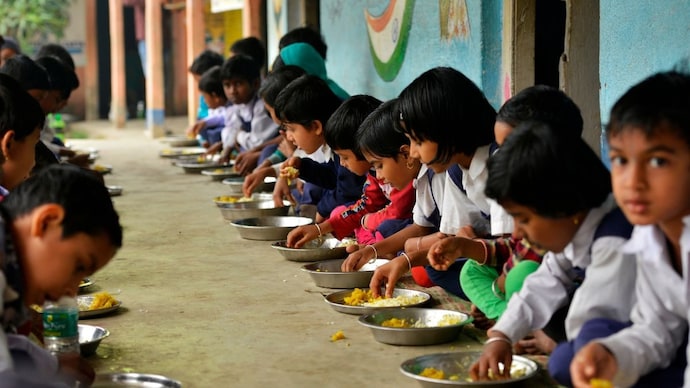
The announcement was made by finance minister Swapan Dasgupta during his maiden Bengal budget speech on June 22. He said the government would partner with ISKCON to provide “nutritious cooked mid-day meals” in schools across the KMC area.
It was ISKCON that had approached the BJP government with the proposal. The government will pay a small amount while the rest of the expenses would be taken care of by ISKCON’s donors.
ISKCON officials insist the arrangement is neither new nor experimental. “We have been supplying mid-day meals to around 17,000 children in north Kolkata for the past 10 years,” said Radharaman Das, vice-president and spokesperson of ISKCON. “The numbers will now increase manifold. We will need to establish additional kitchens, and for that we will have to undertake detailed studies and surveys.”
Through its charitable arm Annamrita Foundation, ISKCON serves more than 1 million schoolchildren every day across 21 cities in eight states. The organisation says it has developed a robust logistics network capable of delivering large quantities of food while maintaining quality.
“Our supply chain is extremely strong,” Das said. “Not only do children receive high-quality meals, but we also ensure zero leakage in the system. If any food packet is found unsealed by school authorities, it is immediately returned.”
The proposal has nevertheless attracted criticism from sections of civil society and Opposition parties, who argue that introducing a vegetarian meal provider into Bengal’s mid-day meal programme runs contrary to the local food culture.
Rejecting the criticism, Das argued that vegetarian food should not be viewed as alien to Bengal’s traditions. “It is simply incorrect to suggest that vegetarian food is anti-Bengali,” he said. “Sri Chaitanya Mahaprabhu, who founded the Gaudiya Vaishnavite tradition, was a Bengali. The dietary practices of Gaudiya Vaishnavites have always been vegetarian. Our nutritionists carefully design every meal to ensure that plant-based alternatives adequately substitute for animal protein.”
Any lingering uncertainty over the government’s intentions appeared to be dispelled after chief minister Suvendu Adhikari addressed the media following the conclusion of the legislative assembly session. “As a pilot project, the responsibility of providing mid-day meals in Kolkata schools is being entrusted to ISKCON,” Adhikari said. “They will provide the food. Taste it for yourself—the quality is excellent. And if you do not wish to chant ‘Hare Krishna’, nobody is asking you to.”
The chief minister’s remarks have strengthened the perception that ISKCON will become the principal supplier of mid-day meals in schools within the Kolkata region. Yet several operational questions remain unanswered. Mid-day meals are currently prepared in some schools while others receive food from community kitchens.
Education department officials acknowledge that they are still awaiting detailed government guidelines before they can determine how the new arrangement will be implemented. “At this stage, it is not clear what exactly is meant by ‘responsibility’ being handed over,” said a senior official on condition of anonymity. “Until the formal guidelines are issued, it is difficult to say what changes schools will actually see on the ground.”
The rollout, therefore, is likely to be watched closely—not only for its impact on meal quality and delivery but also for the larger debate it has ignited over food, culture and identity in Bengal.
Subscribe to India Today Magazine
The announcement was made by finance minister Swapan Dasgupta during his maiden Bengal budget speech on June 22. He said the government would partner with ISKCON to provide “nutritious cooked mid-day meals” in schools across the KMC area.
It was ISKCON that had approached the BJP government with the proposal. The government will pay a small amount while the rest of the expenses would be taken care of by ISKCON’s donors.
ISKCON officials insist the arrangement is neither new nor experimental. “We have been supplying mid-day meals to around 17,000 children in north Kolkata for the past 10 years,” said Radharaman Das, vice-president and spokesperson of ISKCON. “The numbers will now increase manifold. We will need to establish additional kitchens, and for that we will have to undertake detailed studies and surveys.”
Through its charitable arm Annamrita Foundation, ISKCON serves more than 1 million schoolchildren every day across 21 cities in eight states. The organisation says it has developed a robust logistics network capable of delivering large quantities of food while maintaining quality.
“Our supply chain is extremely strong,” Das said. “Not only do children receive high-quality meals, but we also ensure zero leakage in the system. If any food packet is found unsealed by school authorities, it is immediately returned.”
The proposal has nevertheless attracted criticism from sections of civil society and Opposition parties, who argue that introducing a vegetarian meal provider into Bengal’s mid-day meal programme runs contrary to the local food culture.
Rejecting the criticism, Das argued that vegetarian food should not be viewed as alien to Bengal’s traditions. “It is simply incorrect to suggest that vegetarian food is anti-Bengali,” he said. “Sri Chaitanya Mahaprabhu, who founded the Gaudiya Vaishnavite tradition, was a Bengali. The dietary practices of Gaudiya Vaishnavites have always been vegetarian. Our nutritionists carefully design every meal to ensure that plant-based alternatives adequately substitute for animal protein.”
Any lingering uncertainty over the government’s intentions appeared to be dispelled after chief minister Suvendu Adhikari addressed the media following the conclusion of the legislative assembly session. “As a pilot project, the responsibility of providing mid-day meals in Kolkata schools is being entrusted to ISKCON,” Adhikari said. “They will provide the food. Taste it for yourself—the quality is excellent. And if you do not wish to chant ‘Hare Krishna’, nobody is asking you to.”
The chief minister’s remarks have strengthened the perception that ISKCON will become the principal supplier of mid-day meals in schools within the Kolkata region. Yet several operational questions remain unanswered. Mid-day meals are currently prepared in some schools while others receive food from community kitchens.
Education department officials acknowledge that they are still awaiting detailed government guidelines before they can determine how the new arrangement will be implemented. “At this stage, it is not clear what exactly is meant by ‘responsibility’ being handed over,” said a senior official on condition of anonymity. “Until the formal guidelines are issued, it is difficult to say what changes schools will actually see on the ground.”
The rollout, therefore, is likely to be watched closely—not only for its impact on meal quality and delivery but also for the larger debate it has ignited over food, culture and identity in Bengal.
Subscribe to India Today Magazine

