Why BJP is playing by the alliance arithmetic book in Tamil Nadu
By restraining K. Annamalai, conceding to ally AIADMK and letting Vijay split the electoral space, the BJP is eyeing modest gains now and a long-term future
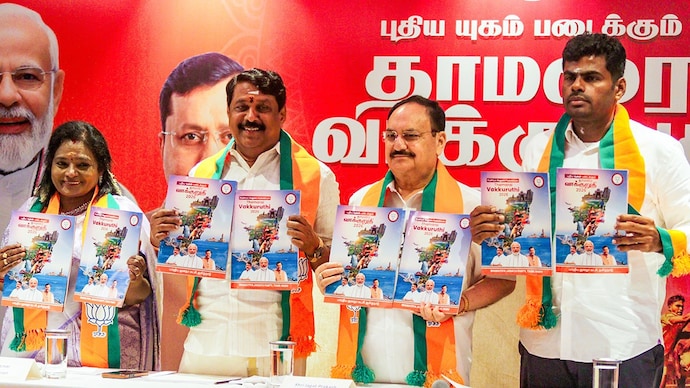
In a state where the BJP has historically struggled to cross even 5 per cent of the vote share on its own, the ambition this time is simply relevance, leverage and long-term positioning.
Such a decision would have been unthinkable a few years ago. For the three years leading to the Lok Sabha polls of 2024, K. Annamalai, the party’s Tamil Nadu chief at the time, was its most visible and combative face in the state, driving the narrative against the ruling Dravida Munnetra Kazhagam (DMK). His unusual aggression was also directed at the All India Anna Dravida Munnetra Kazhagam (AIADMK), riling its leaders.
But as alliance negotiations for the assembly polls intensified with the AIADMK, the BJP chose restraint and a conscious under-projection of Annamalai. He has not been projected as the party’s face nor did he dominate ticket distribution in the way state leaders often do. The message is clear: for the BJP, this election is far above personality cults and about ensuring that the coalition arithmetic holds.
The restraint is rooted in hard lessons from the past two elections. In the 2021 assembly polls, the BJP’s attempt to punch above its weight within the AIADMK-led alliance created friction and limited the efficacy of vote transfers. Despite being in power at the Centre and its assertive posture, the BJP could not significantly expand beyond a marginal vote base. The takeaway: in Tamil Nadu, over-assertion without social depth can be counterproductive.
The 2024 Lok Sabha election results reinforced this lesson. The DMK-led alliance swept the state, consolidating its dominance in both urban and rural constituencies. The BJP, despite a high-decibel campaign and strong push by the central leadership, failed to convert visibility into votes at scale. More importantly, the results showed that narrative alone cannot break entrenched Dravidian voting patterns. Welfare delivery, local alliances and booth-level networks continue to outweigh ideological messaging.
The twin setbacks have shaped the BJP’s approach in this election. The party has moved from assertion to accommodation. The arithmetic begins with the BJP’s renewed alignment with the AIADMK. The party has accepted its role as a junior partner and resisted the temptation to overreach. In key regions such as the Kongu belt, particularly Coimbatore, it has conceded ground to its ally.
The retreat is tactical. For data suggests that even a 3-5 per cent split in alliance votes in tightly contested seats could hand victory to the DMK. By yielding seats where the AIADMK’s vote-transfer machinery is deeper, the BJP has prioritised aggregate gains over individual success.
Instead of centralising the campaign around one leader, the BJP has broad-based it. Leaders such as BJP Mahila Morcha chief Vanathi Srinivasan bring an urban connect in Coimbatore while Union minister L. Murugan has both Dalit outreach and a national profile. From a personality-driven campaign, it’s now a network-driven expansion.
Overlaying this alliance strategy is the disruptive rise of actor-politician Vijay and his Tamilaga Vettri Kazhagam (TVK). Vijay rebuffed overtures to join the National Democratic Alliance (NDA). Early assumptions had suggested Vijay would primarily eat into the anti-DMK vote, hurting the AIADMK-BJP combine. But ground reports, especially from Chennai, indicate a complex reality.
In urban constituencies, the TVK is making inroads into the DMK’s softer vote base—the young, aspirational and mildly anti-incumbent voters. In these pockets, Vijay could be a vote-splitter for the ruling party.
Yet, this urban disruption runs into a hard demographic wall. About 55-60 per cent of Tamil Nadu’s electorate is aged above 40. This cohort is deeply embedded in the state’s Dravidian traditions, party networks and community alignments, and less susceptible to personality-driven politics. It is here that the TVK’s expansion slows down sharply. Its appeal remains strongest among younger, urban voters while rural Tamil Nadu and older demographics continue to be dominated by the DMK and AIADMK.
The result is a widely interpretable electoral map. Chennai and urban clusters are witnessing triangular contests, where the TVK could chip away at the DMK’s margins. Western Tamil Nadu, particularly the Kongu belt, remains a battleground where the AIADMK-BJP seeks consolidation. In the rural and delta regions, the contest largely retains its traditional DMK versus AIADMK character.
For the BJP, this fragmented landscape could well be an opportunity. The party does not need the TVK to perform uniformly across the state. It only needs it to disrupt selectively. Where the TVK weakens the DMK, the NDA benefits indirectly. Where Vijay’s party is weak, the BJP’s focus is on ensuring alliance cohesion and maximising vote transfer. This is why the NDA has avoided direct confrontation with Vijay, choosing instead to let his presence reshape the contest organically.
Underlying all of this is the recognition that Tamil Nadu 2026 will not be a wave election. With the DMK alliance at a 40-42 per cent vote-share mark, the AIADMK-BJP in the mid-30s and the TVK potentially commanding 10-15 per cent of the votes, this election could be decided in the margins. Even a 4-7 per cent swing can decisively alter outcomes across dozens of seats. This makes alliance discipline, candidate calibration and vote-transfer efficiency critical.
The BJP’s strategy, therefore, is built on minimising friction within the alliance, avoiding overexposure of its own leadership and conceding ground where necessary to preserve the larger coalition arithmetic.
By holding back Annamalai, empowering a broader leadership bench, conceding to the AIADMK in strongholds like Coimbatore and allowing the TVK to fragment the electoral space, the BJP is executing a low-ego, high-arithmetic play. It may not deliver an immediate breakthrough. But in a state defined by a binary Dravidian contest, even a modest shift in vote share or seats could matter—if less now, more in the long-term future.
Subscribe to India Today Magazine
In a state where the BJP has historically struggled to cross even 5 per cent of the vote share on its own, the ambition this time is simply relevance, leverage and long-term positioning.
Such a decision would have been unthinkable a few years ago. For the three years leading to the Lok Sabha polls of 2024, K. Annamalai, the party’s Tamil Nadu chief at the time, was its most visible and combative face in the state, driving the narrative against the ruling Dravida Munnetra Kazhagam (DMK). His unusual aggression was also directed at the All India Anna Dravida Munnetra Kazhagam (AIADMK), riling its leaders.
But as alliance negotiations for the assembly polls intensified with the AIADMK, the BJP chose restraint and a conscious under-projection of Annamalai. He has not been projected as the party’s face nor did he dominate ticket distribution in the way state leaders often do. The message is clear: for the BJP, this election is far above personality cults and about ensuring that the coalition arithmetic holds.
The restraint is rooted in hard lessons from the past two elections. In the 2021 assembly polls, the BJP’s attempt to punch above its weight within the AIADMK-led alliance created friction and limited the efficacy of vote transfers. Despite being in power at the Centre and its assertive posture, the BJP could not significantly expand beyond a marginal vote base. The takeaway: in Tamil Nadu, over-assertion without social depth can be counterproductive.
The 2024 Lok Sabha election results reinforced this lesson. The DMK-led alliance swept the state, consolidating its dominance in both urban and rural constituencies. The BJP, despite a high-decibel campaign and strong push by the central leadership, failed to convert visibility into votes at scale. More importantly, the results showed that narrative alone cannot break entrenched Dravidian voting patterns. Welfare delivery, local alliances and booth-level networks continue to outweigh ideological messaging.
The twin setbacks have shaped the BJP’s approach in this election. The party has moved from assertion to accommodation. The arithmetic begins with the BJP’s renewed alignment with the AIADMK. The party has accepted its role as a junior partner and resisted the temptation to overreach. In key regions such as the Kongu belt, particularly Coimbatore, it has conceded ground to its ally.
The retreat is tactical. For data suggests that even a 3-5 per cent split in alliance votes in tightly contested seats could hand victory to the DMK. By yielding seats where the AIADMK’s vote-transfer machinery is deeper, the BJP has prioritised aggregate gains over individual success.
Instead of centralising the campaign around one leader, the BJP has broad-based it. Leaders such as BJP Mahila Morcha chief Vanathi Srinivasan bring an urban connect in Coimbatore while Union minister L. Murugan has both Dalit outreach and a national profile. From a personality-driven campaign, it’s now a network-driven expansion.
Overlaying this alliance strategy is the disruptive rise of actor-politician Vijay and his Tamilaga Vettri Kazhagam (TVK). Vijay rebuffed overtures to join the National Democratic Alliance (NDA). Early assumptions had suggested Vijay would primarily eat into the anti-DMK vote, hurting the AIADMK-BJP combine. But ground reports, especially from Chennai, indicate a complex reality.
In urban constituencies, the TVK is making inroads into the DMK’s softer vote base—the young, aspirational and mildly anti-incumbent voters. In these pockets, Vijay could be a vote-splitter for the ruling party.
Yet, this urban disruption runs into a hard demographic wall. About 55-60 per cent of Tamil Nadu’s electorate is aged above 40. This cohort is deeply embedded in the state’s Dravidian traditions, party networks and community alignments, and less susceptible to personality-driven politics. It is here that the TVK’s expansion slows down sharply. Its appeal remains strongest among younger, urban voters while rural Tamil Nadu and older demographics continue to be dominated by the DMK and AIADMK.
The result is a widely interpretable electoral map. Chennai and urban clusters are witnessing triangular contests, where the TVK could chip away at the DMK’s margins. Western Tamil Nadu, particularly the Kongu belt, remains a battleground where the AIADMK-BJP seeks consolidation. In the rural and delta regions, the contest largely retains its traditional DMK versus AIADMK character.
For the BJP, this fragmented landscape could well be an opportunity. The party does not need the TVK to perform uniformly across the state. It only needs it to disrupt selectively. Where the TVK weakens the DMK, the NDA benefits indirectly. Where Vijay’s party is weak, the BJP’s focus is on ensuring alliance cohesion and maximising vote transfer. This is why the NDA has avoided direct confrontation with Vijay, choosing instead to let his presence reshape the contest organically.
Underlying all of this is the recognition that Tamil Nadu 2026 will not be a wave election. With the DMK alliance at a 40-42 per cent vote-share mark, the AIADMK-BJP in the mid-30s and the TVK potentially commanding 10-15 per cent of the votes, this election could be decided in the margins. Even a 4-7 per cent swing can decisively alter outcomes across dozens of seats. This makes alliance discipline, candidate calibration and vote-transfer efficiency critical.
The BJP’s strategy, therefore, is built on minimising friction within the alliance, avoiding overexposure of its own leadership and conceding ground where necessary to preserve the larger coalition arithmetic.
By holding back Annamalai, empowering a broader leadership bench, conceding to the AIADMK in strongholds like Coimbatore and allowing the TVK to fragment the electoral space, the BJP is executing a low-ego, high-arithmetic play. It may not deliver an immediate breakthrough. But in a state defined by a binary Dravidian contest, even a modest shift in vote share or seats could matter—if less now, more in the long-term future.
Subscribe to India Today Magazine

