Why Diljit Dosanjh's 'Satluj' is a scathing indictment of police brutality
Honey Trehan's film, which was taken down within days of release, is a troubling yet essential account of state crackdown during the Punjab insurgency
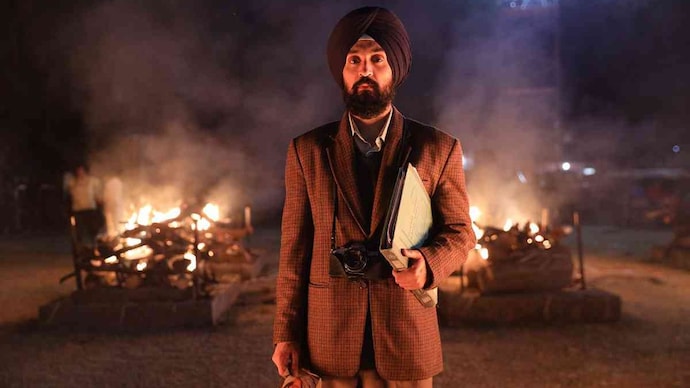
Much like its real-life protagonist Jaswant Singh Khalra (played by Diljit Dosanjh), a human rights activist, Trehan has been resolute in his mission, refusing to flinch to the powers that be—in this case the Central Board of Film Certification (CBFC). His persistence paid off as Satluj, formerly titled ‘Punjab ’95’, finally released on ZEE5 in the iteration its creator wanted—though only briefly.
Satluj makes for troubling yet essential viewing. Trehan, teaming up with writers Niren Bhatt and Utsav Maitra, depicts an atmosphere of fear and impunity, with the Punjab police wreaking havoc to cleanse the state of insurgents. There are unsettling scenes here, including the unnerving opener, that capture the normalisation of brutality and absolute loss of morality. Words such as casualties, disappearances, unclaimed bodies and encounter killings become routine, until one man (Jaswant) demands accountability.
Jaswant is the intrepid activist, the conscience keeper and the selfless warrior who asks the hard questions, fights the tough fight and seeks justice for families that have lost their sons, fathers, brothers, husbands and friends to the insurgency crackdown. He is an unassuming activist, more interested in getting the spotlight on the cause than himself. Dosanjh impactfully surrenders to the simplicity and ordinariness of the character. There’s no lecturing or screaming, just the reading out of cold facts.
As Jaswant’s movement finds support, the police, led by a menacing officer (a fine act by Suvinder Vicky), turn their focus towards who they see as the troublemaker. Even as Satluj seeks to expose the inconvenient truths, it lays the foundation for the doomed fates of a few good men in the struggle.
Satluj is a story of two halves: one man’s mission to seek justice, another’s to seek justice for the former. But the foundation for both is the same—actions have consequences and violence begets violence.
Rampal commands eyeballs as a CBI officer who enters a hostile zone to find the whereabouts of the missing Jaswant. The film does lose some of its punch juggling between being an investigative procedural and a legal drama. Trehan’s slow-burn approach, though, makes sense since the pursuit for justice is always a long-winded, frustrating path with many obstacles, and the destination is never quite within reach.
Satluj, much like Vetrimaaran’s acclaimed Tamil drama Visaranai, works best when it depicts what happens when the custodians of law and order become perpetrators of violence and misuse power. Trehan is brutally precise in highlighting the real enablers, opportunists and benefactors of Punjab’s crisis or what the writers describe as “dhandha” (business) in the guise of peace. The impact boils down to the fact that it shines a light on the bravery of an ordinary man whose crime was to speak up for the powerless.
That the film based on events three decades ago appears relevant and resonant even today is perhaps its biggest accomplishment. When Kanwaljit Singh’s IPS Bitta says lines such as “Videshi taakaton ke puppets hain (Puppets of foreign governments)” and “propaganda” to silence critics of the state government, and uses ‘democracy’ as a crutch to justify actions, it rings a familiar script. “Behti hui laashein behta hua itihaas hoti hain,” says Rampal’s narrator in a telling statement at the very start. Satluj is a stark reminder that history should never be forgotten no matter how troubled it is.
P.S.: The release of Satluj was shortlived, with ZEE5 issuing a statement that it has to take down the film despite the overwhelming response to it. “Current developments” were cited for its removal in India, with no explanation given as to what they were. The platform, though, stated it would “explore every appropriate avenue through due process to bring the film back”. Regardless of it, the release of the uncut version has definitely ruffled feathers to have necessitated such a reaction.
Subscribe to India Today Magazine
Much like its real-life protagonist Jaswant Singh Khalra (played by Diljit Dosanjh), a human rights activist, Trehan has been resolute in his mission, refusing to flinch to the powers that be—in this case the Central Board of Film Certification (CBFC). His persistence paid off as Satluj, formerly titled ‘Punjab ’95’, finally released on ZEE5 in the iteration its creator wanted—though only briefly.
Satluj makes for troubling yet essential viewing. Trehan, teaming up with writers Niren Bhatt and Utsav Maitra, depicts an atmosphere of fear and impunity, with the Punjab police wreaking havoc to cleanse the state of insurgents. There are unsettling scenes here, including the unnerving opener, that capture the normalisation of brutality and absolute loss of morality. Words such as casualties, disappearances, unclaimed bodies and encounter killings become routine, until one man (Jaswant) demands accountability.
Jaswant is the intrepid activist, the conscience keeper and the selfless warrior who asks the hard questions, fights the tough fight and seeks justice for families that have lost their sons, fathers, brothers, husbands and friends to the insurgency crackdown. He is an unassuming activist, more interested in getting the spotlight on the cause than himself. Dosanjh impactfully surrenders to the simplicity and ordinariness of the character. There’s no lecturing or screaming, just the reading out of cold facts.
As Jaswant’s movement finds support, the police, led by a menacing officer (a fine act by Suvinder Vicky), turn their focus towards who they see as the troublemaker. Even as Satluj seeks to expose the inconvenient truths, it lays the foundation for the doomed fates of a few good men in the struggle.
Satluj is a story of two halves: one man’s mission to seek justice, another’s to seek justice for the former. But the foundation for both is the same—actions have consequences and violence begets violence.
Rampal commands eyeballs as a CBI officer who enters a hostile zone to find the whereabouts of the missing Jaswant. The film does lose some of its punch juggling between being an investigative procedural and a legal drama. Trehan’s slow-burn approach, though, makes sense since the pursuit for justice is always a long-winded, frustrating path with many obstacles, and the destination is never quite within reach.
Satluj, much like Vetrimaaran’s acclaimed Tamil drama Visaranai, works best when it depicts what happens when the custodians of law and order become perpetrators of violence and misuse power. Trehan is brutally precise in highlighting the real enablers, opportunists and benefactors of Punjab’s crisis or what the writers describe as “dhandha” (business) in the guise of peace. The impact boils down to the fact that it shines a light on the bravery of an ordinary man whose crime was to speak up for the powerless.
That the film based on events three decades ago appears relevant and resonant even today is perhaps its biggest accomplishment. When Kanwaljit Singh’s IPS Bitta says lines such as “Videshi taakaton ke puppets hain (Puppets of foreign governments)” and “propaganda” to silence critics of the state government, and uses ‘democracy’ as a crutch to justify actions, it rings a familiar script. “Behti hui laashein behta hua itihaas hoti hain,” says Rampal’s narrator in a telling statement at the very start. Satluj is a stark reminder that history should never be forgotten no matter how troubled it is.
P.S.: The release of Satluj was shortlived, with ZEE5 issuing a statement that it has to take down the film despite the overwhelming response to it. “Current developments” were cited for its removal in India, with no explanation given as to what they were. The platform, though, stated it would “explore every appropriate avenue through due process to bring the film back”. Regardless of it, the release of the uncut version has definitely ruffled feathers to have necessitated such a reaction.
Subscribe to India Today Magazine

