Why DK Shivakumar prodded Modi to bet Rs 26,000 cr on Bengaluru
Pitching Bengaluru's contribution to the national economy, the Karnataka CM sought a special grant for the city's infrastructure. How the funds will be spent
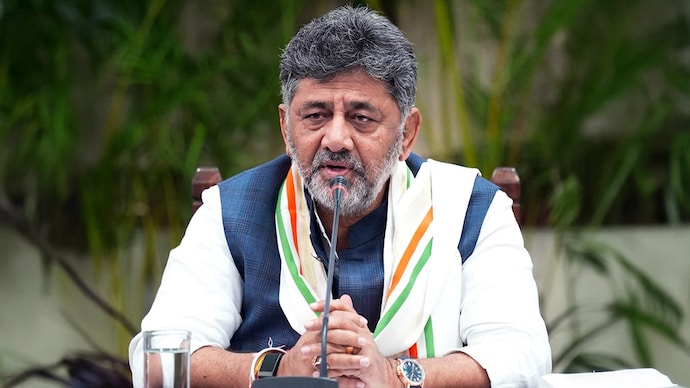
Revamping Bengaluru, both in terms of a structural reset and new infrastructure, has been a pet theme for Shivakumar, who held the Bengaluru development portfolio for three years in the Siddaramaiah government before taking over as chief minister on June 3. One of his first decisions after taking charge was a proposed allocation of Rs 2,000 crore to fix Bengaluru’s potholed roads.
Shivakumar, who met Prime Minister Narendra Modi on June 11, has requested the Centre for a special grant of Rs 26,000 crore for the IT capital. “Bengaluru’s contribution to the national economy warrants special treatment to support infrastructure projects. Hence, it is requested to provide an assistance Rs 26,000 crore to strengthen infrastructure and sustain its global competitiveness,” Shivakumar said in his letter to Modi.
The other items on the Bengaluru wish-list pertained to mobility projects underway. For instance, Shivakumar has sought the Centre’s approval on the reworked plan for Phase 3 of the city’s metro rail. This 44.65-km-long fully-elevated stretch of Namma Metro proposes to connect the city’s western parts in a semicircular arc.
The plan was approved by the Union government in September 2024. But thereafter, the Congress government in Karnataka decided to recast the overhead stretch as a ‘double-decker’ structure by incorporating a road flyover into the design and offering to fully bear the additional cost of Rs 9,700 crore.
Besides, Karnataka has also asked the Centre to approve the Rs 25,999 crore Phase-3A of Namma Metro, which will connect Sarjapura in the southeast to Hebbal in the north through a 37.8-km-long corridor comprising both underground and elevated sections. The detailed project report for this was revised and submitted to the Union ministry of housing and urban affairs in April. Also on the list is the pending approval for the revised completion cost of Phase 2 of Namma Metro, covering 72 km. While it was approved by the Centre at Rs 26,405 crore, the final number is Rs 40,425 crore now, an escalation by more than 50 per cent.
Shivakumar has sought clearance for the Satellite Town Ring Road, which aims to connect the suburban towns around the city, and a proposed Regional Rapid Rail Transit System linking Bengaluru to Mysuru, Tumkuru, Chikkaballapura, Kolar and Kanakapura.
“Bengaluru, being the hub of India’s growth, should be given additional infrastructural grants to cope with the increasing demands due to higher migration from other states. Around 40 per cent of Bengaluru residents come from other states. Hence, a strong push for coping with its infrastructural upgradation requires central [government] assistance,” Shivakumar said in his address at the meeting of the governing council of NITI Aayog on June 11.
The chief minister said Karnataka has identified and started implementing infrastructure projects worth Rs 1 lakh crore in Bengaluru for improving mobility and making the city climate change-resilient. “We seek higher government of India support under the Urban Challenge Fund or otherwise in order to support these programmes [so that] Bengaluru retains its status as a global city,” he argued.
The Urban Challenge Fund, approved in February by the Union cabinet, entails central assistance of Rs 1 lakh crore for projects selected via a competitive ‘challenge mode’. Karnataka has submitted three proposals, amounting to Rs 13,549.6 crore. These include elevated corridors, new sewage treatment plants and two packages of the Bengaluru Business Corridor, an expressway project that aims to boost road connectivity and peripheral urban development in Bengaluru.
Subscribe to India Today Magazine
Revamping Bengaluru, both in terms of a structural reset and new infrastructure, has been a pet theme for Shivakumar, who held the Bengaluru development portfolio for three years in the Siddaramaiah government before taking over as chief minister on June 3. One of his first decisions after taking charge was a proposed allocation of Rs 2,000 crore to fix Bengaluru’s potholed roads.
Shivakumar, who met Prime Minister Narendra Modi on June 11, has requested the Centre for a special grant of Rs 26,000 crore for the IT capital. “Bengaluru’s contribution to the national economy warrants special treatment to support infrastructure projects. Hence, it is requested to provide an assistance Rs 26,000 crore to strengthen infrastructure and sustain its global competitiveness,” Shivakumar said in his letter to Modi.
The other items on the Bengaluru wish-list pertained to mobility projects underway. For instance, Shivakumar has sought the Centre’s approval on the reworked plan for Phase 3 of the city’s metro rail. This 44.65-km-long fully-elevated stretch of Namma Metro proposes to connect the city’s western parts in a semicircular arc.
The plan was approved by the Union government in September 2024. But thereafter, the Congress government in Karnataka decided to recast the overhead stretch as a ‘double-decker’ structure by incorporating a road flyover into the design and offering to fully bear the additional cost of Rs 9,700 crore.
Besides, Karnataka has also asked the Centre to approve the Rs 25,999 crore Phase-3A of Namma Metro, which will connect Sarjapura in the southeast to Hebbal in the north through a 37.8-km-long corridor comprising both underground and elevated sections. The detailed project report for this was revised and submitted to the Union ministry of housing and urban affairs in April. Also on the list is the pending approval for the revised completion cost of Phase 2 of Namma Metro, covering 72 km. While it was approved by the Centre at Rs 26,405 crore, the final number is Rs 40,425 crore now, an escalation by more than 50 per cent.
Shivakumar has sought clearance for the Satellite Town Ring Road, which aims to connect the suburban towns around the city, and a proposed Regional Rapid Rail Transit System linking Bengaluru to Mysuru, Tumkuru, Chikkaballapura, Kolar and Kanakapura.
“Bengaluru, being the hub of India’s growth, should be given additional infrastructural grants to cope with the increasing demands due to higher migration from other states. Around 40 per cent of Bengaluru residents come from other states. Hence, a strong push for coping with its infrastructural upgradation requires central [government] assistance,” Shivakumar said in his address at the meeting of the governing council of NITI Aayog on June 11.
The chief minister said Karnataka has identified and started implementing infrastructure projects worth Rs 1 lakh crore in Bengaluru for improving mobility and making the city climate change-resilient. “We seek higher government of India support under the Urban Challenge Fund or otherwise in order to support these programmes [so that] Bengaluru retains its status as a global city,” he argued.
The Urban Challenge Fund, approved in February by the Union cabinet, entails central assistance of Rs 1 lakh crore for projects selected via a competitive ‘challenge mode’. Karnataka has submitted three proposals, amounting to Rs 13,549.6 crore. These include elevated corridors, new sewage treatment plants and two packages of the Bengaluru Business Corridor, an expressway project that aims to boost road connectivity and peripheral urban development in Bengaluru.
Subscribe to India Today Magazine

