Why gold deserves a bigger place in your portfolio
World Gold Council regional CEO Sachin Jain explains gold's potential as a reliable financial asset and how India can become the 'jeweller to the world'
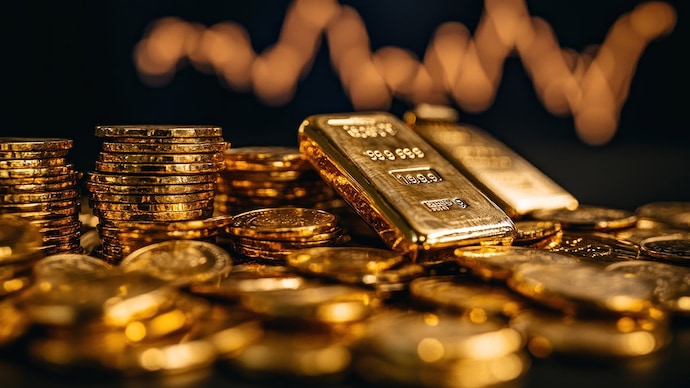
Speaking at a fireside chat at India Today’s Smart Money Financial Conclave, Sachin Jain, Regional CEO, World Gold Council, said the global gold market has witnessed a structural shift over the past three decades, driven by rising investment demand, central bank buying and changing geopolitical realities. This has led to a drastic change in the way gold is consumed.
“Thirty years ago, central banks were net sellers and the main consumption of gold was in jewellery,” Jain said. “Today, there is a big diversification both sectorally and geographically.” He explained that about 20 per cent of gold annually is consumed by central banks, about 30 per cent for jewellery, around 43 per cent for financial reasons and 6-7 per cent for technology, especially in smartphones and renewable energy systems.
According to Jain, developing economies such as India, China and countries in the Middle East now account for nearly 74 per cent of global gold consumption.
The increasing financialisation of gold has also made it one of the world’s most liquid assets. “The financial demand for gold last year crossed $6 trillion. That means Rs 18,70,000 crore worth of gold was traded every single day. That made gold the most liquid asset on planet Earth,” Jain said. “In that respect, the new role of gold and the criticality of gold cannot be ignored.”
GLOBAL DEBT IS STRENGTHENING GOLD’S ROLE
Last year, gold had hit over 56 record highs and was, in fact, one of the top performing asset
classes, led by the geopolitical conflicts. However, Jain believes the larger structural driver lies elsewhere.
“The more important reason why the criticality of gold is coming forward is the debt situation globally, particularly in the United States,” he said. With global debt crossing $37 trillion, Jain argued that countries are increasingly diversifying their reserves towards gold.
“The confidence on global reserves is moving towards gold,” he said, pointing to continued buying by central banks and institutional investors.
INDIA'S BIGGEST GOLD MINE IS INSIDE HOUSEHOLDS
Despite India’s deep emotional relationship with gold, Jain believes the country’s largest untapped opportunity lies in making existing household gold more productive. “The biggest gold mine in the world is actually the gold with the households,” he said.
According to Jain, the objective is not to persuade families to part with their jewellery but to create mechanisms that allow idle gold to generate returns, while owners continue to retain ownership. “It’s not about giving it away. It’s about how this gold can come to productive use,” he said.
He acknowledged that previous gold monetisation schemes had not achieved the desired success and suggested that future solutions must be technology-led, simple and professionally managed.
Jain also pointed out that nearly one-third of India’s household gold holdings are in the form of bars and coins rather than jewellery, making them easier candidates for financial products. “Your relationship with a bar and coin is pretty much financial in nature,” he said.
GOLD ETFs GAINING MOMENTUM
For investors looking to include gold in their portfolios, Jain recommended scientific allocation rather than emotional buying. “As the World Gold Council, we have always recommended that if your portfolio has 10 to 15 per cent gold scientifically invested, it improves the portfolio health,” he said.
Among various investment avenues, Jain believes Gold Exchange Traded Funds (ETFs) are emerging as one of the strongest options because they are regulated, backed by physical gold and offer liquidity.
He said assets under management in Indian Gold ETFs nearly doubled over two years—from around 40 tonnes at the beginning of 2024 to 98 tonnes by early 2026. “I really believe that a product like ETF is at the cusp of growth,” he said.
Digital gold, too, has seen rapid adoption with around 14 crore Indians using the product. However, Jain said regulation is necessary to strengthen consumer protection. “The digital gold industry has actually been asking for regulation. They want to be regulated,” he said.
GOLD AND INDIA’S 2047 VISION
Looking ahead, Jain believes gold can become an important contributor to India’s long-term economic ambitions. He highlighted the need to make domestic mining lucrative, expand jewellery exports, develop tourism around gold and bring greater transparency to the ecosystem.
Drawing comparisons with India’s success in diamonds, Jain said the country has the potential to become the “jeweller to the world”. “We have done very well in diamonds as an exporter to the world, but we have not been able to do that in gold. There is great potential,” he said. The focus until now has been to cater to the Indian diaspora abroad, and this needs to change.
Achieving this, he said, would require improving artisans’ working conditions, strengthening design innovation and building India’s jewellery brands globally.
Jain also believes India should eventually play a larger role in global gold pricing. “India has almost no influence in the price making of gold. We truly need to get to a price-making position, not just a price-taking position,” he said.
As gold evolves into a more technology-driven asset class, Jain expects investing in it to become far simpler. “Gold will become hugely fungible, accessible 24/7 and absolutely authentic,” he said. “It will be comparable with any contemporary asset class.”
KEY TAKEAWAYS
- Gold is evolving from jewellery to a financial asset, with investment demand now accounting for 43 per cent of global consumption.
- Central banks have become major buyers of gold, reversing a trend from three decades ago when they were net sellers.
- Global debt is emerging as a bigger driver of gold demand than geopolitics, with countries increasingly diversifying reserves.
- The World Gold Council recommends allocating 10-15 per cent of an investment portfolio to gold for diversification and risk management.
- India's biggest untapped gold reserve is the gold lying idle in households, which can potentially be brought into productive use through better financial products.
- Gold ETFs are witnessing rapid growth because they are regulated, backed by physical gold and easy to trade, making them suitable for retail as well as institutional investors.
- India has the potential to become the ‘Jeweller to the World’, provided it improves manufacturing, artisan welfare, design capabilities and global branding.
- India should aspire to become a price maker rather than a price taker in the global gold market by strengthening its financial and trading ecosystem.
Subscribe to India Today Magazine
Speaking at a fireside chat at India Today’s Smart Money Financial Conclave, Sachin Jain, Regional CEO, World Gold Council, said the global gold market has witnessed a structural shift over the past three decades, driven by rising investment demand, central bank buying and changing geopolitical realities. This has led to a drastic change in the way gold is consumed.
“Thirty years ago, central banks were net sellers and the main consumption of gold was in jewellery,” Jain said. “Today, there is a big diversification both sectorally and geographically.” He explained that about 20 per cent of gold annually is consumed by central banks, about 30 per cent for jewellery, around 43 per cent for financial reasons and 6-7 per cent for technology, especially in smartphones and renewable energy systems.
According to Jain, developing economies such as India, China and countries in the Middle East now account for nearly 74 per cent of global gold consumption.
The increasing financialisation of gold has also made it one of the world’s most liquid assets. “The financial demand for gold last year crossed $6 trillion. That means Rs 18,70,000 crore worth of gold was traded every single day. That made gold the most liquid asset on planet Earth,” Jain said. “In that respect, the new role of gold and the criticality of gold cannot be ignored.”
GLOBAL DEBT IS STRENGTHENING GOLD’S ROLE
Last year, gold had hit over 56 record highs and was, in fact, one of the top performing asset
classes, led by the geopolitical conflicts. However, Jain believes the larger structural driver lies elsewhere.
“The more important reason why the criticality of gold is coming forward is the debt situation globally, particularly in the United States,” he said. With global debt crossing $37 trillion, Jain argued that countries are increasingly diversifying their reserves towards gold.
“The confidence on global reserves is moving towards gold,” he said, pointing to continued buying by central banks and institutional investors.
INDIA'S BIGGEST GOLD MINE IS INSIDE HOUSEHOLDS
Despite India’s deep emotional relationship with gold, Jain believes the country’s largest untapped opportunity lies in making existing household gold more productive. “The biggest gold mine in the world is actually the gold with the households,” he said.
According to Jain, the objective is not to persuade families to part with their jewellery but to create mechanisms that allow idle gold to generate returns, while owners continue to retain ownership. “It’s not about giving it away. It’s about how this gold can come to productive use,” he said.
He acknowledged that previous gold monetisation schemes had not achieved the desired success and suggested that future solutions must be technology-led, simple and professionally managed.
Jain also pointed out that nearly one-third of India’s household gold holdings are in the form of bars and coins rather than jewellery, making them easier candidates for financial products. “Your relationship with a bar and coin is pretty much financial in nature,” he said.
GOLD ETFs GAINING MOMENTUM
For investors looking to include gold in their portfolios, Jain recommended scientific allocation rather than emotional buying. “As the World Gold Council, we have always recommended that if your portfolio has 10 to 15 per cent gold scientifically invested, it improves the portfolio health,” he said.
Among various investment avenues, Jain believes Gold Exchange Traded Funds (ETFs) are emerging as one of the strongest options because they are regulated, backed by physical gold and offer liquidity.
He said assets under management in Indian Gold ETFs nearly doubled over two years—from around 40 tonnes at the beginning of 2024 to 98 tonnes by early 2026. “I really believe that a product like ETF is at the cusp of growth,” he said.
Digital gold, too, has seen rapid adoption with around 14 crore Indians using the product. However, Jain said regulation is necessary to strengthen consumer protection. “The digital gold industry has actually been asking for regulation. They want to be regulated,” he said.
GOLD AND INDIA’S 2047 VISION
Looking ahead, Jain believes gold can become an important contributor to India’s long-term economic ambitions. He highlighted the need to make domestic mining lucrative, expand jewellery exports, develop tourism around gold and bring greater transparency to the ecosystem.
Drawing comparisons with India’s success in diamonds, Jain said the country has the potential to become the “jeweller to the world”. “We have done very well in diamonds as an exporter to the world, but we have not been able to do that in gold. There is great potential,” he said. The focus until now has been to cater to the Indian diaspora abroad, and this needs to change.
Achieving this, he said, would require improving artisans’ working conditions, strengthening design innovation and building India’s jewellery brands globally.
Jain also believes India should eventually play a larger role in global gold pricing. “India has almost no influence in the price making of gold. We truly need to get to a price-making position, not just a price-taking position,” he said.
As gold evolves into a more technology-driven asset class, Jain expects investing in it to become far simpler. “Gold will become hugely fungible, accessible 24/7 and absolutely authentic,” he said. “It will be comparable with any contemporary asset class.”
KEY TAKEAWAYS
- Gold is evolving from jewellery to a financial asset, with investment demand now accounting for 43 per cent of global consumption.
- Central banks have become major buyers of gold, reversing a trend from three decades ago when they were net sellers.
- Global debt is emerging as a bigger driver of gold demand than geopolitics, with countries increasingly diversifying reserves.
- The World Gold Council recommends allocating 10-15 per cent of an investment portfolio to gold for diversification and risk management.
- India's biggest untapped gold reserve is the gold lying idle in households, which can potentially be brought into productive use through better financial products.
- Gold ETFs are witnessing rapid growth because they are regulated, backed by physical gold and easy to trade, making them suitable for retail as well as institutional investors.
- India has the potential to become the ‘Jeweller to the World’, provided it improves manufacturing, artisan welfare, design capabilities and global branding.
- India should aspire to become a price maker rather than a price taker in the global gold market by strengthening its financial and trading ecosystem.
Subscribe to India Today Magazine

