Why NASA's Swift satellite rescue mission is a daring one
The Swift Boost Mission will use a robotic servicing craft to grab and raise into a higher orbit the Swift Observatory before it falls into the Earth's atmosphere
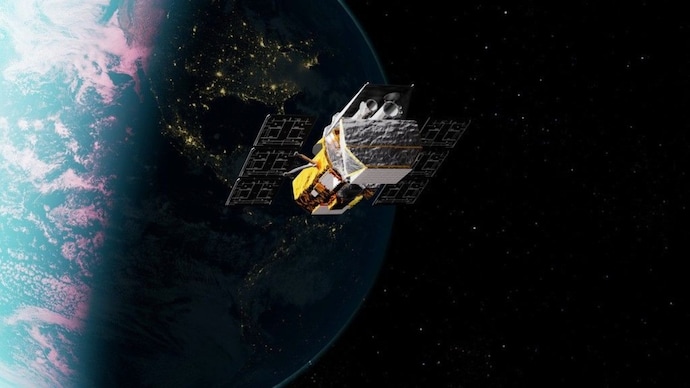
Over the past two decades, it has, as US space agency NASA says, contributed to the study of ‘everything, from comets in our solar system to black-hole activity in distant galaxies’. It was renamed Neil Gehrels Swift Observatory in 2018 in honour of its first principal investigator.
Now, a mission is on to rescue Swift, which has been sinking from its low-earth orbit and is being pulled into the earth’s atmosphere. This is because atmospheric drag has increased owing to intense space weather triggered in 2024 by peaking Sun activity. However, rather than let the satellite re-enter the atmosphere and burn up, NASA is now on a ‘rescue’ mission to haul it back up into a higher orbit and thereby extend its life.
Typically, satellites are steered by firing on-board engines, which allow them to be moved to new orbits. But Swift, originally built for a two-year mission, does not have a propulsion system. Hence, NASA contracted an American start-up, Katalyst Space, to build LINK, a robotic servicing spacecraft that will meet and grab the 1,470 kg Swift—currently orbiting at 300 km above Earth—and lift it to its original orbit (600 km).
While the original June 30 launch date was postponed twice owing to bad weather, the agency is now looking at a launch attempt on July 2. In the planned sequence of events, a Northrop Grumman Stargazer aircraft, taking off from the Marshall Islands in the South Pacific Ocean, will release an air-deployed Pegasus XL rocket at an altitude of around 40,000 ft. The rocket will deliver LINK to the required orbit.
“While NASA could have allowed Swift to re-enter the atmosphere, the situation presented an opportunity to demonstrate a key capability for the future of space exploration. This daring approach also extends Swift’s scientific lifetime and is more affordable than replacing the observatory’s unique capabilities,” the space agency said.
It will also mark the first time a commercial robotic spacecraft captures a government satellite not originally designed to be serviced in space. However, experts say there are key challenges involved. While techniques for docking and berthing in space have been in use for decades, the key factor remains arriving at proximity to the orbiting space observatory and grabbing it with the robotic arm.
In fact, NASA’s Gemini experiments, starting in the mid-1960s, were the beginning of rendezvous and docking technology on-orbit, ahead of the Apollo missions that landed humans on the Moon. In 1993, the First Servicing Mission to carry out repairs on the Hubble Space Telescope was launched on the space shuttle Endeavour, opening a new chapter in ‘satellite servicing’. Between 1993 and 2009, NASA sent five successful servicing missions to the Hubble Space Telescope.
Ideas to refuel and repower ageing satellites whose instruments are healthy are already in the pipeline globally, explains Nigar Shaji, associate director (projects), U R Rao Satellite Centre, Indian Space Research Organisation (ISRO). “Techniques are being tried worldwide to attach to and transfer fuel from other spacecraft so that a satellite can survive for a longer time,” says Shaji. “The space industry is now looking at the economy part of it. So, a lot of techniques are being thought of to reduce costs and save a satellite.”
Similarly, several techniques are being evolved to tackle space debris. In the case of the Swift Boost Mission, NASA calls it a race against time because of the spacecraft’s decaying orbit. To slow this down and minimise drag, its telescope operations were suspended earlier this year. Once LINK reaches orbit, it will go through a commissioning phase lasting several weeks before it assesses the potential grab points where it can attach to Swift, using its three robotic arms. The lift is expected to take a few months, and once completed, LINK will detach and re-enter the Earth’s atmosphere.
Subscribe to India Today Magazine
Over the past two decades, it has, as US space agency NASA says, contributed to the study of ‘everything, from comets in our solar system to black-hole activity in distant galaxies’. It was renamed Neil Gehrels Swift Observatory in 2018 in honour of its first principal investigator.
Now, a mission is on to rescue Swift, which has been sinking from its low-earth orbit and is being pulled into the earth’s atmosphere. This is because atmospheric drag has increased owing to intense space weather triggered in 2024 by peaking Sun activity. However, rather than let the satellite re-enter the atmosphere and burn up, NASA is now on a ‘rescue’ mission to haul it back up into a higher orbit and thereby extend its life.
Typically, satellites are steered by firing on-board engines, which allow them to be moved to new orbits. But Swift, originally built for a two-year mission, does not have a propulsion system. Hence, NASA contracted an American start-up, Katalyst Space, to build LINK, a robotic servicing spacecraft that will meet and grab the 1,470 kg Swift—currently orbiting at 300 km above Earth—and lift it to its original orbit (600 km).
While the original June 30 launch date was postponed twice owing to bad weather, the agency is now looking at a launch attempt on July 2. In the planned sequence of events, a Northrop Grumman Stargazer aircraft, taking off from the Marshall Islands in the South Pacific Ocean, will release an air-deployed Pegasus XL rocket at an altitude of around 40,000 ft. The rocket will deliver LINK to the required orbit.
“While NASA could have allowed Swift to re-enter the atmosphere, the situation presented an opportunity to demonstrate a key capability for the future of space exploration. This daring approach also extends Swift’s scientific lifetime and is more affordable than replacing the observatory’s unique capabilities,” the space agency said.
It will also mark the first time a commercial robotic spacecraft captures a government satellite not originally designed to be serviced in space. However, experts say there are key challenges involved. While techniques for docking and berthing in space have been in use for decades, the key factor remains arriving at proximity to the orbiting space observatory and grabbing it with the robotic arm.
In fact, NASA’s Gemini experiments, starting in the mid-1960s, were the beginning of rendezvous and docking technology on-orbit, ahead of the Apollo missions that landed humans on the Moon. In 1993, the First Servicing Mission to carry out repairs on the Hubble Space Telescope was launched on the space shuttle Endeavour, opening a new chapter in ‘satellite servicing’. Between 1993 and 2009, NASA sent five successful servicing missions to the Hubble Space Telescope.
Ideas to refuel and repower ageing satellites whose instruments are healthy are already in the pipeline globally, explains Nigar Shaji, associate director (projects), U R Rao Satellite Centre, Indian Space Research Organisation (ISRO). “Techniques are being tried worldwide to attach to and transfer fuel from other spacecraft so that a satellite can survive for a longer time,” says Shaji. “The space industry is now looking at the economy part of it. So, a lot of techniques are being thought of to reduce costs and save a satellite.”
Similarly, several techniques are being evolved to tackle space debris. In the case of the Swift Boost Mission, NASA calls it a race against time because of the spacecraft’s decaying orbit. To slow this down and minimise drag, its telescope operations were suspended earlier this year. Once LINK reaches orbit, it will go through a commissioning phase lasting several weeks before it assesses the potential grab points where it can attach to Swift, using its three robotic arms. The lift is expected to take a few months, and once completed, LINK will detach and re-enter the Earth’s atmosphere.
Subscribe to India Today Magazine

