Why no authority is owning up a 'ghost demolition' in Surat's Nasirnagar
The Gujarat HC's firm stand has given the displaced daily wagers hope and prompted the Surat Municipal Corporation to suspend five officials; but no FIR yet
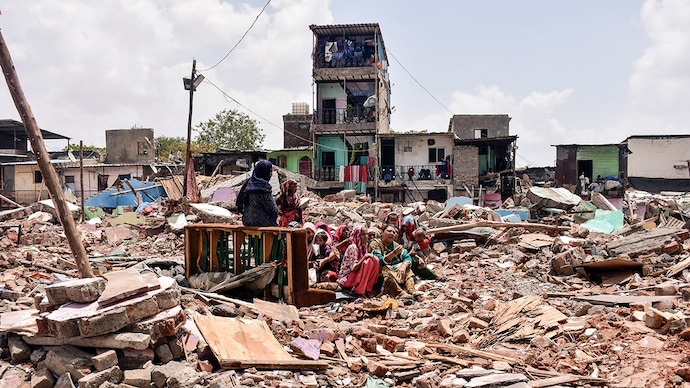
The houses were razed in late May and early June during what residents believed was an official civic operation. Yet, when questions arose over who had authorised the exercise, the Surat Municipal Corporation (SMC), police and other authorities distanced themselves, leaving a startling question: who demolished an entire settlement in full daylight?
The operation was ostensibly linked to a proposed road-widening project in Katargam. According to the SMC’s own account at the time, civic officials had been tasked only with demarcating the alignment of the proposed road. Local BJP MLA Vinu Mordia also stated publicly that the civic body had merely been authorised to carry out measurements.
Instead, bulldozers had flattened 117 dwellings, reducing decades-old homes to rubble while police personnel remained deployed at the site.
Residents allege they received neither demolition notices nor eviction orders, and were given no opportunity to challenge the action or salvage their belongings. Many claimed they had lived in Nasirnagar for over three decades. The absence of documented notices, rehabilitation measures or a clearly identified demolition authority raised serious questions over compliance with due process and constitutional protections governing evictions, even in cases involving alleged encroachments.
“Most of the displaced people are daily-wage labourers who can barely make ends meet. The demolition was completely illegal,” says Mujahid Nafees, convenor of the Minority Coordination Committee, an NGO guiding victims through rehabilitation and legal process for justice.
In the third week of June, 26 affected residents filed a special civil application (writ petition) in the Gujarat High Court, challenging the demolition. Hearing the matter on June 30, the court observed that the SMC appeared to have demolished the houses “under the garb of road demarcation” and questioned why the police had not intervened if the demolition lacked legal sanction.
The bench noted that law enforcement had a duty to prevent unlawful acts rather than remain passive spectators. The government pleader admitted in court that the SMC had permission for demarcation and that the demolition was not authorised. The next hearing is scheduled for July 6.
A day after the court hearing, five SMC officials were suspended. However, no FIR has been filed and no officer has yet taken responsibility for the demolition.
The displaced residents of Nasirnagar have been given temporary shelter in a community hall managed by the SMC. Their biggest concern is recovery of identity documents, which only some have managed to extract from the rubble.
The Minority Coordination Committee has demanded criminal action and accountability at the highest level as well as reconstruction of the demolished houses at the same spot. Nafees alleges that the demolition is a new modus operandi deployed by builders, along with SMC and local police, to free up real estate.
“Earlier, local goons would be recruited to intimidate poor people to evacuate them from their shanties for a real-estate project. Now, that job is done by government officials leisurely over three long days. The operation was so well managed that mainstream electronic media did not report the story for six days,” Nafees said.
The court’s stern stand has given some hope to the victims, but their battle for survival on daily wages continues—with or without a roof over their heads.
Subscribe to India Today Magazine
The houses were razed in late May and early June during what residents believed was an official civic operation. Yet, when questions arose over who had authorised the exercise, the Surat Municipal Corporation (SMC), police and other authorities distanced themselves, leaving a startling question: who demolished an entire settlement in full daylight?
The operation was ostensibly linked to a proposed road-widening project in Katargam. According to the SMC’s own account at the time, civic officials had been tasked only with demarcating the alignment of the proposed road. Local BJP MLA Vinu Mordia also stated publicly that the civic body had merely been authorised to carry out measurements.
Instead, bulldozers had flattened 117 dwellings, reducing decades-old homes to rubble while police personnel remained deployed at the site.
Residents allege they received neither demolition notices nor eviction orders, and were given no opportunity to challenge the action or salvage their belongings. Many claimed they had lived in Nasirnagar for over three decades. The absence of documented notices, rehabilitation measures or a clearly identified demolition authority raised serious questions over compliance with due process and constitutional protections governing evictions, even in cases involving alleged encroachments.
“Most of the displaced people are daily-wage labourers who can barely make ends meet. The demolition was completely illegal,” says Mujahid Nafees, convenor of the Minority Coordination Committee, an NGO guiding victims through rehabilitation and legal process for justice.
In the third week of June, 26 affected residents filed a special civil application (writ petition) in the Gujarat High Court, challenging the demolition. Hearing the matter on June 30, the court observed that the SMC appeared to have demolished the houses “under the garb of road demarcation” and questioned why the police had not intervened if the demolition lacked legal sanction.
The bench noted that law enforcement had a duty to prevent unlawful acts rather than remain passive spectators. The government pleader admitted in court that the SMC had permission for demarcation and that the demolition was not authorised. The next hearing is scheduled for July 6.
A day after the court hearing, five SMC officials were suspended. However, no FIR has been filed and no officer has yet taken responsibility for the demolition.
The displaced residents of Nasirnagar have been given temporary shelter in a community hall managed by the SMC. Their biggest concern is recovery of identity documents, which only some have managed to extract from the rubble.
The Minority Coordination Committee has demanded criminal action and accountability at the highest level as well as reconstruction of the demolished houses at the same spot. Nafees alleges that the demolition is a new modus operandi deployed by builders, along with SMC and local police, to free up real estate.
“Earlier, local goons would be recruited to intimidate poor people to evacuate them from their shanties for a real-estate project. Now, that job is done by government officials leisurely over three long days. The operation was so well managed that mainstream electronic media did not report the story for six days,” Nafees said.
The court’s stern stand has given some hope to the victims, but their battle for survival on daily wages continues—with or without a roof over their heads.
Subscribe to India Today Magazine

