Will Bengal's anti-goonda law curb crime or curb dissent?
While the BJP government considers the new law necessary for addressing organised crime, the Opposition warns it could pave the way to a 'police state'.
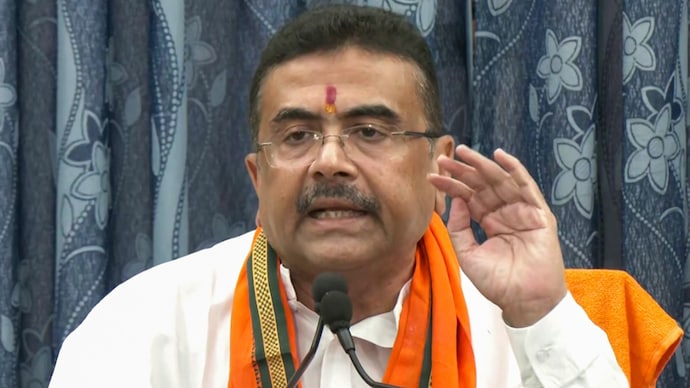
The West Bengal Public Safety and Control of Anti-Social Activities Bill, 2026—already dubbed the “anti-goonda Bill” in political circles—was passed in the assembly by a vote of 176 to 41, alongside the West Bengal Maintenance of Public Order (Amendment) Bill, 2026, after a marathon debate that repeatedly returned to the balance between public order and civil liberties.
Introducing the legislation, CM Adhikari defended the need for stronger laws by citing recent incidents of political violence in the state. Referring to Hargobind Das, who was killed during the Murshidabad violence in April 2025, he said, “Hargobind Das’s wife is seated in the gallery. She is an example of why this Bill is necessary.”
The new law empowers district magistrates, commissioners of police and authorised officers of at least deputy inspector general (DIG) rank to extern from a specified area or district for up to one year any person they believe is engaging in, or is likely to engage in, anti-social activities. It also expands the definition of a “goonda” to include habitual offenders, members of organised criminal groups and those involved in offences ranging from extortion and land grabbing to illegal mining, narcotics, arms and explosives.
The legislation allows preventive detention for up to one year without trial, makes offences cognisable and non-bailable, and criminalises harbouring or assisting persons against whom detention or externment orders have been issued.
The accompanying amendment to the Maintenance of Public Order Act creates a Claims Commission empowered to recover compensation for damage caused during riots, arson, violent protests and public disorder. Compensation can be recovered not only from those directly involved in violence but also from alleged organisers, financiers, instigators and those accused of providing logistical support, with unpaid dues recoverable as arrears of land revenue.
Much of the debate, however, centred on whether the legislation gave the executive excessive discretion. Indian Secular Front MLA Naushad Siddique said he supported making those responsible for vandalising public property pay compensation but questioned several provisions of the Bill. “If public property built using taxpayers’ money is destroyed in the name of protest, compensation must be paid,” Siddique said, adding that “there should be no partiality; the process must adhere to specific rules”. He questioned whether the legislation could become “a tool for suppression”, asking, “Will dissent be treated as a crime? Will the police be granted arbitrary powers?”
Taking particular exception to the provision allowing action based on suspicion, Siddique asked, “The Bill speaks of arrest and detention based merely on suspicion. Against whom will this suspicion be directed—those holding opposing views, or those genuinely engaging in hooliganism?” Drawing parallels with repealed preventive detention laws, he remarked, “A confident government does not need measures like secret lists or detention without trial.”
Referring to custodial deaths reported in the Baruipur police district two years ago, Siddique argued that greater police powers required stronger safeguards and urged the government to refer the Bill to a select committee after wider public consultation.
Similar concerns were also raised from within the fractured Opposition. Trinamool Congress (TMC) MLA Prasun Banerjee, now aligned with the Ritabrata Banerjee faction, questioned whether empowering police to act on suspicion risked undermining democratic safeguards. “It is stated that the police can take action based on suspicion. If the police can act merely on suspicion regarding someone, are we creating a ‘police state’?” he asked.
While supporting the objective of protecting public property, senior TMC leader Kunal Ghosh argued that several provisions required substantial changes. Recalling his earlier criticism of the draft legislation, Ghosh said some provisions resembled “a 2026 version of the British-era Rowlatt Act”, referring to the colonial law that permitted detention without trial and became a symbol of British repression. He also urged the government to send the legislation to a select committee, particularly objecting to provisions that could restrict legal representation for detainees.
The government, however, remained firm that extraordinary powers were necessary to deal with organised violence. Tourism minister Shankar Ghosh argued that the legislation would end the culture of impunity surrounding attacks on public property. “The time has come to disabuse those who believe that destroying government property is not a crime,” he said, alleging that the state had witnessed “15 years of looting, terror and banditry”.
He cited violence during protests over the Citizenship (Amendment) Act and Waqf-related issues, adding, “This Bill is crucial to punish those who attempt to exploit the poor.” Defending the enhanced police powers, he declared, “Through this Bill, the time has come to bring the police out from under the table and force the goons under it.”
Responding to Opposition concerns, Ghosh maintained that peaceful protest remained a constitutional right but insisted that vandalism would no longer be tolerated. He argued that existing provisions under the Bharatiya Nyaya Sanhita were insufficient and claimed that comparable legislation already existed in states such as Gujarat, Kerala and Rajasthan.
Municipal affairs minister Agnimitra Paul said the legislation would also provide relief to ordinary citizens affected by violence. “If someone’s shop is vandalised, their house set on fire or their business ruined, they will be able to claim compensation,” she said.
Despite repeated assurances from the treasury benches that the law targets only organised criminals and vandals, the assembly debate was dominated by concerns that its broad definitions of “anti-social activity”, preventive detention provisions and powers to act on apprehension or suspicion could ultimately be deployed against political opponents, activists and dissenters as much as against criminal syndicates.
Subscribe to India Today Magazine
The West Bengal Public Safety and Control of Anti-Social Activities Bill, 2026—already dubbed the “anti-goonda Bill” in political circles—was passed in the assembly by a vote of 176 to 41, alongside the West Bengal Maintenance of Public Order (Amendment) Bill, 2026, after a marathon debate that repeatedly returned to the balance between public order and civil liberties.
Introducing the legislation, CM Adhikari defended the need for stronger laws by citing recent incidents of political violence in the state. Referring to Hargobind Das, who was killed during the Murshidabad violence in April 2025, he said, “Hargobind Das’s wife is seated in the gallery. She is an example of why this Bill is necessary.”
The new law empowers district magistrates, commissioners of police and authorised officers of at least deputy inspector general (DIG) rank to extern from a specified area or district for up to one year any person they believe is engaging in, or is likely to engage in, anti-social activities. It also expands the definition of a “goonda” to include habitual offenders, members of organised criminal groups and those involved in offences ranging from extortion and land grabbing to illegal mining, narcotics, arms and explosives.
The legislation allows preventive detention for up to one year without trial, makes offences cognisable and non-bailable, and criminalises harbouring or assisting persons against whom detention or externment orders have been issued.
The accompanying amendment to the Maintenance of Public Order Act creates a Claims Commission empowered to recover compensation for damage caused during riots, arson, violent protests and public disorder. Compensation can be recovered not only from those directly involved in violence but also from alleged organisers, financiers, instigators and those accused of providing logistical support, with unpaid dues recoverable as arrears of land revenue.
Much of the debate, however, centred on whether the legislation gave the executive excessive discretion. Indian Secular Front MLA Naushad Siddique said he supported making those responsible for vandalising public property pay compensation but questioned several provisions of the Bill. “If public property built using taxpayers’ money is destroyed in the name of protest, compensation must be paid,” Siddique said, adding that “there should be no partiality; the process must adhere to specific rules”. He questioned whether the legislation could become “a tool for suppression”, asking, “Will dissent be treated as a crime? Will the police be granted arbitrary powers?”
Taking particular exception to the provision allowing action based on suspicion, Siddique asked, “The Bill speaks of arrest and detention based merely on suspicion. Against whom will this suspicion be directed—those holding opposing views, or those genuinely engaging in hooliganism?” Drawing parallels with repealed preventive detention laws, he remarked, “A confident government does not need measures like secret lists or detention without trial.”
Referring to custodial deaths reported in the Baruipur police district two years ago, Siddique argued that greater police powers required stronger safeguards and urged the government to refer the Bill to a select committee after wider public consultation.
Similar concerns were also raised from within the fractured Opposition. Trinamool Congress (TMC) MLA Prasun Banerjee, now aligned with the Ritabrata Banerjee faction, questioned whether empowering police to act on suspicion risked undermining democratic safeguards. “It is stated that the police can take action based on suspicion. If the police can act merely on suspicion regarding someone, are we creating a ‘police state’?” he asked.
While supporting the objective of protecting public property, senior TMC leader Kunal Ghosh argued that several provisions required substantial changes. Recalling his earlier criticism of the draft legislation, Ghosh said some provisions resembled “a 2026 version of the British-era Rowlatt Act”, referring to the colonial law that permitted detention without trial and became a symbol of British repression. He also urged the government to send the legislation to a select committee, particularly objecting to provisions that could restrict legal representation for detainees.
The government, however, remained firm that extraordinary powers were necessary to deal with organised violence. Tourism minister Shankar Ghosh argued that the legislation would end the culture of impunity surrounding attacks on public property. “The time has come to disabuse those who believe that destroying government property is not a crime,” he said, alleging that the state had witnessed “15 years of looting, terror and banditry”.
He cited violence during protests over the Citizenship (Amendment) Act and Waqf-related issues, adding, “This Bill is crucial to punish those who attempt to exploit the poor.” Defending the enhanced police powers, he declared, “Through this Bill, the time has come to bring the police out from under the table and force the goons under it.”
Responding to Opposition concerns, Ghosh maintained that peaceful protest remained a constitutional right but insisted that vandalism would no longer be tolerated. He argued that existing provisions under the Bharatiya Nyaya Sanhita were insufficient and claimed that comparable legislation already existed in states such as Gujarat, Kerala and Rajasthan.
Municipal affairs minister Agnimitra Paul said the legislation would also provide relief to ordinary citizens affected by violence. “If someone’s shop is vandalised, their house set on fire or their business ruined, they will be able to claim compensation,” she said.
Despite repeated assurances from the treasury benches that the law targets only organised criminals and vandals, the assembly debate was dominated by concerns that its broad definitions of “anti-social activity”, preventive detention provisions and powers to act on apprehension or suspicion could ultimately be deployed against political opponents, activists and dissenters as much as against criminal syndicates.
Subscribe to India Today Magazine

