Release minors, those without criminal past: SC's big order on student protesters
The Supreme Court ordered that no coercive action be taken in connection with any FIRs lodged against the students involved in the Cockroach Janta Party-led protests in Jantar Mantar and other states.
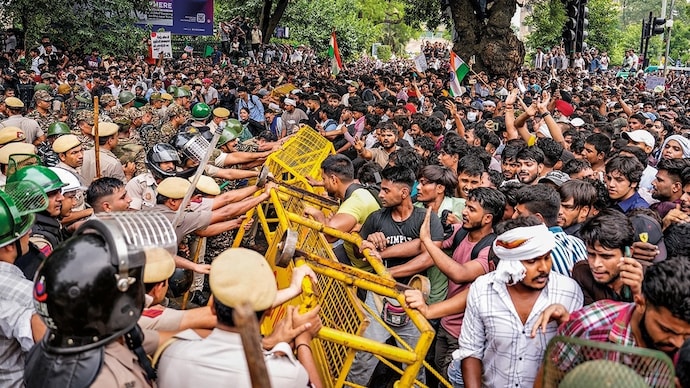
The Supreme Court on Tuesday ordered states to release all students below the age of 18 and those without any criminal antecedents who were arrested or detained during the nationwide protests over exam paper leaks. In wide-ranging interim measures, the Supreme Court also ordered that no coercive action be taken in connection with any FIRs lodged against the students involved in the Cockroach Janta Party-led protests in Delhi's Jantar Mantar and various other states.
A three-judge bench led by Chief Justice Surya Kant, however, made it clear that the protection would not extend to those with criminal background. The Supreme Court also hinted that it might order a probe by a high-powered committee into allegations of police excesses against protesting students. The probe will also look into allegations of attacks on police personnel as well.
The top court also issued notices to the Centre and the governments of Maharashtra, Bihar, Assam, West Bengal, Madhya Pradesh, Uttar Pradesh and Delhi.
'TAKE TO TASK THOSE WHO COMMITTED EXCESSES'
The Supreme Court was hearing a batch of petitions alleging police brutality during the crackdown on protests across several states, including the incident on July 20, when students clashed with police during their march to Parliament. One of the petitions, filed by RJD MP Manoj Jha, said a police officer in Bihar used an AK-47 during the agitation.
The massive agitation eventually forced Education Minister Dharmendra Pradhan to resign, even as the government scrambled to bring a series of measures to curb exam paper leaks.
On Tuesday, the apex court made it clear that those who committed "excesses" or took the law into their own hands should be brought to task.
"There has to be a completely independent probe. Whosoever committed excesses, took the law into their hands, should be taken to task. A probe is meaningless if no responsibility is fixed," the Chief Justice said.
The Supreme Court also directed that CCTV and drone footage, body camera recordings, wireless communication and PCR logs in connection with the protests be preserved. It also directed the states that personal information and digital data of protesters not be made public.
"No personal data, details of protesters to be published," the Supreme Court directed.
The court also said the police required a new protocol to tackle such agitations, taking note of allegations that pellet guns were used during the July 20 protest. One youth lost his eyesight after suffering pellet gun injuries. It also noted that electric batons and sticks embedded with nails were also allegedly used by the forces.
"We need to determine what kind of tear gas, or similar measures, should be used and whether their use should be permitted. After all, protests are a part of democracy," the CJI Surya Kant said.
'CRIMINALS INFILTRATED STUDENTS' PROTEST'
Solicitor General (SG) Tushar Mehta, representing the Centre and Delhi Police, pointed out that about 250 cops also suffered injuries during the July 20 violence and called for a probe by a neutral investigation agency. Mehta also said that criminals might have infiltrated the students' movement.
"If students were attacked, it is a serious matter," SG Mehta said. "As a state, we also cannot do anything that would demoralise the police force," he said in the same vein.
To this, the Chief Justice said it would need to be probed whether those who attacked the security personnel were actually students.
"One aspect would be whether the attacks on police officers... were actually committed by students participating in the protest," the court said. To this, SG Mehta claimed that criminals facing rape and NDPS charges were found to have participated in the protest.
An internal Delhi Police report, accessed exclusively by India Today, has revealed that 989 people present at the CJP-led protests were previously involved in offences like rape, robbery and kidnapping.
On Monday - the first day of hearing - the Supreme Court observed that the police cannot resort to a lathi-charge merely due to an agitation. It said the right to peaceful and lawful protest was constitutionally protected.
The CJI also stressed the urgent need for a uniform police protocol to handle protests across the country.
The matter will next be heard next week, on August 3.
The Supreme Court on Tuesday ordered states to release all students below the age of 18 and those without any criminal antecedents who were arrested or detained during the nationwide protests over exam paper leaks. In wide-ranging interim measures, the Supreme Court also ordered that no coercive action be taken in connection with any FIRs lodged against the students involved in the Cockroach Janta Party-led protests in Delhi's Jantar Mantar and various other states.
A three-judge bench led by Chief Justice Surya Kant, however, made it clear that the protection would not extend to those with criminal background. The Supreme Court also hinted that it might order a probe by a high-powered committee into allegations of police excesses against protesting students. The probe will also look into allegations of attacks on police personnel as well.
The top court also issued notices to the Centre and the governments of Maharashtra, Bihar, Assam, West Bengal, Madhya Pradesh, Uttar Pradesh and Delhi.
'TAKE TO TASK THOSE WHO COMMITTED EXCESSES'
The Supreme Court was hearing a batch of petitions alleging police brutality during the crackdown on protests across several states, including the incident on July 20, when students clashed with police during their march to Parliament. One of the petitions, filed by RJD MP Manoj Jha, said a police officer in Bihar used an AK-47 during the agitation.
The massive agitation eventually forced Education Minister Dharmendra Pradhan to resign, even as the government scrambled to bring a series of measures to curb exam paper leaks.
On Tuesday, the apex court made it clear that those who committed "excesses" or took the law into their own hands should be brought to task.
"There has to be a completely independent probe. Whosoever committed excesses, took the law into their hands, should be taken to task. A probe is meaningless if no responsibility is fixed," the Chief Justice said.
The Supreme Court also directed that CCTV and drone footage, body camera recordings, wireless communication and PCR logs in connection with the protests be preserved. It also directed the states that personal information and digital data of protesters not be made public.
"No personal data, details of protesters to be published," the Supreme Court directed.
The court also said the police required a new protocol to tackle such agitations, taking note of allegations that pellet guns were used during the July 20 protest. One youth lost his eyesight after suffering pellet gun injuries. It also noted that electric batons and sticks embedded with nails were also allegedly used by the forces.
"We need to determine what kind of tear gas, or similar measures, should be used and whether their use should be permitted. After all, protests are a part of democracy," the CJI Surya Kant said.
'CRIMINALS INFILTRATED STUDENTS' PROTEST'
Solicitor General (SG) Tushar Mehta, representing the Centre and Delhi Police, pointed out that about 250 cops also suffered injuries during the July 20 violence and called for a probe by a neutral investigation agency. Mehta also said that criminals might have infiltrated the students' movement.
"If students were attacked, it is a serious matter," SG Mehta said. "As a state, we also cannot do anything that would demoralise the police force," he said in the same vein.
To this, the Chief Justice said it would need to be probed whether those who attacked the security personnel were actually students.
"One aspect would be whether the attacks on police officers... were actually committed by students participating in the protest," the court said. To this, SG Mehta claimed that criminals facing rape and NDPS charges were found to have participated in the protest.
An internal Delhi Police report, accessed exclusively by India Today, has revealed that 989 people present at the CJP-led protests were previously involved in offences like rape, robbery and kidnapping.
On Monday - the first day of hearing - the Supreme Court observed that the police cannot resort to a lathi-charge merely due to an agitation. It said the right to peaceful and lawful protest was constitutionally protected.
The CJI also stressed the urgent need for a uniform police protocol to handle protests across the country.
The matter will next be heard next week, on August 3.
The Supreme Court on Tuesday ordered states to release all students below the age of 18 and those without any criminal antecedents who were arrested or detained during the nationwide protests over exam paper leaks. In wide-ranging interim measures, the Supreme Court also ordered that no coercive action be taken in connection with any FIRs lodged against the students involved in the Cockroach Janta Party-led protests in Delhi's Jantar Mantar and various other states.
A three-judge bench led by Chief Justice Surya Kant, however, made it clear that the protection would not extend to those with criminal background. The Supreme Court also hinted that it might order a probe by a high-powered committee into allegations of police excesses against protesting students. The probe will also look into allegations of attacks on police personnel as well.
The top court also issued notices to the Centre and the governments of Maharashtra, Bihar, Assam, West Bengal, Madhya Pradesh, Uttar Pradesh and Delhi.
'TAKE TO TASK THOSE WHO COMMITTED EXCESSES'
The Supreme Court was hearing a batch of petitions alleging police brutality during the crackdown on protests across several states, including the incident on July 20, when students clashed with police during their march to Parliament. One of the petitions, filed by RJD MP Manoj Jha, said a police officer in Bihar used an AK-47 during the agitation.
The massive agitation eventually forced Education Minister Dharmendra Pradhan to resign, even as the government scrambled to bring a series of measures to curb exam paper leaks.
On Tuesday, the apex court made it clear that those who committed "excesses" or took the law into their own hands should be brought to task.
"There has to be a completely independent probe. Whosoever committed excesses, took the law into their hands, should be taken to task. A probe is meaningless if no responsibility is fixed," the Chief Justice said.
The Supreme Court also directed that CCTV and drone footage, body camera recordings, wireless communication and PCR logs in connection with the protests be preserved. It also directed the states that personal information and digital data of protesters not be made public.
"No personal data, details of protesters to be published," the Supreme Court directed.
The court also said the police required a new protocol to tackle such agitations, taking note of allegations that pellet guns were used during the July 20 protest. One youth lost his eyesight after suffering pellet gun injuries. It also noted that electric batons and sticks embedded with nails were also allegedly used by the forces.
"We need to determine what kind of tear gas, or similar measures, should be used and whether their use should be permitted. After all, protests are a part of democracy," the CJI Surya Kant said.
'CRIMINALS INFILTRATED STUDENTS' PROTEST'
Solicitor General (SG) Tushar Mehta, representing the Centre and Delhi Police, pointed out that about 250 cops also suffered injuries during the July 20 violence and called for a probe by a neutral investigation agency. Mehta also said that criminals might have infiltrated the students' movement.
"If students were attacked, it is a serious matter," SG Mehta said. "As a state, we also cannot do anything that would demoralise the police force," he said in the same vein.
To this, the Chief Justice said it would need to be probed whether those who attacked the security personnel were actually students.
"One aspect would be whether the attacks on police officers... were actually committed by students participating in the protest," the court said. To this, SG Mehta claimed that criminals facing rape and NDPS charges were found to have participated in the protest.
An internal Delhi Police report, accessed exclusively by India Today, has revealed that 989 people present at the CJP-led protests were previously involved in offences like rape, robbery and kidnapping.
On Monday - the first day of hearing - the Supreme Court observed that the police cannot resort to a lathi-charge merely due to an agitation. It said the right to peaceful and lawful protest was constitutionally protected.
The CJI also stressed the urgent need for a uniform police protocol to handle protests across the country.
The matter will next be heard next week, on August 3.

