How India still hasn't closed the borewell trap
A four-year-old boy, Nirvair Singh, died after falling into an abandoned borewell in Ambala despite a 21-hour rescue. The tragedy has revived memories of Prince's 2006 rescue and renewed scrutiny of India's failure to seal unsafe borewells.
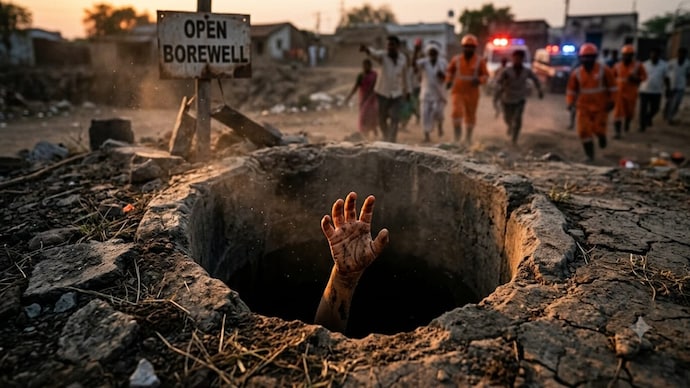
Every time a child falls into an open borewell, India watches the same tragedy unfold. The faces change. The locations change. The rescue equipment becomes more sophisticated. Yet the story remains painfully familiar.
The latest reminder came from Ambala, where a four-year-old boy slipped into an abandoned borewell, triggering yet another desperate rescue operation. Within hours, the familiar scenes returned: anxious parents, villagers praying, television cameras broadcasting every development, heavy machinery rumbling through the night, and teams from the Army and disaster response agencies racing against time. However, the 21-hour rescue ended in heartbreak as the boy Nirvair Singh couldn’t survive.
For many Indians, it was impossible not to remember another little boy, Prince.
This was the rescue that gave India hope.
WHEN PRINCE MADE HEADLINES
In July 2006, five-year-old Prince fell nearly 60 feet into a borewell in Haldaheri village, in Haryana's Kurukshetra district. What followed became one of the country's first nationally televised rescue missions.
For nearly two days, the nation held its breath as the Indian Army soldiers, engineers, doctors, and local authorities worked tirelessly to reach the trapped child. A parallel pit was dug before rescuers carefully tunnelled sideways to pull him out alive.
Prince's rescue was celebrated as a miracle. It demonstrated India's engineering ingenuity, the Army's professionalism, and the determination of ordinary citizens.
Many believed an incident requiring such a rescue would never be repeated.
They were wrong.
TRAGEDY THAT KEEPS REPEATING
In the two decades since Prince's rescue, dozens of children have fallen into abandoned or uncovered borewells across states including Haryana, Madhya Pradesh, Rajasthan, Gujarat, Karnataka, Tamil Nadu, Punjab, and Uttar Pradesh.
Some survived after marathon rescue operations.
Many did not.
Among the most heartbreaking cases was of Mahi, who remained trapped for several days before rescuers recovered her body in 2012 in Haryana’s Manesar. In 2019, toddler Fatehveer Singh, in Punjab's Sangrur district, spent more than 100 hours trapped before succumbing. Similar was the case of Sujith Wilson whose body was recovered from a borewell in a decomposed state in Tamil Nadu's Tiruchirappalli.
Each incident sparks outrage.
Each rescue prompts promises of stricter enforcement.
Yet abandoned borewells continue to dot India's rural landscape.
WHY DO THESE ACCIDENTS HAPPEN?
The answer lies in a mix of poor regulation, weak enforcement, and neglect.
Across India, thousands of borewells are drilled every year to meet agricultural and drinking water needs. When a borewell stops yielding water, it is largely abandoned rather than permanently sealed.
Some borewells are temporarily covered with loose wooden planks or plastic sheets.
Others remain completely open.
These shafts are often only a few inches wide but can extend hundreds of feet underground, making them invisible death traps for curious children playing nearby.
Although the Supreme Court of India has issued guidelines requiring unused borewells to be sealed and fenced, implementation remains inconsistent. Responsibility is often divided among landowners, contractors, and local authorities, allowing accountability to fall through the cracks.
WHY IS THE ARMY OFTEN CALLED?
One question surfaces after every borewell accident: why does the Army become involved in what appears to be a civilian emergency?
The answer is simple.
Rescuing a child from a narrow vertical shaft is one of the most technically demanding operations imaginable.
It requires precision engineering, excavation expertise, medical coordination, and the ability to work under extreme pressure while avoiding further collapse.
The Indian Army possesses trained engineers, specialised equipment and experience in complex rescue situations. Alongside agencies such as the National Disaster Response Force and the State Disaster Response Force, Army personnel frequently become the country's last hope.
Yet every deployment raises an uncomfortable question.
Should India's elite military repeatedly be rescuing children from hazards that should never have existed?
LESSONS FROM ABROAD
Countries facing similar groundwater challenges generally place far greater emphasis on prevention than rescue.
In the United States and Australia, abandoned wells are required to be professionally plugged using cement or specialised sealing materials. Local governments maintain records of wells, inspections are carried out, and landowners can face significant penalties for leaving hazardous wells unsecured.
Several European countries also maintain strict well-registration systems, ensuring authorities know the location and condition of every licenced well.
The focus is clear: eliminate the danger before an accident occurs.
India has rules too.
What it often lacks is consistent enforcement.
WHAT NEEDS TO BE DONE
Unused borewells should be sealed immediately after abandonment. Every new borewell should be geo-tagged and entered into a national digital database. District administrations should conduct periodic inspections, while panchayats and municipal bodies should identify hazardous wells before accidents occur. Heavy financial penalties and where negligence causes death, criminal liability must become the norm rather than the exception.
Technology can also help. Drones, satellite mapping and mobile reporting applications could allow citizens to report dangerous open borewells directly to local authorities.
Public awareness is equally important. Farmers, contractors and landowners must recognise that an uncovered borewell is not merely unfinished work; it is a potentially fatal hazard.
A TEST OF GOVERNANCE
The image of rescue personnel digging desperately reflects compassion, courage and extraordinary dedication.
But it also reflects repeated administrative failure.
The true measure of progress will not be how quickly rescue teams reach the next trapped child.
It will be when no child falls into an abandoned borewell again.
Until then, every new accident will reopen an old wound and remind India that some tragedies persist not because they are unavoidable, but because they have become routine.
Every time a child falls into an open borewell, India watches the same tragedy unfold. The faces change. The locations change. The rescue equipment becomes more sophisticated. Yet the story remains painfully familiar.
The latest reminder came from Ambala, where a four-year-old boy slipped into an abandoned borewell, triggering yet another desperate rescue operation. Within hours, the familiar scenes returned: anxious parents, villagers praying, television cameras broadcasting every development, heavy machinery rumbling through the night, and teams from the Army and disaster response agencies racing against time. However, the 21-hour rescue ended in heartbreak as the boy Nirvair Singh couldn’t survive.
For many Indians, it was impossible not to remember another little boy, Prince.
This was the rescue that gave India hope.
WHEN PRINCE MADE HEADLINES
In July 2006, five-year-old Prince fell nearly 60 feet into a borewell in Haldaheri village, in Haryana's Kurukshetra district. What followed became one of the country's first nationally televised rescue missions.
For nearly two days, the nation held its breath as the Indian Army soldiers, engineers, doctors, and local authorities worked tirelessly to reach the trapped child. A parallel pit was dug before rescuers carefully tunnelled sideways to pull him out alive.
Prince's rescue was celebrated as a miracle. It demonstrated India's engineering ingenuity, the Army's professionalism, and the determination of ordinary citizens.
Many believed an incident requiring such a rescue would never be repeated.
They were wrong.
TRAGEDY THAT KEEPS REPEATING
In the two decades since Prince's rescue, dozens of children have fallen into abandoned or uncovered borewells across states including Haryana, Madhya Pradesh, Rajasthan, Gujarat, Karnataka, Tamil Nadu, Punjab, and Uttar Pradesh.
Some survived after marathon rescue operations.
Many did not.
Among the most heartbreaking cases was of Mahi, who remained trapped for several days before rescuers recovered her body in 2012 in Haryana’s Manesar. In 2019, toddler Fatehveer Singh, in Punjab's Sangrur district, spent more than 100 hours trapped before succumbing. Similar was the case of Sujith Wilson whose body was recovered from a borewell in a decomposed state in Tamil Nadu's Tiruchirappalli.
Each incident sparks outrage.
Each rescue prompts promises of stricter enforcement.
Yet abandoned borewells continue to dot India's rural landscape.
WHY DO THESE ACCIDENTS HAPPEN?
The answer lies in a mix of poor regulation, weak enforcement, and neglect.
Across India, thousands of borewells are drilled every year to meet agricultural and drinking water needs. When a borewell stops yielding water, it is largely abandoned rather than permanently sealed.
Some borewells are temporarily covered with loose wooden planks or plastic sheets.
Others remain completely open.
These shafts are often only a few inches wide but can extend hundreds of feet underground, making them invisible death traps for curious children playing nearby.
Although the Supreme Court of India has issued guidelines requiring unused borewells to be sealed and fenced, implementation remains inconsistent. Responsibility is often divided among landowners, contractors, and local authorities, allowing accountability to fall through the cracks.
WHY IS THE ARMY OFTEN CALLED?
One question surfaces after every borewell accident: why does the Army become involved in what appears to be a civilian emergency?
The answer is simple.
Rescuing a child from a narrow vertical shaft is one of the most technically demanding operations imaginable.
It requires precision engineering, excavation expertise, medical coordination, and the ability to work under extreme pressure while avoiding further collapse.
The Indian Army possesses trained engineers, specialised equipment and experience in complex rescue situations. Alongside agencies such as the National Disaster Response Force and the State Disaster Response Force, Army personnel frequently become the country's last hope.
Yet every deployment raises an uncomfortable question.
Should India's elite military repeatedly be rescuing children from hazards that should never have existed?
LESSONS FROM ABROAD
Countries facing similar groundwater challenges generally place far greater emphasis on prevention than rescue.
In the United States and Australia, abandoned wells are required to be professionally plugged using cement or specialised sealing materials. Local governments maintain records of wells, inspections are carried out, and landowners can face significant penalties for leaving hazardous wells unsecured.
Several European countries also maintain strict well-registration systems, ensuring authorities know the location and condition of every licenced well.
The focus is clear: eliminate the danger before an accident occurs.
India has rules too.
What it often lacks is consistent enforcement.
WHAT NEEDS TO BE DONE
Unused borewells should be sealed immediately after abandonment. Every new borewell should be geo-tagged and entered into a national digital database. District administrations should conduct periodic inspections, while panchayats and municipal bodies should identify hazardous wells before accidents occur. Heavy financial penalties and where negligence causes death, criminal liability must become the norm rather than the exception.
Technology can also help. Drones, satellite mapping and mobile reporting applications could allow citizens to report dangerous open borewells directly to local authorities.
Public awareness is equally important. Farmers, contractors and landowners must recognise that an uncovered borewell is not merely unfinished work; it is a potentially fatal hazard.
A TEST OF GOVERNANCE
The image of rescue personnel digging desperately reflects compassion, courage and extraordinary dedication.
But it also reflects repeated administrative failure.
The true measure of progress will not be how quickly rescue teams reach the next trapped child.
It will be when no child falls into an abandoned borewell again.
Until then, every new accident will reopen an old wound and remind India that some tragedies persist not because they are unavoidable, but because they have become routine.

