India's chip push gets boost as PM opens semiconductor plant in Gujarat's Sanand
Prime Minister Narendra Modi inaugurated the CG Semi OSAT plant in Gujarat's Sanand, calling it a landmark in India's semiconductor journey and reaffirming the country's goal of becoming a global chip manufacturing hub.
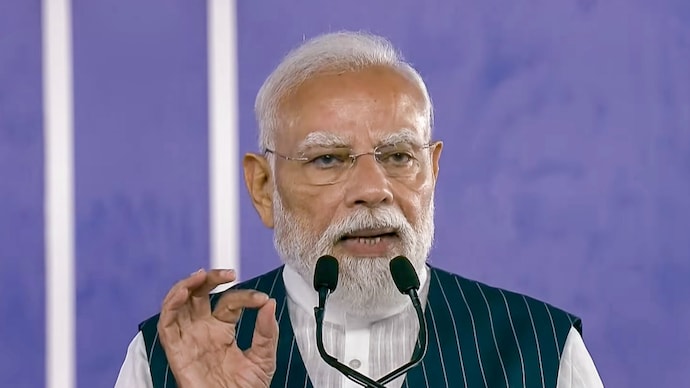
Prime Minister Narendra Modi on Saturday inaugurated the CG Semi Outsourced Semiconductor Assembly and Test (OSAT) facility in Gujarat's Sanand, describing it as a landmark milestone in India's semiconductor journey and highlighting the country's ambition to become a global semiconductor hub.
Sharing the development on X, the Prime Minister wrote, "A landmark day for India's semiconductor journey. The CG SEMI OSAT facility in Sanand will strengthen the chip manufacturing ecosystem, boost technological self-reliance and enhance India's position in the global semiconductor value chain."
Addressing the inauguration ceremony, Modi expressed confidence that the facility would meet its production target.
"I've been told that 200 million chips will be produced here every year from now on. I am firmly confident that you will achieve it soon. This confidence also stems from the fact that the Semicon India programme is gaining momentum. Step by step, brick by brick, and now chip by chip. We have set a target of manufacturing 500 million chips annually. I am confident that you will achieve this target very soon. I extend my heartfelt congratulations to the entire team at CG Semi," he said.
The Prime Minister said India's semiconductor progress is part of a decade-long transformation in the electronics sector rather than a sudden development. He said the country has steadily progressed from manufacturing finished products to components and is now entering semiconductor manufacturing, with the goal of establishing the entire electronics value chain within India.
"The expansion of the semiconductor industry in India did not happen suddenly. This is the next step of the electronics revolution that has come to India over the past decade. First product, then components, and now semiconductor. Meaning the entire value chain of electronics will be in India. This is the roadmap for a developed India. This is the next phase of Make in India," Modi said.
Highlighting the country's achievements in electronics manufacturing, the Prime Minister said India has become the world's second-largest mobile manufacturer as well as the second-largest mobile exporter.
"Today, India is the world's second-largest mobile manufacturer and also the second-largest mobile exporter. Today, India's total electronic production has increased by nearly seven times compared to 2014. Electronics exports have increased by nearly eleven times," he said.
PM Modi also recalled India's commitment to building a domestic semiconductor industry.
"Five years ago, India resolved that we would make the country a semiconductor hub. We have moved forward with the mantra of Design in India, Make in India, and today, commercial production of chip packaging is also starting in the country's third semiconductor plant," he said.
Recalling the timeline of the project, Modi said he had laid the foundation stone of the facility in 2024 and that testing chip work began at the plant in August 2025.
"I had the opportunity to lay the foundation stone of this plant in 2024. In August 2025, the testing chip work began here, and today the inauguration of this plant has taken place. This journey from foundation stone to production is undoubtedly the result of the hard work of many colleagues," he said.
The Prime Minister also highlighted the international collaboration behind the project.
"This CG Semi plant is also a symbol of the collective efforts of our industry partners from India, Japan, and Thailand. This is not just a business venture; it is a model of technology, trust, and partnership that will give new momentum to India's semiconductor journey," he said.
Speaking at the event, Union Minister for Electronics and Information Technology Ashwini Vaishnaw said the chips manufactured at the Sanand facility would cater to multiple sectors and international markets.
"The chips manufactured at this plant will be used in cars, scooters, and various industrial applications; and—most significantly—chips made in India, at this facility, will be exported to Japan, America, and Europe. Indian technology will earn global acclaim. The efforts of Prime Minister have made this success possible. This was once considered impossible, but it has become a reality thanks to the bold resolve of our leadership—a monumental commitment to establish a semiconductor industry in India, which has now come to fruition," Vaishnaw said.
Prime Minister Narendra Modi on Saturday inaugurated the CG Semi Outsourced Semiconductor Assembly and Test (OSAT) facility in Gujarat's Sanand, describing it as a landmark milestone in India's semiconductor journey and highlighting the country's ambition to become a global semiconductor hub.
Sharing the development on X, the Prime Minister wrote, "A landmark day for India's semiconductor journey. The CG SEMI OSAT facility in Sanand will strengthen the chip manufacturing ecosystem, boost technological self-reliance and enhance India's position in the global semiconductor value chain."
Addressing the inauguration ceremony, Modi expressed confidence that the facility would meet its production target.
"I've been told that 200 million chips will be produced here every year from now on. I am firmly confident that you will achieve it soon. This confidence also stems from the fact that the Semicon India programme is gaining momentum. Step by step, brick by brick, and now chip by chip. We have set a target of manufacturing 500 million chips annually. I am confident that you will achieve this target very soon. I extend my heartfelt congratulations to the entire team at CG Semi," he said.
The Prime Minister said India's semiconductor progress is part of a decade-long transformation in the electronics sector rather than a sudden development. He said the country has steadily progressed from manufacturing finished products to components and is now entering semiconductor manufacturing, with the goal of establishing the entire electronics value chain within India.
"The expansion of the semiconductor industry in India did not happen suddenly. This is the next step of the electronics revolution that has come to India over the past decade. First product, then components, and now semiconductor. Meaning the entire value chain of electronics will be in India. This is the roadmap for a developed India. This is the next phase of Make in India," Modi said.
Highlighting the country's achievements in electronics manufacturing, the Prime Minister said India has become the world's second-largest mobile manufacturer as well as the second-largest mobile exporter.
"Today, India is the world's second-largest mobile manufacturer and also the second-largest mobile exporter. Today, India's total electronic production has increased by nearly seven times compared to 2014. Electronics exports have increased by nearly eleven times," he said.
PM Modi also recalled India's commitment to building a domestic semiconductor industry.
"Five years ago, India resolved that we would make the country a semiconductor hub. We have moved forward with the mantra of Design in India, Make in India, and today, commercial production of chip packaging is also starting in the country's third semiconductor plant," he said.
Recalling the timeline of the project, Modi said he had laid the foundation stone of the facility in 2024 and that testing chip work began at the plant in August 2025.
"I had the opportunity to lay the foundation stone of this plant in 2024. In August 2025, the testing chip work began here, and today the inauguration of this plant has taken place. This journey from foundation stone to production is undoubtedly the result of the hard work of many colleagues," he said.
The Prime Minister also highlighted the international collaboration behind the project.
"This CG Semi plant is also a symbol of the collective efforts of our industry partners from India, Japan, and Thailand. This is not just a business venture; it is a model of technology, trust, and partnership that will give new momentum to India's semiconductor journey," he said.
Speaking at the event, Union Minister for Electronics and Information Technology Ashwini Vaishnaw said the chips manufactured at the Sanand facility would cater to multiple sectors and international markets.
"The chips manufactured at this plant will be used in cars, scooters, and various industrial applications; and—most significantly—chips made in India, at this facility, will be exported to Japan, America, and Europe. Indian technology will earn global acclaim. The efforts of Prime Minister have made this success possible. This was once considered impossible, but it has become a reality thanks to the bold resolve of our leadership—a monumental commitment to establish a semiconductor industry in India, which has now come to fruition," Vaishnaw said.

