Kidneys, hearts 'listed' on dark web for sale: Organ racket or scam?
From kidneys to hearts, dark web sellers advertise human organs like online products, demanding Bitcoin deposits upfront. An India Today OSINT investigation found that despite strict laws governing organ transplants, such operations largely appear to be scams that prey on desperate patients, exploiting their hope and duping them of large sums of money.

A kidney delivered to India in two days. A matching donor in Delhi within minutes. Medical reports, hospital arrangements and even a doctor in Mumbai, all promised after a Bitcoin deposit of $2,000.
In a country where organ transplants are governed by strict laws and waiting periods can stretch for months, such promises would appear extraordinary.
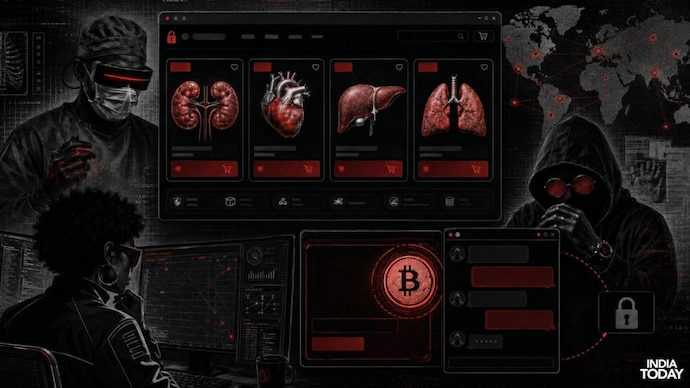
An investigation by India Today's Open Source Intelligence (OSINT) team found at least three onion websites openly advertising human organs for sale and directing users through Telegram for further negotiations. The websites list kidneys, hearts, lungs and livers with price tags resembling those of online shopping platforms, complete with product descriptions, sale tags and shopping cart options.
Onion sites, often called dark web websites, are websites that cannot be accessed through normal browsers like Chrome or Safari. They require special software such as Tor and often hide the identities and locations of both the website operators and their users.
One such website advertised a "Human Kidney" for $85,000, a "Human Heart" for $69,000 and a "Human Liver" for $35,000. The platform claimed to provide "cheap and legal" organs, arguing that long waiting lists and organ shortages justified such transactions. It also claimed to operate across Europe, India and several other countries.
To examine these claims, India Today's OSINT team contacted one such seller, who described the operation as a "darknet marketplace for all things, real and authentic."
Posing as a prospective buyer seeking a kidney in India, the team was told that delivery would take two days and that payment would be accepted only through Bitcoin. As the conversation progressed, the seller claimed to have a "fresh harvest" kidney available within a 24-hour window and later offered what it described as a "live matching donor" in Delhi, allegedly a healthy 24-year-old male with O negative blood.
The account quoted a package price of $50,000, which it said covered donor compensation, surgery, hospital stay and airport pickup. To reserve the donor, the seller demanded a Bitcoin deposit of $2,000 and claimed that the remaining amount could be paid after the transplant. Hospital details, however, would only be disclosed after payment because of what the seller described as concerns over police surveillance.
Several of these claims, however, run contrary to India's transplant laws and established medical procedures.
"It is not possible. The government has very strict laws under the Human Organ Transplant Act," said Dr. Vikas Jain, Vice President (Surgeon) of the Indian Society of Organ Transplantation.
According to Dr. Jain, nearly 90 to 95 percent of organ transplants in India are carried out through living donors, while organs from deceased or cadaveric donors are allocated through the National Organ and Tissue Transplant Organisation (NOTTO) and corresponding state bodies.
“The promise of arranging a matching donor within hours also overlooks the extensive medical and legal procedures involved in transplantation.”
"Six to eight hours are required just to complete the necessary tests. It is simply not possible that someone can arrange a kidney and complete everything within 24 hours. Also, donors and recipients are generally required to be close relatives, while authorization committees often examine family relationships through documents, family trees and, in some cases, DNA testing before approving a transplant," Dr. Jain said.
While our conversation continued with the seller, they attempted to establish credibility by providing the name of a Mumbai-based urologist. An independent search found that the name matched that of a prominent Mumbai-based urologist associated with a reputed private hospital.
However, the vendor declined to share any additional details, including the name of the hospital, direct contact information or any independent verification, and continued to insist on advance payment.
India Today has not independently verified whether the name provided by the seller refers to the same doctor or whether the individual has any association with the purported transaction or the hospital mentioned by the vendor.
The use of a reputed doctor's name without verification raises further questions about the authenticity of the operation. Experts say fraud networks often invoke established hospitals and medical professionals to gain the trust of desperate patients seeking urgent treatment.
Another aspect that emerged during the investigation was the choice of Telegram as the primary channel for negotiations. After initial contact through darkweb, conversations shifted to the messaging platform, where alleged vendors continued discussions away from publicly accessible websites.
Telegram has previously come under scrutiny in India in connection with a range of alleged illicit activities. Authorities investigating the NEET paper leak alleged that the platform was used to circulate leaked examination material. More recently, a report by the Home Ministry's Indian Cyber Crime Coordination Centre found that Telegram groups were being used to share child sexual abuse material and facilitate financial scams.
While there is no evidence linking the platform itself to the alleged organ trade, the conversations reviewed during this investigation suggest that messaging services with anonymity can provide a private channel through which suspected vendors continue negotiations while shielding their identities from public view.
The conversations, however, leave a more fundamental question unanswered: are these networks facilitating illegal organ trade, or are they primarily designed to extract money from desperate patients seeking urgent treatment?
Whether these vendors represent organised organ trafficking networks, elaborate advance-payment scams targeting vulnerable patients, or a combination of both remains unclear. What is evident, however, is that many of the promises made by the sellers stand in direct contradiction to India's transplant laws, medical protocols and organ allocation system.
A kidney delivered to India in two days. A matching donor in Delhi within minutes. Medical reports, hospital arrangements and even a doctor in Mumbai, all promised after a Bitcoin deposit of $2,000.
In a country where organ transplants are governed by strict laws and waiting periods can stretch for months, such promises would appear extraordinary.
An investigation by India Today's Open Source Intelligence (OSINT) team found at least three onion websites openly advertising human organs for sale and directing users through Telegram for further negotiations. The websites list kidneys, hearts, lungs and livers with price tags resembling those of online shopping platforms, complete with product descriptions, sale tags and shopping cart options.
Onion sites, often called dark web websites, are websites that cannot be accessed through normal browsers like Chrome or Safari. They require special software such as Tor and often hide the identities and locations of both the website operators and their users.
One such website advertised a "Human Kidney" for $85,000, a "Human Heart" for $69,000 and a "Human Liver" for $35,000. The platform claimed to provide "cheap and legal" organs, arguing that long waiting lists and organ shortages justified such transactions. It also claimed to operate across Europe, India and several other countries.
To examine these claims, India Today's OSINT team contacted one such seller, who described the operation as a "darknet marketplace for all things, real and authentic."
Posing as a prospective buyer seeking a kidney in India, the team was told that delivery would take two days and that payment would be accepted only through Bitcoin. As the conversation progressed, the seller claimed to have a "fresh harvest" kidney available within a 24-hour window and later offered what it described as a "live matching donor" in Delhi, allegedly a healthy 24-year-old male with O negative blood.
The account quoted a package price of $50,000, which it said covered donor compensation, surgery, hospital stay and airport pickup. To reserve the donor, the seller demanded a Bitcoin deposit of $2,000 and claimed that the remaining amount could be paid after the transplant. Hospital details, however, would only be disclosed after payment because of what the seller described as concerns over police surveillance.
Several of these claims, however, run contrary to India's transplant laws and established medical procedures.
"It is not possible. The government has very strict laws under the Human Organ Transplant Act," said Dr. Vikas Jain, Vice President (Surgeon) of the Indian Society of Organ Transplantation.
According to Dr. Jain, nearly 90 to 95 percent of organ transplants in India are carried out through living donors, while organs from deceased or cadaveric donors are allocated through the National Organ and Tissue Transplant Organisation (NOTTO) and corresponding state bodies.
“The promise of arranging a matching donor within hours also overlooks the extensive medical and legal procedures involved in transplantation.”
"Six to eight hours are required just to complete the necessary tests. It is simply not possible that someone can arrange a kidney and complete everything within 24 hours. Also, donors and recipients are generally required to be close relatives, while authorization committees often examine family relationships through documents, family trees and, in some cases, DNA testing before approving a transplant," Dr. Jain said.
While our conversation continued with the seller, they attempted to establish credibility by providing the name of a Mumbai-based urologist. An independent search found that the name matched that of a prominent Mumbai-based urologist associated with a reputed private hospital.
However, the vendor declined to share any additional details, including the name of the hospital, direct contact information or any independent verification, and continued to insist on advance payment.
India Today has not independently verified whether the name provided by the seller refers to the same doctor or whether the individual has any association with the purported transaction or the hospital mentioned by the vendor.
The use of a reputed doctor's name without verification raises further questions about the authenticity of the operation. Experts say fraud networks often invoke established hospitals and medical professionals to gain the trust of desperate patients seeking urgent treatment.
Another aspect that emerged during the investigation was the choice of Telegram as the primary channel for negotiations. After initial contact through darkweb, conversations shifted to the messaging platform, where alleged vendors continued discussions away from publicly accessible websites.
Telegram has previously come under scrutiny in India in connection with a range of alleged illicit activities. Authorities investigating the NEET paper leak alleged that the platform was used to circulate leaked examination material. More recently, a report by the Home Ministry's Indian Cyber Crime Coordination Centre found that Telegram groups were being used to share child sexual abuse material and facilitate financial scams.
While there is no evidence linking the platform itself to the alleged organ trade, the conversations reviewed during this investigation suggest that messaging services with anonymity can provide a private channel through which suspected vendors continue negotiations while shielding their identities from public view.
The conversations, however, leave a more fundamental question unanswered: are these networks facilitating illegal organ trade, or are they primarily designed to extract money from desperate patients seeking urgent treatment?
Whether these vendors represent organised organ trafficking networks, elaborate advance-payment scams targeting vulnerable patients, or a combination of both remains unclear. What is evident, however, is that many of the promises made by the sellers stand in direct contradiction to India's transplant laws, medical protocols and organ allocation system.

