Beyond the Headline: Why Dharmendra Pradhan's resignation wasn't really about CJP
The CJP may have won Dharmendra Pradhan's resignation, but the BJP's larger calculation was likely about preventing the Opposition from harnessing the movement, uniting Parliament, energising young voters and derailing its legislative agenda.
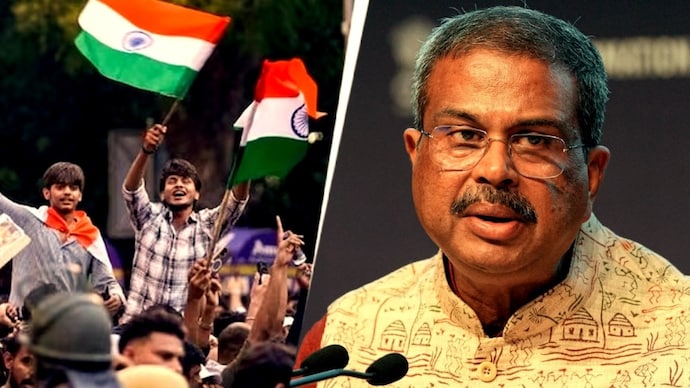
The overwhelming narrative since Saturday has been that the Cockroach Janta Party brought the Union government to its knees.
A loose coalition of Gen Z protesters took on one of the most politically formidable governments in independent India’s history and emerged victorious.
Dharmendra Pradhan resigned. The government accepted virtually every major demand the protesters had made. The CJP called off its agitation. Case closed.
Except, that might not necessarily be what happened.
The government certainly conceded. There is little doubt about that. But did it concede because it was apprehensive of the CJP? In fact it can be argued that the BJP was looking beyond the protesters and worrying about who stood to gain from the political undercurrent they had created.
The author had already argued in an earlier piece that the Centre might incur a higher political cost by retaining Pradhan than by letting him go.
In that sense, Dharmendra Pradhan may not have been sacrificed because the government lost to the CJP. He may have been sacrificed because the BJP feared losing something far more consequential.
To understand why, it is worth looking at where the movement stood just before the resignation.
On the face of it, the CJP did not appear to be at the peak of its momentum by the end of the week. Its moral centre had always been Sonam Wangchuk.
Like Anna Hazare in 2011, Wangchuk’s fast transformed what could have remained a student agitation into a broader moral movement. He was not merely another protest leader; he was the Gandhian figure whose hunger strike appealed to the country’s conscience.
But Wangchuk eventually broke his fast after receiving assurances from the government in the presence of two Union ministers. Those assurances were about accountability for the paper leak. They did not include the resignation of Dharmendra Pradhan, which remained one of the CJP’s central demands.
Whether intentionally or otherwise, that created a divergence between Wangchuk’s position and that of sections of the movement which wanted to continue the agitation.
It is impossible to know how that would have played out. But it is equally difficult to ignore that governments have often dealt with protest movements by engaging with their moral leadership while allowing internal differences to gradually widen.
The CJP was never a conventional political party with an organisational structure capable of surviving indefinitely. It was a coalition brought together by anger over a common cause. Movements like these can grow remarkably quickly, but they can also lose momentum just as fast once their leadership begins pulling in different directions.
Which is why the timing of Pradhan’s resignation comes across as politically curious. If the government genuinely believed it had begun creating space between Wangchuk and the rest of the movement, why suddenly make the biggest concession of them all?
The answer, one suspects, lies not on the streets but inside Parliament.
Throughout the week, Rahul Gandhi displayed a degree of political doggedness that is easy to miss in the daily churn of events. He resisted the temptation to immediately embrace the CJP.
That mattered because the moment the Congress officially became the face of the protests, the BJP would have found it much easier to dismiss the movement as yet another Opposition-backed agitation. Instead, Rahul Gandhi attached himself not to the organisation but to the sentiment.
He led protests by Opposition MPs after the police action in Delhi. He allowed the images of his detention to become the political story. He went to Gandhi Smriti with INDIA bloc leaders after being stopped by the police. He went public with proof of pellet guns being used against protesters. Finally, just hours before Pradhan resigned, he appeared alongside AISA representatives, including students who had themselves been fasting, making it abundantly clear that his solidarity was with protesting students rather than with the CJP as an organisation.
That distinction was politically significant. It denied the BJP the opportunity to reduce the movement to a Congress-versus-BJP contest while simultaneously allowing Rahul Gandhi to emerge as the parliamentary face of a youth movement that had originated outside party politics.
This, perceptibly , is where the BJP’s calculations fundamentally changed. The government had entered this Parliament session expecting to dominate the agenda with legislations that could define its legacy for the next decade. Delimitation, FCRA, Vande Mataram and other landmark bills were supposed to occupy the political conversation. Months of political management had gone into preparing the numbers. Equally important, considerable effort had gone into ensuring that key parties outside the NDA would, at the very least, not obstruct that legislative agenda. Instead, the opening week was consumed almost entirely by Dharmendra Pradhan, student protests and parliamentary disruption.
More worrying for the government, the Opposition was beginning to look unusually cohesive. Rahul Gandhi suddenly had an issue around which he could rally a disintegrating INDIA bloc. Parties like the Samajwadi Party and the Trinamool Congress had every incentive to reinforce that unity. Even parties such as the DMK and Sharad Pawar’s NCP, widely believed to be maintaining working channels with the BJP on upcoming legislation, publicly sided with the protesting students. For a government that prides itself on political arithmetic, this was no longer just a perception problem. It risked becoming a numbers problem.
The resignation of Dharmendra Pradhan undoubtedly handed the CJP its biggest victory. But it may also have prevented an even bigger victory for an Opposition that had finally found an issue capable of uniting Parliament, energising young voters and threatening to overshadow a legislative session the government had spent months preparing for.
Seen through that prism, the BJP did not necessarily surrender to the CJP. It simply decided that sacrificing one minister was a smaller political price than allowing the Opposition to inherit an agitation that was rapidly becoming much bigger than the organisation that had started it.
The overwhelming narrative since Saturday has been that the Cockroach Janta Party brought the Union government to its knees.
A loose coalition of Gen Z protesters took on one of the most politically formidable governments in independent India’s history and emerged victorious.
Dharmendra Pradhan resigned. The government accepted virtually every major demand the protesters had made. The CJP called off its agitation. Case closed.
Except, that might not necessarily be what happened.
The government certainly conceded. There is little doubt about that. But did it concede because it was apprehensive of the CJP? In fact it can be argued that the BJP was looking beyond the protesters and worrying about who stood to gain from the political undercurrent they had created.
The author had already argued in an earlier piece that the Centre might incur a higher political cost by retaining Pradhan than by letting him go.
In that sense, Dharmendra Pradhan may not have been sacrificed because the government lost to the CJP. He may have been sacrificed because the BJP feared losing something far more consequential.
To understand why, it is worth looking at where the movement stood just before the resignation.
On the face of it, the CJP did not appear to be at the peak of its momentum by the end of the week. Its moral centre had always been Sonam Wangchuk.
Like Anna Hazare in 2011, Wangchuk’s fast transformed what could have remained a student agitation into a broader moral movement. He was not merely another protest leader; he was the Gandhian figure whose hunger strike appealed to the country’s conscience.
But Wangchuk eventually broke his fast after receiving assurances from the government in the presence of two Union ministers. Those assurances were about accountability for the paper leak. They did not include the resignation of Dharmendra Pradhan, which remained one of the CJP’s central demands.
Whether intentionally or otherwise, that created a divergence between Wangchuk’s position and that of sections of the movement which wanted to continue the agitation.
It is impossible to know how that would have played out. But it is equally difficult to ignore that governments have often dealt with protest movements by engaging with their moral leadership while allowing internal differences to gradually widen.
The CJP was never a conventional political party with an organisational structure capable of surviving indefinitely. It was a coalition brought together by anger over a common cause. Movements like these can grow remarkably quickly, but they can also lose momentum just as fast once their leadership begins pulling in different directions.
Which is why the timing of Pradhan’s resignation comes across as politically curious. If the government genuinely believed it had begun creating space between Wangchuk and the rest of the movement, why suddenly make the biggest concession of them all?
The answer, one suspects, lies not on the streets but inside Parliament.
Throughout the week, Rahul Gandhi displayed a degree of political doggedness that is easy to miss in the daily churn of events. He resisted the temptation to immediately embrace the CJP.
That mattered because the moment the Congress officially became the face of the protests, the BJP would have found it much easier to dismiss the movement as yet another Opposition-backed agitation. Instead, Rahul Gandhi attached himself not to the organisation but to the sentiment.
He led protests by Opposition MPs after the police action in Delhi. He allowed the images of his detention to become the political story. He went to Gandhi Smriti with INDIA bloc leaders after being stopped by the police. He went public with proof of pellet guns being used against protesters. Finally, just hours before Pradhan resigned, he appeared alongside AISA representatives, including students who had themselves been fasting, making it abundantly clear that his solidarity was with protesting students rather than with the CJP as an organisation.
That distinction was politically significant. It denied the BJP the opportunity to reduce the movement to a Congress-versus-BJP contest while simultaneously allowing Rahul Gandhi to emerge as the parliamentary face of a youth movement that had originated outside party politics.
This, perceptibly , is where the BJP’s calculations fundamentally changed. The government had entered this Parliament session expecting to dominate the agenda with legislations that could define its legacy for the next decade. Delimitation, FCRA, Vande Mataram and other landmark bills were supposed to occupy the political conversation. Months of political management had gone into preparing the numbers. Equally important, considerable effort had gone into ensuring that key parties outside the NDA would, at the very least, not obstruct that legislative agenda. Instead, the opening week was consumed almost entirely by Dharmendra Pradhan, student protests and parliamentary disruption.
More worrying for the government, the Opposition was beginning to look unusually cohesive. Rahul Gandhi suddenly had an issue around which he could rally a disintegrating INDIA bloc. Parties like the Samajwadi Party and the Trinamool Congress had every incentive to reinforce that unity. Even parties such as the DMK and Sharad Pawar’s NCP, widely believed to be maintaining working channels with the BJP on upcoming legislation, publicly sided with the protesting students. For a government that prides itself on political arithmetic, this was no longer just a perception problem. It risked becoming a numbers problem.
The resignation of Dharmendra Pradhan undoubtedly handed the CJP its biggest victory. But it may also have prevented an even bigger victory for an Opposition that had finally found an issue capable of uniting Parliament, energising young voters and threatening to overshadow a legislative session the government had spent months preparing for.
Seen through that prism, the BJP did not necessarily surrender to the CJP. It simply decided that sacrificing one minister was a smaller political price than allowing the Opposition to inherit an agitation that was rapidly becoming much bigger than the organisation that had started it.
The overwhelming narrative since Saturday has been that the Cockroach Janta Party brought the Union government to its knees.
A loose coalition of Gen Z protesters took on one of the most politically formidable governments in independent India’s history and emerged victorious.
Dharmendra Pradhan resigned. The government accepted virtually every major demand the protesters had made. The CJP called off its agitation. Case closed.
Except, that might not necessarily be what happened.
The government certainly conceded. There is little doubt about that. But did it concede because it was apprehensive of the CJP? In fact it can be argued that the BJP was looking beyond the protesters and worrying about who stood to gain from the political undercurrent they had created.
The author had already argued in an earlier piece that the Centre might incur a higher political cost by retaining Pradhan than by letting him go.
In that sense, Dharmendra Pradhan may not have been sacrificed because the government lost to the CJP. He may have been sacrificed because the BJP feared losing something far more consequential.
To understand why, it is worth looking at where the movement stood just before the resignation.
On the face of it, the CJP did not appear to be at the peak of its momentum by the end of the week. Its moral centre had always been Sonam Wangchuk.
Like Anna Hazare in 2011, Wangchuk’s fast transformed what could have remained a student agitation into a broader moral movement. He was not merely another protest leader; he was the Gandhian figure whose hunger strike appealed to the country’s conscience.
But Wangchuk eventually broke his fast after receiving assurances from the government in the presence of two Union ministers. Those assurances were about accountability for the paper leak. They did not include the resignation of Dharmendra Pradhan, which remained one of the CJP’s central demands.
Whether intentionally or otherwise, that created a divergence between Wangchuk’s position and that of sections of the movement which wanted to continue the agitation.
It is impossible to know how that would have played out. But it is equally difficult to ignore that governments have often dealt with protest movements by engaging with their moral leadership while allowing internal differences to gradually widen.
The CJP was never a conventional political party with an organisational structure capable of surviving indefinitely. It was a coalition brought together by anger over a common cause. Movements like these can grow remarkably quickly, but they can also lose momentum just as fast once their leadership begins pulling in different directions.
Which is why the timing of Pradhan’s resignation comes across as politically curious. If the government genuinely believed it had begun creating space between Wangchuk and the rest of the movement, why suddenly make the biggest concession of them all?
The answer, one suspects, lies not on the streets but inside Parliament.
Throughout the week, Rahul Gandhi displayed a degree of political doggedness that is easy to miss in the daily churn of events. He resisted the temptation to immediately embrace the CJP.
That mattered because the moment the Congress officially became the face of the protests, the BJP would have found it much easier to dismiss the movement as yet another Opposition-backed agitation. Instead, Rahul Gandhi attached himself not to the organisation but to the sentiment.
He led protests by Opposition MPs after the police action in Delhi. He allowed the images of his detention to become the political story. He went to Gandhi Smriti with INDIA bloc leaders after being stopped by the police. He went public with proof of pellet guns being used against protesters. Finally, just hours before Pradhan resigned, he appeared alongside AISA representatives, including students who had themselves been fasting, making it abundantly clear that his solidarity was with protesting students rather than with the CJP as an organisation.
That distinction was politically significant. It denied the BJP the opportunity to reduce the movement to a Congress-versus-BJP contest while simultaneously allowing Rahul Gandhi to emerge as the parliamentary face of a youth movement that had originated outside party politics.
This, perceptibly , is where the BJP’s calculations fundamentally changed. The government had entered this Parliament session expecting to dominate the agenda with legislations that could define its legacy for the next decade. Delimitation, FCRA, Vande Mataram and other landmark bills were supposed to occupy the political conversation. Months of political management had gone into preparing the numbers. Equally important, considerable effort had gone into ensuring that key parties outside the NDA would, at the very least, not obstruct that legislative agenda. Instead, the opening week was consumed almost entirely by Dharmendra Pradhan, student protests and parliamentary disruption.
More worrying for the government, the Opposition was beginning to look unusually cohesive. Rahul Gandhi suddenly had an issue around which he could rally a disintegrating INDIA bloc. Parties like the Samajwadi Party and the Trinamool Congress had every incentive to reinforce that unity. Even parties such as the DMK and Sharad Pawar’s NCP, widely believed to be maintaining working channels with the BJP on upcoming legislation, publicly sided with the protesting students. For a government that prides itself on political arithmetic, this was no longer just a perception problem. It risked becoming a numbers problem.
The resignation of Dharmendra Pradhan undoubtedly handed the CJP its biggest victory. But it may also have prevented an even bigger victory for an Opposition that had finally found an issue capable of uniting Parliament, energising young voters and threatening to overshadow a legislative session the government had spent months preparing for.
Seen through that prism, the BJP did not necessarily surrender to the CJP. It simply decided that sacrificing one minister was a smaller political price than allowing the Opposition to inherit an agitation that was rapidly becoming much bigger than the organisation that had started it.

