Baseless: BJP rejects report that govt proposed middle ground to CJP on Pradhan
Reports had claimed that the Centre offered the CJP a change in Dharmendra Pradhan's portfolio instead of his removal, but BJP spokesperson Sambit Patra rejected the claim as "baseless, imaginary and unfounded". Earlier accounts said the CJP had refused to accept any alternative to Pradhan's resignation, including a change of portfolio.
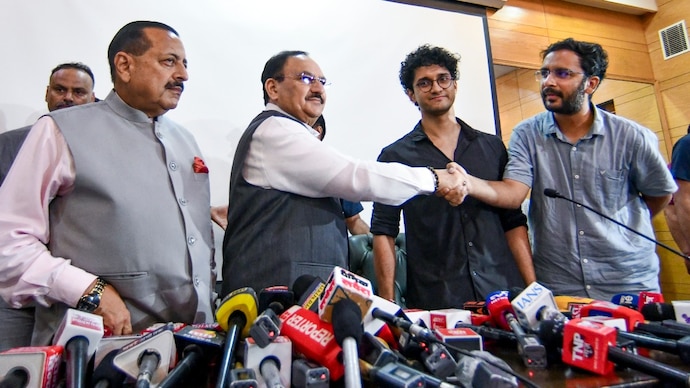
The BJP has denied reports that the Cockroach Janta Party delegation rejected an offer from Union Ministers JP Nadda and Jitendra Singh on Saturday to change Dharmendra Pradhan’s portfolio instead of removing him from the Cabinet altogether. BJP MP and spokesperson Sambit Patra called the claim baseless.
“I want to make it clear that this report, which was published in a reputed newspaper, is completely baseless, imaginary and unfounded. As an official spokesperson, I have stated this clearly. There should be no attempt to spread any kind of confusion,” Patra said.
Earlier, reports claimed that the CJP delegation, represented by Ashutosh Ranka and Saurav Das, had rejected the proposal outright and made it clear that it would accept no alternative to Education Minister Pradhan’s resignation.
Dharmendra Pradhan resigned from his post hours after CJP leaders concluded the third round of talks with Union ministers on Saturday afternoon, prompting the CJP to call off its protests.
The first round of talks between the CJP and the Centre was held on July 20 during the CJP’s ‘Sansad Chalo’ march from Jantar Mantar. CJP spokesperson Saurav Das claimed that their phones were taken away, and they were placed under house arrest, while the delegation had to wait for two hours for a 10-minute meeting at Nadda’s residence. The CJP delegation also met the Centre for a second time that day.
In its memorandum submitted to Nadda, the CJP listed three principal demands: the unconditional release of activist Sonam Wangchuk, who was on hunger strike when he was picked up by police from Jantar Mantar and shifted to Safdarjung Hospital; the removal of Education Minister Dharmendra Pradhan; and Rs 1 crore compensation for the families of NEET aspirants who died by suicide following the NEET paper leak.
A day later, Wangchuk was transferred from Safdarjung Hospital to Medanta Hospital in Gurugram, the facility of his choice, following a Delhi High Court order.
As the protests continued to swell a day after the Parliament march and spread across cities, the CJP delegation stood firm on its position, saying it would not go to Nadda’s residence and instead called for a neutral venue. CJP spokesperson Ranka also said that this time, they wanted some of their demands to be met, with Pradhan’s resignation being non-negotiable.
“And this time, we don’t want empty gestures or mere optics. If you are meeting us, you can’t waste our time. You will have to accept some of our demands or clearly tell us how many days it will take to fulfil them,” Ranka said.
Finally, the government relented and chose Constitution Club as a neutral venue for the third and final round of talks, where it agreed to accept all of CJP’s demands, including the withdrawal of cases against all peaceful protesters in Delhi and NDA-ruled states.
On Monday, Pradhan received a hero’s welcome from NDA leaders in Parliament, in a visible show of support for the former Education Minister, who resigned on Saturday amid nationwide protests over the NEET paper leak.
At the same time, Opposition leaders led by Congress MP Priyanka Gandhi Vadra held a protest over the alleged use of excessive force against students during the demonstrations.
The confrontation between the Opposition and the NDA took place as Parliament was set to take up the Public Examinations (Prevention of Unfair Means) Amendment Bill, 2026, which seeks to tighten the country’s anti-paper leak law in the wake of the NEET controversy.
BJP MPs assembled at the Makar Dwar entrance before Pradhan’s arrival and waited there to receive him. When he entered the Parliament complex, party colleagues escorted him inside, greeted him and presented him with a ceremonial cap as a gesture of solidarity.
On the other hand, Opposition leaders staged their protest over what they alleged was excessive force used against students during the nationwide protests.
Raising the slogan “Shiksha Chori” (theft of education), they asked Union Home Minister Amit Shah to apologise for what they described as police brutality against peaceful protesters.
The political stand-off unfolded as Parliament prepared to discuss the Public Examinations (Prevention of Unfair Means) Amendment Bill, 2026.
The proposed law is aimed at strengthening measures against paper leaks after the NEET controversy, which led to Pradhan’s resignation and had become a central demand of the Cockroach Janta Party-led movement.
Meanwhile, as Pradhan walked into a grand welcome, Congress MP Jairam Ramesh, who had vociferously demanded his resignation until a day earlier, approached him and expressed sympathy after he eventually stepped down.
“It happens,” the Congress leader told him. “Nothing happened,” Pradhan retorted, before adding, “I am a street fighter, not an AC-room activist.”
After six days of washout during the Monsoon Session, Parliament is likely to take up a discussion today on a bill seeking to amend the anti-paper leak law. The bill was tabled in Parliament on Monday amid a massive uproar by the Opposition, which demanded answers from the Centre over the use of police force against protesters in Delhi and across the country.
The Public Examination (Prevention of Unfair Means) Amendment Bill, 2026, which came in the wake of weeks of massive youth protests, proposes more stringent punishment for examination fraud, increasing the maximum jail term from five years to 10 years and imposing a fine of up to Rs 50 lakh.
The BJP has denied reports that the Cockroach Janta Party delegation rejected an offer from Union Ministers JP Nadda and Jitendra Singh on Saturday to change Dharmendra Pradhan’s portfolio instead of removing him from the Cabinet altogether. BJP MP and spokesperson Sambit Patra called the claim baseless.
“I want to make it clear that this report, which was published in a reputed newspaper, is completely baseless, imaginary and unfounded. As an official spokesperson, I have stated this clearly. There should be no attempt to spread any kind of confusion,” Patra said.
Earlier, reports claimed that the CJP delegation, represented by Ashutosh Ranka and Saurav Das, had rejected the proposal outright and made it clear that it would accept no alternative to Education Minister Pradhan’s resignation.
Dharmendra Pradhan resigned from his post hours after CJP leaders concluded the third round of talks with Union ministers on Saturday afternoon, prompting the CJP to call off its protests.
The first round of talks between the CJP and the Centre was held on July 20 during the CJP’s ‘Sansad Chalo’ march from Jantar Mantar. CJP spokesperson Saurav Das claimed that their phones were taken away, and they were placed under house arrest, while the delegation had to wait for two hours for a 10-minute meeting at Nadda’s residence. The CJP delegation also met the Centre for a second time that day.
In its memorandum submitted to Nadda, the CJP listed three principal demands: the unconditional release of activist Sonam Wangchuk, who was on hunger strike when he was picked up by police from Jantar Mantar and shifted to Safdarjung Hospital; the removal of Education Minister Dharmendra Pradhan; and Rs 1 crore compensation for the families of NEET aspirants who died by suicide following the NEET paper leak.
A day later, Wangchuk was transferred from Safdarjung Hospital to Medanta Hospital in Gurugram, the facility of his choice, following a Delhi High Court order.
As the protests continued to swell a day after the Parliament march and spread across cities, the CJP delegation stood firm on its position, saying it would not go to Nadda’s residence and instead called for a neutral venue. CJP spokesperson Ranka also said that this time, they wanted some of their demands to be met, with Pradhan’s resignation being non-negotiable.
“And this time, we don’t want empty gestures or mere optics. If you are meeting us, you can’t waste our time. You will have to accept some of our demands or clearly tell us how many days it will take to fulfil them,” Ranka said.
Finally, the government relented and chose Constitution Club as a neutral venue for the third and final round of talks, where it agreed to accept all of CJP’s demands, including the withdrawal of cases against all peaceful protesters in Delhi and NDA-ruled states.
On Monday, Pradhan received a hero’s welcome from NDA leaders in Parliament, in a visible show of support for the former Education Minister, who resigned on Saturday amid nationwide protests over the NEET paper leak.
At the same time, Opposition leaders led by Congress MP Priyanka Gandhi Vadra held a protest over the alleged use of excessive force against students during the demonstrations.
The confrontation between the Opposition and the NDA took place as Parliament was set to take up the Public Examinations (Prevention of Unfair Means) Amendment Bill, 2026, which seeks to tighten the country’s anti-paper leak law in the wake of the NEET controversy.
BJP MPs assembled at the Makar Dwar entrance before Pradhan’s arrival and waited there to receive him. When he entered the Parliament complex, party colleagues escorted him inside, greeted him and presented him with a ceremonial cap as a gesture of solidarity.
On the other hand, Opposition leaders staged their protest over what they alleged was excessive force used against students during the nationwide protests.
Raising the slogan “Shiksha Chori” (theft of education), they asked Union Home Minister Amit Shah to apologise for what they described as police brutality against peaceful protesters.
The political stand-off unfolded as Parliament prepared to discuss the Public Examinations (Prevention of Unfair Means) Amendment Bill, 2026.
The proposed law is aimed at strengthening measures against paper leaks after the NEET controversy, which led to Pradhan’s resignation and had become a central demand of the Cockroach Janta Party-led movement.
Meanwhile, as Pradhan walked into a grand welcome, Congress MP Jairam Ramesh, who had vociferously demanded his resignation until a day earlier, approached him and expressed sympathy after he eventually stepped down.
“It happens,” the Congress leader told him. “Nothing happened,” Pradhan retorted, before adding, “I am a street fighter, not an AC-room activist.”
After six days of washout during the Monsoon Session, Parliament is likely to take up a discussion today on a bill seeking to amend the anti-paper leak law. The bill was tabled in Parliament on Monday amid a massive uproar by the Opposition, which demanded answers from the Centre over the use of police force against protesters in Delhi and across the country.
The Public Examination (Prevention of Unfair Means) Amendment Bill, 2026, which came in the wake of weeks of massive youth protests, proposes more stringent punishment for examination fraud, increasing the maximum jail term from five years to 10 years and imposing a fine of up to Rs 50 lakh.
The BJP has denied reports that the Cockroach Janta Party delegation rejected an offer from Union Ministers JP Nadda and Jitendra Singh on Saturday to change Dharmendra Pradhan’s portfolio instead of removing him from the Cabinet altogether. BJP MP and spokesperson Sambit Patra called the claim baseless.
“I want to make it clear that this report, which was published in a reputed newspaper, is completely baseless, imaginary and unfounded. As an official spokesperson, I have stated this clearly. There should be no attempt to spread any kind of confusion,” Patra said.
Earlier, reports claimed that the CJP delegation, represented by Ashutosh Ranka and Saurav Das, had rejected the proposal outright and made it clear that it would accept no alternative to Education Minister Pradhan’s resignation.
Dharmendra Pradhan resigned from his post hours after CJP leaders concluded the third round of talks with Union ministers on Saturday afternoon, prompting the CJP to call off its protests.
The first round of talks between the CJP and the Centre was held on July 20 during the CJP’s ‘Sansad Chalo’ march from Jantar Mantar. CJP spokesperson Saurav Das claimed that their phones were taken away, and they were placed under house arrest, while the delegation had to wait for two hours for a 10-minute meeting at Nadda’s residence. The CJP delegation also met the Centre for a second time that day.
In its memorandum submitted to Nadda, the CJP listed three principal demands: the unconditional release of activist Sonam Wangchuk, who was on hunger strike when he was picked up by police from Jantar Mantar and shifted to Safdarjung Hospital; the removal of Education Minister Dharmendra Pradhan; and Rs 1 crore compensation for the families of NEET aspirants who died by suicide following the NEET paper leak.
A day later, Wangchuk was transferred from Safdarjung Hospital to Medanta Hospital in Gurugram, the facility of his choice, following a Delhi High Court order.
As the protests continued to swell a day after the Parliament march and spread across cities, the CJP delegation stood firm on its position, saying it would not go to Nadda’s residence and instead called for a neutral venue. CJP spokesperson Ranka also said that this time, they wanted some of their demands to be met, with Pradhan’s resignation being non-negotiable.
“And this time, we don’t want empty gestures or mere optics. If you are meeting us, you can’t waste our time. You will have to accept some of our demands or clearly tell us how many days it will take to fulfil them,” Ranka said.
Finally, the government relented and chose Constitution Club as a neutral venue for the third and final round of talks, where it agreed to accept all of CJP’s demands, including the withdrawal of cases against all peaceful protesters in Delhi and NDA-ruled states.
On Monday, Pradhan received a hero’s welcome from NDA leaders in Parliament, in a visible show of support for the former Education Minister, who resigned on Saturday amid nationwide protests over the NEET paper leak.
At the same time, Opposition leaders led by Congress MP Priyanka Gandhi Vadra held a protest over the alleged use of excessive force against students during the demonstrations.
The confrontation between the Opposition and the NDA took place as Parliament was set to take up the Public Examinations (Prevention of Unfair Means) Amendment Bill, 2026, which seeks to tighten the country’s anti-paper leak law in the wake of the NEET controversy.
BJP MPs assembled at the Makar Dwar entrance before Pradhan’s arrival and waited there to receive him. When he entered the Parliament complex, party colleagues escorted him inside, greeted him and presented him with a ceremonial cap as a gesture of solidarity.
On the other hand, Opposition leaders staged their protest over what they alleged was excessive force used against students during the nationwide protests.
Raising the slogan “Shiksha Chori” (theft of education), they asked Union Home Minister Amit Shah to apologise for what they described as police brutality against peaceful protesters.
The political stand-off unfolded as Parliament prepared to discuss the Public Examinations (Prevention of Unfair Means) Amendment Bill, 2026.
The proposed law is aimed at strengthening measures against paper leaks after the NEET controversy, which led to Pradhan’s resignation and had become a central demand of the Cockroach Janta Party-led movement.
Meanwhile, as Pradhan walked into a grand welcome, Congress MP Jairam Ramesh, who had vociferously demanded his resignation until a day earlier, approached him and expressed sympathy after he eventually stepped down.
“It happens,” the Congress leader told him. “Nothing happened,” Pradhan retorted, before adding, “I am a street fighter, not an AC-room activist.”
After six days of washout during the Monsoon Session, Parliament is likely to take up a discussion today on a bill seeking to amend the anti-paper leak law. The bill was tabled in Parliament on Monday amid a massive uproar by the Opposition, which demanded answers from the Centre over the use of police force against protesters in Delhi and across the country.
The Public Examination (Prevention of Unfair Means) Amendment Bill, 2026, which came in the wake of weeks of massive youth protests, proposes more stringent punishment for examination fraud, increasing the maximum jail term from five years to 10 years and imposing a fine of up to Rs 50 lakh.

