Impaled by 4 iron rods, labourer survives after 8.5-hour surgery in Lucknow
A 23-year-old labourer was brought to KGMU after falling onto four iron rods at a Lucknow construction site. Doctors removed the rods in an 8.5-hour surgery and said such objects must be taken out only in an operation theatre.
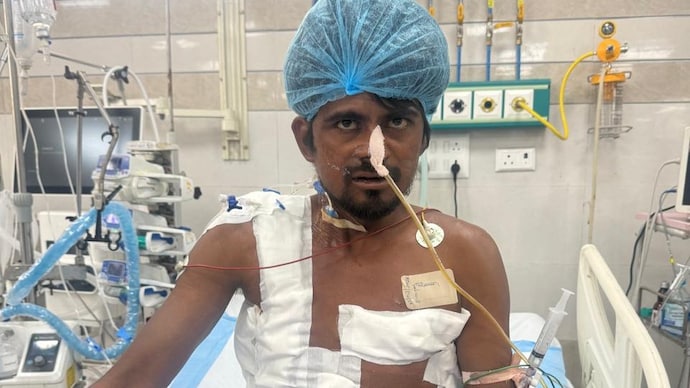
While King George's Medical University (KGMU) was preparing for its 22nd convocation ceremony on Monday morning, a team of doctors inside the Trauma Centre's operation theatre was engaged in a race against time to save the life of a 23-year-old labourer whose body had been impaled by four iron rods.
The young man arrived at the hospital with iron rods piercing his chest and abdomen, leaving multiple vital organs critically damaged. The slightest mistake could have proved fatal. After an intensive eight-and-a-half-hour surgery, doctors managed to remove the rods and save his life.
FALL AT UNDER-CONSTRUCTION BUILDING TURNS INTO A NIGHTMARE
The victim, Umesh (23), a resident of Naraiya village in Uttar Pradesh's Farrukhabad district, was working at an under-construction building in Lucknow's Badshah Nagar area at around 4:30 am on July 13 when he lost his balance and fell several feet onto exposed iron reinforcement rods.
The impact was devastating. Four iron rods entered through the left side of his body, piercing his abdomen and chest before emerging from the other side. Three of the rods extended up to his right shoulder and neck.
Realising the severity of the situation, local residents did not attempt to pull out the rods. Instead, they cut them at the construction site and rushed Umesh to KGMU Trauma Centre with the rods still lodged inside his body.
MULTIPLE VITAL ORGANS SEVERELY DAMAGED
Doctors found Umesh in an extremely critical condition. His blood pressure was unstable, and he was passing blood in his urine.
A CT scan revealed that the rods had severely damaged his urinary bladder, small intestine, stomach, spleen, diaphragm, left lung and major abdominal blood vessels. He had also developed pneumothorax (collapsed lung), making it difficult for him to breathe.
Under the supervision of Prof. Dr. Sameer Mishra, Dr. Narendra Kumar and the trauma team first stabilised the patient following the Advanced Trauma Life Support (ATLS) protocol. Chest drains (ICDs) were inserted into both lungs to remove trapped air and blood before he was shifted to the operating theatre.
EVERY MOVE COULD MEAN LIFE OR DEATH
The biggest challenge before the surgical team was removing the iron rods without triggering catastrophic bleeding.
According to the doctors, pulling out the rods without proper planning could have caused uncontrollable haemorrhage within minutes. The rods were effectively plugging damaged blood vessels — a phenomenon known as the tamponade effect.
The team carefully planned the surgery before performing a combined chest and abdominal operation. One by one, the rods were extracted while surgeons repaired injuries to the lungs, diaphragm, stomach, small intestine, urinary bladder, spleen and damaged blood vessels.
During the marathon procedure, which lasted eight hours and 30 minutes, the patient received three units of packed red blood cells (PRBC) and four units of fresh frozen plasma (FFP).
PATIENT STABLE, RECOVERING IN ICU
Following the successful surgery, Umesh was shifted to the Intensive Care Unit (ICU), where he is currently stable and under close observation.
KGMU Vice-Chancellor Prof. Sonia Nityanand congratulated the medical team for successfully performing the highly complex surgery. She said such cases highlight the importance of timely treatment and close coordination among multiple medical departments.
DOCTORS SHARE IMPORTANT SAFETY MESSAGE
The trauma specialists also issued a crucial advisory for the public.
They urged people never to remove any sharp object or iron rod lodged inside a victim's body at the accident site or before reaching a hospital. Such objects often temporarily prevent severe blood loss by compressing damaged blood vessels. Removing them without surgical preparation can trigger massive bleeding and drastically reduce the victim's chances of survival.
The correct approach, doctors said, is to stabilise the patient first and remove the object only inside a fully equipped operation theatre under expert medical supervision.
SURGICAL TEAM
The surgery was performed by a multidisciplinary team comprising Prof. Dr. Sameer Mishra (Senior Consultant & In-charge), Dr. Narendra Kumar (Consultant & In-charge), Dr. Yadvendra Dheer (Consultant), Dr. Rambit (Senior Resident), Dr. Charanveer (Senior Resident), Dr. Mahesh, Dr. Prajjwal, Dr. Dhairya, Dr. Ankit, Dr. Akhand, Dr. Mohtasni, Dr. Sagar and Dr. Parth.
The anaesthesia team was led by Dr. Vipin, with Dr. Harish, Dr. Obenthung and Dr. Mrinanjal playing key roles during the procedure.
The surgery, which lasted nearly 8.5 hours, required seamless coordination between trauma surgeons, anaesthesiologists and critical care specialists, underscoring the complexity of managing severe penetrating injuries involving multiple vital organs.
While King George's Medical University (KGMU) was preparing for its 22nd convocation ceremony on Monday morning, a team of doctors inside the Trauma Centre's operation theatre was engaged in a race against time to save the life of a 23-year-old labourer whose body had been impaled by four iron rods.
The young man arrived at the hospital with iron rods piercing his chest and abdomen, leaving multiple vital organs critically damaged. The slightest mistake could have proved fatal. After an intensive eight-and-a-half-hour surgery, doctors managed to remove the rods and save his life.
FALL AT UNDER-CONSTRUCTION BUILDING TURNS INTO A NIGHTMARE
The victim, Umesh (23), a resident of Naraiya village in Uttar Pradesh's Farrukhabad district, was working at an under-construction building in Lucknow's Badshah Nagar area at around 4:30 am on July 13 when he lost his balance and fell several feet onto exposed iron reinforcement rods.
The impact was devastating. Four iron rods entered through the left side of his body, piercing his abdomen and chest before emerging from the other side. Three of the rods extended up to his right shoulder and neck.
Realising the severity of the situation, local residents did not attempt to pull out the rods. Instead, they cut them at the construction site and rushed Umesh to KGMU Trauma Centre with the rods still lodged inside his body.
MULTIPLE VITAL ORGANS SEVERELY DAMAGED
Doctors found Umesh in an extremely critical condition. His blood pressure was unstable, and he was passing blood in his urine.
A CT scan revealed that the rods had severely damaged his urinary bladder, small intestine, stomach, spleen, diaphragm, left lung and major abdominal blood vessels. He had also developed pneumothorax (collapsed lung), making it difficult for him to breathe.
Under the supervision of Prof. Dr. Sameer Mishra, Dr. Narendra Kumar and the trauma team first stabilised the patient following the Advanced Trauma Life Support (ATLS) protocol. Chest drains (ICDs) were inserted into both lungs to remove trapped air and blood before he was shifted to the operating theatre.
EVERY MOVE COULD MEAN LIFE OR DEATH
The biggest challenge before the surgical team was removing the iron rods without triggering catastrophic bleeding.
According to the doctors, pulling out the rods without proper planning could have caused uncontrollable haemorrhage within minutes. The rods were effectively plugging damaged blood vessels — a phenomenon known as the tamponade effect.
The team carefully planned the surgery before performing a combined chest and abdominal operation. One by one, the rods were extracted while surgeons repaired injuries to the lungs, diaphragm, stomach, small intestine, urinary bladder, spleen and damaged blood vessels.
During the marathon procedure, which lasted eight hours and 30 minutes, the patient received three units of packed red blood cells (PRBC) and four units of fresh frozen plasma (FFP).
PATIENT STABLE, RECOVERING IN ICU
Following the successful surgery, Umesh was shifted to the Intensive Care Unit (ICU), where he is currently stable and under close observation.
KGMU Vice-Chancellor Prof. Sonia Nityanand congratulated the medical team for successfully performing the highly complex surgery. She said such cases highlight the importance of timely treatment and close coordination among multiple medical departments.
DOCTORS SHARE IMPORTANT SAFETY MESSAGE
The trauma specialists also issued a crucial advisory for the public.
They urged people never to remove any sharp object or iron rod lodged inside a victim's body at the accident site or before reaching a hospital. Such objects often temporarily prevent severe blood loss by compressing damaged blood vessels. Removing them without surgical preparation can trigger massive bleeding and drastically reduce the victim's chances of survival.
The correct approach, doctors said, is to stabilise the patient first and remove the object only inside a fully equipped operation theatre under expert medical supervision.
SURGICAL TEAM
The surgery was performed by a multidisciplinary team comprising Prof. Dr. Sameer Mishra (Senior Consultant & In-charge), Dr. Narendra Kumar (Consultant & In-charge), Dr. Yadvendra Dheer (Consultant), Dr. Rambit (Senior Resident), Dr. Charanveer (Senior Resident), Dr. Mahesh, Dr. Prajjwal, Dr. Dhairya, Dr. Ankit, Dr. Akhand, Dr. Mohtasni, Dr. Sagar and Dr. Parth.
The anaesthesia team was led by Dr. Vipin, with Dr. Harish, Dr. Obenthung and Dr. Mrinanjal playing key roles during the procedure.
The surgery, which lasted nearly 8.5 hours, required seamless coordination between trauma surgeons, anaesthesiologists and critical care specialists, underscoring the complexity of managing severe penetrating injuries involving multiple vital organs.
While King George's Medical University (KGMU) was preparing for its 22nd convocation ceremony on Monday morning, a team of doctors inside the Trauma Centre's operation theatre was engaged in a race against time to save the life of a 23-year-old labourer whose body had been impaled by four iron rods.
The young man arrived at the hospital with iron rods piercing his chest and abdomen, leaving multiple vital organs critically damaged. The slightest mistake could have proved fatal. After an intensive eight-and-a-half-hour surgery, doctors managed to remove the rods and save his life.
FALL AT UNDER-CONSTRUCTION BUILDING TURNS INTO A NIGHTMARE
The victim, Umesh (23), a resident of Naraiya village in Uttar Pradesh's Farrukhabad district, was working at an under-construction building in Lucknow's Badshah Nagar area at around 4:30 am on July 13 when he lost his balance and fell several feet onto exposed iron reinforcement rods.
The impact was devastating. Four iron rods entered through the left side of his body, piercing his abdomen and chest before emerging from the other side. Three of the rods extended up to his right shoulder and neck.
Realising the severity of the situation, local residents did not attempt to pull out the rods. Instead, they cut them at the construction site and rushed Umesh to KGMU Trauma Centre with the rods still lodged inside his body.
MULTIPLE VITAL ORGANS SEVERELY DAMAGED
Doctors found Umesh in an extremely critical condition. His blood pressure was unstable, and he was passing blood in his urine.
A CT scan revealed that the rods had severely damaged his urinary bladder, small intestine, stomach, spleen, diaphragm, left lung and major abdominal blood vessels. He had also developed pneumothorax (collapsed lung), making it difficult for him to breathe.
Under the supervision of Prof. Dr. Sameer Mishra, Dr. Narendra Kumar and the trauma team first stabilised the patient following the Advanced Trauma Life Support (ATLS) protocol. Chest drains (ICDs) were inserted into both lungs to remove trapped air and blood before he was shifted to the operating theatre.
EVERY MOVE COULD MEAN LIFE OR DEATH
The biggest challenge before the surgical team was removing the iron rods without triggering catastrophic bleeding.
According to the doctors, pulling out the rods without proper planning could have caused uncontrollable haemorrhage within minutes. The rods were effectively plugging damaged blood vessels — a phenomenon known as the tamponade effect.
The team carefully planned the surgery before performing a combined chest and abdominal operation. One by one, the rods were extracted while surgeons repaired injuries to the lungs, diaphragm, stomach, small intestine, urinary bladder, spleen and damaged blood vessels.
During the marathon procedure, which lasted eight hours and 30 minutes, the patient received three units of packed red blood cells (PRBC) and four units of fresh frozen plasma (FFP).
PATIENT STABLE, RECOVERING IN ICU
Following the successful surgery, Umesh was shifted to the Intensive Care Unit (ICU), where he is currently stable and under close observation.
KGMU Vice-Chancellor Prof. Sonia Nityanand congratulated the medical team for successfully performing the highly complex surgery. She said such cases highlight the importance of timely treatment and close coordination among multiple medical departments.
DOCTORS SHARE IMPORTANT SAFETY MESSAGE
The trauma specialists also issued a crucial advisory for the public.
They urged people never to remove any sharp object or iron rod lodged inside a victim's body at the accident site or before reaching a hospital. Such objects often temporarily prevent severe blood loss by compressing damaged blood vessels. Removing them without surgical preparation can trigger massive bleeding and drastically reduce the victim's chances of survival.
The correct approach, doctors said, is to stabilise the patient first and remove the object only inside a fully equipped operation theatre under expert medical supervision.
SURGICAL TEAM
The surgery was performed by a multidisciplinary team comprising Prof. Dr. Sameer Mishra (Senior Consultant & In-charge), Dr. Narendra Kumar (Consultant & In-charge), Dr. Yadvendra Dheer (Consultant), Dr. Rambit (Senior Resident), Dr. Charanveer (Senior Resident), Dr. Mahesh, Dr. Prajjwal, Dr. Dhairya, Dr. Ankit, Dr. Akhand, Dr. Mohtasni, Dr. Sagar and Dr. Parth.
The anaesthesia team was led by Dr. Vipin, with Dr. Harish, Dr. Obenthung and Dr. Mrinanjal playing key roles during the procedure.
The surgery, which lasted nearly 8.5 hours, required seamless coordination between trauma surgeons, anaesthesiologists and critical care specialists, underscoring the complexity of managing severe penetrating injuries involving multiple vital organs.

