Does India's delegation for Khamenei funeral reveal a shift?
A junior Union minister and a governor will be travelling to Iran to represent India at the funeral of former Ayatollah Ali Khamenei. Iran had invited PM Modi. Does the selection of the two representatives hint at a shift in New Delhi's Middle East diplomacy?
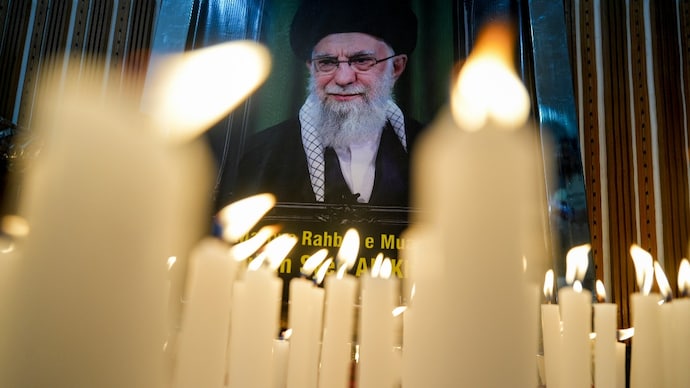
The state funeral of Iran's Supreme Leader Ayatollah Ali Khamenei, to be held from July 4 to 9 in Tehran, Qom and his birthplace, Mashhad, might be one of the largest funeral processions in recent history. While Iranian President Masoud Pezeshkian personally invited Prime Minister Narendra Modi for Khamenei's funeral, India has chosen to send Minister of State for External Affairs Pabitra Margherita and Bihar Governor Lt Gen Syed Ata Hasnain (Retd) instead. Experts are debating if the choice of representatives signifies a shift in India's Middle East policy vis a vis Iran.
Those claiming that there is a change in stance compared the choice to India's representation at the 2024 funeral of Iranian President Ebrahim Raisi, where Vice President Jagdeep Dhankhar led the delegation. Those suggesting there wasn't any change in stance compared the representation to the funeral of then Ayatollah Ruhollah Khomenei in 1989. India had sent the serving foreign minister to Khomenei's funeral.
Ayatollah Ali Khamenei, who served as Iran's Supreme Leader for decades, was killed in Tehran on February 28 in a US-Israeli airstrike.
The multi-day funeral in July is expected to draw world leaders and other international dignitaries, underscoring Iran's significance in geopolitics through its influence over global energy markets, and the Strait of Hormuz. Ali Khamenei, being the Ayatollah, was also the leader of Shia Muslims across the world.
India and Iran share longstanding historical, cultural, and strategic ties. Bilateral relations have encompassed energy cooperation, the development of Chabahar Port as a key connectivity project bypassing Pakistan, and collaboration in multilateral settings.
However, these ties have navigated complexities arising from sanctions, regional conflicts, and India's growing partnerships with other Middle Eastern players, including Israel and Gulf nations like the UAE.
IS INDIA'S MOVE AIMED AT NOT ANTAGONISING US AND ISRAEL?
The composition of the delegation India is sending to Khamenei's funeral has elicited varied commentary. Some observers have questioned whether it adequately signals the depth of India's engagement with Iran, especially given the personal nature of the invitation to the Prime Minister. They asked if it was aimed at not trying to antagonise ties with the US and Israel.
Among the sharpest critics was lawyer and author Navroop Singh, who argued that the delegation signals a downgrade in ties with Tehran. "Sending a Governor of a state tells you how seriousness of rebuilding relationship with Iran (sic). Seems the tilt towards Israel and UAE is more pronounced. MEA has got its priorities messed up to be frank. On a personal invite may be Foreign Sect, MoS or MEA or VP would have made sense. This is not strategic autonomy, when your decisions are influenced by what third powers would perceive to be of our diplomacy. BRICS summit in India seems to be a non starter! When UAE & USA are talking, JD Vance is talking to Iranian leadership. We are being cagey!"
Strategic affairs analyst Brahma Chellaney also drew a contrast with India's response after the death of Iranian President Ebrahim Raisi in 2024. "When Iranian President Ebrahim Raisi died in a helicopter crash in 2024, India dispatched its vice president to the funeral. But now the Modi government is sending much lower-level representation to the multi-day state funeral for Ali Khamenei, who was not only Iran's spiritual leader but also its head of state. The decision suggests that Modi's tilt toward the aggressor states in the Iran war still persists."
"By avoiding higher-level representation, New Delhi appears intent on not antagonising Washington and Tel Aviv. The government would argue that it is calibrating its representation to honour India's historical and strategic relationship with Iran as a maritime neighbour while avoiding a high-profile political gesture that could complicate ties with Washington and Tel Aviv," Chellaney also said.
Independent journalist and author Saba Naqvi echoed similar concerns, saying, "This is poor judgement as Pakistan is reportedly sending their Prime Minister. Come what may Iran will be determining so many things in the world including oil supply. Israel cannot win this war but can create trouble as it loses. We should untether ourselves. Maybe India will upgrade delegation to Defence Minister Rajnath Singh."
Former military officers also weighed in on what they saw as the protocol implications. Indian Army veteran Colonel Pavan Nair observed, "Last time the VP attended the funeral of the President of Iraq who was killed in an aircrash. This was a personal invitation to the Prime Minister for the funeral of the assassinated Supreme Leader. Sending a governor of a state is a breach of protocol revealing the USIS tilt."
Indian Army veteran and political commentator Pravin Sawhney viewed the decision in the context of India's broader foreign policy. "There it is. Modi will not attend Ali Khamenei funeral. Extremely unfortunate for India. At the time when the world is going through a once in a century change, India has chosen not to stand with Global South nations and the New World Order - where hope, development & prosperity resides. Nothing should be expected from India's Brics presidency this year!"
WHO REPRESENTED INDIA AT RUHOLLAH KHOMENEI'S FUNERAL?
Not everyone, however, interpreted the move as an outright diplomatic snub. Policy expert and author Tanvi Madan urged caution against reading too much into the delegation's rank. "India didn't send Prez/VP/PM (or IIRC even EAM) in 1989. Maybe pol-religious distinction; sent VP to Prez Raisi funeral. India not as close to Iran as commentary suggests (esp comp to others in ME). Public rhetoric masks real divergences, difficulties (incl in this conflict)."
One possible reason is that India might have treated the funeral differently because Ayatollah Ali Khamenei was the Supreme Leader, a post that combines religious and political authority, rather than an elected head of government. That might have influenced the level of representation New Delhi chose.
In 1989, then Foreign Minister PV Narasimha Rao attended the funeral of Ayatollah Ruhollah Khomenei.
"The death of such a towering personality [Khomenei] has created a huge void and will have a profound impact on the future of Iran," Rao, who attended the funeral, told India Today Magazine.
However, the alignments in the Middle East have changed significantly over the decades.
Professor of Political Science at the University at Albany, Christopher Clary, meanwhile, said, "With respect for these two esteemed individuals, this is not the delegation you send if you want to demonstrate a desire for close India-Iran ties."
The reactions show differing opinions on what diplomatic protocol signifies.
THE OPTICS OF DIPLOMACY AT KHAMENEI'S FUNERAL
India's foreign policy has long emphasised strategic autonomy and multi-alignment, engaging with diverse partners without formal alliances. India's relations with Iran have faced headwinds from international sanctions on Tehran and regional realignments, yet practical cooperation persists in areas like Chabahar and potential energy routes.
Ali Khamenei's funeral comes as tensions remain high in West Asia. India's response has typically been to balance its ties with all sides while protecting its strategic interests.
However, observers are saying the level of representation at a state funeral often carries diplomatic symbolism, even though governments usually decide their delegations based on protocol, scheduling and strategic considerations.
The delegation includes MoS Pabitra Margherita and Lt Gen Syed Ata Hasnain (Retd), whose military and diplomatic experience is expected to add strategic weight to India's representation.
It must be noted that India wasn't represented by its Prime Minister, President or Vice President at Ayatollah Ruhollah Khomeini's funeral in 1989.
As the ceremonies approach, the episode will show the delicate navigation required in India's Middle East policy. It also highlights ongoing debates about how New Delhi balances its relationships with Iran, Israel, the US, Gulf partners, and Global South forums amid a rapidly changing global order. No single interpretation captures the full picture, as diplomatic decisions often reflect a mix of immediate constraints and long-term objectives.
The state funeral of Iran's Supreme Leader Ayatollah Ali Khamenei, to be held from July 4 to 9 in Tehran, Qom and his birthplace, Mashhad, might be one of the largest funeral processions in recent history. While Iranian President Masoud Pezeshkian personally invited Prime Minister Narendra Modi for Khamenei's funeral, India has chosen to send Minister of State for External Affairs Pabitra Margherita and Bihar Governor Lt Gen Syed Ata Hasnain (Retd) instead. Experts are debating if the choice of representatives signifies a shift in India's Middle East policy vis a vis Iran.
Those claiming that there is a change in stance compared the choice to India's representation at the 2024 funeral of Iranian President Ebrahim Raisi, where Vice President Jagdeep Dhankhar led the delegation. Those suggesting there wasn't any change in stance compared the representation to the funeral of then Ayatollah Ruhollah Khomenei in 1989. India had sent the serving foreign minister to Khomenei's funeral.
Ayatollah Ali Khamenei, who served as Iran's Supreme Leader for decades, was killed in Tehran on February 28 in a US-Israeli airstrike.
The multi-day funeral in July is expected to draw world leaders and other international dignitaries, underscoring Iran's significance in geopolitics through its influence over global energy markets, and the Strait of Hormuz. Ali Khamenei, being the Ayatollah, was also the leader of Shia Muslims across the world.
India and Iran share longstanding historical, cultural, and strategic ties. Bilateral relations have encompassed energy cooperation, the development of Chabahar Port as a key connectivity project bypassing Pakistan, and collaboration in multilateral settings.
However, these ties have navigated complexities arising from sanctions, regional conflicts, and India's growing partnerships with other Middle Eastern players, including Israel and Gulf nations like the UAE.
IS INDIA'S MOVE AIMED AT NOT ANTAGONISING US AND ISRAEL?
The composition of the delegation India is sending to Khamenei's funeral has elicited varied commentary. Some observers have questioned whether it adequately signals the depth of India's engagement with Iran, especially given the personal nature of the invitation to the Prime Minister. They asked if it was aimed at not trying to antagonise ties with the US and Israel.
Among the sharpest critics was lawyer and author Navroop Singh, who argued that the delegation signals a downgrade in ties with Tehran. "Sending a Governor of a state tells you how seriousness of rebuilding relationship with Iran (sic). Seems the tilt towards Israel and UAE is more pronounced. MEA has got its priorities messed up to be frank. On a personal invite may be Foreign Sect, MoS or MEA or VP would have made sense. This is not strategic autonomy, when your decisions are influenced by what third powers would perceive to be of our diplomacy. BRICS summit in India seems to be a non starter! When UAE & USA are talking, JD Vance is talking to Iranian leadership. We are being cagey!"
Strategic affairs analyst Brahma Chellaney also drew a contrast with India's response after the death of Iranian President Ebrahim Raisi in 2024. "When Iranian President Ebrahim Raisi died in a helicopter crash in 2024, India dispatched its vice president to the funeral. But now the Modi government is sending much lower-level representation to the multi-day state funeral for Ali Khamenei, who was not only Iran's spiritual leader but also its head of state. The decision suggests that Modi's tilt toward the aggressor states in the Iran war still persists."
"By avoiding higher-level representation, New Delhi appears intent on not antagonising Washington and Tel Aviv. The government would argue that it is calibrating its representation to honour India's historical and strategic relationship with Iran as a maritime neighbour while avoiding a high-profile political gesture that could complicate ties with Washington and Tel Aviv," Chellaney also said.
Independent journalist and author Saba Naqvi echoed similar concerns, saying, "This is poor judgement as Pakistan is reportedly sending their Prime Minister. Come what may Iran will be determining so many things in the world including oil supply. Israel cannot win this war but can create trouble as it loses. We should untether ourselves. Maybe India will upgrade delegation to Defence Minister Rajnath Singh."
Former military officers also weighed in on what they saw as the protocol implications. Indian Army veteran Colonel Pavan Nair observed, "Last time the VP attended the funeral of the President of Iraq who was killed in an aircrash. This was a personal invitation to the Prime Minister for the funeral of the assassinated Supreme Leader. Sending a governor of a state is a breach of protocol revealing the USIS tilt."
Indian Army veteran and political commentator Pravin Sawhney viewed the decision in the context of India's broader foreign policy. "There it is. Modi will not attend Ali Khamenei funeral. Extremely unfortunate for India. At the time when the world is going through a once in a century change, India has chosen not to stand with Global South nations and the New World Order - where hope, development & prosperity resides. Nothing should be expected from India's Brics presidency this year!"
WHO REPRESENTED INDIA AT RUHOLLAH KHOMENEI'S FUNERAL?
Not everyone, however, interpreted the move as an outright diplomatic snub. Policy expert and author Tanvi Madan urged caution against reading too much into the delegation's rank. "India didn't send Prez/VP/PM (or IIRC even EAM) in 1989. Maybe pol-religious distinction; sent VP to Prez Raisi funeral. India not as close to Iran as commentary suggests (esp comp to others in ME). Public rhetoric masks real divergences, difficulties (incl in this conflict)."
One possible reason is that India might have treated the funeral differently because Ayatollah Ali Khamenei was the Supreme Leader, a post that combines religious and political authority, rather than an elected head of government. That might have influenced the level of representation New Delhi chose.
In 1989, then Foreign Minister PV Narasimha Rao attended the funeral of Ayatollah Ruhollah Khomenei.
"The death of such a towering personality [Khomenei] has created a huge void and will have a profound impact on the future of Iran," Rao, who attended the funeral, told India Today Magazine.
However, the alignments in the Middle East have changed significantly over the decades.
Professor of Political Science at the University at Albany, Christopher Clary, meanwhile, said, "With respect for these two esteemed individuals, this is not the delegation you send if you want to demonstrate a desire for close India-Iran ties."
The reactions show differing opinions on what diplomatic protocol signifies.
THE OPTICS OF DIPLOMACY AT KHAMENEI'S FUNERAL
India's foreign policy has long emphasised strategic autonomy and multi-alignment, engaging with diverse partners without formal alliances. India's relations with Iran have faced headwinds from international sanctions on Tehran and regional realignments, yet practical cooperation persists in areas like Chabahar and potential energy routes.
Ali Khamenei's funeral comes as tensions remain high in West Asia. India's response has typically been to balance its ties with all sides while protecting its strategic interests.
However, observers are saying the level of representation at a state funeral often carries diplomatic symbolism, even though governments usually decide their delegations based on protocol, scheduling and strategic considerations.
The delegation includes MoS Pabitra Margherita and Lt Gen Syed Ata Hasnain (Retd), whose military and diplomatic experience is expected to add strategic weight to India's representation.
It must be noted that India wasn't represented by its Prime Minister, President or Vice President at Ayatollah Ruhollah Khomeini's funeral in 1989.
As the ceremonies approach, the episode will show the delicate navigation required in India's Middle East policy. It also highlights ongoing debates about how New Delhi balances its relationships with Iran, Israel, the US, Gulf partners, and Global South forums amid a rapidly changing global order. No single interpretation captures the full picture, as diplomatic decisions often reflect a mix of immediate constraints and long-term objectives.

