How to make India more tourist-friendly? Inside Niti Aayog's big overhaul plan
NITI Aayog has proposed multiple-entry visas on arrival for travellers from select countries and easier approval for hotels. It has argued that India's tourism potential remains constrained by regulatory bottlenecks.
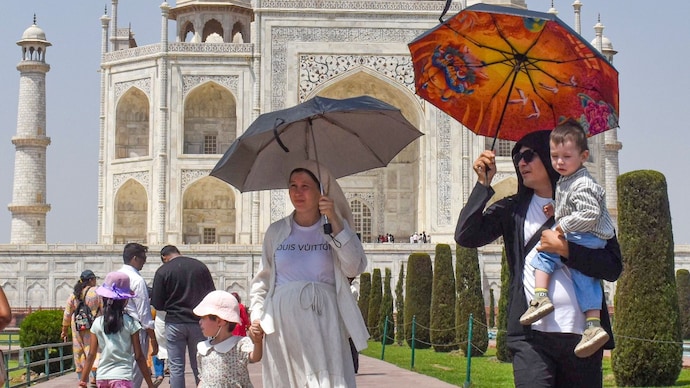
NITI Aayog has proposed a sweeping overhaul of India's tourism regulations, recommending multiple-entry Visa-on-Arrival (VoA) for travellers from select countries, easier approvals for hotels, simpler licensing norms and major regulatory reforms aimed at attracting investment and boosting international footfall.
The recommendations are part of NITI Aayog's latest report - Unlocking Growth in Tourism and Hospitality Sector. It was prepared in consultation with the Ministry of Tourism and industry stakeholders. The policy think tank has argued that India's tourism potential remains constrained not by a lack of demand, but by regulatory bottlenecks that delay investments and discourage international travellers.
According to the report, India welcomed around 20.6 million international tourists, including NRIs, in 2024. Foreign tourist arrivals stood at 9.95 million. Tourism contributed 15.73 lakh crore, or 5.22% of the GDP in FY24, supporting an estimated 84.6 million jobs.
SIMPLER VISA STRUCTURE
Among its biggest recommendations is the introduction of a 90-day, multiple-entry Visa-on-Arrival for travellers from selected countries. Eligible visitors would be able to obtain visas at designated airports and seaports without applying in advance, reducing paperwork and making India a more accessible destination.
The report also proposes simplifying India's visa architecture by reducing multiple e-visa sub-categories into a smaller set of broad-purpose visas covering tourism, business visits, short-term medical treatment, student travel and attendant visas.
To encourage repeat travel, NITI Aayog has suggested allowing multiple entries during the visa validity period, introducing faster processing for frequent visitors, integrating visa systems with tourism services and even examining a Tourist Refund Scheme (TRS) that would allow foreign tourists to claim GST refunds on purchases made in India.
EASIER APPROVAL FOR HOTELS
On the business side, the report recommends removing several regulatory hurdles that delay tourism projects. It proposes scrapping project-stage approvals by the Ministry of Tourism for hotels, introducing a single health trade licence and a single liquor licence for hotels operating multiple restaurants and service areas within the same premises.
It has also recommended removing the requirement for an Eating House Licence for food and beverage establishments, extending the validity of liquor licences and FSSAI registrations, and simplifying approvals through digital integration and single-window mechanisms.
The report noted that hotel projects in India typically take 36-48 months from approvals to commissioning, compared with 12-18 months in competing ASEAN destinations. This, in turn, increases project costs and delays capacity creation.
India's branded hotel inventory currently stands at around 2 lakh rooms, accounting for less than 8% of the country's estimated lodging capacity, despite strong domestic tourism demand.
The report pointed out that simplifying regulations, improving ease of doing business and making entry procedures more traveller-friendly was critical to achieve India's long-term ambition of becoming a leading global tourism hub.
NITI Aayog has proposed a sweeping overhaul of India's tourism regulations, recommending multiple-entry Visa-on-Arrival (VoA) for travellers from select countries, easier approvals for hotels, simpler licensing norms and major regulatory reforms aimed at attracting investment and boosting international footfall.
The recommendations are part of NITI Aayog's latest report - Unlocking Growth in Tourism and Hospitality Sector. It was prepared in consultation with the Ministry of Tourism and industry stakeholders. The policy think tank has argued that India's tourism potential remains constrained not by a lack of demand, but by regulatory bottlenecks that delay investments and discourage international travellers.
According to the report, India welcomed around 20.6 million international tourists, including NRIs, in 2024. Foreign tourist arrivals stood at 9.95 million. Tourism contributed 15.73 lakh crore, or 5.22% of the GDP in FY24, supporting an estimated 84.6 million jobs.
SIMPLER VISA STRUCTURE
Among its biggest recommendations is the introduction of a 90-day, multiple-entry Visa-on-Arrival for travellers from selected countries. Eligible visitors would be able to obtain visas at designated airports and seaports without applying in advance, reducing paperwork and making India a more accessible destination.
The report also proposes simplifying India's visa architecture by reducing multiple e-visa sub-categories into a smaller set of broad-purpose visas covering tourism, business visits, short-term medical treatment, student travel and attendant visas.
To encourage repeat travel, NITI Aayog has suggested allowing multiple entries during the visa validity period, introducing faster processing for frequent visitors, integrating visa systems with tourism services and even examining a Tourist Refund Scheme (TRS) that would allow foreign tourists to claim GST refunds on purchases made in India.
EASIER APPROVAL FOR HOTELS
On the business side, the report recommends removing several regulatory hurdles that delay tourism projects. It proposes scrapping project-stage approvals by the Ministry of Tourism for hotels, introducing a single health trade licence and a single liquor licence for hotels operating multiple restaurants and service areas within the same premises.
It has also recommended removing the requirement for an Eating House Licence for food and beverage establishments, extending the validity of liquor licences and FSSAI registrations, and simplifying approvals through digital integration and single-window mechanisms.
The report noted that hotel projects in India typically take 36-48 months from approvals to commissioning, compared with 12-18 months in competing ASEAN destinations. This, in turn, increases project costs and delays capacity creation.
India's branded hotel inventory currently stands at around 2 lakh rooms, accounting for less than 8% of the country's estimated lodging capacity, despite strong domestic tourism demand.
The report pointed out that simplifying regulations, improving ease of doing business and making entry procedures more traveller-friendly was critical to achieve India's long-term ambition of becoming a leading global tourism hub.

