Long before Modi and Trump: How the story of India and the US began in revolution
Long before formal diplomacy, India and the United States were connected through shared encounters with British rule, economic ties and political developments that influenced both nations. From the American Revolution and the Mysore Wars to India's freedom struggle, these early links helped shape a relationship that later evolved into a strategic partnership.
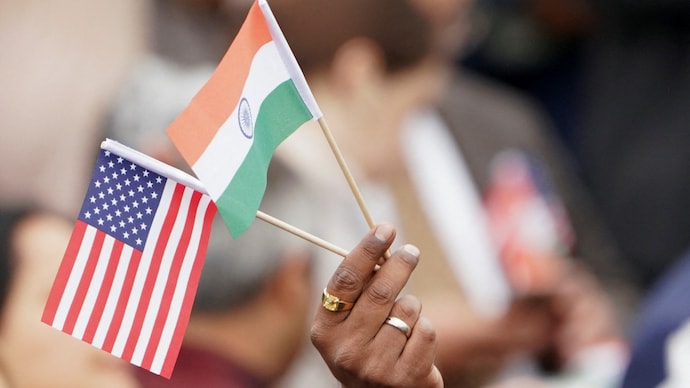
Two centuries before they became strategic partners, India and the United States of America had developed an unusual connection — one involving a common enemy and a common ally.
Let's rewind to the 1770s. What is now India and what is now the US were both under the shadow of the British Empire. After initially cheering the British East India Company's victories in India, many settlers in the 13 British colonies had gradually turned against the empire.
Unfair taxation, restrictive trade rules and the lack of representation in the British Parliament were the main triggers for their discontent. One of the earliest acts of defiance in the American Revolution had a direct Indian connection.
The 1773 Boston Tea Party was a protest against the British Parliament's decision to grant the East India Company a virtual monopoly over the tea trade in the 13 colonies. What began as a revolt against exploitative taxation soon fuelled an independence movement.
A SHARED ENEMY: MYSORE AND AMERICAN REVOLUTION
The idiom "the enemy of my enemy is a friend" found practical expression among the American Founding Fathers. As the East India Company expanded across 18th-century India, one small kingdom captured the imagination of the revolutionaries.
The Mysore kingdom, led by Hyder Ali, stood as a formidable obstacle to British imperial expansion in southern India. His wars not only stunned the British but were watched closely by American revolutionary leaders.
The common link was France, which sought to tie Britain down across two continents after its defeat in the Seven Years' War. Bolstered by French arms and a military sophistication that belied its size, Mysore became a subject of fascination in the 13 colonies: celebrated in newspaper articles, conversations and poems that turned Hyder Ali into something of a folk hero.
"...Hyder Ally having collected an Army of 80000 horse, had laid siege to Arcot, that the Colonels Baillie and Fletcher attempting to go to its relief were totally defeated with the loss of 400 Europeans and 4000 Sepoys," read a 1781 letter to John Adams, the future US President.
The Continental Congress — the governing body of the revolutionary colonies — had even contemplated sending an expeditionary force to Mysore. The nascent nation lacked the resources to do so, and ultimately directed its privateers to attack British ships off the North American coast instead. The fascination, however, ran deep enough that the revolutionaries named one of their warships after Mysore's ruler — Hyder Ally (the spelling, not a pun).
INDEPENDENCE AND A CENTURY OF DISTANCE
By the time Hyder Ali died, the situation in North America had changed decisively. George Washington's forces defeated the British, and the Treaty of Paris (1783) recognised the independence of the thirteen colonies.
For India, however, American independence changed little. The United States opened a consular office in Kolkata in 1792, one of its earliest overseas posts, but beyond commerce, India remained largely peripheral to American foreign policy for much of the next century.
During the 19th century, American perceptions of India were shaped primarily by missionaries and travellers. Many of them portrayed the country as impoverished, illiterate and bound by superstition. At the same time, a growing circle of American intellectuals and writers developed an appreciation for India's ancient civilisation, philosophy and literary traditions.
Even so, for most Americans, India remained a distant and exoticised "Oriental" land which was admired in the abstract, but little understood in practice.
Yet another development, this time within the United States itself, would eventually have far-reaching direct and indirect influence on India.
HOW US CIVIL WAR SHAPED INDIA
The American Civil War, fought between the Union North and the Confederate South over slavery, played out thousands of miles from India. Yet its economic ripple reached the subcontinent almost immediately.
Cotton was central to the conflict — the Southern economy ran on slave labour to sustain it. When the war began, American cotton exports to Britain dried up, forcing the British Empire to seek alternatives. India filled the gap, and a cotton boom transformed the country's western coast.
The boom built the city we now know as India's financial capital. Mumbai emerged as a major hub for the cotton trade, and the surge in liquidity gave rise to a rudimentary stock exchange. When the Civil War ended, that market collapsed. From its ashes came the Bombay Stock Exchange, today one of the world's oldest and largest bourses.
The Civil War's influence extended further still. Dr Bhimrao Ambedkar, chairman of the Drafting Committee of the Indian Constitution, is said to have chosen "Union of India" over "federation of states" to signal that the Union is indestructible. He explicitly cited the American Civil War to argue that states must not have the right to secede.
He also drew on the 14th Amendment to the US Constitution, enacted after the Civil War to mandate equal treatment under law, in drafting Article 14 of the Indian Constitution, which enshrines the Right to Equality.
INDIA'S FREEDOM STRUGGLE AND A DISTANT WASHINGTON
The US was largely neutral or indifferent to India's independence movement, bound as it was by close ties with Britain.
President Theodore Roosevelt was openly hostile to the cause. In a 1909 address, he described British rule in India as a civilising force and called British administration a feat greater than anything achieved by the Roman Empire.
Yet American neutrality also created space. Several Indian revolutionaries found refuge in the US, and the most significant connection between the two countries during this period came from the Hindustan Ghadar Party, a San Francisco-based anti-colonial organisation that advocated for complete Indian independence.
The party drew support from the German foreign office, which brought it under surveillance from American and British authorities. This eventually led to the uncovering of the Hindu-German Conspiracy in 1917 and the trial of Ghadar members.
The mood shifted, if only slightly, under Woodrow Wilson. In his 1918 address to Congress, the wartime president called for "a free, open-minded, and absolutely impartial adjustment of all colonial claims." These words were interpreted by many Indian nationalists as an endorsement of self-determination for colonies.
Several individual Americans played more direct roles in India's freedom struggle. Samuel Stokes — who took the name Satyanand — arrived from the US in 1904 to help leprosy patients, became a committed Gandhian, learnt Hindi and Sanskrit, and settled in India for the rest of his life.
THE FINAL PUSH FOR FREEDOM
American neutrality began to tilt toward India's cause under Franklin Roosevelt, who led the US through the Second World War. Pragmatic enough not to rupture ties with Britain mid-war, Roosevelt nonetheless argued that colonialism would have to end for lasting global peace in a post-war world.
In an unusual move, his successor, Harry S Truman, formalised diplomatic ties with India on November 1, 1946 itself. When India gained its freedom on August 15, 1947, the US was among the first nations to formally recognise it.
"We welcome India's new and enhanced status in the world community of sovereign independent nations and assure the new dominion our continued friendship and goodwill," Truman wrote to Governor General Louis Mountbatten.
With that, India and the US entered a new phase — one that would be marked, over the next eight decades, by cautious optimism, periodic distrust and, eventually, close strategic partnership.
Two centuries before they became strategic partners, India and the United States of America had developed an unusual connection — one involving a common enemy and a common ally.
Let's rewind to the 1770s. What is now India and what is now the US were both under the shadow of the British Empire. After initially cheering the British East India Company's victories in India, many settlers in the 13 British colonies had gradually turned against the empire.
Unfair taxation, restrictive trade rules and the lack of representation in the British Parliament were the main triggers for their discontent. One of the earliest acts of defiance in the American Revolution had a direct Indian connection.
The 1773 Boston Tea Party was a protest against the British Parliament's decision to grant the East India Company a virtual monopoly over the tea trade in the 13 colonies. What began as a revolt against exploitative taxation soon fuelled an independence movement.
A SHARED ENEMY: MYSORE AND AMERICAN REVOLUTION
The idiom "the enemy of my enemy is a friend" found practical expression among the American Founding Fathers. As the East India Company expanded across 18th-century India, one small kingdom captured the imagination of the revolutionaries.
The Mysore kingdom, led by Hyder Ali, stood as a formidable obstacle to British imperial expansion in southern India. His wars not only stunned the British but were watched closely by American revolutionary leaders.
The common link was France, which sought to tie Britain down across two continents after its defeat in the Seven Years' War. Bolstered by French arms and a military sophistication that belied its size, Mysore became a subject of fascination in the 13 colonies: celebrated in newspaper articles, conversations and poems that turned Hyder Ali into something of a folk hero.
"...Hyder Ally having collected an Army of 80000 horse, had laid siege to Arcot, that the Colonels Baillie and Fletcher attempting to go to its relief were totally defeated with the loss of 400 Europeans and 4000 Sepoys," read a 1781 letter to John Adams, the future US President.
The Continental Congress — the governing body of the revolutionary colonies — had even contemplated sending an expeditionary force to Mysore. The nascent nation lacked the resources to do so, and ultimately directed its privateers to attack British ships off the North American coast instead. The fascination, however, ran deep enough that the revolutionaries named one of their warships after Mysore's ruler — Hyder Ally (the spelling, not a pun).
INDEPENDENCE AND A CENTURY OF DISTANCE
By the time Hyder Ali died, the situation in North America had changed decisively. George Washington's forces defeated the British, and the Treaty of Paris (1783) recognised the independence of the thirteen colonies.
For India, however, American independence changed little. The United States opened a consular office in Kolkata in 1792, one of its earliest overseas posts, but beyond commerce, India remained largely peripheral to American foreign policy for much of the next century.
During the 19th century, American perceptions of India were shaped primarily by missionaries and travellers. Many of them portrayed the country as impoverished, illiterate and bound by superstition. At the same time, a growing circle of American intellectuals and writers developed an appreciation for India's ancient civilisation, philosophy and literary traditions.
Even so, for most Americans, India remained a distant and exoticised "Oriental" land which was admired in the abstract, but little understood in practice.
Yet another development, this time within the United States itself, would eventually have far-reaching direct and indirect influence on India.
HOW US CIVIL WAR SHAPED INDIA
The American Civil War, fought between the Union North and the Confederate South over slavery, played out thousands of miles from India. Yet its economic ripple reached the subcontinent almost immediately.
Cotton was central to the conflict — the Southern economy ran on slave labour to sustain it. When the war began, American cotton exports to Britain dried up, forcing the British Empire to seek alternatives. India filled the gap, and a cotton boom transformed the country's western coast.
The boom built the city we now know as India's financial capital. Mumbai emerged as a major hub for the cotton trade, and the surge in liquidity gave rise to a rudimentary stock exchange. When the Civil War ended, that market collapsed. From its ashes came the Bombay Stock Exchange, today one of the world's oldest and largest bourses.
The Civil War's influence extended further still. Dr Bhimrao Ambedkar, chairman of the Drafting Committee of the Indian Constitution, is said to have chosen "Union of India" over "federation of states" to signal that the Union is indestructible. He explicitly cited the American Civil War to argue that states must not have the right to secede.
He also drew on the 14th Amendment to the US Constitution, enacted after the Civil War to mandate equal treatment under law, in drafting Article 14 of the Indian Constitution, which enshrines the Right to Equality.
INDIA'S FREEDOM STRUGGLE AND A DISTANT WASHINGTON
The US was largely neutral or indifferent to India's independence movement, bound as it was by close ties with Britain.
President Theodore Roosevelt was openly hostile to the cause. In a 1909 address, he described British rule in India as a civilising force and called British administration a feat greater than anything achieved by the Roman Empire.
Yet American neutrality also created space. Several Indian revolutionaries found refuge in the US, and the most significant connection between the two countries during this period came from the Hindustan Ghadar Party, a San Francisco-based anti-colonial organisation that advocated for complete Indian independence.
The party drew support from the German foreign office, which brought it under surveillance from American and British authorities. This eventually led to the uncovering of the Hindu-German Conspiracy in 1917 and the trial of Ghadar members.
The mood shifted, if only slightly, under Woodrow Wilson. In his 1918 address to Congress, the wartime president called for "a free, open-minded, and absolutely impartial adjustment of all colonial claims." These words were interpreted by many Indian nationalists as an endorsement of self-determination for colonies.
Several individual Americans played more direct roles in India's freedom struggle. Samuel Stokes — who took the name Satyanand — arrived from the US in 1904 to help leprosy patients, became a committed Gandhian, learnt Hindi and Sanskrit, and settled in India for the rest of his life.
THE FINAL PUSH FOR FREEDOM
American neutrality began to tilt toward India's cause under Franklin Roosevelt, who led the US through the Second World War. Pragmatic enough not to rupture ties with Britain mid-war, Roosevelt nonetheless argued that colonialism would have to end for lasting global peace in a post-war world.
In an unusual move, his successor, Harry S Truman, formalised diplomatic ties with India on November 1, 1946 itself. When India gained its freedom on August 15, 1947, the US was among the first nations to formally recognise it.
"We welcome India's new and enhanced status in the world community of sovereign independent nations and assure the new dominion our continued friendship and goodwill," Truman wrote to Governor General Louis Mountbatten.
With that, India and the US entered a new phase — one that would be marked, over the next eight decades, by cautious optimism, periodic distrust and, eventually, close strategic partnership.

