Army to set up specialised Baaz Battalions to boost drone warfare capabilities
The Indian Army is raising specialised Baaz Battalions as dedicated drone units. The move is aimed at strengthening intelligence, surveillance and reconnaissance across the battlefield.
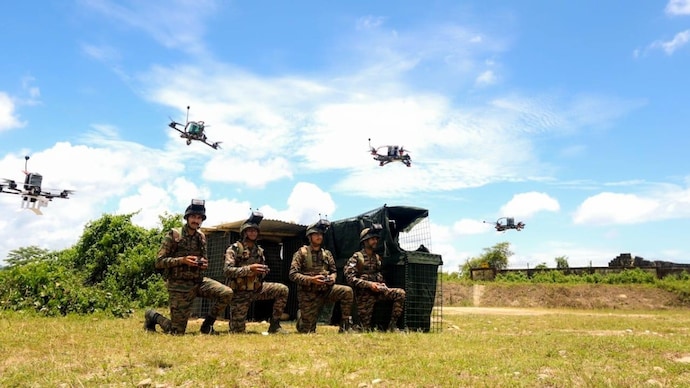
The Indian Army is set to establish specialised drone units called “Baaz Battalions” as part of a broader effort to strengthen its unmanned warfare capabilities and expand the role of drones in future military operations.
Announcing the initiative, Army Chief General Upendra Dwivedi said the dedicated units are intended to create a specialist cadre of personnel trained to operate, manage and sustain a rapidly expanding ecosystem of unmanned systems.
“The Army will require continuous induction, upgrades and replenishment of drones on a large scale. To maintain pace with this requirement, one of the most important initiatives is raising Baaz Battalions,” General Dwivedi said.
The proposed battalions will build on the existing Remotely Piloted Aircraft Flights functioning across different Army formations and are expected to provide a structured framework for drone operations across theatres.
According to the Army Chief, the specialised units will comprise trained personnel focused exclusively on operating and managing drone systems, strengthening intelligence, surveillance and reconnaissance capabilities while improving target acquisition and real-time battlefield awareness.
The initiative reflects the Army’s broader push to institutionalise unmanned technologies as part of its evolving operational doctrine at a time when modern conflicts are increasingly shaped by the use of drones.
Recent global conflicts, particularly the Russia-Ukraine war, have demonstrated the growing role of unmanned platforms in reconnaissance, battlefield intelligence and precision operations, reinforcing the importance of drone-led capabilities for armed forces worldwide.
General Dwivedi said the Army’s drone inventory has expanded sharply in recent years. While the force operated only a few hundred drones around two years ago, it now possesses more than 50,000 unmanned systems.
Based on current operational requirements and future projections, the inventory is expected to grow further and could potentially double over the next two to three years.
General Dwivedi said drones are steadily becoming central to tactical operations and are enabling commanders to make quicker and more informed decisions through enhanced situational awareness.
“As technology matures and costs reduce, drones are likely to become as common on the battlefield as communication equipment and night-vision devices,” he said.
The Army’s modernisation plans are not limited to expanding drone numbers. Efforts are also underway to strengthen capabilities to detect, track and neutralise hostile unmanned platforms.
Addressing concerns over Pakistan’s investments in drone technologies, General Dwivedi said the Army continuously monitors developments and assesses emerging threats.
He noted that adversaries are investing significantly in unmanned capabilities and drawing technological support from multiple sources.
“Our focus is to achieve dominance in the drone battlespace rather than merely matching the numbers possessed by adversaries,” the Army Chief said.
The raising of Baaz Battalions is being seen as a significant organisational reform that could formalise drone operations within the Army, develop a dedicated pool of skilled operators and accelerate the integration of unmanned systems into future combat doctrines.
The Indian Army is set to establish specialised drone units called “Baaz Battalions” as part of a broader effort to strengthen its unmanned warfare capabilities and expand the role of drones in future military operations.
Announcing the initiative, Army Chief General Upendra Dwivedi said the dedicated units are intended to create a specialist cadre of personnel trained to operate, manage and sustain a rapidly expanding ecosystem of unmanned systems.
“The Army will require continuous induction, upgrades and replenishment of drones on a large scale. To maintain pace with this requirement, one of the most important initiatives is raising Baaz Battalions,” General Dwivedi said.
The proposed battalions will build on the existing Remotely Piloted Aircraft Flights functioning across different Army formations and are expected to provide a structured framework for drone operations across theatres.
According to the Army Chief, the specialised units will comprise trained personnel focused exclusively on operating and managing drone systems, strengthening intelligence, surveillance and reconnaissance capabilities while improving target acquisition and real-time battlefield awareness.
The initiative reflects the Army’s broader push to institutionalise unmanned technologies as part of its evolving operational doctrine at a time when modern conflicts are increasingly shaped by the use of drones.
Recent global conflicts, particularly the Russia-Ukraine war, have demonstrated the growing role of unmanned platforms in reconnaissance, battlefield intelligence and precision operations, reinforcing the importance of drone-led capabilities for armed forces worldwide.
General Dwivedi said the Army’s drone inventory has expanded sharply in recent years. While the force operated only a few hundred drones around two years ago, it now possesses more than 50,000 unmanned systems.
Based on current operational requirements and future projections, the inventory is expected to grow further and could potentially double over the next two to three years.
General Dwivedi said drones are steadily becoming central to tactical operations and are enabling commanders to make quicker and more informed decisions through enhanced situational awareness.
“As technology matures and costs reduce, drones are likely to become as common on the battlefield as communication equipment and night-vision devices,” he said.
The Army’s modernisation plans are not limited to expanding drone numbers. Efforts are also underway to strengthen capabilities to detect, track and neutralise hostile unmanned platforms.
Addressing concerns over Pakistan’s investments in drone technologies, General Dwivedi said the Army continuously monitors developments and assesses emerging threats.
He noted that adversaries are investing significantly in unmanned capabilities and drawing technological support from multiple sources.
“Our focus is to achieve dominance in the drone battlespace rather than merely matching the numbers possessed by adversaries,” the Army Chief said.
The raising of Baaz Battalions is being seen as a significant organisational reform that could formalise drone operations within the Army, develop a dedicated pool of skilled operators and accelerate the integration of unmanned systems into future combat doctrines.

