Have India and Pakistan started fresh track-2 diplomacy? Here's what we know
There are reports claiming that India and Pakistan held a track-2 dialogue on the sidelines of a security conference held in Sri Lanka this week. Some reports are referring to it as track-1.5 dialogue, claiming that serving officials were involved. Did representatives from India and Pakistan hold talks? Here's what we know.
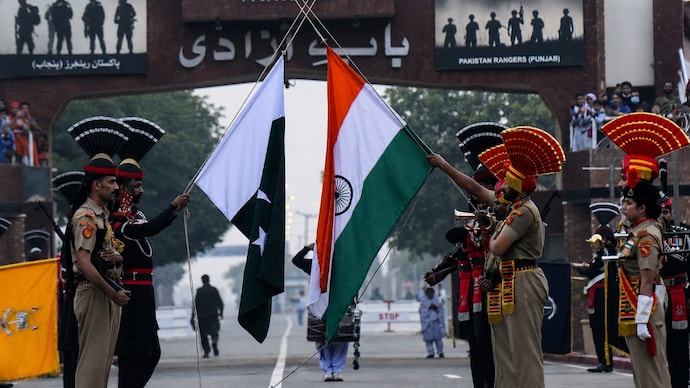
After Pakistani state-sponsored terrorists killed 26 innocent civilians in Pahalgam of Jammu and Kashmir in April 2025, India launched Operation Sindoor in May and destroyed terror camps, bases, and launchpads across Pakistan and Pakistan-occupied Kashmir (POK). Diplomatic ties between New Delhi and Islamabad, already frozen, plummeted. And only the hotline between the Directors General of Military Operations (DGMOs) of both countries remains operational. However, reports have now emerged of backchannel talks between the two countries.
While there are no official track-1 talks between India and Pakistan, reports suggest that some track-2 people-to-people connections might have happened since late 2025. However, the newer reports and claims are more interesting. They suggest that top retired defence officials and some close to the ruling dispensations of both countries have met in Colombo, Sri Lanka's capital, on the sidelines of a security conference.
A report in a Pakistani newspaper even branded the talks in Colombo this week as track-1.5, suggesting that serving officials met in Colombo in the presence of retired officers. While track-1 refers to government-to-government talks, track-2 is about people-to-people engagement. Track-1.5 would lie somewhere in between with the presence of both.
Some reports went on to even name two of the participants, with one of them junking the reports of the track-2 diplomacy as "totally wrong portrayal" and it being "not any track 2 dialogue".
Pakistan unilaterally downgraded bilateral ties after India abrogated Article 370, which granted special status to Jammu and Kashmir, on August 5, 2019. The ties went into a deep freeze after the Pahalgam attacks. There is no direct trade or diplomatic exchanges between the two countries.
While the freezing of ties has hit India's overfly rights over Pakistan, there is more at stake for Islamabad. Since the Pahalgam attacks, New Delhi has also kept the Indus Water Treaty in abeyance, with Prime Minister Narendra Modi saying that "blood and water cannot flow together". Pakistan's farming-based economy and power generation depends on the Indus waters.
INDIAN AND PAKISTANI OFFICIALS HELD TRACK 1.5 DIALOGUE: PAKISTAN-BASED NEWSPAPER
Pakistan-based The Express Tribune newspaper claimed that serving officials of India and Pakistan held a Track 1.5 dialogue in the presence of former diplomats, retired military officials and politicians.
According to the report, the talks were held on the sidelines of the International Institute for Strategic Studies' (IISS) annual South Asia Dialogue in Colombo this week. The IISS is a global security, political risk and military conflict based in London.
The Express Tribune report also added that a senior politician from Pakistan's ruling alliance was part of the talks with Indian officials.
The Hindustan Times (HT) newspaper also claimed that talks have been held between India and Pakistan, but it said that the talks held in Colombo were a Track 2 dialogue, meaning that no serving Indian official was involved.
According to the Hindustan Times report, the Indian side included former national general secretary of the BJP Ram Madhav, former Army Chief General Manoj Mukund Naravane and former diplomat Ruchi Ghanashyam. The Pakistani delegation reportedly featured a serving diplomat from the foreign ministry, Director General (South Asia and Saarc) Sajjad Haider Khan, former senator Sherry Rehman, and retired Major General Isfandiyar Ali Khan Pataudi.
The report also added that US Assistant Secretary of State for South and Central Asian Affairs S Paul Kapur joined participants for a special dinner during the conference.
The Express Tribune said that the Sri Lankan media reports confirmed the dialogue between Indian and Pakistani delegates, saying the primary objective was to strengthen mechanisms for communication during crises and explore measures to prevent and manage potential escalations.
NO OFFICIAL SUPPORT BY THE INDIAN GOVERNMENT: FOREIGN SECY VIKRAM MISRI
Foreign Secretary Vikram Misri on Monday (June 29) said the Indian government had no role in the participation of retired diplomats, military officers and other former officials in Track 2 dialogues with Pakistan, stressing that such engagements are private initiatives and receive no official backing from New Delhi.
Speaking to reporters in Seychelles, Misri was responding to questions about reports that retired Indian and Pakistani military officials, diplomats and politicians took part in Track 2 discussions on the sidelines of a regional security conference in Colombo.
"Dozens of such events take place in different parts of the world on a wide range of issues. There is nothing new or unusual about them," Misri said.
"As far as we are concerned, these are private events organised by private parties. There is nothing official about them," he added.
Misri clarified that the Government of India neither officially participates in nor supports such engagements.
"I cannot speak for the Government of Pakistan, but as far as the Government of India is concerned, there is no official participation, no official support or involvement in these visits," he said.
TOTALLY WRONG PORTRAYAL: BJP LEADER DENIES TRACK-2 TALKS WITH PAKISTAN IN COLOMBO
Amid the claims of Track 1.5 and Track 2 talks, BJP's Ram Madhav, who was part of the Colombo event, rejected the claims and said that reports describing his participation in the security conference were a "broader regional forum" and not an "unofficial bilateral engagement".
Madhav said the event had nothing to do with Track 2 talks and that scholars, experts and officials from several countries attended the annual dialogue. He added that the reports were a "complete spin on a non-story".
"Totally wrong portrayal. It was not any Track 2 dialogue. It was the IISS annual South Asia Dialogue, which was attended by scholars from India, Sri Lanka, the US, the UK, Afghanistan and Pakistan," Madhav posted on X on Saturday.
The HT report said that the interaction in Colombo was the latest in a series of informal contacts between the two countries following Operation Sindoor, the military confrontation in May 2025.
India had in the past, after agreeing to a ceasefire with Pakistan in May 2025 following Operation Sindoor, rejected the claims made by US Secretary of State Marco Rubio that India and Pakistan have agreed to hold peace talks in a neutral site.
"No idea on anything other than Track 1," a Pakistani foreign office official told Arab News when asked about the Colombo meeting. The official declined to be named as he was not authorised to comment on the matter.
WHAT IS TRACK-1, TRACK-1.5 AND TRACK-2 DIPLOMACY?
Track 1 diplomacy is the official channel of diplomacy conducted directly between governments through serving leaders, ministers, diplomats and other authorised officials. These negotiations carry the authority of the state and can lead to formal agreements, treaties and policy decisions.
Whereas Track 1.5 diplomacy is a hybrid form of engagement that brings together serving government officials and non-government experts, often under the facilitation of a neutral think tank or organisation. This usually allows governments to discuss sensitive issues in a more flexible and informal setting while still retaining some official involvement.
Track 2 diplomacy refers to unofficial dialogue involving retired diplomats, former military officers, academics, think tank experts, journalists and civil society representatives. Participants take part in their personal or professional capacities rather than as government representatives, with the objective of building trust, exploring possible solutions and reducing tensions without producing binding agreements.
ARE CLAIMS ON INDIA-PAK TRACK-2 TALKS CLEVERLY PROJECTED?
Senior journalist and national security analyst Nitin A Gokhale questioned the portrayal of the Colombo meeting as a fresh India-Pakistan Track 2 initiative.
In a post on X, Gokhale said, "Reports on the so-called India-Pakistan Track 2 meetings in Muscat, Bangkok and Colombo were being cleverly projected as new bilateral initiatives when they were, in fact, long-standing multilateral conferences organised by international think tanks".
According to Gokhale, retired military officers, former diplomats and strategic affairs experts from both India and Pakistan have been participating in such forums for years alongside delegates from several other countries.
Gokhale noted that the Colombo event was the annual South Asia security conference organised by the London-based think tank IISS, which is usually held in Bahrain but was shifted to Colombo this year due to the security situation in the Gulf.
He added that the same think tank has hosted similar annual conferences in Muscat for years, attracting participants from countries including the US, the UK and across South Asia.
Referring to another conference held in Bangkok, Gokhale said, "It is organised by a Canadian university with a long history of bringing Indian and Pakistani participants onto a common platform".
Gokhale argued that while members of the Indian establishment may be aware of such interactions, portraying them as a new diplomatic initiative or linking them to possible concessions between the two countries was "beyond exaggeration".
Recalling his own participation in an earlier IISS conference, Gokhale said that several Pakistani delegates mentioned in the recent reports had attended those meetings as well. He described the event as "an annual talk shop, not some direct bilateral Track 2 as it is being made out to be".
THE INDO-PAK TRACK-2 TALKS CLAIMS COME MONTHS AFTER RSS NUMBER 2's CALL FOR DIALOGUE
The claims of India and Pakistan's track-2 diplomacy come months after RSS General Secretary Dattatreya Hosabale said that "India should always be ready to engage in dialogue with Pakistan". After the RSS chief, Hosabale is the second top official of the organisation.
Hosabale's remarks were later backed by former Army Chief General M.M. Naravane — who reportedly attended the Colombo event — who had said that "people-to-people connections and contacts are very important".
While the reports portrayed the Colombo interaction as an India-Pakistan Track 1.5 and Track 2 engagement, Ram Madhav's clarification suggests that the conference was a long-running multilateral strategic forum rather than a dedicated bilateral dialogue between New Delhi and Islamabad. By Gokhale's account, it was part of a series of engagements, and not a fresh track-2 diplomatic endeavour.
After Pakistani state-sponsored terrorists killed 26 innocent civilians in Pahalgam of Jammu and Kashmir in April 2025, India launched Operation Sindoor in May and destroyed terror camps, bases, and launchpads across Pakistan and Pakistan-occupied Kashmir (POK). Diplomatic ties between New Delhi and Islamabad, already frozen, plummeted. And only the hotline between the Directors General of Military Operations (DGMOs) of both countries remains operational. However, reports have now emerged of backchannel talks between the two countries.
While there are no official track-1 talks between India and Pakistan, reports suggest that some track-2 people-to-people connections might have happened since late 2025. However, the newer reports and claims are more interesting. They suggest that top retired defence officials and some close to the ruling dispensations of both countries have met in Colombo, Sri Lanka's capital, on the sidelines of a security conference.
A report in a Pakistani newspaper even branded the talks in Colombo this week as track-1.5, suggesting that serving officials met in Colombo in the presence of retired officers. While track-1 refers to government-to-government talks, track-2 is about people-to-people engagement. Track-1.5 would lie somewhere in between with the presence of both.
Some reports went on to even name two of the participants, with one of them junking the reports of the track-2 diplomacy as "totally wrong portrayal" and it being "not any track 2 dialogue".
Pakistan unilaterally downgraded bilateral ties after India abrogated Article 370, which granted special status to Jammu and Kashmir, on August 5, 2019. The ties went into a deep freeze after the Pahalgam attacks. There is no direct trade or diplomatic exchanges between the two countries.
While the freezing of ties has hit India's overfly rights over Pakistan, there is more at stake for Islamabad. Since the Pahalgam attacks, New Delhi has also kept the Indus Water Treaty in abeyance, with Prime Minister Narendra Modi saying that "blood and water cannot flow together". Pakistan's farming-based economy and power generation depends on the Indus waters.
INDIAN AND PAKISTANI OFFICIALS HELD TRACK 1.5 DIALOGUE: PAKISTAN-BASED NEWSPAPER
Pakistan-based The Express Tribune newspaper claimed that serving officials of India and Pakistan held a Track 1.5 dialogue in the presence of former diplomats, retired military officials and politicians.
According to the report, the talks were held on the sidelines of the International Institute for Strategic Studies' (IISS) annual South Asia Dialogue in Colombo this week. The IISS is a global security, political risk and military conflict based in London.
The Express Tribune report also added that a senior politician from Pakistan's ruling alliance was part of the talks with Indian officials.
The Hindustan Times (HT) newspaper also claimed that talks have been held between India and Pakistan, but it said that the talks held in Colombo were a Track 2 dialogue, meaning that no serving Indian official was involved.
According to the Hindustan Times report, the Indian side included former national general secretary of the BJP Ram Madhav, former Army Chief General Manoj Mukund Naravane and former diplomat Ruchi Ghanashyam. The Pakistani delegation reportedly featured a serving diplomat from the foreign ministry, Director General (South Asia and Saarc) Sajjad Haider Khan, former senator Sherry Rehman, and retired Major General Isfandiyar Ali Khan Pataudi.
The report also added that US Assistant Secretary of State for South and Central Asian Affairs S Paul Kapur joined participants for a special dinner during the conference.
The Express Tribune said that the Sri Lankan media reports confirmed the dialogue between Indian and Pakistani delegates, saying the primary objective was to strengthen mechanisms for communication during crises and explore measures to prevent and manage potential escalations.
NO OFFICIAL SUPPORT BY THE INDIAN GOVERNMENT: FOREIGN SECY VIKRAM MISRI
Foreign Secretary Vikram Misri on Monday (June 29) said the Indian government had no role in the participation of retired diplomats, military officers and other former officials in Track 2 dialogues with Pakistan, stressing that such engagements are private initiatives and receive no official backing from New Delhi.
Speaking to reporters in Seychelles, Misri was responding to questions about reports that retired Indian and Pakistani military officials, diplomats and politicians took part in Track 2 discussions on the sidelines of a regional security conference in Colombo.
"Dozens of such events take place in different parts of the world on a wide range of issues. There is nothing new or unusual about them," Misri said.
"As far as we are concerned, these are private events organised by private parties. There is nothing official about them," he added.
Misri clarified that the Government of India neither officially participates in nor supports such engagements.
"I cannot speak for the Government of Pakistan, but as far as the Government of India is concerned, there is no official participation, no official support or involvement in these visits," he said.
TOTALLY WRONG PORTRAYAL: BJP LEADER DENIES TRACK-2 TALKS WITH PAKISTAN IN COLOMBO
Amid the claims of Track 1.5 and Track 2 talks, BJP's Ram Madhav, who was part of the Colombo event, rejected the claims and said that reports describing his participation in the security conference were a "broader regional forum" and not an "unofficial bilateral engagement".
Madhav said the event had nothing to do with Track 2 talks and that scholars, experts and officials from several countries attended the annual dialogue. He added that the reports were a "complete spin on a non-story".
"Totally wrong portrayal. It was not any Track 2 dialogue. It was the IISS annual South Asia Dialogue, which was attended by scholars from India, Sri Lanka, the US, the UK, Afghanistan and Pakistan," Madhav posted on X on Saturday.
The HT report said that the interaction in Colombo was the latest in a series of informal contacts between the two countries following Operation Sindoor, the military confrontation in May 2025.
India had in the past, after agreeing to a ceasefire with Pakistan in May 2025 following Operation Sindoor, rejected the claims made by US Secretary of State Marco Rubio that India and Pakistan have agreed to hold peace talks in a neutral site.
"No idea on anything other than Track 1," a Pakistani foreign office official told Arab News when asked about the Colombo meeting. The official declined to be named as he was not authorised to comment on the matter.
WHAT IS TRACK-1, TRACK-1.5 AND TRACK-2 DIPLOMACY?
Track 1 diplomacy is the official channel of diplomacy conducted directly between governments through serving leaders, ministers, diplomats and other authorised officials. These negotiations carry the authority of the state and can lead to formal agreements, treaties and policy decisions.
Whereas Track 1.5 diplomacy is a hybrid form of engagement that brings together serving government officials and non-government experts, often under the facilitation of a neutral think tank or organisation. This usually allows governments to discuss sensitive issues in a more flexible and informal setting while still retaining some official involvement.
Track 2 diplomacy refers to unofficial dialogue involving retired diplomats, former military officers, academics, think tank experts, journalists and civil society representatives. Participants take part in their personal or professional capacities rather than as government representatives, with the objective of building trust, exploring possible solutions and reducing tensions without producing binding agreements.
ARE CLAIMS ON INDIA-PAK TRACK-2 TALKS CLEVERLY PROJECTED?
Senior journalist and national security analyst Nitin A Gokhale questioned the portrayal of the Colombo meeting as a fresh India-Pakistan Track 2 initiative.
In a post on X, Gokhale said, "Reports on the so-called India-Pakistan Track 2 meetings in Muscat, Bangkok and Colombo were being cleverly projected as new bilateral initiatives when they were, in fact, long-standing multilateral conferences organised by international think tanks".
According to Gokhale, retired military officers, former diplomats and strategic affairs experts from both India and Pakistan have been participating in such forums for years alongside delegates from several other countries.
Gokhale noted that the Colombo event was the annual South Asia security conference organised by the London-based think tank IISS, which is usually held in Bahrain but was shifted to Colombo this year due to the security situation in the Gulf.
He added that the same think tank has hosted similar annual conferences in Muscat for years, attracting participants from countries including the US, the UK and across South Asia.
Referring to another conference held in Bangkok, Gokhale said, "It is organised by a Canadian university with a long history of bringing Indian and Pakistani participants onto a common platform".
Gokhale argued that while members of the Indian establishment may be aware of such interactions, portraying them as a new diplomatic initiative or linking them to possible concessions between the two countries was "beyond exaggeration".
Recalling his own participation in an earlier IISS conference, Gokhale said that several Pakistani delegates mentioned in the recent reports had attended those meetings as well. He described the event as "an annual talk shop, not some direct bilateral Track 2 as it is being made out to be".
THE INDO-PAK TRACK-2 TALKS CLAIMS COME MONTHS AFTER RSS NUMBER 2's CALL FOR DIALOGUE
The claims of India and Pakistan's track-2 diplomacy come months after RSS General Secretary Dattatreya Hosabale said that "India should always be ready to engage in dialogue with Pakistan". After the RSS chief, Hosabale is the second top official of the organisation.
Hosabale's remarks were later backed by former Army Chief General M.M. Naravane — who reportedly attended the Colombo event — who had said that "people-to-people connections and contacts are very important".
While the reports portrayed the Colombo interaction as an India-Pakistan Track 1.5 and Track 2 engagement, Ram Madhav's clarification suggests that the conference was a long-running multilateral strategic forum rather than a dedicated bilateral dialogue between New Delhi and Islamabad. By Gokhale's account, it was part of a series of engagements, and not a fresh track-2 diplomatic endeavour.

