Political orphans, untouchables: Kashmiri Pandits accuse parties of using suffering
Displaced Kashmiri Pandits in Jammu camps have accused political parties of invoking their suffering only during elections. They say decades of neglect, poor infrastructure and pending rehabilitation have reduced them to political orphans.
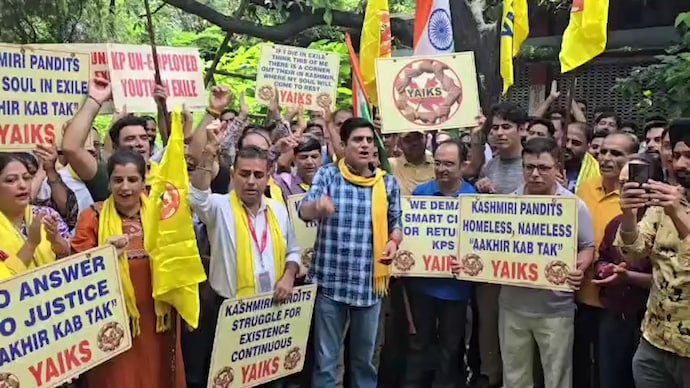
Hundreds of displaced Kashmiri Pandits living in Jagti township and nearby camps in Jammu have accused political parties of using their suffering only in election manifestos while failing to address their problems. Describing themselves as “political orphans” and the “new untouchables”, they demanded steps to ensure a dignified life as guaranteed by the Constitution.
Residents said they remain caught between near non-functional civic representation, failing infrastructure and long-pending rehabilitation promises. They said their concerns are raised during elections, but disappear afterwards, leaving many in the community feeling neglected and pushed to the margins of the political process.
Advocate Vishva Ranjan Pandita, a resident of the Jagti camp, said, “Used by everyone, represented by none, this is the real tragedy,” adding, “the hardest exile is the one imposed by our own country.” Residents across camps for the displaced community, which left Kashmir in the 1990s after the outbreak of militancy, said this neglect had deepened over time, with some even threatening to take “drastic measures” to end their miseries.
Tito Ganju, chairman of Panun Kashmir, which has been raising issues faced by migrants in the camps, said the core grievance was that the community was remembered by political parties only during election cycles.
“Kashmiri Pandits may have been made political orphans, but we are not destined to remain political orphans. We are the indigenous bearers of Kashmir's civilisational memory and one of the most enduring expressions of Indianness in the Valley,” he said.
Ganju said that while governments over the years may ignore them or try to speak about Kashmir without the community, “history and geopolitics will not permit that fiction to last”. Speaking about what he called decades of administrative neglect, community members expressed anger over crumbling infrastructure and unfulfilled rehabilitation promises. Ganju added, “We are not the discarded chapter of Kashmir's story. We are its unfinished chapter, and we intend to write the next one,” and said no durable solution to Kashmir was possible without the community.
Election data shows changing trends in Kashmiri Pandit voting patterns over the years. While many voters have gradually shifted their votes to their present places of residence in Jammu, recent years have seen more migrants registering as voters in the Valley again.
In the 2024 Lok Sabha elections, 1,13,873 Kashmiri migrant electors were registered across Srinagar, Baramulla and Anantnag-Rajouri parliamentary constituencies. The total included 56,290 men, 57,582 women and one transgender voter. This was higher than about 99,000 registered migrant voters in the 2019 Lok Sabha polls and around 92,000 in the 2014 elections.
Some community leaders alleged that representatives of a political party had been encouraging people to transfer their votes to their place of birth in the Kashmir Valley, and called it another step towards turning them into political orphans. Academician Dileep Kumar Kaul also described the community as “real political orphans” and said there had been a systemic lack of intent to anchor them within the political framework.
“This is the result of the thinning of their collective agency through seven centuries and seven waves of genocide unleashed on them,” Kaul said, arguing that the political system found it convenient to ignore the community's historical victimhood. Expressing frustration over repeated political rhetoric, Vishva Ranjan Pandita said, “Every election brings promises, manifestos and speeches in our name. Every party claims to stand with our pain of forced displacement, but once the votes are counted, our issues disappear.”
Social activist Bhushan Lal Bhat said the community should no longer be seen only as victims waiting for rehabilitation, and added that any political process looking to decide Kashmir's future without them would remain incomplete. Academician B L Kaul said the tragedy of Kashmiri Pandits lay not only in their displacement, but also in being pushed to the margins of political discourse, and said any settlement that treated their return as “charity” was unacceptable.
Community leader Kuldeep Raina said the displacement could not be reduced to a humanitarian issue. “It is a political rupture. Any serious attempt to resolve Kashmir must therefore restore the political space, security, and dignity of Kashmiri Pandits,” he said. Activists also pointed to delays in employment and relief measures needed to support daily life.
Activist Sunil Pandita said, “Lord Ram's ‘Vanwas’ ended after 14 years, but we have been away from our homes for the past 36 years, and there seems no end to our miseries.” He said the government had failed to fill the 6,000 migrant posts announced in 2009, and that housing for Prime Minister's package employees in the Valley remained incomplete. Overall, the residents said their demand was simple: political space, representation and a dignified life, instead of being remembered only when elections approach.
Hundreds of displaced Kashmiri Pandits living in Jagti township and nearby camps in Jammu have accused political parties of using their suffering only in election manifestos while failing to address their problems. Describing themselves as “political orphans” and the “new untouchables”, they demanded steps to ensure a dignified life as guaranteed by the Constitution.
Residents said they remain caught between near non-functional civic representation, failing infrastructure and long-pending rehabilitation promises. They said their concerns are raised during elections, but disappear afterwards, leaving many in the community feeling neglected and pushed to the margins of the political process.
Advocate Vishva Ranjan Pandita, a resident of the Jagti camp, said, “Used by everyone, represented by none, this is the real tragedy,” adding, “the hardest exile is the one imposed by our own country.” Residents across camps for the displaced community, which left Kashmir in the 1990s after the outbreak of militancy, said this neglect had deepened over time, with some even threatening to take “drastic measures” to end their miseries.
Tito Ganju, chairman of Panun Kashmir, which has been raising issues faced by migrants in the camps, said the core grievance was that the community was remembered by political parties only during election cycles.
“Kashmiri Pandits may have been made political orphans, but we are not destined to remain political orphans. We are the indigenous bearers of Kashmir's civilisational memory and one of the most enduring expressions of Indianness in the Valley,” he said.
Ganju said that while governments over the years may ignore them or try to speak about Kashmir without the community, “history and geopolitics will not permit that fiction to last”. Speaking about what he called decades of administrative neglect, community members expressed anger over crumbling infrastructure and unfulfilled rehabilitation promises. Ganju added, “We are not the discarded chapter of Kashmir's story. We are its unfinished chapter, and we intend to write the next one,” and said no durable solution to Kashmir was possible without the community.
Election data shows changing trends in Kashmiri Pandit voting patterns over the years. While many voters have gradually shifted their votes to their present places of residence in Jammu, recent years have seen more migrants registering as voters in the Valley again.
In the 2024 Lok Sabha elections, 1,13,873 Kashmiri migrant electors were registered across Srinagar, Baramulla and Anantnag-Rajouri parliamentary constituencies. The total included 56,290 men, 57,582 women and one transgender voter. This was higher than about 99,000 registered migrant voters in the 2019 Lok Sabha polls and around 92,000 in the 2014 elections.
Some community leaders alleged that representatives of a political party had been encouraging people to transfer their votes to their place of birth in the Kashmir Valley, and called it another step towards turning them into political orphans. Academician Dileep Kumar Kaul also described the community as “real political orphans” and said there had been a systemic lack of intent to anchor them within the political framework.
“This is the result of the thinning of their collective agency through seven centuries and seven waves of genocide unleashed on them,” Kaul said, arguing that the political system found it convenient to ignore the community's historical victimhood. Expressing frustration over repeated political rhetoric, Vishva Ranjan Pandita said, “Every election brings promises, manifestos and speeches in our name. Every party claims to stand with our pain of forced displacement, but once the votes are counted, our issues disappear.”
Social activist Bhushan Lal Bhat said the community should no longer be seen only as victims waiting for rehabilitation, and added that any political process looking to decide Kashmir's future without them would remain incomplete. Academician B L Kaul said the tragedy of Kashmiri Pandits lay not only in their displacement, but also in being pushed to the margins of political discourse, and said any settlement that treated their return as “charity” was unacceptable.
Community leader Kuldeep Raina said the displacement could not be reduced to a humanitarian issue. “It is a political rupture. Any serious attempt to resolve Kashmir must therefore restore the political space, security, and dignity of Kashmiri Pandits,” he said. Activists also pointed to delays in employment and relief measures needed to support daily life.
Activist Sunil Pandita said, “Lord Ram's ‘Vanwas’ ended after 14 years, but we have been away from our homes for the past 36 years, and there seems no end to our miseries.” He said the government had failed to fill the 6,000 migrant posts announced in 2009, and that housing for Prime Minister's package employees in the Valley remained incomplete. Overall, the residents said their demand was simple: political space, representation and a dignified life, instead of being remembered only when elections approach.
Hundreds of displaced Kashmiri Pandits living in Jagti township and nearby camps in Jammu have accused political parties of using their suffering only in election manifestos while failing to address their problems. Describing themselves as “political orphans” and the “new untouchables”, they demanded steps to ensure a dignified life as guaranteed by the Constitution.
Residents said they remain caught between near non-functional civic representation, failing infrastructure and long-pending rehabilitation promises. They said their concerns are raised during elections, but disappear afterwards, leaving many in the community feeling neglected and pushed to the margins of the political process.
Advocate Vishva Ranjan Pandita, a resident of the Jagti camp, said, “Used by everyone, represented by none, this is the real tragedy,” adding, “the hardest exile is the one imposed by our own country.” Residents across camps for the displaced community, which left Kashmir in the 1990s after the outbreak of militancy, said this neglect had deepened over time, with some even threatening to take “drastic measures” to end their miseries.
Tito Ganju, chairman of Panun Kashmir, which has been raising issues faced by migrants in the camps, said the core grievance was that the community was remembered by political parties only during election cycles.
“Kashmiri Pandits may have been made political orphans, but we are not destined to remain political orphans. We are the indigenous bearers of Kashmir's civilisational memory and one of the most enduring expressions of Indianness in the Valley,” he said.
Ganju said that while governments over the years may ignore them or try to speak about Kashmir without the community, “history and geopolitics will not permit that fiction to last”. Speaking about what he called decades of administrative neglect, community members expressed anger over crumbling infrastructure and unfulfilled rehabilitation promises. Ganju added, “We are not the discarded chapter of Kashmir's story. We are its unfinished chapter, and we intend to write the next one,” and said no durable solution to Kashmir was possible without the community.
Election data shows changing trends in Kashmiri Pandit voting patterns over the years. While many voters have gradually shifted their votes to their present places of residence in Jammu, recent years have seen more migrants registering as voters in the Valley again.
In the 2024 Lok Sabha elections, 1,13,873 Kashmiri migrant electors were registered across Srinagar, Baramulla and Anantnag-Rajouri parliamentary constituencies. The total included 56,290 men, 57,582 women and one transgender voter. This was higher than about 99,000 registered migrant voters in the 2019 Lok Sabha polls and around 92,000 in the 2014 elections.
Some community leaders alleged that representatives of a political party had been encouraging people to transfer their votes to their place of birth in the Kashmir Valley, and called it another step towards turning them into political orphans. Academician Dileep Kumar Kaul also described the community as “real political orphans” and said there had been a systemic lack of intent to anchor them within the political framework.
“This is the result of the thinning of their collective agency through seven centuries and seven waves of genocide unleashed on them,” Kaul said, arguing that the political system found it convenient to ignore the community's historical victimhood. Expressing frustration over repeated political rhetoric, Vishva Ranjan Pandita said, “Every election brings promises, manifestos and speeches in our name. Every party claims to stand with our pain of forced displacement, but once the votes are counted, our issues disappear.”
Social activist Bhushan Lal Bhat said the community should no longer be seen only as victims waiting for rehabilitation, and added that any political process looking to decide Kashmir's future without them would remain incomplete. Academician B L Kaul said the tragedy of Kashmiri Pandits lay not only in their displacement, but also in being pushed to the margins of political discourse, and said any settlement that treated their return as “charity” was unacceptable.
Community leader Kuldeep Raina said the displacement could not be reduced to a humanitarian issue. “It is a political rupture. Any serious attempt to resolve Kashmir must therefore restore the political space, security, and dignity of Kashmiri Pandits,” he said. Activists also pointed to delays in employment and relief measures needed to support daily life.
Activist Sunil Pandita said, “Lord Ram's ‘Vanwas’ ended after 14 years, but we have been away from our homes for the past 36 years, and there seems no end to our miseries.” He said the government had failed to fill the 6,000 migrant posts announced in 2009, and that housing for Prime Minister's package employees in the Valley remained incomplete. Overall, the residents said their demand was simple: political space, representation and a dignified life, instead of being remembered only when elections approach.

