Monocrotophos: Why is this poison still allowed in India?
Monocrotophos: The repeated formation of expert committees appears to have become a tried-and-tested administrative mechanism for pushing serious issues into cold storage and providing relief to influential lobbies.
This is not just the story of a pesticide. It is also the story of an agrochemical industry accused of putting profits before lives and of policymakers who, critics say, have responded to repeated warnings with committees and reviews while farmers continued to face the consequences on the ground.
In today's instalment of the 'War Against Poison' series, we examine monocrotophos, a highly hazardous insecticide that has been banned in 112 countries. While much of the world phased out the chemical, India continued to debate restrictions through a series of reviews and expert committees. Here is a look at its origins, controversial history, and the policy decisions that have allowed it to remain in circulation.
Whenever proposals were made to impose a complete ban on monocrotophos in India, fresh review committees were constituted and revised drafts were introduced. As a result, critics argue, the chemical has remained available despite restrictions.
The government has prohibited only the domestic use of the specific formulation monocrotophos 36% SL, while permitting the manufacture and export of the technical-grade chemical and certain other formulations. Critics say this regulatory gap has enabled continued production, with the pesticide allegedly finding its way into domestic markets under different names and concentrations.
HISTORY OF MONOCROTOPHOS
The origins of monocrotophos can be traced to research carried out during World War II. Scientists had developed nerve agents such as sarin and tabun that disrupt the human nervous system. After the war, multinational companies adapted similar chemical principles for agricultural use, arguing that compounds capable of disabling nervous systems could also eliminate crop-damaging insects.
Monocrotophos was developed in 1965 by Switzerland-based Ciba AG and the United States-based Shell Chemical Company. It was marketed under brand names such as Azodrin and Nuvacron. The pesticide is systemic in nature, meaning plants absorb it into their tissues. Insects feeding on treated crops are rapidly paralysed and killed.
INDIA AND MONOCROTOPHOS
As countries including India pursued higher agricultural output during the Green Revolution of the 1970s and 1980s, monocrotophos came to be viewed as an effective solution for pest control.
The Indian Institute of Chemical Technology (IICT) in Hyderabad developed indigenous technology for domestic production of the chemical, paving the way for large-scale manufacturing by Indian companies.
HOW DANGEROUS IS IT?
The World Health Organization (WHO) classifies monocrotophos as a Class Ib pesticide, categorising it as highly hazardous.
It belongs to the organophosphate group of chemicals and acts by disrupting the nervous system. Medical studies have reported that nearly 87 per cent of patients exposed to severe poisoning require ventilator support, while the mortality rate has been estimated at 23.8 per cent.
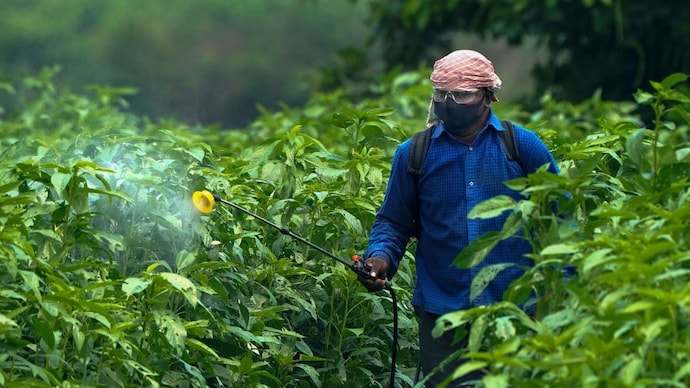
Experts note that ingestion is not the only route of exposure. During spraying operations, especially in hot weather, the chemical can enter the body through the skin or by inhalation and may prove fatal. It is also highly toxic to birds, bees and other beneficial insects.
INCIDENTS THAT SHOCKED THE COUNTRY
The history of monocrotophos is reflected not only in scientific literature but also in a series of major poisoning incidents.
The Mid-Day Meal Tragedy
On July 16, 2013, a government school in Gandaman village of Bihar's Saran district witnessed one of the country's worst school tragedies. Twenty-three children died after consuming a mid-day meal.
Forensic investigations later found that cooking oil had been stored in a container that previously contained monocrotophos. The contamination proved fatal, and many of the children died before they could receive medical treatment.
The Yavatmal Tragedy
In 2017, cotton farmers in Maharashtra's Yavatmal district sprayed monocrotophos extensively to combat pink bollworm infestations.
Without adequate protective gear such as masks, gloves or goggles, many farmers inhaled the pesticide during spraying operations. Twenty farmers and agricultural labourers died, while hundreds required hospital treatment. Several victims reportedly suffered permanent vision damage.
Argentina's Bird Killings
One of the most cited environmental disasters involving monocrotophos occurred in Argentina during 1995-96.
Following severe locust infestations in sunflower and alfalfa crops, farmers conducted extensive aerial and ground spraying of monocrotophos. The pesticide directly affected migratory birds arriving from North America.
Many birds died after coming into contact with the chemical or consuming poisoned locusts. Estimates suggest that more than 20,000 birds of prey perished within weeks, drawing international attention to the environmental risks associated with the pesticide.
PAPER RULES VS GROUND REALITY
Indian regulations prohibited the use of monocrotophos on vegetables because of concerns over toxic residues in food. The pesticide was approved only for selected crops such as cotton, paddy, maize, mustard, sugarcane, groundnut, coconut, tea and coffee.
However, reports from rural markets suggested a different reality.
Because monocrotophos was significantly cheaper than newer pesticides and produced quick results, dealers often recommended it to vegetable growers. As a result, it was reportedly used on crops such as brinjal, tomato, cabbage and capsicum, raising concerns about pesticide residues entering the food chain.
THE GOVERNMENT'S U-TURN
In 2020, the Agriculture Ministry issued a draft order proposing a ban on 27 hazardous pesticides, including monocrotophos.
The move triggered strong opposition from the agrochemical industry, which argued that an abrupt ban would cause economic losses and affect employment.
Following industry representations, the government constituted a high-level technical committee chaired by agricultural scientist Dr T P Rajendran to review the proposal. The committee reportedly accepted several industry arguments.
In February 2023, the government revised its position and removed 24 of the 27 pesticides, including monocrotophos, from the proposed ban list.
WHAT WAS INDIA'S COMPULSION?
The government's argument was that many Indian farmers could not afford costlier alternatives and that monocrotophos remained an inexpensive option for controlling certain pests in crops such as cotton and paddy.
Critics, however, questioned whether economic considerations should outweigh concerns about farmer safety and public health. They also asked why safer and affordable alternatives had not been developed on a large scale despite decades of research.
Environmental groups challenged the government's decision in the Supreme Court. Subsequently, in October 2024, the government imposed restrictions on the pesticide.
Critics, however, argue that the gap between official bans and ground-level enforcement remains significant. They contend that monocrotophos continues to be available in various forms despite regulatory action.
THE COMMITTEE CYCLE
Critics argue that the repeated formation of expert committees has often delayed decisive action against hazardous pesticides.
From earlier review panels to the Rajendran Committee, they point out that every attempt to impose a complete ban on monocrotophos was followed by fresh reviews, revised drafts and policy reconsiderations, even as the WHO continued to classify the chemical as highly hazardous.
QUESTIONS RAISED IN PARLIAMENT
Concerns over the continued availability of monocrotophos reached Parliament as well.
On March 20, 2026, the issue was raised in the Rajya Sabha. The government stated that all states and Union Territories had been directed to ensure that no new manufacturing takes place after October 2024 and that companies surrender their registration certificates.
The government also noted that manufacturing or selling banned pesticides is a punishable offence under the Insecticides Act, 1968, and that 12,511 pesticide inspectors have been deployed across the country to enforce compliance.
A specific question was raised on whether the government planned to ban formulations other than monocrotophos 36% SL. In response, the government said it periodically reviews pesticides that have been banned abroad or are found to pose risks to human health and the environment.
According to the government, such reviews are conducted through expert committees and the Registration Committee, and any future decision on additional restrictions would be based on their recommendations.
This is not just the story of a pesticide. It is also the story of an agrochemical industry accused of putting profits before lives and of policymakers who, critics say, have responded to repeated warnings with committees and reviews while farmers continued to face the consequences on the ground.
In today's instalment of the 'War Against Poison' series, we examine monocrotophos, a highly hazardous insecticide that has been banned in 112 countries. While much of the world phased out the chemical, India continued to debate restrictions through a series of reviews and expert committees. Here is a look at its origins, controversial history, and the policy decisions that have allowed it to remain in circulation.
Whenever proposals were made to impose a complete ban on monocrotophos in India, fresh review committees were constituted and revised drafts were introduced. As a result, critics argue, the chemical has remained available despite restrictions.
The government has prohibited only the domestic use of the specific formulation monocrotophos 36% SL, while permitting the manufacture and export of the technical-grade chemical and certain other formulations. Critics say this regulatory gap has enabled continued production, with the pesticide allegedly finding its way into domestic markets under different names and concentrations.
HISTORY OF MONOCROTOPHOS
The origins of monocrotophos can be traced to research carried out during World War II. Scientists had developed nerve agents such as sarin and tabun that disrupt the human nervous system. After the war, multinational companies adapted similar chemical principles for agricultural use, arguing that compounds capable of disabling nervous systems could also eliminate crop-damaging insects.
Monocrotophos was developed in 1965 by Switzerland-based Ciba AG and the United States-based Shell Chemical Company. It was marketed under brand names such as Azodrin and Nuvacron. The pesticide is systemic in nature, meaning plants absorb it into their tissues. Insects feeding on treated crops are rapidly paralysed and killed.
INDIA AND MONOCROTOPHOS
As countries including India pursued higher agricultural output during the Green Revolution of the 1970s and 1980s, monocrotophos came to be viewed as an effective solution for pest control.
The Indian Institute of Chemical Technology (IICT) in Hyderabad developed indigenous technology for domestic production of the chemical, paving the way for large-scale manufacturing by Indian companies.
HOW DANGEROUS IS IT?
The World Health Organization (WHO) classifies monocrotophos as a Class Ib pesticide, categorising it as highly hazardous.
It belongs to the organophosphate group of chemicals and acts by disrupting the nervous system. Medical studies have reported that nearly 87 per cent of patients exposed to severe poisoning require ventilator support, while the mortality rate has been estimated at 23.8 per cent.
Experts note that ingestion is not the only route of exposure. During spraying operations, especially in hot weather, the chemical can enter the body through the skin or by inhalation and may prove fatal. It is also highly toxic to birds, bees and other beneficial insects.
INCIDENTS THAT SHOCKED THE COUNTRY
The history of monocrotophos is reflected not only in scientific literature but also in a series of major poisoning incidents.
The Mid-Day Meal Tragedy
On July 16, 2013, a government school in Gandaman village of Bihar's Saran district witnessed one of the country's worst school tragedies. Twenty-three children died after consuming a mid-day meal.
Forensic investigations later found that cooking oil had been stored in a container that previously contained monocrotophos. The contamination proved fatal, and many of the children died before they could receive medical treatment.
The Yavatmal Tragedy
In 2017, cotton farmers in Maharashtra's Yavatmal district sprayed monocrotophos extensively to combat pink bollworm infestations.
Without adequate protective gear such as masks, gloves or goggles, many farmers inhaled the pesticide during spraying operations. Twenty farmers and agricultural labourers died, while hundreds required hospital treatment. Several victims reportedly suffered permanent vision damage.
Argentina's Bird Killings
One of the most cited environmental disasters involving monocrotophos occurred in Argentina during 1995-96.
Following severe locust infestations in sunflower and alfalfa crops, farmers conducted extensive aerial and ground spraying of monocrotophos. The pesticide directly affected migratory birds arriving from North America.
Many birds died after coming into contact with the chemical or consuming poisoned locusts. Estimates suggest that more than 20,000 birds of prey perished within weeks, drawing international attention to the environmental risks associated with the pesticide.
PAPER RULES VS GROUND REALITY
Indian regulations prohibited the use of monocrotophos on vegetables because of concerns over toxic residues in food. The pesticide was approved only for selected crops such as cotton, paddy, maize, mustard, sugarcane, groundnut, coconut, tea and coffee.
However, reports from rural markets suggested a different reality.
Because monocrotophos was significantly cheaper than newer pesticides and produced quick results, dealers often recommended it to vegetable growers. As a result, it was reportedly used on crops such as brinjal, tomato, cabbage and capsicum, raising concerns about pesticide residues entering the food chain.
THE GOVERNMENT'S U-TURN
In 2020, the Agriculture Ministry issued a draft order proposing a ban on 27 hazardous pesticides, including monocrotophos.
The move triggered strong opposition from the agrochemical industry, which argued that an abrupt ban would cause economic losses and affect employment.
Following industry representations, the government constituted a high-level technical committee chaired by agricultural scientist Dr T P Rajendran to review the proposal. The committee reportedly accepted several industry arguments.
In February 2023, the government revised its position and removed 24 of the 27 pesticides, including monocrotophos, from the proposed ban list.
WHAT WAS INDIA'S COMPULSION?
The government's argument was that many Indian farmers could not afford costlier alternatives and that monocrotophos remained an inexpensive option for controlling certain pests in crops such as cotton and paddy.
Critics, however, questioned whether economic considerations should outweigh concerns about farmer safety and public health. They also asked why safer and affordable alternatives had not been developed on a large scale despite decades of research.
Environmental groups challenged the government's decision in the Supreme Court. Subsequently, in October 2024, the government imposed restrictions on the pesticide.
Critics, however, argue that the gap between official bans and ground-level enforcement remains significant. They contend that monocrotophos continues to be available in various forms despite regulatory action.
THE COMMITTEE CYCLE
Critics argue that the repeated formation of expert committees has often delayed decisive action against hazardous pesticides.
From earlier review panels to the Rajendran Committee, they point out that every attempt to impose a complete ban on monocrotophos was followed by fresh reviews, revised drafts and policy reconsiderations, even as the WHO continued to classify the chemical as highly hazardous.
QUESTIONS RAISED IN PARLIAMENT
Concerns over the continued availability of monocrotophos reached Parliament as well.
On March 20, 2026, the issue was raised in the Rajya Sabha. The government stated that all states and Union Territories had been directed to ensure that no new manufacturing takes place after October 2024 and that companies surrender their registration certificates.
The government also noted that manufacturing or selling banned pesticides is a punishable offence under the Insecticides Act, 1968, and that 12,511 pesticide inspectors have been deployed across the country to enforce compliance.
A specific question was raised on whether the government planned to ban formulations other than monocrotophos 36% SL. In response, the government said it periodically reviews pesticides that have been banned abroad or are found to pose risks to human health and the environment.
According to the government, such reviews are conducted through expert committees and the Registration Committee, and any future decision on additional restrictions would be based on their recommendations.

